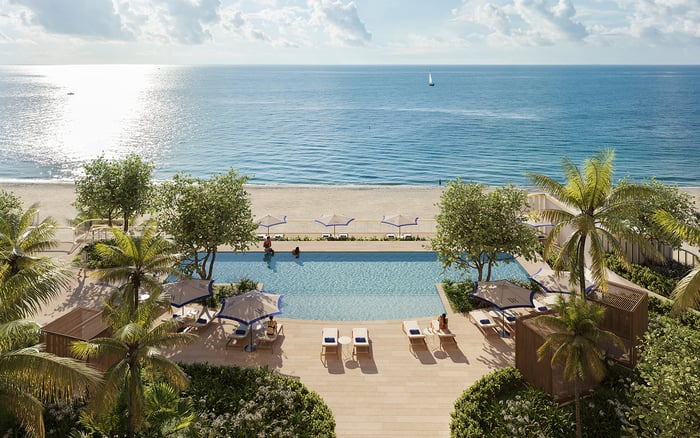
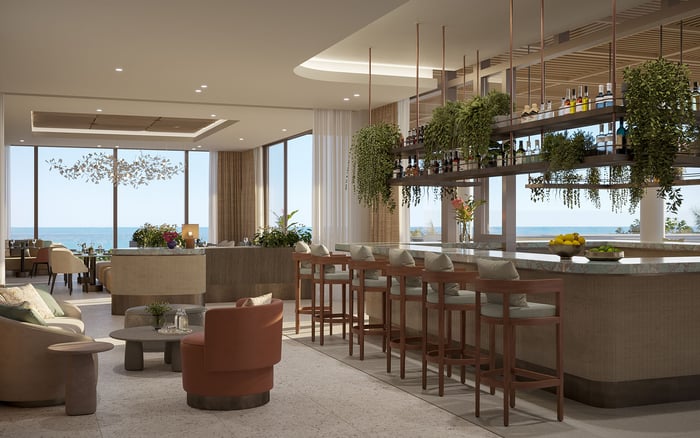
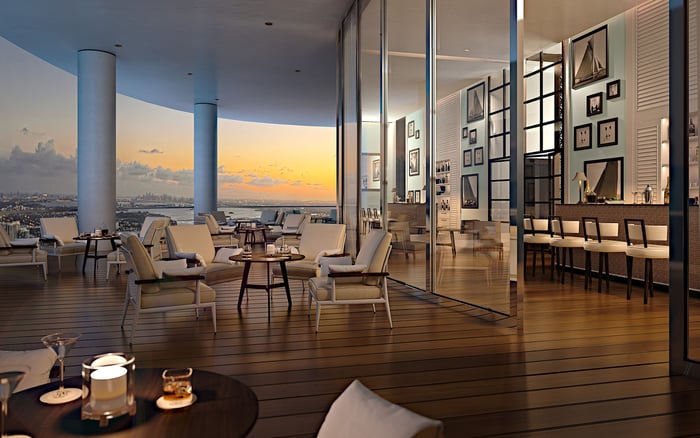
A buyer-focused guide to South Florida oceanfront residences for private aviation users, emphasizing arrival privacy, coastal rhythm, service standards, and neighborhood fit.
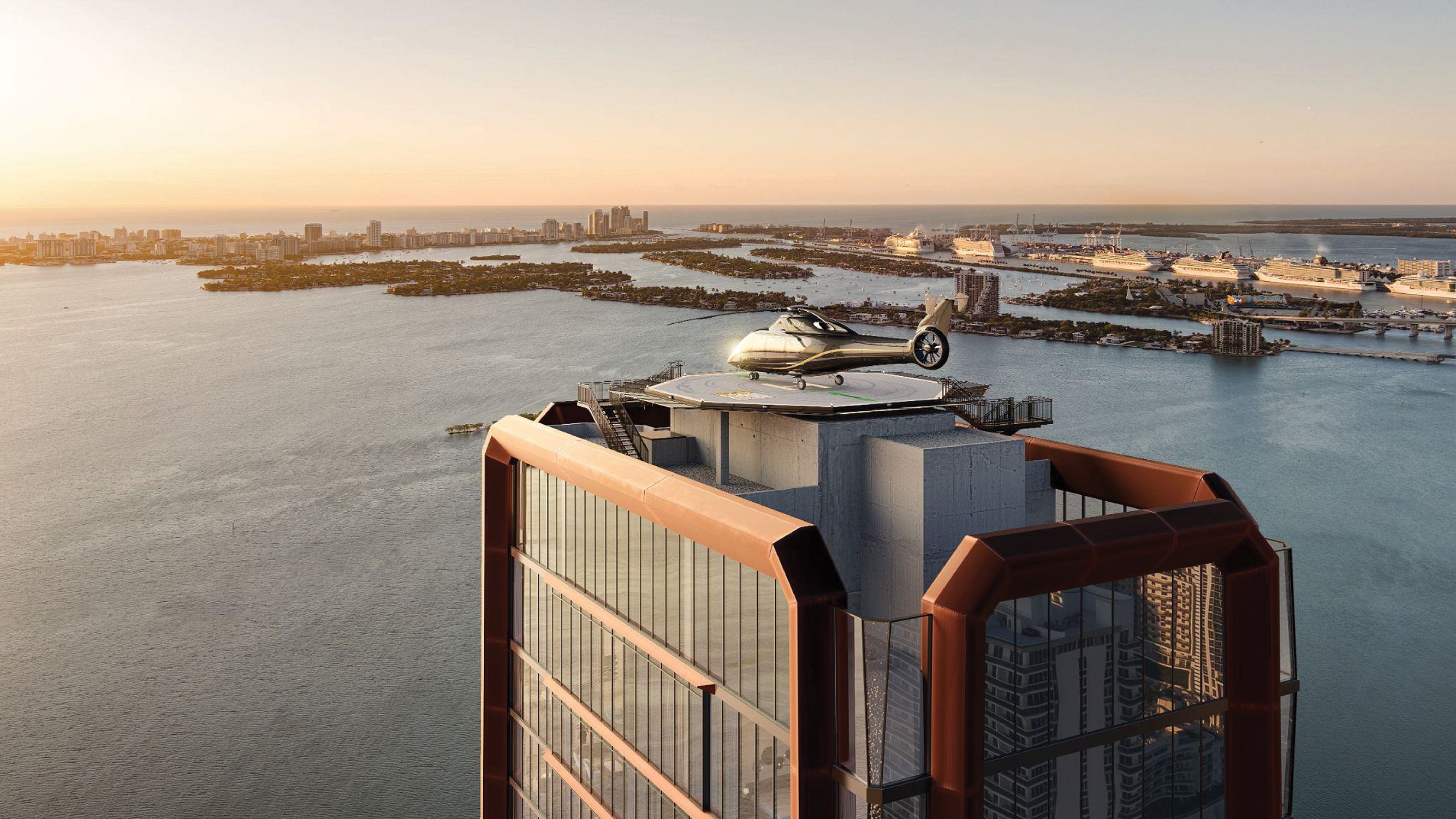
For the private aviation user, an oceanfront residence is not judged by the view alone. The true measure is the full sequence: aircraft arrival, ground transfer, building approach, security, elevator, residence, and reset. When that choreography feels calm, private, and repeatable, the property begins to function less like a vacation address and more like a personal operating base.
South Florida is unusually well suited to this mindset because it offers multiple versions of coastal living. Some buyers want the social gravity of Miami Beach, with restaurants, wellness, and design culture close at hand. Others prefer the quieter vertical privacy of Sunny Isles, the estate-like discretion of Fisher Island, or the less theatrical pace of Broward and Palm Beach County shoreline enclaves. For aviation users, the best choice is rarely the most publicized tower. It is the residence that protects time.
That protection begins with fundamentals: an efficient arrival court, discreet staff coordination, secure parking or car staging, elevator access that feels controlled, and a building culture accustomed to residents who move between cities frequently. A beautiful beach address can disappoint if every arrival feels exposed or improvised. Conversely, a quieter building with a disciplined service model can feel exceptional after a late flight.
Private aviation buyers should think in transitions. The first is from aircraft to car, the second from car to lobby, and the third from lobby to residence. Each handoff should be low-friction. The building does not need to announce this publicly. In fact, the most desirable residences often communicate it through silence: a calm entry, attentive staff, a sensible loading path, and an atmosphere that needs no explanation.
This is why the best oceanfront residences for aviation users often share certain traits. They feel enclosed without feeling defensive. They balance hospitality with residential discretion. They allow owners to arrive with luggage, family, pets, or guests without turning the lobby into a performance. They make it possible to land, change, dine, and sleep with minimal decision fatigue.
Buyers should also evaluate how a property supports departures. Early flights require reliable valet timing, clear service communication, and staff who understand that a delayed elevator or misplaced bag can alter an entire itinerary. The more often an owner flies, the more these small details become part of the property’s true value.
Miami Beach and Surfside remain compelling for private aviation users who want oceanfront living with cultural immediacy. The appeal is not simply proximity to restaurants, hotels, clubs, and wellness venues. It is the ability to move between a private residence and a sophisticated social calendar without feeling detached from the city.
A residence such as Shore Club Private Collections Miami Beach belongs in the conversation for buyers who want the emotional charge of Miami Beach while still expecting the refinement of a private residential experience. The best Miami Beach ownership is not about being everywhere. It is about having the option to participate, then retreat.
Surfside offers a different tone. It is quieter, more residential, and more measured. For aviation users who divide time among multiple homes, that restraint can be valuable. The Delmore Surfside speaks to buyers who want the beach to feel composed rather than crowded, with the surrounding neighborhood serving as a buffer from Miami’s more visible energy.
The distinction matters. Miami Beach can reward the buyer who wants access, image, and momentum. Surfside may better suit the owner who wants privacy, rhythm, and a less public arrival. Both can work beautifully for private flyers, but they answer different emotional needs.
Sunny Isles has long attracted buyers who prefer high-rise oceanfront living, expansive water views, and a more self-contained residential experience. For private aviation users, the corridor can feel practical because the lifestyle is direct: beach, tower, car, reservation, return. It is less about wandering and more about precision.
That is why Bentley Residences Sunny Isles is a natural reference point for buyers thinking about the relationship between residential identity, vehicles, privacy, and the oceanfront lifestyle. The project name itself aligns with a clientele that understands mobility as part of luxury, not a separate category.
Nearby, St. Regis® Residences Sunny Isles speaks to another private aviation priority: the comfort of an established hospitality language translated into residential living. For frequent flyers, recognizable service culture can reduce friction. The owner knows what tone to expect, and that consistency is often more valuable than novelty.
Aventura also enters the decision matrix for many buyers, even when the desired residence is directly on the ocean. It can serve as part of the broader daily map for shopping, dining, schools, medical needs, and family logistics. For owners who fly often, the surrounding support ecosystem can matter almost as much as the building itself.
Not every private aviation user wants Miami as the center of gravity. Broward and Palm Beach County coastal addresses can appeal to owners who prize understatement, wellness, boating culture, golf relationships, or simply a softer arrival. The pace is different. The public gaze is often lower. The best residences in these corridors are less about being seen and more about feeling settled.
In Pompano Beach, The Ritz-Carlton Residences® Pompano Beach gives buyers a branded residential option in a market that continues to draw attention from those seeking oceanfront living north of Miami. For the aviation user, the attraction is the possibility of a calmer home base without abandoning the sophistication expected at the top of the market.
Further north, Rosewood Residences Hillsboro Beach suits a buyer who wants the coastline to feel quieter and more private. Hillsboro Beach has an inherently residential character, and for many frequent flyers, that is precisely the point. The residence should not always demand energy from its owner. Sometimes it should restore it.
Fort Lauderdale adds another layer to the equation. It offers waterfront culture, a more businesslike rhythm, and a coastal identity distinct from Miami. Buyers considering Four Seasons Hotel & Private Residences Fort Lauderdale are often evaluating not just a home, but a service environment that can support frequent arrivals and departures with a polished sense of continuity.
The aviation-oriented buyer should ask questions that go beyond finishes and views. How does the building manage arrivals after long travel days? Can staff coordinate luggage without ceremony? Is there a clear protocol for guests, drivers, household employees, and deliveries? Does the parking experience feel private enough for the owner’s lifestyle?
Security is equally important, but it should not feel theatrical. The best buildings make residents feel known without making movement feel monitored. For public-facing families, executives, athletes, founders, and collectors, that balance can define whether a residence feels livable over time.
Storage also deserves attention. Private flyers often travel with seasonal wardrobes, sports equipment, pet needs, children’s items, and rotating luggage. A residence that looks perfect in photographs may feel insufficient if it lacks practical support spaces or a staff culture that can manage movement elegantly.
Finally, consider the property’s rhythm in both peak season and quieter months. The best choice should feel graceful when the building is full, not only when it is calm. Frequent flyers need consistency because their schedules are already variable.
The best South Florida oceanfront residence for a private aviation user is the one that matches the owner’s flight pattern, not someone else’s idea of prestige. A buyer who lands for long winter stays may value outdoor living, wellness, and neighborhood calm. A buyer arriving for two-night business and social trips may prioritize immediate service, dining access, and a building team that can prepare the residence before arrival.
Families often require a different calculus. They may need proximity to schools, clubs, grandparents, tutors, medical care, or boating arrangements. Couples may prioritize spa culture, privacy, and dining. Entrepreneurs may want a residence that allows work, recovery, entertaining, and rapid departures without changing the household’s tempo.
In the end, private aviation reveals the difference between luxury as decoration and luxury as performance. The view should be spectacular, but the experience should be almost invisible. When the building, neighborhood, staff, and route all work together, the owner feels the real privilege of South Florida oceanfront living: arriving without friction, and leaving without regret.
What makes an oceanfront residence ideal for private aviation users? The best fit combines privacy, efficient arrivals, strong service culture, and a calm transition from car to residence.
Is Miami Beach best for private flyers who want a social lifestyle? It can be, especially for buyers who want dining, wellness, and cultural energy close to the oceanfront home.
Why do some aviation users prefer Surfside? Surfside can feel quieter and more residential, which suits buyers who want oceanfront access with a lower-profile atmosphere.
Is Sunny Isles a strong option for frequent travelers? Yes, particularly for buyers who like high-rise oceanfront living, direct routines, and a residential environment shaped around views and privacy.
Should Aventura influence an oceanfront purchase decision? It may, because many buyers consider the broader daily map around services, shopping, family needs, and appointments.
Are branded residences useful for private aviation users? They can be appealing when the service language is consistent, discreet, and responsive to frequent arrivals and departures.
What should buyers ask building staff before purchasing? Ask how arrivals, luggage, guests, drivers, deliveries, and early departures are handled in normal and peak-season conditions.
Is Broward quieter than Miami for oceanfront ownership? It often offers a softer coastal cadence, which may appeal to buyers who want less spectacle and more routine.
Can Palm Beach County work for private aviation lifestyles? Yes, especially for owners who prioritize privacy, wellness, clubs, family networks, and a more residential coastal rhythm.
What is the biggest mistake private flyers make when buying? Focusing only on views and finishes, while underestimating the daily importance of arrival flow, staff quality, and privacy.
For a confidential assessment and a building-by-building shortlist, connect with MILLION.
If branded residences are on your mind — as a home or as an allocation — we would be glad to share what we are seeing, privately.
Begin a quiet conversation