A discreet buyer’s guide to selecting a Coconut Grove waterfront residence with the spatial flow, privacy, service potential, and technical capacity required for polished entertaining.
The best home for entertaining is not necessarily the one with the largest living room. It is the residence where arrival, conversation, dining, service, and departure unfold without friction. In Coconut Grove, the assessment should begin with a precise brief: the number of guests hosted regularly, the balance between seated dinners and informal gatherings, and the extent to which household staff or outside caterers will support an event.
A buyer who prefers intimate dinners may value an elegantly proportioned dining area, flattering lighting, and a direct path from kitchen to table. A host planning larger receptions should examine circulation, furniture flexibility, powder-room access, coat storage, and the separation of guest and service movement. Second-home owners should also consider how readily the residence can be prepared after an absence.
Lifestyle preferences matter as much as square footage. A formal host may prioritize procession and symmetry, while a relaxed host may favor a continuous sequence connecting the kitchen, lounge, and outdoor dining area. The right choice reflects how the owner actually welcomes guests.
A useful comparison begins with projects that represent distinct residential propositions. Four Seasons Residences Coconut Grove and Park Grove Coconut Grove are natural names for an initial Grove search, but buyers should verify the precise entertaining attributes of each available residence rather than infer them from the building’s identity.
The same discipline applies to Vita at Grove Isle. Examine the specific floor plan, orientation, outdoor areas, service access, and governing rules attached to the opportunity under consideration. Private dining capacity is ultimately unit-specific, even when a building’s broader positioning appears compatible with the brief.
Buyers exploring a wider range of architectural settings may also compare Mr. C Tigertail Coconut Grove with Opus Coconut Grove. The objective is not to select by name alone, but to identify the residence that best supports the intended guest count, hosting frequency, privacy threshold, and service model.
An entertaining kitchen has two roles: it must appear composed when visible and perform efficiently under pressure. Begin by mapping preparation, cooking, plating, beverage service, and cleanup. A dramatic island can anchor conversation, but its value depends on clear circulation and sufficient room for guests to gather without obstructing the working zone.
Storage warrants equal attention. Inspect the space available for serving pieces, glassware, linens, small appliances, wine, and bulk provisions. Confirm where refuse, recycling, used tableware, and catering equipment can be held discreetly during an event. Qualified professionals should review ventilation, appliance specifications, electrical capacity, durable work surfaces, and access to water.
If private chefs or caterers will be frequent, ask them to walk the plan. Their observations on landing surfaces, refrigeration, warming, plating, and cleanup can expose constraints easily missed during a polished showing.
Assess a dining room with the intended table and chairs drawn to scale. Allow for occupied chairs, service movement, access to adjacent spaces, and a comfortable route to the kitchen. Decorative dimensions alone do not establish capacity. Lighting controls, ceiling conditions, acoustics, and the relationship to views can materially shape the atmosphere.
Terrace dining demands another layer of scrutiny. Measure the genuinely usable area after accounting for doors, railings, columns, planters, and circulation. Observe sun, wind, shelter, privacy, lighting, and proximity to the kitchen at the times when entertaining is most likely. Confirm whether furniture, cooking equipment, audio, and gatherings are subject to building restrictions.
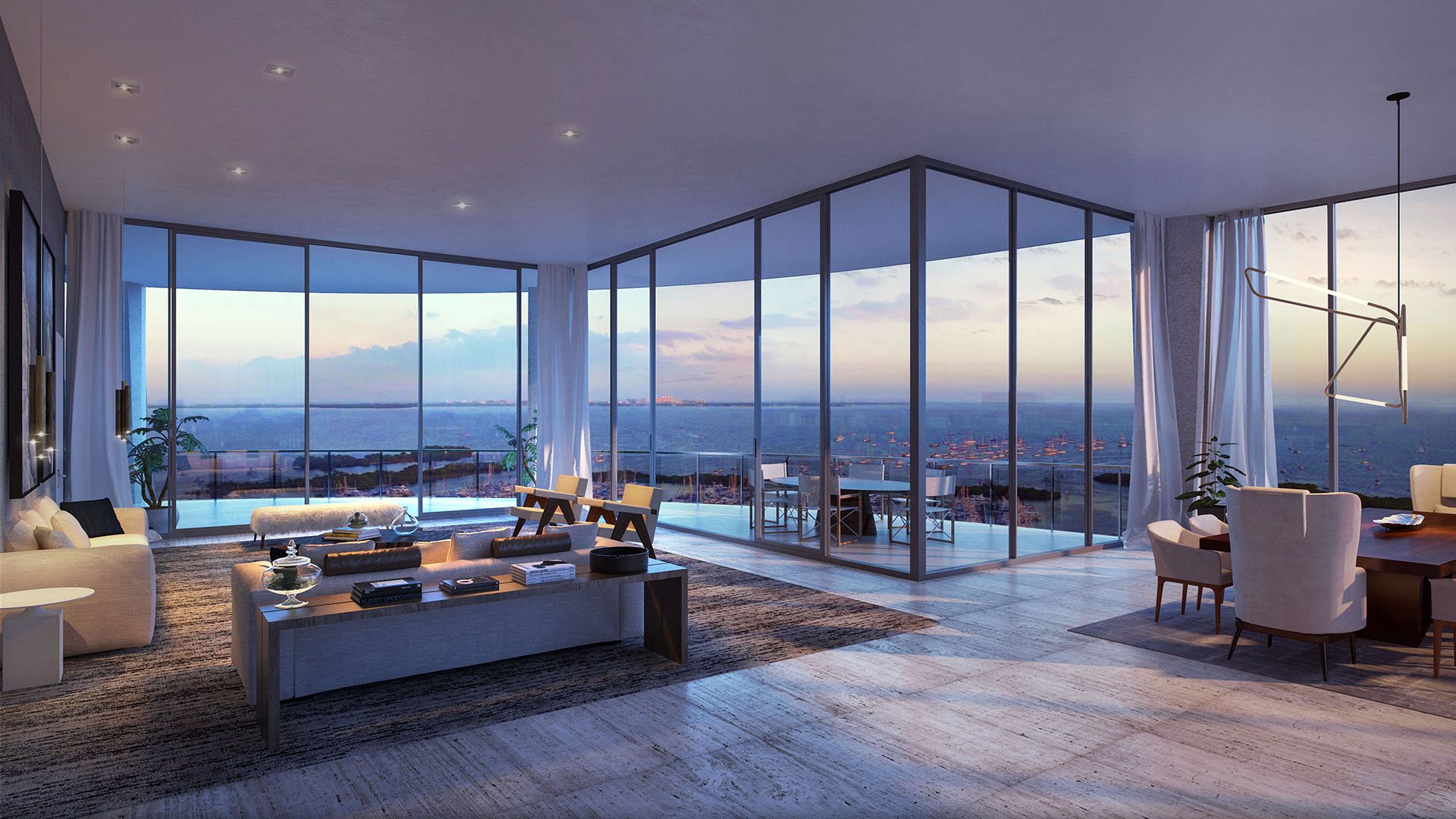
Waterfront settings can make an evening memorable, but the view should not eclipse practical performance. Operable doors, threshold conditions, floor finishes, climate control, and insect management all influence whether indoor and outdoor rooms function as one composed sequence.
Discreet entertaining depends on separation. Guests should reach the principal living spaces without passing through private bedrooms, household storage, or active service areas. Ideally, overnight accommodations remain calm while the social rooms are in use. Powder rooms should be intuitive to find yet visually removed from dining and food-preparation areas.
Arrival matters, too. Buyers should personally trace the journey from vehicle arrival to residence entry, noting access protocols, elevator transitions, guest waiting areas, deliveries, and the handling of multiple arrivals. Ask how outside chefs, florists, musicians, and rental vendors are admitted and supervised.
Acoustic privacy merits professional review, particularly when music, late dinners, or frequent gatherings are part of the plan. Door placement, glazing, hard surfaces, and proximity to neighboring residences can influence sound transmission. A beautiful room succeeds only when it supports hospitality without compromising the owner’s discretion or the comfort of others.
Before committing, request current floor plans, specifications, residence rules, renovation requirements, insurance obligations, and procedures governing vendors, deliveries, elevators, noise, terraces, and common spaces. Confirm every representation directly and in writing. Requirements may vary by residence and change over time.
For a major renovation, assemble the relevant advisers early. An architect can test furniture placement and circulation; a kitchen specialist can assess workflow; lighting and acoustic consultants can refine the atmosphere; and legal, insurance, tax, and property-management professionals can review ownership and operating considerations.
The strongest purchase decision unites aesthetics with repeatable performance. When a home can move effortlessly from a quiet breakfast to a formal dinner while preserving privacy and operational calm, entertaining capacity becomes an enduring quality rather than an occasional spectacle.
What should buyers prioritize first in an entertaining residence? Define the usual guest count, dining style, staffing needs, privacy expectations, and desired indoor-outdoor relationship.
Is a large great room enough for formal entertaining? No. Circulation, acoustics, lighting, service access, storage, and powder-room placement are equally important.
How should a dining area be measured? Test the intended table and occupied chairs at scale, then preserve clear paths for guests and service.
What makes a kitchen suitable for a private chef? Efficient preparation, cooking, plating, refrigeration, ventilation, storage, and cleanup zones should work in concert.
Why is a separate service route valuable? It can reduce congestion while keeping deliveries, cleanup, and staff movement discreet during a gathering.
How should buyers evaluate a terrace? Study usable dimensions, access, shelter, wind, sun, privacy, lighting, acoustics, and applicable rules.
Do building rules affect private events? Yes. Buyers should verify current requirements for guests, vendors, deliveries, music, elevators, and outdoor use.
What should second-home buyers consider? Focus on preparation, secure storage, property management, vendor access, and the ease of reopening the residence.
Can waterfront conditions influence entertaining? Yes. Exposure, thresholds, glazing, climate control, and outdoor comfort can shape the guest experience.
When should professional advisers become involved? Engage them before purchase when renovation, technical systems, ownership structure, or frequent catered events are contemplated.
For a tailored shortlist and next-step guidance, connect with MILLION.
If branded residences are on your mind — as a home or as an allocation — we would be glad to share what we are seeing, privately.
Begin a quiet conversation