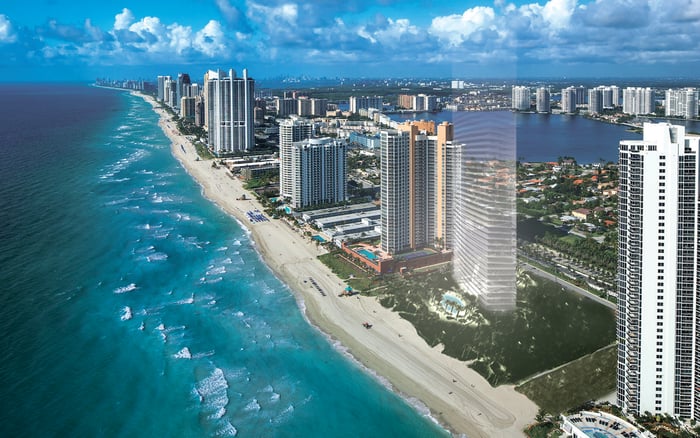
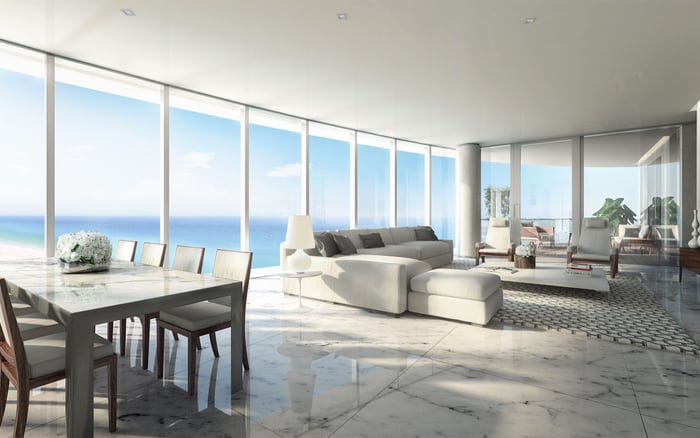
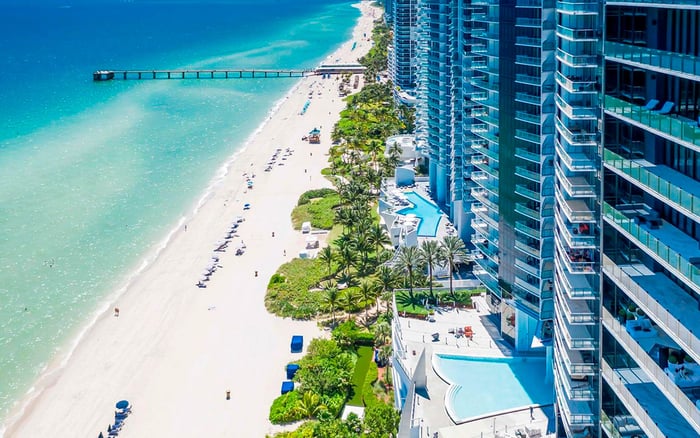
Jade Ocean and Muse Residences reveal two distinct expressions of service-led luxury ownership in Sunny Isles Beach, one hospitality-influenced and developer-led, the other boutique, private and design-driven.
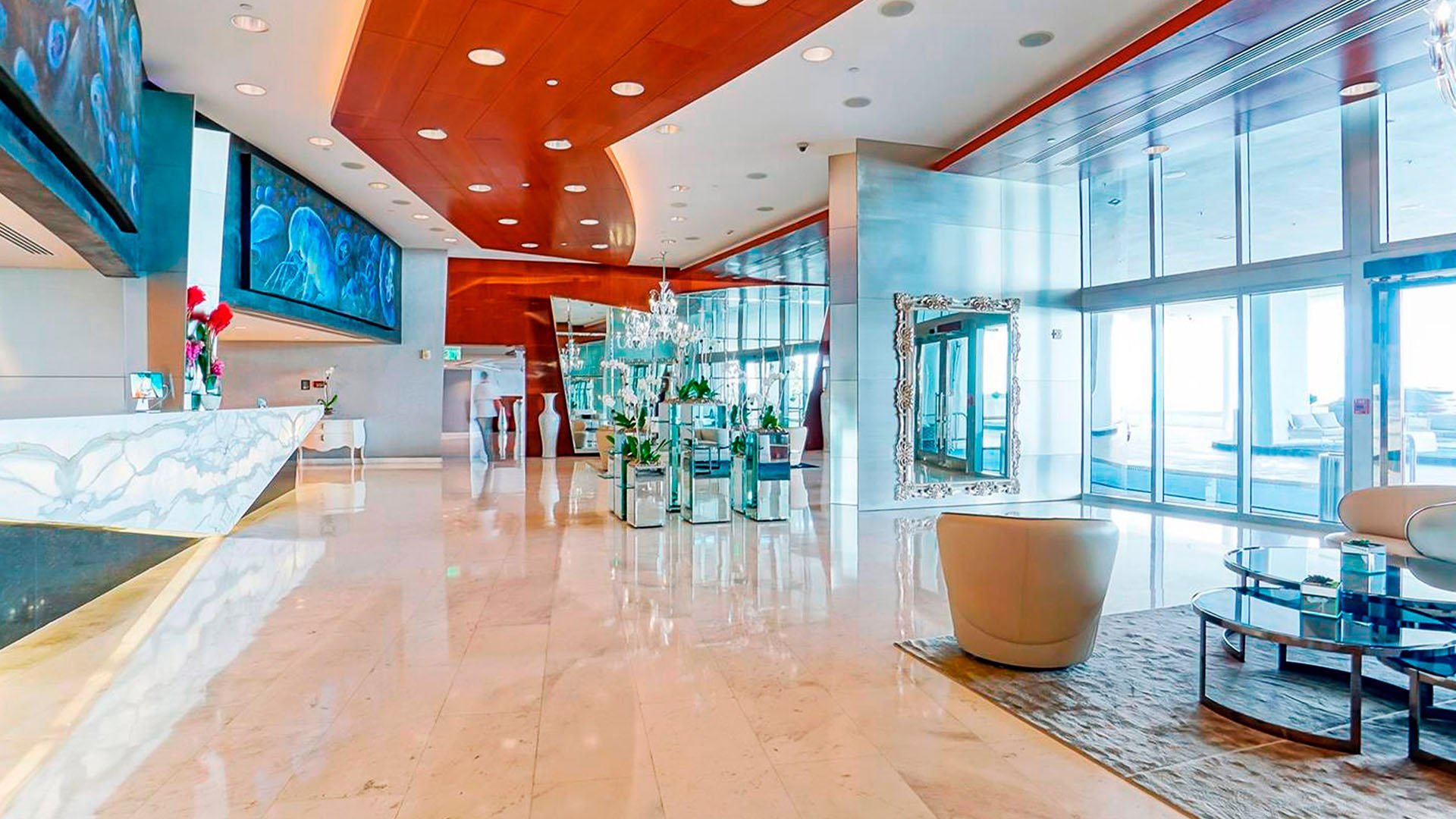
In Sunny Isles Beach, the meaning of an exceptional condominium is expanding. Ocean views and well-resolved floor plans remain fundamental, but they no longer define the entire ownership experience. Increasingly, distinction lies in how a property operates: how residents arrive, how requests are handled, how amenities support daily routines and how consistently a building expresses its identity.
That shift is especially clear at Jade Ocean Sunny Isles Beach and Muse Residences Sunny Isles Beach. Neither relies on an outside hotel or fashion label to create meaning. Instead, each shows how architecture, staffing, amenities and resident experience can form a recognizable residential brand.
For buyers comparing Branded Residences, this distinction matters. A name can establish expectations, but ownership is ultimately defined by operations. The most persuasive proposition is not branding applied as decoration, but a coherent system that extends beyond the lobby and into daily life.
Jade Ocean is an early expression of developer-led luxury branding in Sunny Isles Beach. Its identity emerges from the integration of architecture, amenities and service rather than an affiliation with an external hospitality marque. In this model, the developer’s reputation and operating vision effectively become the brand.
The result is an ownership proposition that extends beyond oceanfront square footage. Concierge and valet functions are not isolated conveniences. They belong to a broader, hospitality-influenced environment in which arrival, assistance and access are intended to feel like one continuous, managed experience.
This vertical integration can be compelling for an owner who values clarity. The building’s physical character and service culture are conceived as parts of the same idea. Rather than relying on a collection of amenities to create luxury independently, Jade Ocean relies on coordination. Its significance lies in demonstrating that a condominium can establish a branded sensibility through execution, without borrowing the identity of a global consumer label.
Muse offers a different interpretation. Positioned as a boutique, design-driven alternative, it places ultra-low residential density at the center of the ownership concept. The experience is conceived less as a large resort and more as a private club, with privacy and staff-mediated convenience shaping the atmosphere.
Integrated art gives Muse a distinct visual identity, while advanced residential technology adds another dimension. These elements are not presented as unrelated upgrades. Combined with service and low density, they create a cohesive proposition built around discretion, personalization and control.
That approach can resonate with buyers who want the benefits of managed condominium living without the social scale of a resort environment. Muse suggests that service need not feel theatrical to be luxurious. It can be quiet, responsive and embedded in the rhythms of the home. Here, lifestyle is expressed through reduced friction rather than conspicuous activity.
Jade Ocean and Muse arrive at branded service through different routes. Jade Ocean emphasizes a unified developer vision and a hospitality-influenced ownership experience. Muse focuses on boutique scale, art, technology and a private-club sensibility. One feels broad and orchestrated; the other, edited and intimate.
Their common ground is more consequential than their stylistic contrast. Both treat service as part of the residence itself. Staff interaction, privacy, arrival and amenity use become extensions of design. For an owner, the building is not merely a container for a private home. It is an operating environment that can either reinforce or dilute the promise of its architecture.
The wider Sunny Isles Beach landscape gives buyers other ways to assess this idea. Armani Casa Sunny Isles Beach represents the explicit use of a globally recognized design name, while Bentley Residences Sunny Isles brings another branded proposition into the local conversation. Viewed alongside Jade Ocean and Muse, these choices underscore a central point: buyers are selecting not only a residence, but also the identity and operating philosophy surrounding it.
A polished amenity list can signal ambition, but it cannot reveal how a building feels on an ordinary day. Buyers should look for consistency between the promise and the lived experience. Does arrival feel composed? Are concierge and valet services integrated into a clear operating culture? Does the level of privacy align with the building’s density and social character?
The comparison should also account for personal fit. An owner who prefers an active, hospitality-oriented atmosphere may interpret service differently from one seeking quiet, private-club discretion. Neither model is inherently superior. The better choice is the one whose routines, staffing style and degree of visibility correspond to the owner’s expectations.
Technology deserves similar scrutiny. At Muse, it is central to the residential concept, but its value depends on simplifying rather than complicating daily life. Art and design should likewise be considered enduring components of identity, not merely visual impressions during a tour.
Finally, buyers should separate qualitative appeal from financial conclusions. Current asking prices, association fees, transaction performance and operating costs require distinct, up-to-date review. Service can strengthen the ownership experience, but any judgment about value or liquidity should rest on relevant building financials and market data.
The evolution represented by Jade Ocean and Muse is subtle but consequential. Luxury is moving beyond a checklist of physical features toward a fuller assessment of identity, access and service continuity. Views and layouts remain essential, yet the daily choreography around them can determine whether a residence feels merely impressive or genuinely effortless.
For sophisticated buyers, operational character becomes a design consideration. Jade Ocean shows how a developer-led identity can produce a curated hospitality environment. Muse shows how low density, integrated art, technology and attentive service can create a more private expression. Both demonstrate that the strongest residential brands are experienced repeatedly, often in moments too small to appear on a floor plan.
What defines Jade Ocean’s branded approach? It integrates architecture, amenities and resident service under a single developer-led identity rather than an outside hotel or fashion label.
Is Jade Ocean a hotel-branded residence? No. Its brand proposition is rooted in the developer’s reputation, operating vision and hospitality-influenced residential experience.
Which services shape the Jade Ocean experience? Concierge and valet function as parts of a broader managed ownership environment rather than stand-alone conveniences.
What distinguishes Muse within Sunny Isles Beach? Muse combines boutique positioning, ultra-low residential density, integrated art, advanced technology and staff-mediated convenience.
Does Muse follow a resort model? Its service philosophy is closer to a private-club experience than a large resort environment.
Why does residential density matter? Lower density can support privacy and a more intimate atmosphere, both central to the Muse ownership concept.
How does technology contribute at Muse? Advanced residential technology supports a broader approach centered on convenience, control and cohesive living.
Are views and floor plans still important? Yes. The emerging distinction is that service, identity and operational experience now stand alongside those traditional priorities.
Can service quality indicate resale performance? Not by itself. Any conclusion about long-term value or liquidity requires current transaction data, building financials and market context.
What should a buyer compare before choosing? Compare service culture, privacy, density, technology and daily operations, then review current pricing, fees and financial information separately.
For a confidential assessment and a building-by-building shortlist, connect with MILLION.
If branded residences are on your mind — as a home or as an allocation — we would be glad to share what we are seeing, privately.
Begin a quiet conversation