A discreet buyer’s guide to evaluating South Florida luxury residences for daily life, not only winter-season appeal.
Seasonal glamour has always been easy to understand in South Florida. It is the terrace at sunset, the polished lobby in winter, the dinner reservation that becomes ritual, and the effortless sense that life has moved outdoors. Year-round living is more exacting. It asks whether the residence performs beautifully when the calendar is less theatrical: when humidity lingers, afternoon storms arrive quickly, service teams are stretched, and a home is no longer a backdrop but an operating system for daily life.
For the ultra-premium buyer, this distinction is not aesthetic. It is strategic. A residence that photographs beautifully in January may still require deeper scrutiny if it is expected to support a family, staff, pets, wardrobes, collections, wellness routines, remote work, and extended guest stays throughout the year. The modern South Florida buyer is increasingly less interested in seasonal sparkle alone and more focused on endurance, discretion, and livability.
That is why the most serious conversations now begin behind the walls, beneath the floors, and within the building’s management culture. Design still matters, but the new luxury is confidence.
South Florida’s setting is the source of its beauty, and also the reason a residence must be evaluated with uncommon care. Heat, humidity, heavy rain, salt air, wind exposure, and waterfront conditions can all influence how a home lives over time. These are not reasons to retreat from the market. They are reasons to buy with a sharper eye.
The year-round buyer should look beyond finishes and ask about air quality, ventilation, dehumidification, the building envelope, window systems, drainage logic, backup power planning, and maintenance protocols. In a full-time residence, the best luxury is often invisible. It is the closet that does not feel damp, the elevator that feels reliably managed, the garage that is logically protected, the terrace door that seals properly, and the staff that knows how to respond before a small issue becomes an inconvenience.
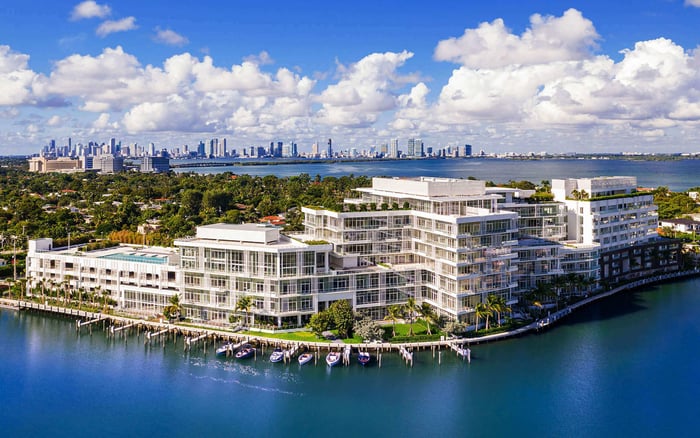
This is especially relevant for oceanfront living, where the romance of the view comes with a more intensive standard of care. Salt air, exterior exposure, balcony maintenance, and building upkeep deserve close attention. A project such as The Perigon Miami Beach speaks to a buyer profile that wants design presence, but the lasting decision still rests on how well a residence supports daily comfort in every month.
A seasonal home can be more theatrical. A year-round home must be more intelligent. The plan should allow life to expand and contract without friction, with quiet work areas, private guest zones, staff circulation where appropriate, proper storage, serviceable kitchens, laundry capacity, and spaces that can handle routines rather than simply host occasions.
Buyers should study how they will enter the home after errands, how groceries arrive, where luggage disappears, how pets move, how children or guests create noise, and whether the primary suite feels protected from the more social areas of the residence. Even in a condominium, the choreography of daily living matters.
In Brickell, the conversation often centers on proximity, vertical privacy, and the ability to balance city energy with residential calm. The Residences at 1428 Brickell sits naturally within that discussion because the full-time urban buyer is not only purchasing skyline views. That buyer is purchasing an address that must work Monday morning, hurricane season, school season, holiday season, and the quiet weeks when the city belongs mostly to locals.
In South Florida, service is not an amenity layer. It is part of the property’s architecture. A well-run building can make ownership feel serene; a poorly coordinated one can diminish even the most impressive residence. The year-round buyer should consider the culture of management, responsiveness, staff depth, maintenance routines, security discretion, valet flow, package handling, vendor access, and the way rules are enforced.
The question is not simply whether a building has a concierge, a pool, a spa, or a private dining room. The question is how those elements function when residents are actually living there in volume. Is the pool designed for daily use or only visual effect? Is the fitness center sufficient beyond peak winter weeks? Are common spaces maintained with consistency? Can the building accommodate the rhythms of residents who are present in August as well as February?
In Sunny Isles, where towers often appeal to global buyers and waterfront lifestyles, residences such as Bentley Residences Sunny Isles are part of a broader conversation about privacy, access, vertical living, and the expectation that branded or highly designed environments must also perform with discipline.
The old language of luxury leaned heavily on stone, glass, height, and pedigree. The newer language is more technical. It includes impact protection, water management, emergency planning, mechanical redundancy, durable exterior materials, and thoughtful maintenance. These features may not be as seductive as a marble bath, but they are central to the lived experience of ownership.
For buyers comparing new-construction with resale, the issue is not only age. It is philosophy. Some properties were conceived primarily as seasonal statements, while others feel more aligned with full-time living. The more discerning approach is to assess how each building anticipates weather, wear, staffing, utilities, and resident expectations over time.
The best homes do not remove the realities of South Florida. They are designed to meet them gracefully. This is the difference between glamour that depends on perfect conditions and luxury that remains composed when conditions change.
Year-round ownership also changes the emotional requirements of a home. Seasonal buyers may prioritize entertainment, proximity, and spectacle. Full-time buyers often become more protective of privacy, wellness, ease, and neighborhood continuity. They want restaurants, schools, clubs, marinas, parks, healthcare, and cultural life within a pattern that feels sustainable, not performative.
That is why Coconut Grove continues to matter for buyers who want a softer, more residential rhythm without surrendering sophistication. Four Seasons Residences Coconut Grove fits into a conversation about established neighborhood texture, greenery, and the desire for a daily life that feels less transient. Miami Beach, by contrast, may appeal to those who want cultural energy and coastal immediacy. Brickell offers density and convenience. Sunny Isles delivers height, water, and privacy. Each location can work, but only if it matches the buyer’s real life rather than an imagined vacation version of it.
This is where advisors earn their place. The right question is not simply, “What is the most beautiful residence?” It is, “Which residence will still feel calm, efficient, and appropriate after twelve consecutive months?”
A serious year-round review should include climate control, sound separation, storage, parking, guest logistics, staff pathways, pet practicality, service reliability, hurricane preparation, and the long-term maintenance culture of the building or estate. Buyers should also consider how often they will entertain, how long guests will stay, whether they will work from home, and whether the property supports both privacy and connection.
The most elegant residences make these matters feel effortless. They do not require residents to adapt too much. They provide an underlying intelligence that allows daily life to unfold with grace.
Seasonal glamour is still valuable. It is part of South Florida’s enduring appeal. But for buyers making the region a true home, glamour is only the opening scene. The deeper luxury is resilience, order, comfort, and quiet confidence.
What makes year-round living different from seasonal ownership? Year-round living tests daily comfort, maintenance, service response, privacy, and building operations in every season.
Why does humidity matter in a luxury residence? Humidity can affect comfort, storage, finishes, wardrobes, and the overall feeling of freshness inside the home.
Should buyers prioritize new-construction for full-time living? New-construction can be compelling, but buyers should compare building systems, management culture, and livability rather than age alone.
Is oceanfront living practical year-round? It can be, provided the property is maintained with discipline and the buyer understands exposure, upkeep, and service expectations.
What should Brickell buyers consider beyond views? Brickell buyers should evaluate privacy, parking flow, elevator experience, noise control, and how the residence supports daily routines.
How important is building staff for full-time residents? Staff quality is central because full-time living depends on consistent response, security, maintenance, and discreet problem solving.
Do full-time buyers need more storage than seasonal buyers? Usually, yes. Wardrobes, sports equipment, luggage, supplies, and guest needs all become more important in daily use.
Can a highly glamorous residence still work as a primary home? Yes, if the glamour is supported by practical planning, resilient systems, privacy, and disciplined operations.
Why does neighborhood rhythm matter? A year-round home must support weekday routines, wellness, dining, errands, guests, and quiet time, not only peak-season entertainment.
What is the best first step for a serious year-round buyer? Begin with lifestyle requirements, then evaluate residences for climate performance, service depth, privacy, and long-term ease.
If you'd like a private walkthrough and a curated shortlist, connect with MILLION.
If branded residences are on your mind — as a home or as an allocation — we would be glad to share what we are seeing, privately.
Begin a quiet conversation