A discreet buyer’s guide to the Downtown Miami lifestyle around Waldorf Astoria Residences, focused on hospitality, privacy, circulation, and daily rhythm rather than public-facing spectacle.
For many affluent buyers, hospitality-branded living is compelling for one reason above all: it promises order. Not excess, not spectacle, but a residence where service, arrival, amenities, and daily problem-solving feel composed. In Downtown Miami, that preference becomes especially nuanced. The neighborhood is energetic by nature, with business districts, cultural venues, waterfront promenades, restaurants, and transit corridors layered into a dense urban setting. The right buyer is not trying to avoid the city. The right buyer wants to experience it on more deliberate terms.
That is the central appeal of Waldorf Astoria Residences Downtown Miami for a purchaser who wants the polish of a hospitality name without building a lifestyle around heavy public traffic. The decision is less about choosing the loudest amenity package than understanding how a residence will feel on a Tuesday morning, after a late flight, before a private dinner, or during a high-profile weekend in Miami.
In this context, Downtown is not merely a skyline. It is a daily operating system. Buyers should examine how the building frames arrival, how private and shared spaces are separated, how amenity use is likely to feel across seasons, and whether the surrounding neighborhood supports both convenience and retreat.
The most aligned buyer is often someone who already understands luxury hotels but does not want to live inside the social theater of one. They may value a staffed environment, thoughtful maintenance, elevated common areas, and a clear sense of standards, yet prefer a residential mood over a resort-lobby atmosphere. That distinction matters.
Hospitality in a private residence should simplify the day. It should support security of routine, reduce friction, and create confidence when owners are away. A second-home buyer may be focused on lock-and-leave ease. A primary resident may care about the grace of repeated daily interactions. An international owner may prioritize consistency and communication. Each use case points to the same underlying issue: the brand is meaningful only if the lived experience feels disciplined.
For a Top Project buyer, the most important question is not whether the name is recognizable. It is whether the building’s culture supports the level of discretion the buyer expects. Downtown offers many forms of luxury, but not all of them produce the same rhythm.
Downtown Miami has matured into one of South Florida’s most complex residential choices. It offers immediate access to the bayfront, arts and entertainment, offices, dining, and connections to adjacent districts. Yet it also asks buyers to be precise. A great Downtown residence must balance connectivity with sanctuary.
This is where lifestyle mapping becomes essential. Buyers should think in routes: airport arrival, marina access, dinner in Brickell, a performance night, a school or office commute, a morning walk by the water, a weekend crossing to Miami Beach. The quality of the address is not just what surrounds it, but how gracefully it allows the owner to move through the city.
Nearby branded and design-led towers help illustrate the broader context. Aston Martin Residences Downtown Miami speaks to a design-conscious Downtown audience, while Casa Bella by B&B Italia Downtown Miami reflects the neighborhood’s appetite for interiors-driven residential identity. Waldorf’s appeal sits in a different emotional register: refined hospitality, recognizable service culture, and a more composed view of urban living.
The phrase “hospitality without heavy public traffic” is really a question of circulation. Buyers should look closely at how residents, guests, staff, service providers, deliveries, and amenity users are intended to move through a building. Even without relying on a checklist of unverified details, the evaluation can be sophisticated.
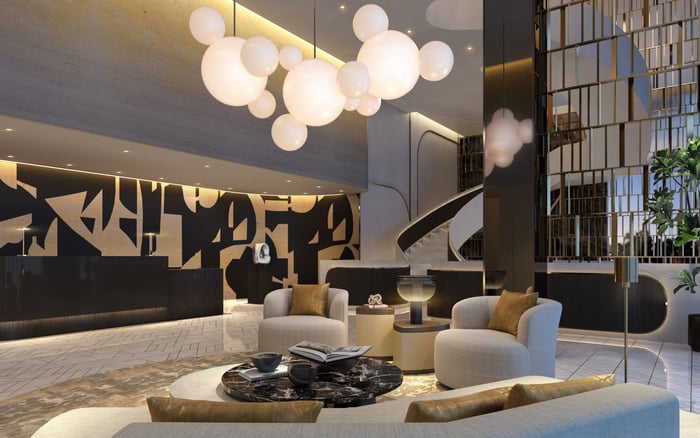
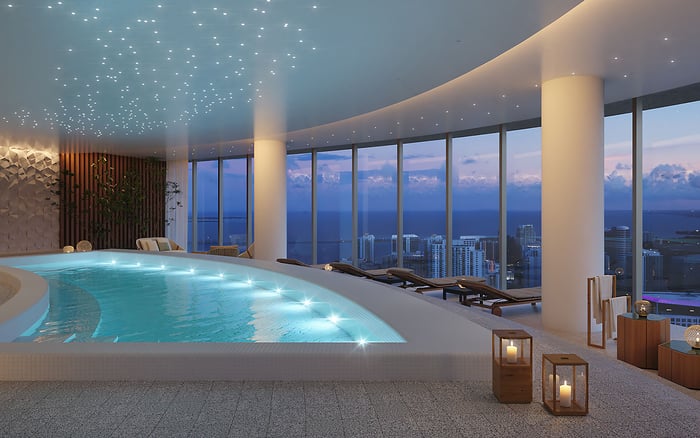
A discreet buyer will want to understand whether the experience feels residential first. Is the arrival sequence calm? Are amenity spaces conceived as extensions of home rather than performance venues? Does the building support privacy during peak social periods? Can an owner entertain quietly without feeling absorbed into a larger public scene?
These questions matter because Miami’s most desirable addresses often attract attention. The best buildings manage attention rather than amplify it. For Waldorf-minded buyers, the luxury is not simply being seen. It is being recognized when desired and left undisturbed when preferred.
One of Downtown’s advantages is its proximity to Brickell without requiring a full Brickell identity. For some buyers, Brickell’s restaurant density, office concentration, and financial energy are compelling, but its pace may feel too constant for home. Downtown can offer access while preserving a distinct atmosphere.
That comparison is especially relevant when considering towers such as Baccarat Residences Brickell or The Residences at 1428 Brickell. Both sit within a Brickell conversation shaped by status, vertical living, and urban convenience. A Downtown buyer may want similar metropolitan access, but with a different daily cadence and a stronger connection to the civic, cultural, and bayfront character of the city.
This is not a matter of better or lesser. It is a matter of temperament. Brickell is ideal for buyers who want to be directly inside Miami’s business and dining pulse. Downtown is compelling for buyers who want that pulse nearby, while anchoring themselves in a more layered urban setting.
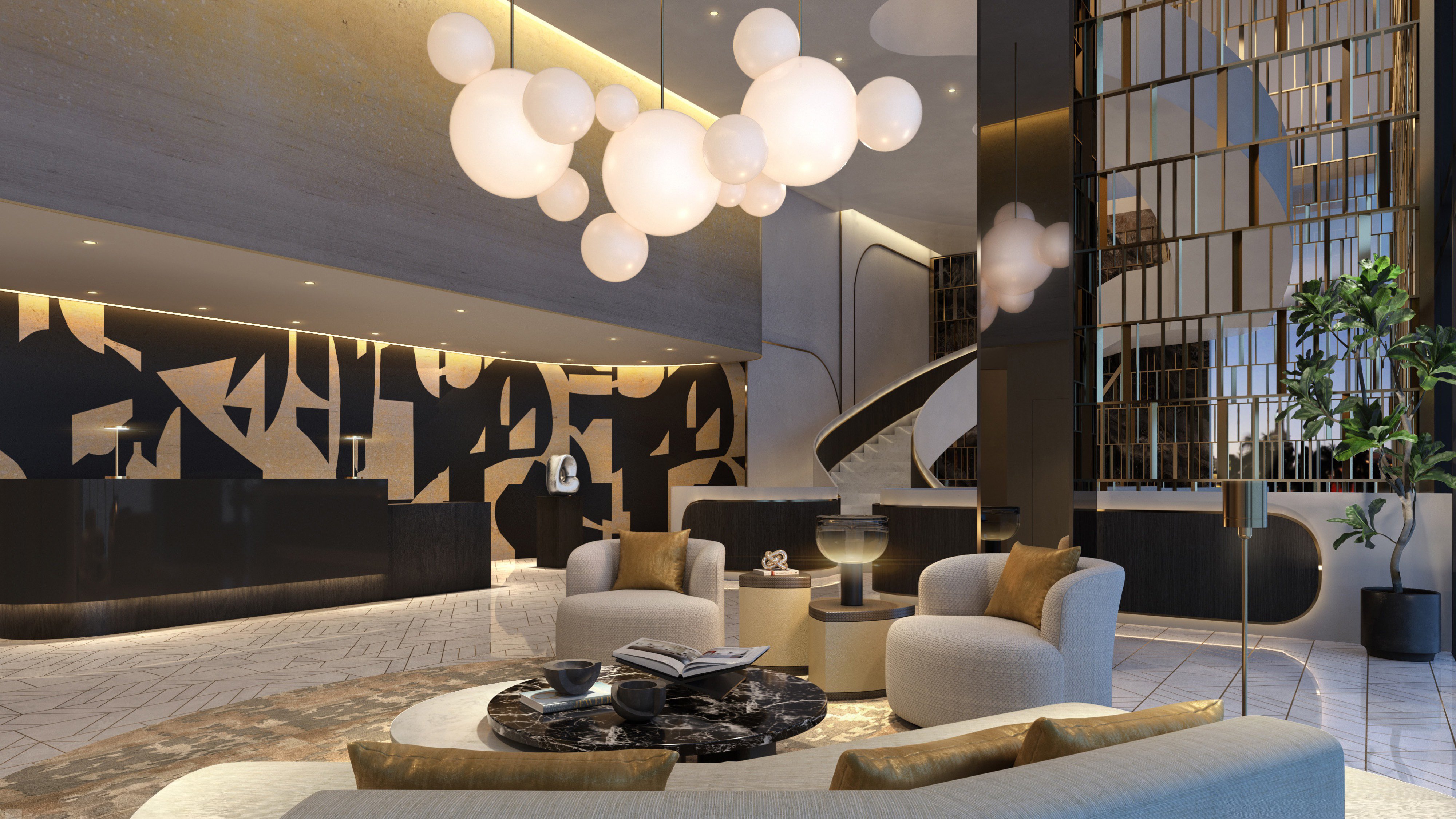
New-construction buyers should be especially disciplined. Renderings can communicate mood, but the real value lies in the questions behind the image. How will the residence live over time? How does the floor plan separate entertaining from private space? What is the likely relationship between views, sun exposure, and interior calm? How will the building feel during major Miami events?
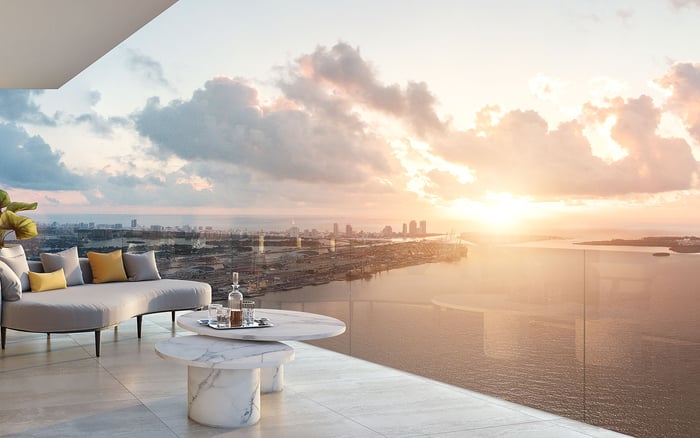
Waterview expectations also deserve careful thought. In Downtown Miami, water, skyline, port, and city perspectives can vary dramatically by orientation and height. Buyers should think beyond the phrase “view” and consider when they will actually use the residence. Morning light, evening reflections, privacy from neighboring towers, and the emotional quality of the outlook all matter.
The most intentional buyers will also compare service philosophy. A branded residence should not simply borrow prestige from a hotel name. It should translate that name into residential behavior: anticipation, consistency, and restraint.
The strongest case for Waldorf Astoria Residences Downtown Miami is not that it belongs to one category. It is that it may serve buyers who want multiple Miami lives held in balance: cultural access, bay proximity, business convenience, polished service, and a private home base.
That balance is increasingly rare. Some buyers want beachfront resort energy. Others want gated estate privacy. Others want the social charge of Brickell or the design intimacy of Coconut Grove. The Waldorf-oriented Downtown buyer is different. They want the city, but edited. They want service, but not intrusion. They want hospitality, but not a lobby that becomes the destination.
For this audience, the best purchase is one that feels calm before it feels impressive. It is a residence that makes Miami easier to inhabit, not louder to consume.
Who is the ideal buyer for this Downtown Miami lifestyle? The ideal buyer values service, privacy, and city access, but does not want a residence dominated by public-facing energy.
Why consider Waldorf Astoria Residences Downtown Miami? It suits buyers drawn to hospitality-branded living who want a more intentional Downtown residential base.
Is Downtown Miami different from Brickell for daily living? Yes. Brickell often feels more business and dining driven, while Downtown can offer a broader mix of civic, cultural, waterfront, and urban routines.
What does “hospitality without heavy public traffic” mean? It means prioritizing service, arrival, amenity design, and privacy in a way that feels residential rather than constantly public.
Should buyers focus first on amenities or floor plans? Floor plans should come first. Amenities matter, but the residence itself determines daily comfort, privacy, and long-term livability.
How important are views in Downtown Miami? Views can be highly important, but buyers should evaluate orientation, light, privacy, and how the outlook feels at different times of day.
Is this a good fit for second-home owners? It can be, especially for buyers who want a lock-and-leave urban residence supported by a polished service environment.
How should buyers compare Downtown towers? Compare arrival, privacy, amenity culture, residence layouts, neighborhood rhythm, and how each building supports your actual Miami routine.
Does a branded residence always mean a better lifestyle? Not automatically. The brand must translate into residential consistency, discretion, and a service culture that fits the owner.
What is the most important question before purchasing? Ask whether the building will make your Miami life calmer, more efficient, and more enjoyable without adding unnecessary visibility.
For a confidential assessment and a building-by-building shortlist, connect with MILLION.
If branded residences are on your mind — as a home or as an allocation — we would be glad to share what we are seeing, privately.
Begin a quiet conversation