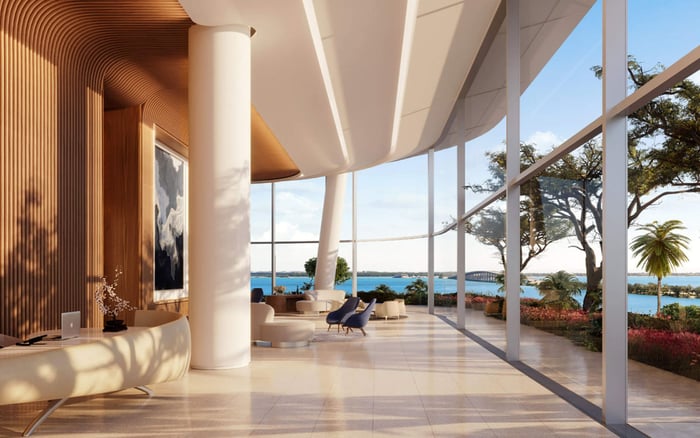
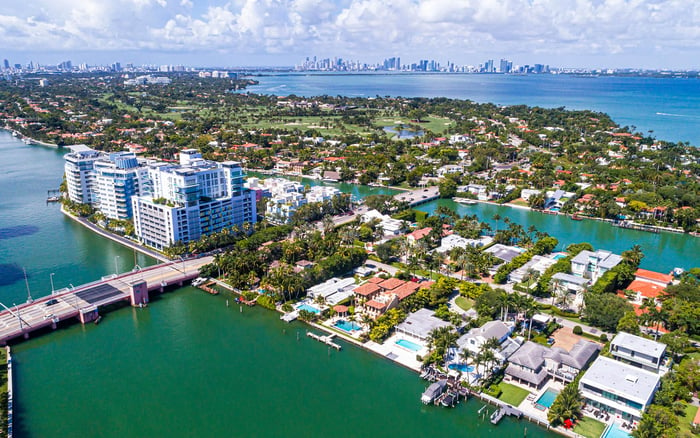
A practical framework for buyers weighing a Wynwood residence against the privacy, calm, and coastal access they expect from a South Florida luxury home.

For Westchester buyers, choosing Wynwood is less about choosing between city and beach than determining how each should fit into daily life. A buyer may want an energetic urban base while preserving quiet mornings, discreet arrivals, and unhurried coastal time. Those priorities can coexist-but only when they are defined before touring begins.
Start by identifying the moments that matter most: leaving for work, returning after dinner, hosting guests, exercising, working from home, and setting aside beach days. This turns a broad lifestyle question into a precise residential brief. It also keeps design appeal from eclipsing practical considerations such as exposure, circulation, access, and the transition from street to residence.
Convenience should be measured by recurring routines, not a general impression of centrality. Identify the destinations that shape an ordinary week, then consider the entire journey to each one-including parking, building entry, elevator use, and the final return home.
A Wynwood residence may suit buyers who value an urban home base, but the building and unit must still deliver privacy. When reviewing Frida Kahlo Wynwood Residences, use the visit to test the complete sequence from arrival to front door rather than judging the residence in isolation.
Apply the same discipline to nearby alternatives. Kempinski Residences Miami Design District can serve as a Design District comparison for buyers assessing how strongly neighborhood atmosphere shapes their definition of convenience.
Beach privacy and residential privacy are related, but they are not identical. A buyer can preserve a discreet home environment in an urban setting while planning coastal time separately. The key is to assess privacy in layers: vehicle arrival, lobby passage, elevator circulation, residence entry, window orientation, terrace exposure, and sound within the home.
During a tour, pause at each threshold. Consider whether guests and service providers can be received comfortably, whether shared spaces feel exposed, and whether the residence becomes a convincing retreat once the door closes. Request written details on access protocols, staffing, parking procedures, and any policies that may affect the desired level of discretion.
For a coastal benchmark, tour The Perigon Miami Beach without assuming that a Miami Beach address automatically resolves every privacy concern. Apply the same threshold test to both properties.
Create one schedule for a typical working week and another for a leisure-led week. The first should include commutes, school or family obligations, dining, appointments, and time at home. The second should account for beach visits, entertaining, wellness, and spontaneous plans.
Then score each residence against both scenarios. A Wynwood option may be compelling during the working week yet require more planning for coastal rituals. A beach residence may reverse that equation. Five Park Miami Beach offers another comparison point for testing whether proximity to a preferred setting outweighs the appeal of an urban base.
This exercise is especially useful for second-home buyers, who might otherwise overvalue vacation patterns and underestimate ordinary logistics. It also helps primary residents avoid shaping every decision around weekends.
A single polished appointment rarely reveals enough. Revisit the immediate setting at contrasting hours and, where possible, approach by the routes you would actually use. Inside the residence, spend quiet time near windows, bedrooms, terraces, and entry points. Note what can be observed directly, then request documentation for anything that cannot.
Bring a concise checklist covering view exposure, light control, acoustics, parking, guest arrival, deliveries, pet routines, storage, and building rules. Do not assume that new finishes guarantee calm or that a quieter presentation guarantees privacy. Test each claim against plans, specifications, governing documents, and the physical experience of the unit.
As a business-district counterpoint, 2200 Brickell can help buyers distinguish Brickell’s appeal from the more creative urban identity they may seek in Wynwood. The objective is not to crown one area, but to sharpen the brief.
First, choose the lifestyle pattern. Next, choose the neighborhood. Then select the building, line, and individual residence. Reversing that order can lead buyers to rationalize a visually impressive home that does not support their actual routines.
The most durable principle is simple: protect the nonnegotiables and remain flexible on preferences. If city convenience is a daily priority and beach privacy an occasional one, Wynwood may deserve precedence alongside a deliberate coastal plan. If the beach defines most mornings, a coastal home with planned city access may be the more coherent choice.
Can a Wynwood residence still feel private? Yes, if the specific building and residence meet your standards for arrival, circulation, exposure, acoustics, and in-home retreat.
Should beach access or weekday convenience come first? Prioritize the pattern you repeat most often, then create a realistic plan for the secondary priority.
How should Westchester buyers begin the search? Translate current habits into a written South Florida brief covering work, family, entertaining, wellness, and coastal time.
Is one property tour enough? No. Visits at contrasting times can reveal differences in arrival, surroundings, light, activity, and the overall sense of retreat.
What should buyers verify about privacy? Review access procedures, parking, elevator circulation, guest handling, residence exposure, building rules, and relevant documents.
How can buyers compare urban and beach residences fairly? Use the same checklist, tour format, weekly scenarios, and decision criteria for every property under consideration.
Does a higher floor always provide greater privacy? Not necessarily. Privacy also depends on orientation, neighboring sightlines, circulation, glazing, and interior planning.
What is the best way to evaluate noise? Spend quiet time in the residence at contrasting hours and confirm construction details through available project documentation.
Should buyers consider owning two South Florida residences? Only after assessing carrying costs, usage, management, and whether one well-chosen home can support both priorities.
What should happen before an offer is made? Recheck the residence against nonnegotiables, review relevant documents with qualified advisers, and confirm that the weekly routine works.
For a tailored shortlist and next-step guidance, connect with MILLION.
If branded residences are on your mind — as a home or as an allocation — we would be glad to share what we are seeing, privately.
Begin a quiet conversation