In South Florida, privacy is as much a landscape problem as it is an architectural one. This editorial breaks down refined, high-performing strategies that preserve light and views while controlling sightlines, noise, and access using layered planting, sculpted evergreens, defensive landscaping, berms, and discreet hardscape.
In South Florida, privacy rarely comes from a single move. It’s the combined effect of distance, elevation, foliage density, and the way a property is approached. The strongest landscapes treat privacy as visual choreography: what’s revealed, what’s softened, and what’s fully concealed.
For luxury buyers, the goal is typically not to build a fortress. It’s to create discretion while keeping the home luminous, breezy, and open to the parts of the view that matter. That’s why the most elegant solutions don’t depend on one hedge pushed to an extreme height. Instead, they layer plant forms, mix textures, and apply selective screening that protects key sightlines.
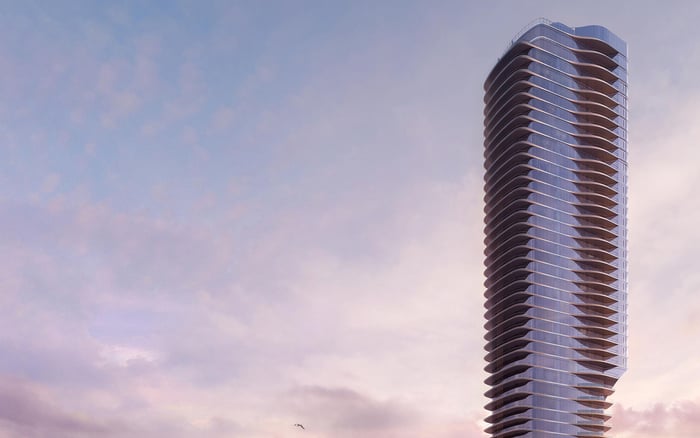
In vertical living, the same principles apply-translated to terraces and amenity decks. A deep planter with a clumping screen can define outdoor rooms as effectively as a wall. In Brickell, for example, terrace living at 2200 Brickell naturally calls for a more tailored approach: framing city and bay views while preventing direct lines of sight from adjacent outdoor spaces.
Before choosing plants, identify exactly where privacy is being lost: the street, a neighboring second-story window, a side-yard setback, or the water-where passing boaters can see into outdoor entertaining areas. Planting uniformly along the perimeter often sacrifices desirable views while leaving the most exposed angles underprotected.
A more refined approach is to map sightlines at both standing and seated eye level, then place screening precisely where it intercepts the view. This is where strategic “pods” of planting outperform continuous hedges: a cluster at the corner of a pool terrace can protect the entire outdoor room without touching the view corridor beyond.
Coastal neighborhoods and oceanfront buildings add another layer: glare and wind. Screening that’s too thin can read as transparent in motion, while overly rigid solutions can feel like a barricade. In Miami Beach, a controlled balance of architecture and planting can make privacy feel effortless-a sensibility that aligns with the clean-lined, low-density character buyers associate with 57 Ocean Miami Beach.
A layered privacy screen-built from trees, shrubs, and groundcovers-blocks sightlines more effectively than a single hedge because it interrupts views at multiple heights and distances. Think of it as depth. Even if one layer thins slightly, the others maintain coverage.
A polished South Florida composition often looks like this:
A tall, airy canopy element to provide presence without heaviness.
A mid-layer evergreen shrub mass to serve as the primary visual block.
A low layer of dense, textural planting that prevents “see-under” transparency.
Areca palm is a classic choice for this approach, commonly used for Florida privacy screens and typically reaching about 15 to 20 feet, forming a dense screen when planted in multiples. It reads relaxed rather than rigid, especially when paired with a clipped broadleaf hedge beneath.
For a more urbane, tailored look, Podocarpus can be trained into a refined, formal evergreen hedge and maintained as a tall screen. It offers a more architectural texture than many tropical options, making it a strong fit for contemporary homes and minimalist hardscape.
Privacy that fades seasonally can make even a well-designed property feel exposed. Evergreens are preferred for screening because they hold foliage year-round, avoiding the “see-through” gaps that can occur with deciduous planting.
In South Florida, broadleaf evergreen hedges are often the backbone of a privacy plan. Clusia is widely used as a clipped hedge because it can form a dense, opaque wall of green when properly maintained. Viburnum is another common option, valued for quick growth and its ability to become a thick evergreen screen with regular pruning.
When the intent is a more naturalistic estate feel, native-leaning choices such as sea grape and wax myrtle can create layered, coastal softness while still screening effectively. Sea grape can be grown as a dense screen or hedge and reads especially appropriate near waterfront conditions. Wax myrtle works beautifully in hedgerows and mixed screens when you want privacy that doesn’t look overly manicured.
On elevated terraces and amenity decks, evergreen screening can be handled like outdoor interior design. Consider how an owner wants to host: a conversational seating area needs a different level of visual separation than a sun lounge. In Sunny Isles, the vertical lifestyle at Bentley Residences Sunny Isles underscores why outdoor rooms benefit from planting that holds its structure year-round.
Mature plantings take time. If you want privacy now, use landscape geometry.
Berms, or raised planting areas, increase effective screening height without relying solely on taller plants. They lift planting into the sightline faster, which is particularly useful along streets, between closely spaced properties, or beside a pool deck where seated eye level is the concern.
Hardscape elements-such as screens, pergolas, and fences-paired with plants can deliver privacy faster than plants alone while keeping the result softened and garden-forward. The most luxurious versions are never just a fence. They read as a sequence: a wall that defines the edge, a trellis plane that supports green, and layered planting that makes the whole composition feel inevitable.
In West Palm Beach, where outdoor living is part of the daily routine, this hybrid approach complements the terrace culture and curated amenity environments seen around Alba West Palm Beach. The goal is separation without sacrificing airflow-or creating a dark, heavy edge condition.
Bamboo can be an exceptional screening tool when chosen and managed correctly. Clumping bamboo is recommended over running bamboo for privacy because it stays within a tighter footprint while still producing a dense, tall screen.
In a luxury context, the appeal is both acoustic and visual softness: leaves move, light filters, and the overall effect can feel like a private resort. The risk is selecting a type that spreads aggressively or placing it where maintenance access is limited. If bamboo is part of the palette, treat it like a living wall that requires boundaries, irrigation planning, and periodic thinning to stay tailored.
South Florida’s best privacy landscapes do double duty. Defensive landscaping uses thorny or spiky plants as natural barriers that can discourage trespassing when placed under windows or along fences and entry points.
The key is restraint. Use defensive planting where it belongs: vulnerable side yards, beneath low windows, and gaps between hardscape elements. Avoid turning the primary garden into a defensive statement.
Bougainvillea is commonly used for defensive landscaping because it can form a dense, thorny barrier while also providing ornamental color. Trained along a fence or trellis, it reads like classic Mediterranean glamour while creating a formidable edge. Firethorn is also used as a security-minded plant due to its sharp thorns and dense habit, but it should be placed carefully-away from high-traffic paths where guests might brush against it.
The most discreet properties don’t announce security. They choreograph it.
Visual privacy is only half the equation. Outdoor entertaining areas can feel exposed when conversation carries across property lines or when street noise cuts into the calm.
Water features, such as fountains, can improve sound privacy by creating masking noise that reduces the intelligibility of nearby conversations and neighborhood sounds. The effect is psychological as much as technical: a steady, low-frequency water tone makes a space feel enclosed and composed.
Pair water with planting. Dense, layered greenery helps diffuse and soften noise, while hard surfaces reflect it. If you’re renovating an outdoor room, consider replacing a large, flat paving field with a composition that includes planted zones, textured surfaces, and a water note that becomes the space’s soundtrack.
Luxury privacy landscapes aren’t “install and forget.” Their visual payoff depends on disciplined care: pruning schedules, irrigation tuning, and occasional replacement planting to keep density consistent.
Hedge installation is often priced around $10 to $45 per linear foot, depending on plant type, size, and complexity. Professional bush and hedge trimming commonly ranges roughly $150 to $850 depending on the size and scope of the job. In practice, high-end properties may run above broad national ranges depending on access constraints, specialty pruning, and the level of finish expected-but these ranges are useful for calibrating a baseline.
From a resale perspective, curated landscaping is consistently associated with stronger outcomes. While the impact varies by market and scope, buyers respond to outdoor spaces that feel complete, private, and immediately usable. Privacy planting isn’t simply functional; it’s a lifestyle signal.
A well-screened property should feel open, not claustrophobic. Before you commit to a plan, pressure-test it with these questions:
Does the landscape block the specific sightlines that matter, without erasing the view?
Is the screening evergreen, so it reads finished all year?
Is there depth, or is it a single thin line that will reveal gaps over time?
Are hardscape elements softened with planting, so privacy feels designed, not imposed?
Do security-minded plantings sit in the right places, discreetly, without dominating?
When the answers are yes, the result is the ultimate form of luxury: the freedom to live expansively without feeling observed.
What is the most effective approach for privacy without blocking light? Use a layered screen with multiple heights so you gain opacity without a solid wall.
Are evergreens really necessary in South Florida? For reliable year-round coverage, yes; evergreen foliage prevents seasonal gaps.
Which plants are commonly used for dense Florida privacy hedges? Clusia, Podocarpus, and viburnum are frequently used for thick, maintainable screens.
How tall can an areca palm privacy screen get? Areca palms typically reach about 15 to 20 feet and screen best when planted in groups.
Is bamboo a good privacy choice for luxury homes? It can be, but clumping bamboo is preferred so the footprint stays controlled.
What is a berm and why does it help with privacy? A berm is a raised planting area that increases screening height faster at eye level.
How can landscaping improve sound privacy outdoors? A fountain or similar water feature can mask voices and neighborhood noise.
What is defensive landscaping in a residential setting? It places thorny or spiky plants strategically to discourage access at vulnerable points.
Can defensive plants still look elegant? Yes; bougainvillea can be trained as a beautiful barrier while remaining difficult to cross.
Do privacy landscapes help resale appeal? Well-designed landscaping often improves perceived value and can help a home feel move-in ready.
For a tailored shortlist and next-step guidance, connect with MILLION Luxury.
If branded residences are on your mind — as a home or as an allocation — we would be glad to share what we are seeing, privately.
Begin a quiet conversation