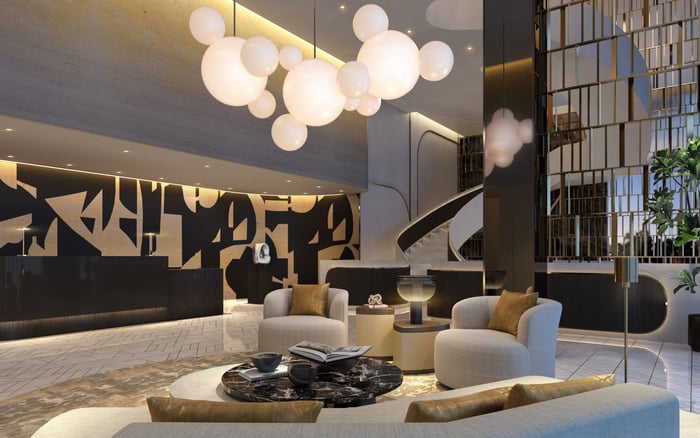
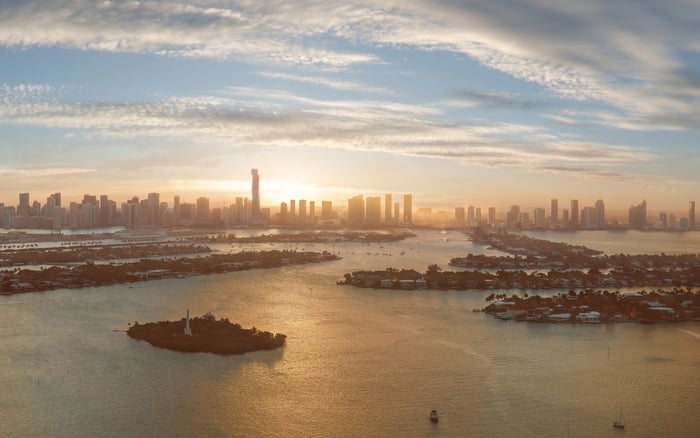
For globally mobile buyers, the better residence depends on whether travel is anchored by Miami’s business ecosystem or Fort Lauderdale’s resort and coastal rhythm. Waldorf Astoria Residences Downtown Miami is the stronger fit for MIA-driven, Downtown and Brickell-oriented international movement, while The Ritz-Carlton Residences® Fort Lauderdale may better suit buyers whose mobility is centered on beach, yachting, and FLL-oriented routines.
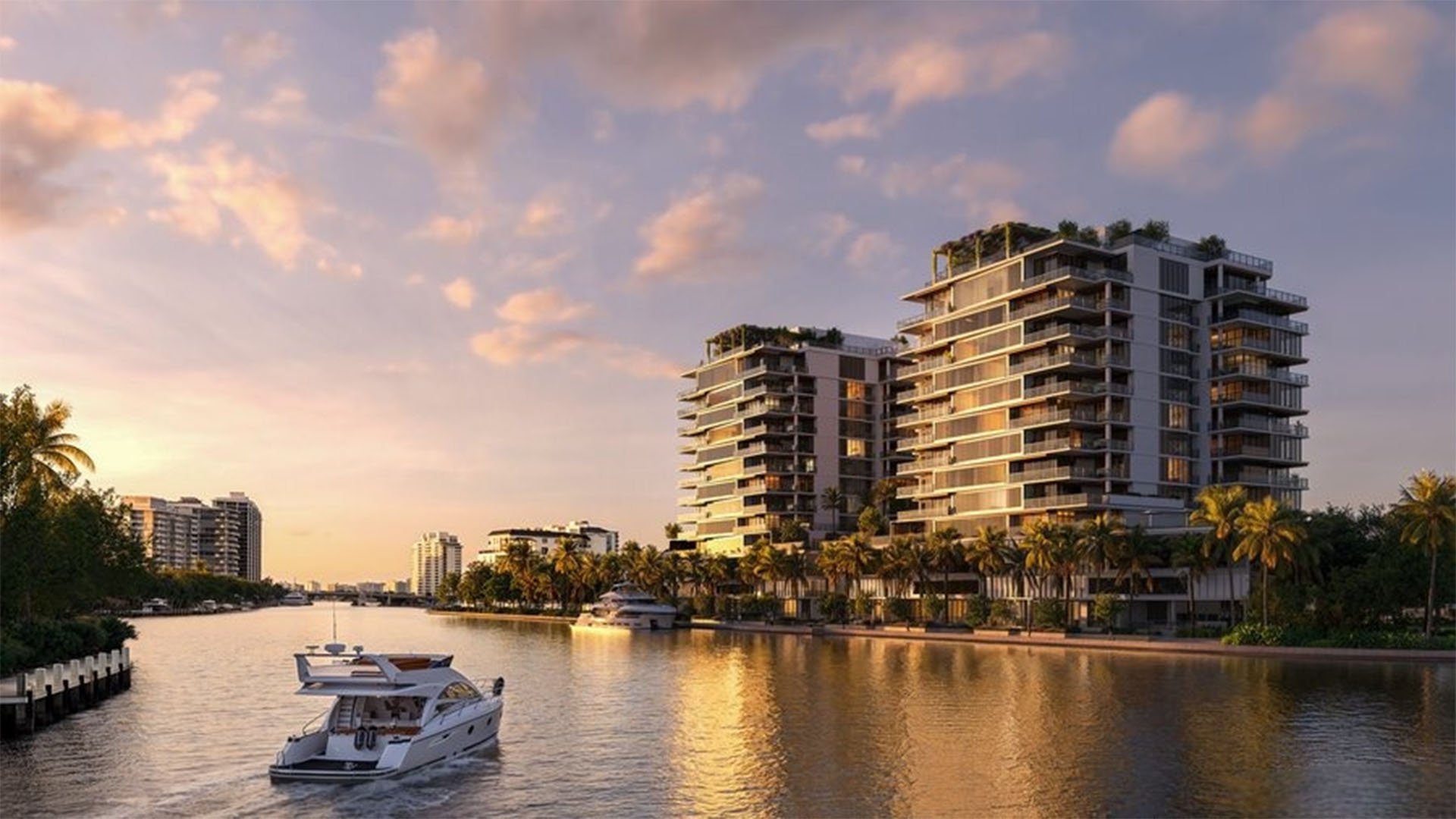
For a buyer who crosses borders often, a South Florida residence is not simply a retreat. It is a private base of operations: a place to arrive after overnight flights, a secure holding point for wardrobes and documents, and often a quiet extension of the office. That reality changes the comparison between Waldorf Astoria Residences Downtown Miami and The Ritz-Carlton Residences® Fort Lauderdale.
The decision is not only about brand preference. It is about how each building aligns with the buyer’s recurring travel map. If international mobility is tied to Miami’s global business ecosystem, Downtown meetings, Brickell finance, and long-haul commercial routes, Waldorf Astoria Residences Downtown Miami has the clearer strategic case. If the owner’s South Florida life is primarily shaped by the beach, yachting, leisure, and Fort Lauderdale airport-oriented routines, the Ritz-Carlton Fort Lauderdale proposition may feel more natural.
This is where luxury becomes operational. The right building should make departures easier, returns calmer, and remote ownership less exposed to friction.
Waldorf Astoria Residences Downtown Miami is best understood as the more urban, business-hub-oriented choice. It places the buyer in the Downtown context, with nearby Brickell activity central to the appeal. For owners who view Miami as a hemispheric business base, that matters more than a beach-facing mood.
The residence is framed as a luxury branded residential property in Downtown, and its strongest buyer profile is the internationally mobile owner whose travel patterns depend on Miami International Airport and long-haul commercial routes. That does not mean every traveler should choose it. It means the fit is strongest when the buyer’s calendar is structured around global meetings, Miami-based professional activity, and rapid re-entry into the city’s commercial core.
In practical terms, Waldorf Astoria Residences Downtown Miami supports the buyer who treats a South Florida home as part residence, part global office, and part travel base. A secure, serviced, lock-and-leave environment becomes a form of time management. The value is not only in the arrival experience, but in what the owner does not have to worry about while abroad.
The Ritz-Carlton Residences® Fort Lauderdale belongs in a different lifestyle frame. The comparison is strongest when Fort Lauderdale is not being forced to compete with Downtown Miami on business connectivity. Its logic is resort-beach oriented, and that may be exactly what certain global buyers want.
For owners whose South Florida rhythm is based around the beach, yachting, coastal leisure, or Fort Lauderdale airport convenience, The Ritz-Carlton Residences® Fort Lauderdale can feel more aligned. The buyer is not asking for a Downtown command center. They are asking for a residence that supports arrival into a softer, more recreational version of South Florida.
That distinction is important because frequent international travel does not always mean business travel. A buyer flying in from abroad to board a yacht, spend extended holiday periods by the water, or maintain a lower-intensity second home may not need the same urban platform that a Miami business traveler requires. In that scenario, Fort Lauderdale becomes shorthand for a different kind of mobility: less boardroom, more marina, sand, and personal restoration.
For both buildings, the essential question is not only where the residence is located. It is how well the building works when the owner is absent.
Frequent international travelers should scrutinize lock-and-leave functionality, concierge and logistics support, resilience, and security. These are not secondary conveniences. They are the infrastructure of remote ownership. A beautiful residence that becomes complicated during absences is not truly low-maintenance for a global buyer.
The best building for this profile should support low-friction returns after international travel. That can mean an arrival sequence that feels composed, a staff culture that understands discretion, and operating standards that reduce the number of decisions an owner must make from another time zone. It also means the residence should function well when the owner is not physically present, which is especially relevant for buyers who are abroad for long stretches.
Waldorf Astoria’s case is particularly compelling for buyers whose absences and returns are tied to Downtown and Brickell business cycles. Ritz-Carlton Fort Lauderdale’s case is more compelling when the owner’s returns are tied to waterfront leisure and Fort Lauderdale-based convenience.
One of the defining considerations for Waldorf Astoria Residences Downtown Miami is development-stage timing. It is a future-oriented choice, and that can be attractive to buyers who want to secure a position in a globally connected Downtown project while accepting the realities of pre-construction.
That acceptance should be deliberate. Pre-construction can offer the possibility of participating in a project before delivery, but it also requires comfort with timing, execution risk, and the evolving nature of any development-stage purchase. For some buyers, this is part of the appeal. They are making an investment in a future Miami address that aligns with the city’s global trajectory. For others, especially those who need immediate certainty of use, that same timeline may be a drawback.
The buyer who travels constantly should ask a simple question: do I need this residence to solve my mobility needs now, or am I positioning for a future base? Waldorf Astoria is stronger when the answer is future positioning around Miami’s international business orbit. Ritz-Carlton Fort Lauderdale may be easier to justify when the buyer’s immediate lifestyle priority is coastal use rather than Downtown integration.
The Waldorf Astoria buyer is likely to see Miami as more than a seasonal destination. This buyer may spend significant time abroad but still needs a South Florida anchor connected to commercial life, private meetings, and global travel routes. They may arrive for compressed stays, move quickly between appointments, and require a residence that feels efficient rather than escapist.
For that person, Downtown is not a compromise. It is the point. Proximity to the city’s business energy, with Brickell close by, reinforces the home’s purpose as a working residence. The brand component also matters, not as decoration, but as shorthand for service expectations and operational polish.
This is the buyer for whom Waldorf Astoria Residences Downtown Miami is the more compelling platform. It supports a life in motion, especially when that motion is tied to Miami International Airport, global business, and the need to move fluidly between private residence and professional obligation.
The Ritz-Carlton Fort Lauderdale buyer is different. This buyer may still be international, sophisticated, and highly mobile, but the use case is less about Miami’s business ecosystem and more about resort-caliber living on the Broward coast.
If the owner’s calendar revolves around beach time, boating, visiting family, or a calmer coastal routine, a Fort Lauderdale orientation may be the better match. The residence becomes a refined landing point rather than an urban command post. That is not a lesser choice. It is simply a different definition of convenience.
The key is to avoid buying the wrong version of prestige. A globally recognized brand can be powerful in either market, but the address has to match the buyer’s real itinerary. The right residence should reflect how the owner actually arrives, departs, works, rests, and returns.
For frequent international travelers whose movement is anchored by Miami’s business ecosystem, the stronger answer is Waldorf Astoria Residences Downtown Miami. Its Downtown setting, relevance to nearby Brickell activity, and alignment with Miami International Airport-driven travel make it the more globally connected, business-hub-oriented option, provided the buyer is comfortable with pre-construction timing and risk.
For buyers whose international travel is primarily leisure-based, yachting-focused, beach-oriented, or Fort Lauderdale airport-driven, The Ritz-Carlton Residences® Fort Lauderdale may be the more intuitive fit. Its value is not in outperforming Downtown Miami as a business base, but in serving a different version of South Florida life.
The most sophisticated answer is therefore conditional. Choose Waldorf Astoria if the residence must work as a global office and urban travel base. Choose Ritz-Carlton Fort Lauderdale if the residence must work as a coastal retreat with travel convenience shaped around beach and yachting routines.
Which residence is better for Miami business travel? Waldorf Astoria Residences Downtown Miami is the stronger fit for buyers tied to Downtown, Brickell, Miami International Airport, and long-haul commercial travel.
Which residence is better for beach-oriented international buyers? The Ritz-Carlton Residences® Fort Lauderdale may suit buyers whose travel patterns are centered on the beach, yachting, leisure, or Fort Lauderdale airport convenience.
Is Waldorf Astoria Residences Downtown Miami more of a business base? Yes. It is best framed as the more globally connected, business-hub-oriented option for frequent international travelers.
Is The Ritz-Carlton Residences® Fort Lauderdale less suitable for global buyers? Not necessarily. It may be highly suitable when the buyer’s global travel supports a coastal, leisure, or yachting lifestyle rather than a Miami business routine.
Why does airport orientation matter so much? Frequent international buyers feel small inefficiencies repeatedly, so the airport and city pattern they use most often should guide the purchase.
What does lock-and-leave mean for this buyer profile? It means the residence and building operations should support secure absences, remote ownership, concierge help, and calm returns after travel.
Is pre-construction a concern for Waldorf Astoria buyers? It can be. Buyers should be comfortable with development-stage timing, execution risk, and future-oriented planning.
Can a second home also function as a work base? Yes, especially for buyers who need a private South Florida residence that also supports meetings, travel logistics, and remote work patterns.
Which option has the stronger investment logic? Waldorf Astoria has the clearer investment logic for buyers focused on Downtown Miami’s global business role, while Fort Lauderdale depends more on lifestyle alignment.
What is the simplest way to decide between them? Map your real travel routine first: MIA, Downtown, and Brickell favor Waldorf Astoria, while beach, yachting, and FLL-oriented use favor Ritz-Carlton Fort Lauderdale.
If you'd like a private walkthrough and a curated shortlist, connect with MILLION.
If branded residences are on your mind — as a home or as an allocation — we would be glad to share what we are seeing, privately.
Begin a quiet conversation