An art-first framework for evaluating an Edgewater residence, from wall geometry and daylight control to climate stability, delivery access, storage, insurance, and long-term flexibility.

For an art collector, choosing an Edgewater residence demands a different hierarchy of priorities. A memorable panorama may shape the first impression, but wall geometry, controlled light, circulation, climate stability, delivery access, and security determine whether a home can truly support a collection.
Begin with an inventory that categorizes works by scale, medium, sensitivity, weight, and installation complexity. A residence suited to framed photography may not accommodate sculpture, textiles, video, or oversized canvases with equal ease. This collection map should guide the search before finishes or furniture enter the conversation.
Among MILLION Buyer's Guides, the art-focused brief is unusually personal. The objective is not to maximize display area, but to match a particular collection with a residence that can protect it, present it, and evolve alongside it.
A conventional floor plan identifies rooms. A collector's reading identifies uninterrupted walls, sightlines, thresholds, corners, ceiling planes, glazing, and circulation paths. Request dimensioned plans, then mark every potential installation zone. Door swings, control panels, return grilles, sprinklers, millwork, and switches can reduce a seemingly generous wall to a narrow fragment.
Long visual axes can create meaningful encounters with art, while transitional spaces may suit smaller or more intimate pieces. Negative space is equally important. A collection needs pauses; an overfilled plan can diminish both the art and the architecture.
Use candidate projects as points of comparison, not as grounds for assumption. Reviewing plans at Aria Reserve Miami alongside those at EDITION Edgewater can clarify which layouts offer the proportions your works require. Verify every dimension and condition directly rather than relying on marketing imagery.
Water views and broad glazing can be central to Edgewater's appeal, yet collectors should evaluate daylight with discipline. Orientation, adjacent structures, reflective surfaces, seasonal sun angles, and interior finishes can all alter how light reaches a work.
When possible, visit at more than one time of day. Observe where direct sun falls, how glare moves across glass, and whether shades can operate by zone. Window treatments should form part of the curatorial plan, not become a decorative afterthought. For sensitive works, seek specialist guidance on glazing, films, lighting, and placement.
Balcony depth may affect interior brightness, but it must be assessed within the specific residence. High-floor residences can offer a distinct visual experience while presenting different exposure and access considerations. Neither description is a substitute for an on-site light study.
Art preservation depends on consistency. During diligence, investigate how the residence manages temperature, humidity, filtration, condensation risk, and equipment interruptions. Ask which systems are controlled within the unit, which depend on the building, and how maintenance is handled during an extended absence.
Collectors should also understand backup-power coverage and the practical response to a mechanical issue. A second home may remain unattended for long periods, making remote monitoring, alert protocols, and a trusted local contact especially important. Review any collection-specific requirements with qualified conservation, mechanical, and insurance professionals.
Design and architecture choices can improve performance discreetly. Lighting tracks, reinforced walls, concealed shades, equipment ventilation, and dedicated controls can be integrated more elegantly when planned before interior work begins.
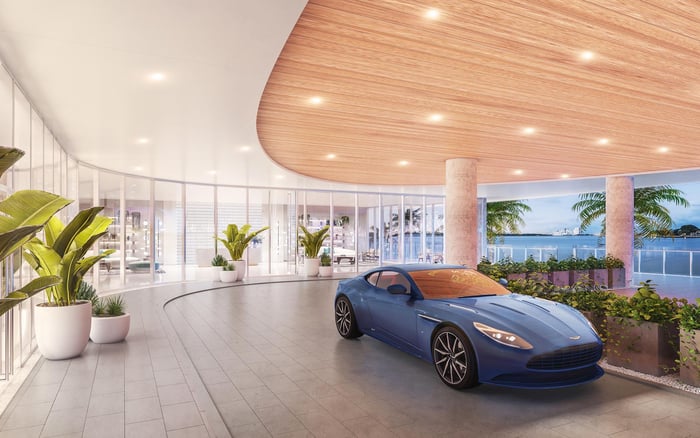
A work that fits beautifully within a room must first reach it. Trace the entire path from vehicle arrival to final position. Confirm loading procedures, entry clearances, elevator dimensions, weight limits, corridor turns, protective requirements, working hours, contractor access, and reservation policies.
This exercise is particularly important for large canvases, crates, sculptures, and pieces requiring specialized rigging. Waterfront living can introduce practical considerations for deliveries and staging, so test the route against the collection's dimensions rather than evaluating it abstractly.
Storage warrants equal scrutiny. Assess in-unit storage for environmental suitability, security, and retrieval space. Building storage may be convenient, but its conditions and permitted uses require confirmation. When comparing The Cove Residences Edgewater with Lilli Miami Edgewater, request current plans and operating documents relevant to moving, storage, and alterations.
Before committing, examine the documents governing renovations, deliveries, contractors, cameras, alarms, window treatments, and work in common areas. Determine whether an art installation requires approval and whether drilling, structural attachment, electrical changes, or after-hours access is restricted.
Consider security as a layered system encompassing building entry, residence entry, staff protocols, visitor handling, digital access, and response procedures. Avoid discussing the collection more broadly than necessary, and coordinate privacy requirements with advisers.
Begin the insurance review early. Share accurate information about occupancy, display, storage, transit, and installation with the relevant professionals. Confirm responsibilities during delivery and contractor work, and keep collection documentation current.
The strongest shortlist is not simply a ranking of buildings. It is a controlled comparison of individual residences measured against the same art-first criteria. Create a scorecard covering usable wall length, ceiling conditions, daylight control, environmental systems, delivery routes, storage, privacy, alteration flexibility, and operating oversight.
A visit to Villa Miami may therefore be evaluated differently from another Edgewater option, even before aesthetic preferences enter the equation. Bring a scaled collection plan to every serious viewing. Photograph only with permission, record measurements carefully, and identify where specialist review remains necessary.
The right residence should do more than contain the collection. It should make installation calmer, conservation more deliberate, and daily encounters with art more rewarding.
Should art determine the floor plan I choose? Yes. The collection's dimensions, media, and installation requirements should shape the plan evaluation from the outset.
Are large windows unsuitable for collectors? Not necessarily. Their effect depends on orientation, shading, glazing, interior controls, and the sensitivity of each work.
Why should I visit a residence at different times? Changing daylight can reveal direct sun, reflections, glare, and display conditions that a single viewing may miss.
What measurements matter for art delivery? Check every clearance from arrival through installation, including doors, elevators, corridors, turns, and ceiling heights.
Do I need reinforced walls? It depends on the work's weight and attachment method. Seek professional guidance before altering a wall.
Is in-unit art storage always preferable? No. Suitability depends on climate control, security, access, available working room, and the nature of the stored works.
What building rules should I review? Focus on renovations, contractor access, delivery hours, elevator reservations, security systems, and installation approvals.
How should a second-home buyer plan for art care? Consider remote monitoring, maintenance protocols, emergency contacts, and dependable local oversight during absences.
Should insurance be reviewed before closing? An early review can clarify coverage expectations for occupancy, display, transit, storage, and installation.
What should I bring to a serious viewing? Bring dimensioned plans, a collection inventory, measuring tools, and a checklist tailored to conservation and access.
For a discreet conversation and a curated building-by-building shortlist, connect with MILLION.
If branded residences are on your mind — as a home or as an allocation — we would be glad to share what we are seeing, privately.
Begin a quiet conversation