A buyer-oriented guide to Downtown Miami towers where kitchens are designed to perform: generous work surfaces, serious ventilation, and layouts that handle catered-scale entertaining. With limited publicly standardized disclosures building-by-building, this editorial ranks six high-rises that fit the lifestyle brief and explains what to verify before you buy.
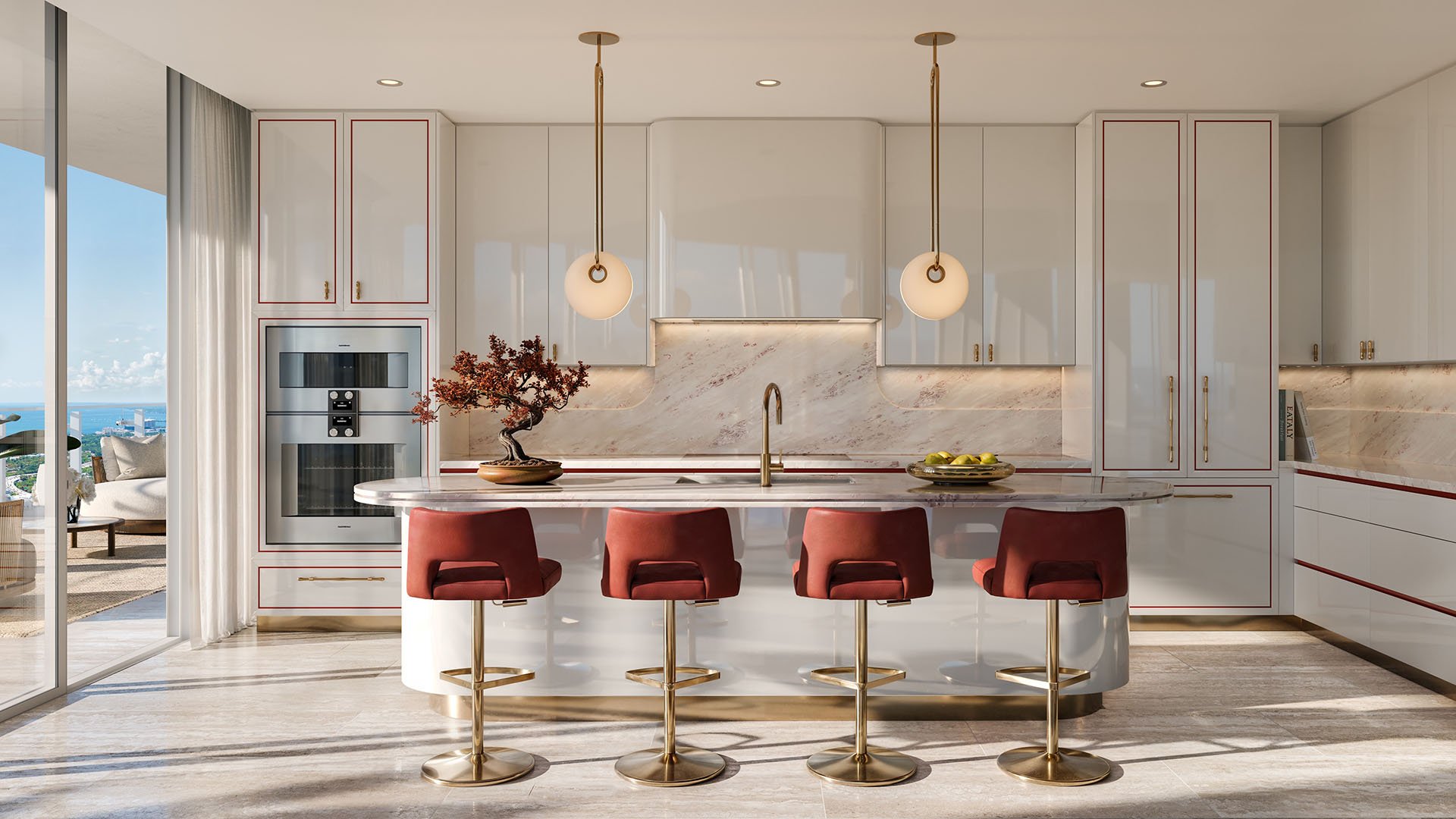
Downtown Miami has matured into a neighborhood where entertaining isn’t an occasional event-it’s an operating mode. In ultra-premium condos, the kitchen has become the true anchor: a place to plate, pour, prep, and host with the poise of a private club. Buyers now ask less about whether a residence has an “open kitchen” and more about whether it can actually perform.
In this context, a “commercial grade chef kitchen” is best understood as a performance standard, not a literal restaurant build-out. Think robust ventilation that can handle searing and spice without lingering, appliance packages built for daily use, and spatial planning that supports real choreography-including multiple cooks and staff.
This MILLION Luxury editorial focuses on Downtown Miami’s high-rise lifestyle and the towers most aligned with chef-forward expectations, then outlines the due diligence that separates a beautiful kitchen from a genuinely capable one.
Luxury marketing often leans on the word “chef” without defining the hardware. Here is the more practical lens performance-minded buyers use.
First, ventilation. A kitchen can have the best appliances in the world, but without proper extraction it reads like a design set piece rather than an engine. In high-rises, venting can be limited by the building’s mechanical strategy, so get clear confirmation of whether cooking exhaust is externally vented, filtered, or integrated into a broader system.
Second, heat and control. Many high-end residences now favor induction for speed and precision, while some buyers still prefer gas for certain techniques. In Downtown towers, the question is not preference alone, but feasibility: what the building supports, what is permitted by design, and what upgrades are actually allowed.
Third, work surfaces and flow. A true chef kitchen prioritizes uninterrupted prep runs, landing zones near heat, and thoughtful separation between prep and presentation. Islands should be sized for more than stools; they should function as a working table. Pantry and cold storage should be planned for a week of living, not a weekend.
Finally, noise and serviceability. If you entertain, you do not want a dishwasher that dominates conversation, nor do you want routine maintenance to require disruptive access. The best kitchens are quiet, durable, and easy to service.
For readers comparing lifestyle options beyond Downtown, it is worth noting that similar performance-minded thinking shows up in Brickell and adjacent submarkets, including Casa Bella by B&B Italia Downtown Miami where the design language often treats the kitchen as part of a broader Italian-inflected living environment.
The list below reflects a buyer’s perspective: how well a building’s residences can plausibly support serious cooking and catered-scale entertaining, and how naturally the kitchen integrates into the hosting experience. As always, confirm the exact appliance package, venting strategy, and permitted upgrades for the specific line you are buying.
1. One Thousand Museum - iconic, gallery-like entertaining
The building’s design-forward positioning lends itself to residences where the kitchen and great room read as a single entertaining volume. For buyers who host, the appeal is prepping without leaving the social field, then transitioning seamlessly into dining and living.
When touring, prioritize kitchens with generous counter runs and a clear service path from entry to kitchen. In a tower with statement architecture, the strongest layouts are the ones that remain practical under pressure.
2. Aston Martin Residences Downtown Miami - waterfront lifestyle with event-ready interiors
This is a Downtown address that suits a certain kind of host: someone who wants a polished, arrival-driven home where the kitchen supports the room without visually dominating it. The most compelling residences are those where the island functions as both a working station and a bar.
If you cook often, ask direct questions about ventilation and where the heaviest cooking is intended to happen. Also confirm whether the kitchen’s material palette is resilient enough for regular use-not just occasional entertaining.
3. Waldorf Astoria Residences Downtown Miami - hospitality expectations carried into the home
In a branded residence, buyers often expect a more hotel-caliber standard of fit and finish, and the kitchen is a key test. You want a package that feels deliberately selected, not simply upgraded.
The most important verification here is operational: how service, deliveries, and staff access work in practice, and how that interfaces with your kitchen and entertaining routine.
4. Faena Residences Miami Downtown Miami - design intensity with a social kitchen posture
For some buyers, a chef kitchen is as much about mood as mechanics: lighting, tactility, and an environment that makes you want to cook. In an aesthetic-forward tower, the right residence can make the kitchen feel like a salon.
Because design-led interiors can sometimes favor form over function, keep a pragmatic eye on storage, landing zones, and backsplash and counter durability-especially if you plan to cook frequently.
5. Delano Residences & Hotel Miami - a modern hosting set-up with flexibility
A condo-hotel adjacency tends to attract owners who use their residence as a social base. In that use case, the kitchen needs to be intuitive for both the owner and any visiting chef or caterer.
During due diligence, check clearances around the island, refrigerator placement that does not trap traffic, and appliance controls that staff can operate without a learning curve.
6. Villa Miami - contemporary lines and livability-focused layouts
For buyers who value a kitchen that feels current and clean, a newer high-rise can deliver a sense of efficiency and freshness. The best chef-forward kitchens are the ones with straightforward workflow and a strong balance between storage and open presentation.
Confirm exactly what the standard appliance suite includes for your unit and what changes are permitted post-closing. In high-rises, “upgrade” can sometimes mean “restricted,” depending on building rules and mechanical constraints.
A showing can make any kitchen look composed. A better approach is to run the scenario. Stand at the primary prep surface and picture making a full meal with two people moving around you. Where do groceries land? Where do you wash and prep? Where do hot pans go when you pull them? If the answers require crossing traffic or improvising, the kitchen will feel smaller over time.
Open the cabinets. Count meaningful pantry shelves, not just decorative uppers. Look for a place to keep countertop appliances out of sight, if visual calm matters to you. Pay attention to drawer depth and whether the island is engineered for storage or mostly for seating.
Then, talk about ventilation and smell control. In many high-rise lifestyles, you want the option to cook boldly without your home retaining the memory of it. That is a systems question, not a styling question.
Downtown’s appeal is its ability to support an “out, in, then out again” rhythm. A capable kitchen matters because it lets you start the night at home, host a pre-dinner gathering, or bring friends back for a final glass without relying on external planning. The kitchen is the control room.
If your social orbit frequently overlaps with Brickell, it is also worth cross-shopping residences that treat culinary culture as part of the building’s identity, such as ORA by Casa Tua Brickell and Cipriani Residences Brickell, then comparing how their kitchens balance performance with a hospitality tone.
Before you commit to any “chef kitchen” claim, verify five things in writing.
Appliance suite and alternates. Confirm the exact models included for your residence, not just the brand family. If substitutions are permitted, understand what triggers them.
Venting and smoke management. Ask whether cooking exhaust is externally vented, filtered, or recirculated. If filtration is the answer, confirm the maintenance cycle and who is responsible.
Electrical capacity and future-proofing. If you prefer induction, confirm the electrical load supports it. If you plan wine storage, specialty refrigeration, or additional equipment, confirm capacity and permitted modifications.
Permitted upgrades and alteration rules. Many owners assume they can swap in a larger range or change a hood. In high-rises, alterations can be restricted by mechanical design, association rules, and warranty constraints.
Service circulation. If you use staff or caterers, confirm how deliveries work, where staging can occur, and whether the kitchen entry path is discreet.
And for buyers who want a more classically residential feel in a neighboring core, 2200 Brickell is often compared for its livability-first approach, making it a useful reference point when deciding how event-ready you want Downtown to be.
What does “commercial grade” mean in a condo kitchen? It usually signals performance features like robust ventilation, pro-style appliances, and durable materials, rather than a literal restaurant installation.
Is gas cooking common in Downtown Miami high-rises? It varies by building; many towers are electric-forward, so confirm what the property supports and what upgrades are permitted.
Why is ventilation the most important factor? Because high-heat cooking without proper extraction can leave odors and residue throughout an open-plan residence.
Should I prioritize an island or a separate prep run? Prioritize continuous prep surface and landing zones near heat; an island is valuable only if it truly works as a workstation.
How do I verify the exact appliance models included? Request the unit’s finish schedule or appliance spec sheet tied to your specific residence, not a generic brochure.
Are upgrades like bigger ranges typically allowed? Not always; building mechanical limits and alteration rules can restrict changes, so get written confirmation before closing.
What kitchen details matter most for entertaining? Traffic flow, quiet dishwashing, ample cold storage, and a layout that allows prep while staying engaged with guests.
Do branded residences automatically have better kitchens? They often target higher finish standards, but performance still depends on venting, layout, and the exact appliance package.
What is the biggest mistake buyers make during showings? Judging by styling alone instead of testing workflow, storage, and where real cooking tasks would happen.
Can a beautiful kitchen still be a poor chef kitchen? Yes; without sufficient ventilation, storage, and logical work zones, even premium finishes can underperform day to day.
For a tailored shortlist and next-step guidance, connect with MILLION Luxury.
If branded residences are on your mind — as a home or as an allocation — we would be glad to share what we are seeing, privately.
Begin a quiet conversation