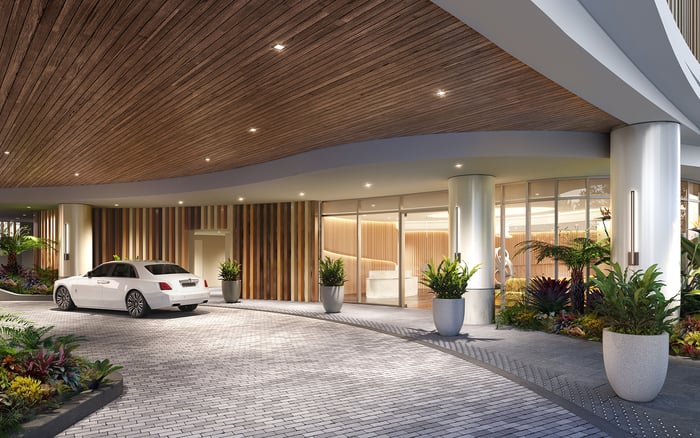
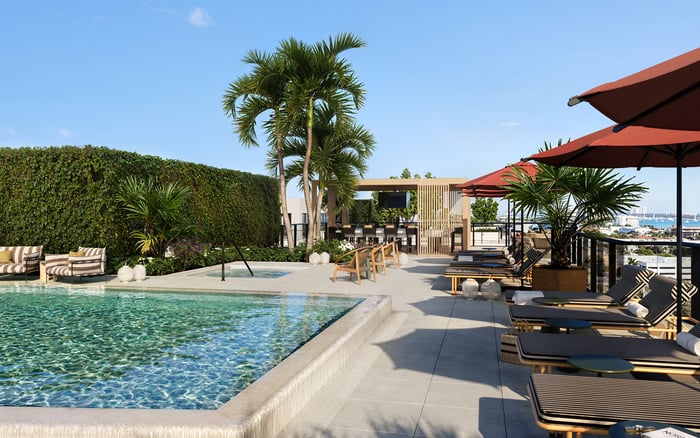
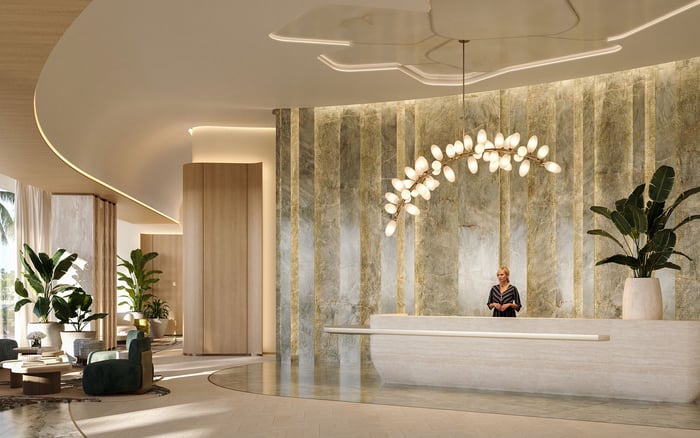
For a certain luxury buyer, the most persuasive amenity is not more. Nora House West Palm Beach is positioned around privacy, curation, and a stronger in-residence experience rather than a sprawling roster of shared features. In a market long defined by resort-style escalation, that restraint reads less like compromise and more like confidence.
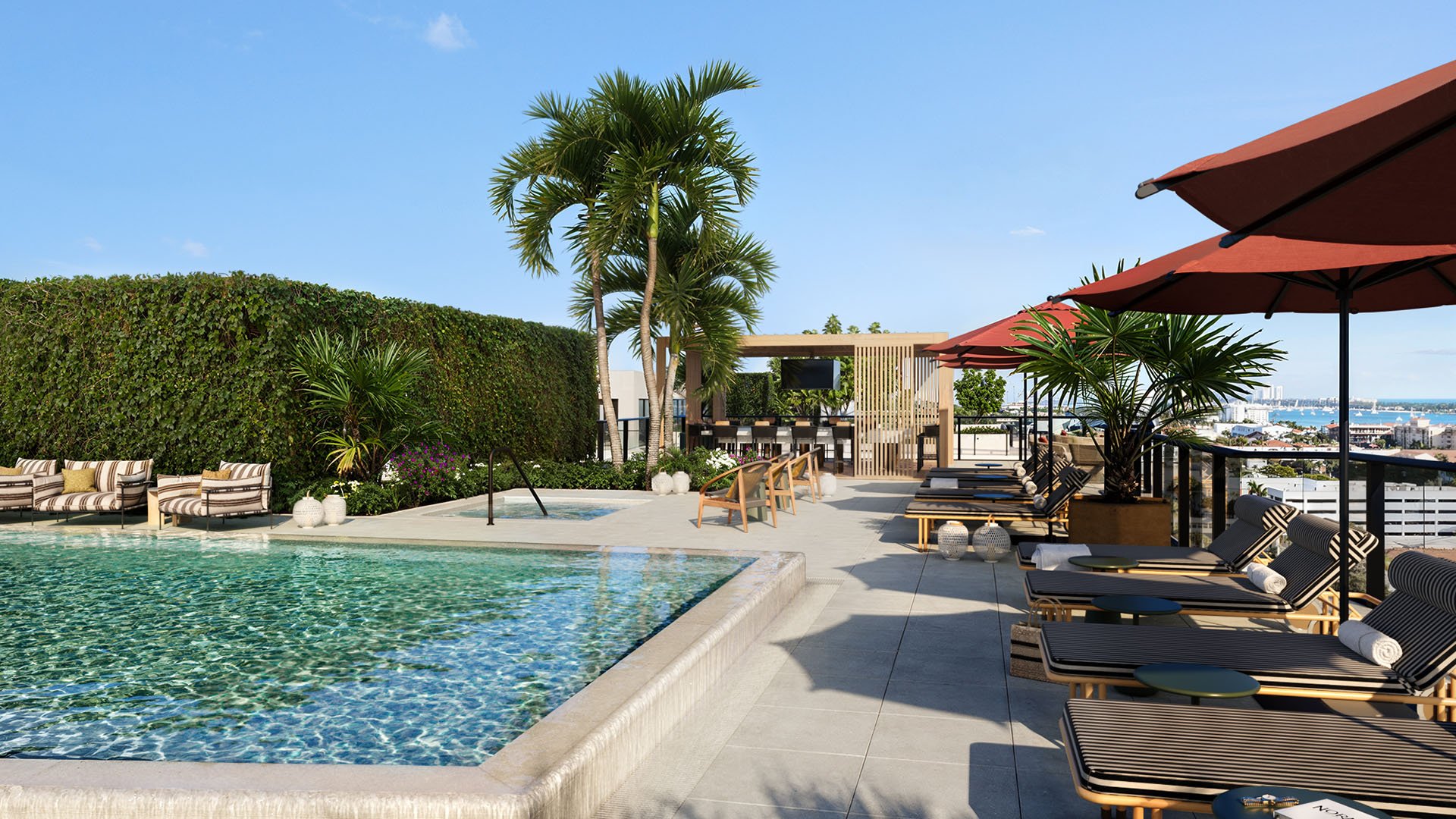
South Florida spent years in an amenity arms race. The formula was familiar: bigger spas, longer service menus, rooftop programming, social clubs, wine storage, screening rooms, and ever more elaborate concierge layers. For a time, that abundance helped define the modern trophy tower.
Now, a more selective buyer is asking a different question: not what else is included, but whether any of it actually improves daily life.
That is the lane Nora House West Palm Beach appears designed to occupy. Its positioning is aimed at affluent buyers who prefer intimate, curated living over the sprawling amenity packages that have become common at the upper end of the condominium market. Rather than competing on volume, the concept emphasizes a more edited version of luxury: privacy, personalization, quality over quantity, and a residential atmosphere that feels more like a retreat than a social venue.
For buyers who increasingly view home as sanctuary, that distinction matters. An oversized amenity stack can impress at launch, but it can also create a building culture that feels performative, busy, and operationally heavy. Nora House is framed as an anti-trend alternative, appealing to those who no longer equate exclusivity with excess.
In this category of luxury, the primary product is not the lounge, the spa circuit, or the event calendar. It is the residence itself.
Nora House is associated with a design emphasis on the in-residence experience, including finishes, views, and layouts, rather than an expansive menu of common-area attractions. That is a meaningful distinction for buyers who know they will spend most of their time inside the home they are purchasing, not rotating through communal spaces built largely for marketing theater.
The strongest luxury buildings often understand this intuitively. Even in markets known for grand amenity packages, the residences that endure tend to be those where proportion, privacy, and interior livability carry the value story. In West Palm Beach, buyers comparing quieter offerings such as Alba West Palm Beach, Forté on Flagler West Palm Beach, and Mr. C Residences West Palm Beach are often evaluating exactly that balance: how much of the value proposition lives inside the home, and how much lives in shareable spectacle.
For the buyer who wants discretion, the answer is usually clear. A shorter amenities list is not necessarily a lesser offering. In many cases, it reflects discipline.
A broader correction is underway in South Florida luxury. After years of resort-style branding, there is growing appetite for buildings that feel less like branded entertainment platforms and more like finely run private residences.
Nora House aligns with this shift. Its amenity philosophy favors essentials over feature-heavy offerings such as multiple spas, oversized rooftop programming, and the kind of expansive shared inventory that can blur the line between private residence and hospitality product. The appeal is especially strong among buyers seeking homes that function as private retreats.
This does not mean amenities have stopped mattering. It means the hierarchy has changed. Thoughtful common spaces, smaller lounges, curated art, and intimate gathering areas can feel more luxurious than a long list of underused rooms. At the top of the market, editing has become part of the brand language.
That same sensibility helps explain why some buyers gravitate toward boutique-leaning environments in other South Florida markets as well, from Glass House Boca Raton to Arbor Coconut Grove. The through line is not geography. It is temperament.
The West Palm Beach story is important here. For affluent buyers choosing between South Florida submarkets, West Palm Beach offers walkable urban access with pricing that can still compare favorably to Miami Beach or Brickell. That dynamic supports a less resort-branded version of luxury, one rooted in location, convenience, and composure.
In practical terms, a buyer drawn to Nora House is likely responding not only to the building concept but also to the city’s tone. West Palm Beach can deliver social access without requiring the constant velocity associated with denser luxury districts. It is urban, but not overwhelming. Connected, but not over-programmed.
That makes it a natural setting for a project built around intimacy. A residence in this context does not need to compensate with an oversized internal universe. The neighborhood already contributes part of the experience.
For buyers considering the local landscape, The Ritz-Carlton Residences® West Palm Beach and other emerging addresses help define the broader premium conversation, but Nora House’s distinction lies in tone rather than scale. It is speaking to a buyer who wants refinement without unnecessary performance.
There is also a practical argument behind minimalist luxury. Excessive amenities can translate into operational burden, staffing complexity, and long-term maintenance considerations that sophisticated buyers increasingly scrutinize. In that context, a smaller amenity footprint is not simply an aesthetic choice. It can also be a governance choice.
For owners, that may support less complexity around HOA decision-making and the ongoing care of heavily programmed spaces. No serious buyer assumes that luxury living is inexpensive to operate. But many do understand the difference between paying for excellence and paying for surplus.
That distinction has become more relevant as buyers grow fatigued with amenity saturation. When every tower offers a variation of the same oversized promise, quantity stops being a differentiator. Quality, exclusivity, and location regain the upper hand.
This is where Nora House’s proposition becomes especially sharp. It does not need to win on the longest list. It only needs to persuade the right buyer that fewer, better things create a superior residential life.
The clearest audience for Nora House includes ultra-high-net-worth buyers, empty-nesters, and international purchasers who value privacy and personalization over communal scale. These are often buyers who have already lived through multiple versions of luxury inventory and are less interested in novelty for novelty’s sake.
They tend to recognize subtle advantages quickly: a calmer arrival experience, more controlled common spaces, fewer highly programmed areas, and an overall environment that feels tailored rather than theatrical. Many are not trying to buy into a building that behaves like a club. They are trying to secure a home that feels insulated from one.
That is why Nora House may prove especially compelling for second-home ownership as well. The strongest second-home properties often reduce friction, not multiply it. They offer assurance, comfort, and a sense of ease. In a market crowded with louder statements, restraint itself can become the luxury signal.
Nora House West Palm Beach is compelling not because it rejects luxury, but because it edits it. In a region where high-end residential projects have often tried to outdo one another with scale and spectacle, an intimate, buyer-first approach feels increasingly current.
For the right audience, the proposition is elegant: focus on the residence, keep the shared environment thoughtful, reduce operational sprawl, and let location do part of the work. That formula will not suit everyone. It is not supposed to.
It is designed for buyers who understand that true luxury is often experienced in private, not announced in the amenities deck.
What is the core appeal of Nora House West Palm Beach? Its positioning centers on intimate, curated living for buyers who prefer privacy and quality over a long list of shared amenities.
Is Nora House aimed at buyers who want a resort-style tower? No. It is better understood as an alternative to the resort-style model that has defined many luxury developments.
What kind of amenities does this concept prioritize? The emphasis is on essentials and thoughtful common spaces rather than oversized, feature-heavy programming.
Why are some luxury buyers moving away from large amenity packages? Many find them less compelling after years of saturation, especially when they add complexity without improving daily life.
How does Nora House frame luxury differently? It places more value on the in-residence experience, including finishes, views, and layouts, than on communal spectacle.
Why does West Palm Beach suit this type of project? The city offers walkable urban access and a premium lifestyle that can feel less resort-branded than some neighboring markets.
Who is most likely to be drawn to this positioning? Ultra-high-net-worth buyers, empty-nesters, and international buyers are especially aligned with this quieter luxury approach.
Can fewer amenities be a financial advantage? Potentially, yes. A smaller amenity footprint can reduce operating burdens and simplify long-term HOA-related complexity.
Is boutique luxury becoming more important in South Florida? Yes. A more edited, private, and residence-focused model is becoming increasingly attractive at the high end.
What should buyers compare when evaluating Nora House? They should look closely at privacy, in-home quality, location, and whether the building’s shared spaces genuinely match their lifestyle.
When you're ready to tour or underwrite the options, connect with MILLION.
If branded residences are on your mind — as a home or as an allocation — we would be glad to share what we are seeing, privately.
Begin a quiet conversation