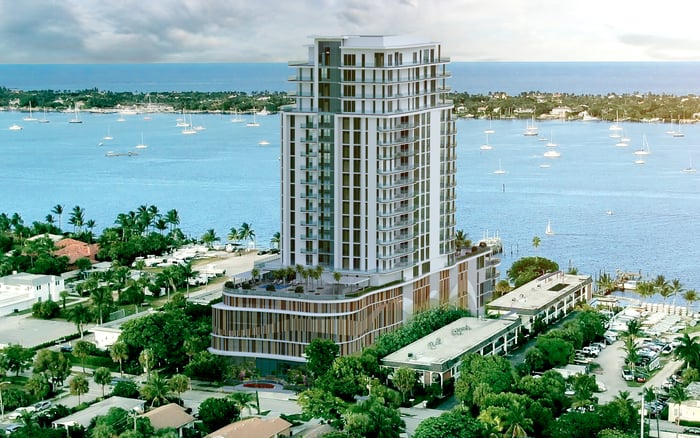
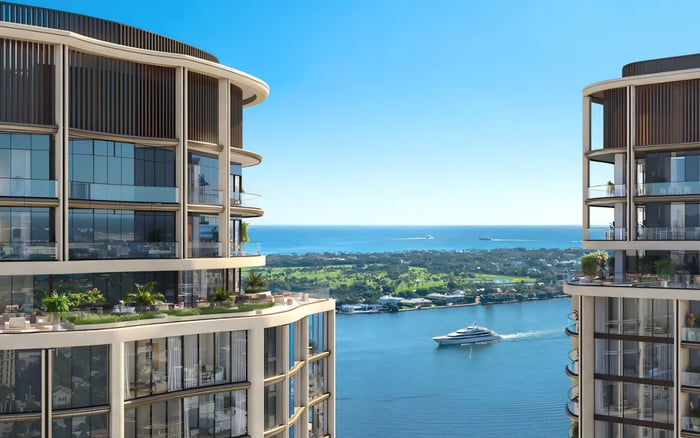
For certain luxury buyers in West Palm Beach, Nora House represents a more precise lifestyle play than the traditional waterfront tower: less about commanding view corridors and more about daily ease, cultural proximity, lower-density exclusivity, and potentially lighter carrying costs.
In West Palm Beach, the highest-priced address is not always the smartest one. For many buyers, a waterfront tower remains the default symbol of arrival: elevated views, marina adjacency, resort-style pools, and the visual drama of living directly on the water. That formula still carries weight, and it often commands a meaningful premium.
But another segment of the market is asking a more disciplined question: not which residence offers the most obvious prestige, but which one delivers the best life on an ordinary Tuesday. That is where Nora House West Palm Beach can become a sharper answer than a waterfront tower.
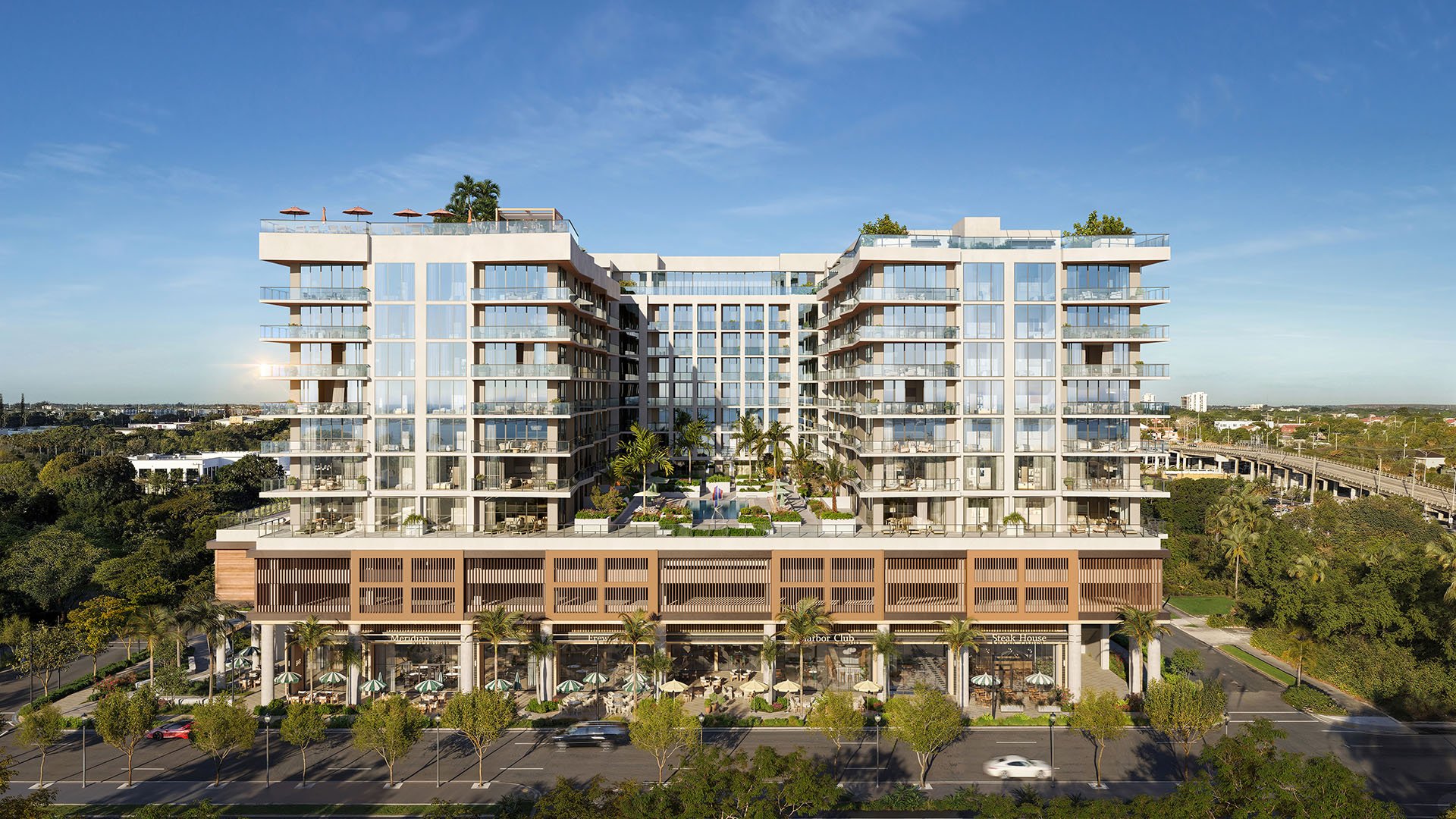
Nora House is best understood not as a compromise to the waterfront, but as a different luxury proposition altogether. It aligns with a walkable, mixed-use urban lifestyle shaped by daily access to dining, retail, culture, and neighborhood rhythm. Rather than selling exclusivity through distance and elevation, it offers relevance through proximity and placemaking.
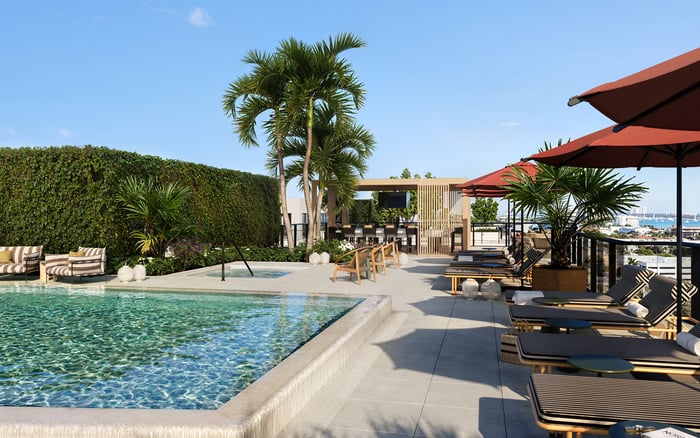
There is a reason West Palm Beach waterfront towers continue to attract attention. They offer a classic expression of coastal luxury: water views, broader amenity decks, spa environments, and, in some cases, a marina-oriented way of living that inland buildings cannot replicate. For buyers who want sunrise panoramas, boating adjacency, and the feeling of being physically removed from the city below, the waterfront remains difficult to replace.
That appeal is often reflected in pricing because view corridors and direct water orientation are typically treated as scarce assets. For legacy buyers, second-home purchasers, and those seeking a quieter, more insulated ownership experience, paying a premium can still make sense.
Projects such as Forté on Flagler West Palm Beach and The Ritz-Carlton Residences® West Palm Beach speak to that side of the market. They represent the enduring logic of waterfront living: fewer compromises on views, a more formal amenity language, and a more traditional luxury posture.
Nora House gains strength precisely where the waterfront model can become less practical. Its value is rooted in access. The surrounding concept emphasizes an integrated neighborhood experience, where stepping outside your residence is part of the amenity package. Dining, retail, coworking energy, and cultural programming become part of the daily rhythm rather than destinations that require a drive.
For buyers relocating from more urban markets, or for entrepreneurs and executives who value efficiency as much as aesthetics, that distinction matters. The difference shapes how often you use your neighborhood, how connected you feel to the city, and whether luxury is defined by isolation or by intelligent convenience.
This is also why lower-density urban luxury can feel more selective than a large-format tower. A residence within a curated district may offer a more intimate ownership experience, even without a waterfront silhouette. In that sense, Nora House belongs to a broader category of placemaking-driven luxury. The residence is part of a living district rather than a standalone vertical statement.
That same buyer might also compare Mr. C Residences West Palm Beach or Alba West Palm Beach to understand how lifestyle positioning within West Palm Beach is becoming more nuanced. Not every premium buyer is shopping for the same version of status.
The clearest way to understand this decision is to reduce it to a single trade-off: views versus engagement.
A waterfront tower sells what you see from inside your home. Nora House sells what you can do the moment you leave it.
That may sound simplistic, but it captures a real divide in the luxury market. Some buyers want the residence itself to be the centerpiece. Others want the neighborhood to function as an extension of the residence. In the first scenario, the private terrace and waterline dominate the value equation. In the second, walkability, cultural access, and frictionless routines start to matter just as much as finishes and amenity decks.
Central West Palm Beach has strengthened this case. A more refined street-level experience has made inland luxury feel less like a secondary choice and more like a deliberate one. If your ideal day includes walking to coffee, a meeting, dinner, or an exhibition without compromising on luxury, then a project like Nora House becomes increasingly persuasive.
One of the more underappreciated distinctions between inland luxury and waterfront towers is carrying cost. In many cases, inland residences can present lower HOA and property-tax burdens than comparable waterfront product. Over time, that difference can materially affect ownership comfort, especially for buyers who plan to use the home as a primary residence rather than as a symbolic pied-à-terre.
That does not make inland residences inexpensive. It makes them potentially more efficient.
Efficiency is not a downgrade in luxury. In many cases, it is luxury in its more sophisticated form. The buyer who chooses Nora House may be allocating capital toward a better daily experience rather than toward the premium attached to a water view. For some, that is not restraint. It is precision.
Nora House is particularly compelling for younger affluent buyers, company founders, executives in relocation mode, and purchasers who want a residence that connects them to the city rather than buffering them from it. It also suits those who see hospitality-style convenience in fitness, rooftop gathering spaces, and curated ground-floor retail rather than in marina services or oversized pool decks.
It may be less compelling for buyers whose idea of luxury is inseparable from direct water orientation, large resort amenities, and the traditional social signaling of a waterfront tower. If the defining emotional payoff is looking out at the Intracoastal every morning, inland urban luxury may never feel equivalent, no matter how well executed it is.
The market is broad enough for both instincts. A buyer considering Shorecrest Flagler Drive West Palm Beach may still conclude that the waterfront is worth every dollar. Another may decide that walkable urban exclusivity is the more contemporary expression of wealth.
West Palm Beach is no longer a one-idea luxury market. It now supports more than one premium identity at the same time. The traditional tower on the water remains the clearest shorthand for prestige. But the mixed-use urban residence, especially one tied to a thoughtful district, increasingly reads as the more considered move.
That is the real reason Nora House can become the sharper answer. It does not try to imitate the waterfront tower. It sidesteps the comparison by speaking to a buyer who wants luxury integrated into daily life, not elevated above it.
Is Nora House West Palm Beach a waterfront project? No. Its appeal is centered on walkability, mixed-use urban living, and proximity to neighborhood amenities rather than direct waterfront positioning.
Why do waterfront towers usually feel more prestigious? They often pair water views with a classic coastal luxury image that many buyers still associate with arrival and exclusivity.
Can inland luxury feel as exclusive as a tower on the water? Yes. Lower-density urban projects can feel more intimate and curated, even without the scale or visibility of a waterfront high-rise.
Who is the ideal buyer for Nora House? Buyers who prioritize daily efficiency, neighborhood vibrancy, and a polished urban lifestyle tend to be the best fit.
What is the biggest trade-off in this decision? It generally comes down to choosing between panoramic views and street-level engagement.
Are carrying costs often lower inland? They can be. Inland luxury residences may have lower ownership burdens than comparable waterfront towers.
Do waterfront towers still make sense for many luxury buyers? Absolutely. They remain attractive for those who want resort-style amenities, privacy, and the symbolism of a water-facing address.
Is Nora House more about the building or the district around it? Its appeal is closely tied to a broader placemaking concept, where the surrounding neighborhood is part of the luxury experience.
Could Nora House appeal more to full-time residents? In many cases, yes. Its emphasis on convenience and daily use can be especially compelling for primary-residence buyers.
What is the best way to shortlist comparable options for touring? Start with location fit, delivery status, and daily lifestyle priorities, then compare stacks and elevations to validate views and privacy.
For a tailored shortlist and next-step guidance, connect with MILLION.
If branded residences are on your mind — as a home or as an allocation — we would be glad to share what we are seeing, privately.
Begin a quiet conversation