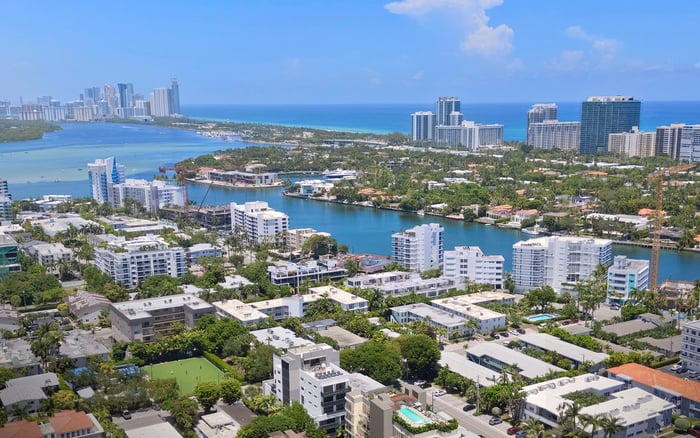
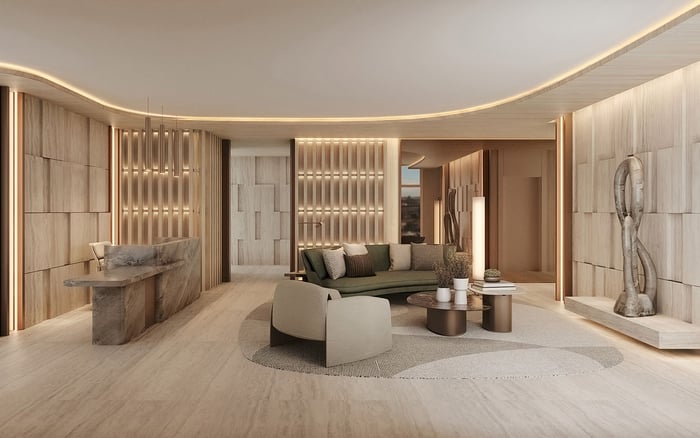
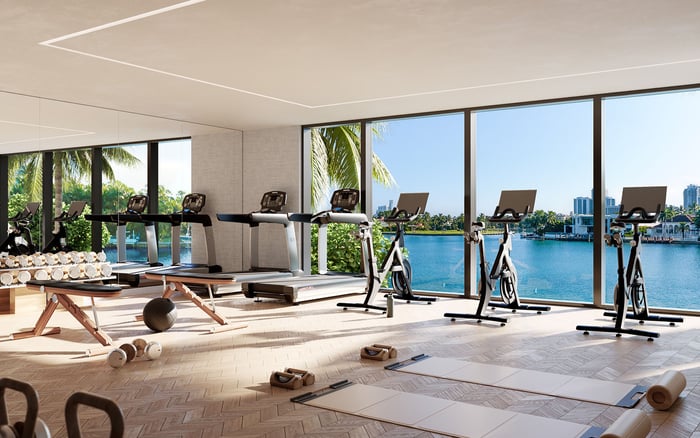
Bay Harbor Islands is leaning into a new definition of luxury: wellness as a daily operating system, not an amenity. Two boutique projects illustrate the shift from traditional resort programming toward health-forward design and services, while scarcity in this low-density enclave continues to support premium positioning.
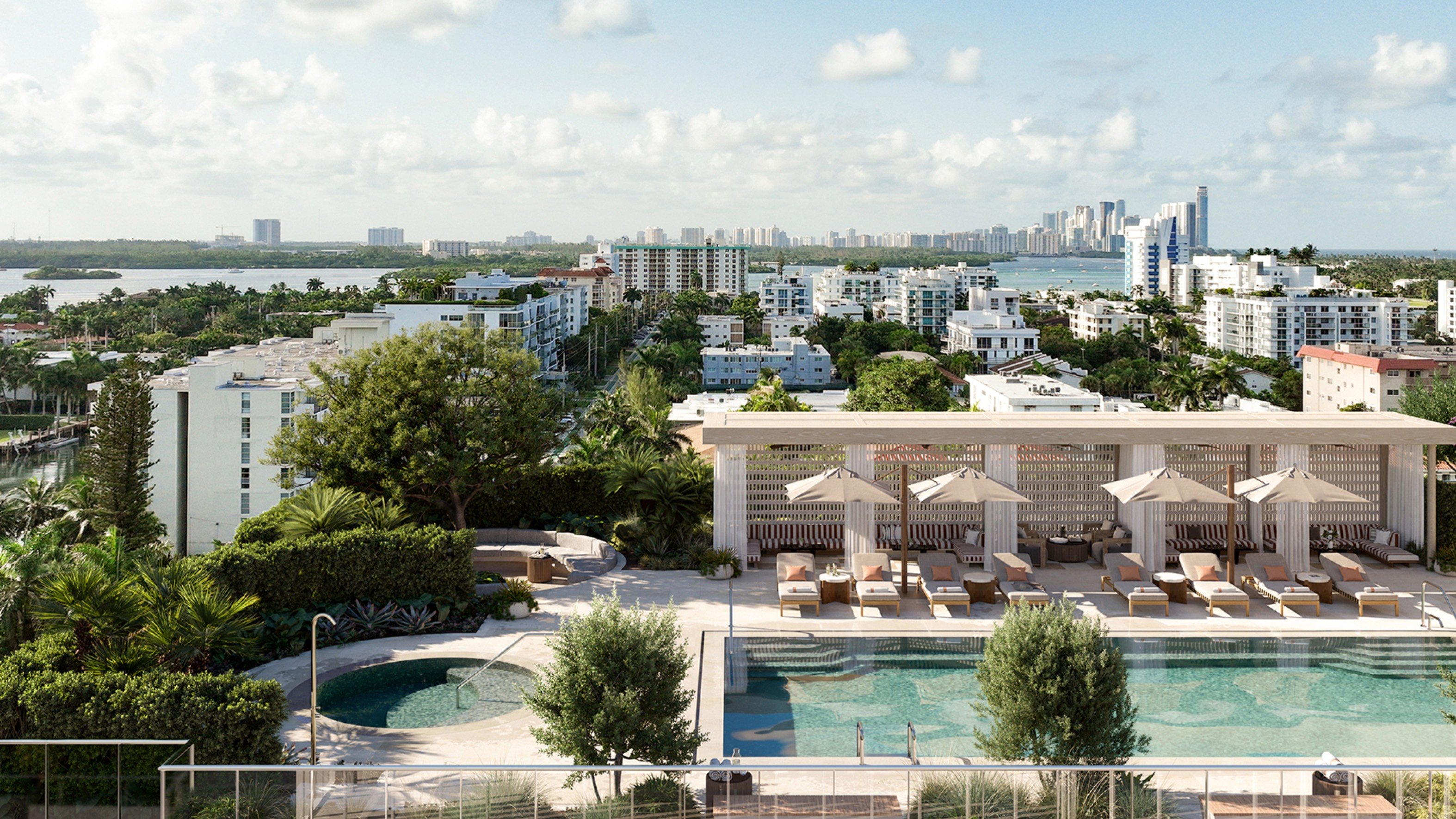
Bay Harbor Islands has always traded on understatement: a small, low-density community close to Bal Harbour and Miami Beach, where scarcity is literally built into the map. What’s shifting is the definition of the upgrade. The most compelling new-construction conversations here are less about adding another rooftop pool and more about making health, recovery, and longevity feel native to how a building actually operates.
That’s where wellness-branded luxury condos come into focus. In Bay Harbor Islands, wellness is increasingly positioned as a residential ecosystem: design decisions that prioritize comfort and circadian rhythms, amenity programs that read more like private clubs, and service layers that make the building feel like a daily ritual rather than a weekend resort.
Two boutique projects capture this shift in distinct, highly revealing ways: The Well Bay Harbor Islands and Bay Harbor Towers.
In ultra-premium coastal markets, wellness can sometimes feel like a marketing overlay. In Bay Harbor Islands, it lands differently because the neighborhood’s fundamentals naturally support a more curated lifestyle.
Low density changes what residents actually use. In a boutique building, amenity space and service programming can be calibrated to a smaller, membership-like community-making wellness feel personal rather than performative.
Scarcity matters, too. Bay Harbor Islands has been widely discussed for rapid pricing acceleration in recent years, including claims of a roughly 93% surge-context that helps explain why new boutique product can command a premium when it presents a distinct lifestyle thesis instead of a generic luxury checklist.
Finally, adjacency plays a role. Proximity to Bal Harbour and Miami Beach keeps Bay Harbor Islands plugged into the broader luxury ecosystem while preserving a more residential cadence. In that setting, wellness isn’t just a perk; it becomes a differentiator that can justify decisions at the top of the market.
The Well Bay Harbor Islands is a wellness-branded luxury condo project with 54 residences. Its positioning is explicit: wellness-first living, with the residential concept tied to The Well wellness club brand, whose flagship opened in New York in 2019.
Architecturally, the project is designed by Arquitectonica, with interiors by Meyer Davis. That pairing sets a clear expectation for design-literate buyers: a contemporary envelope matched with interiors that aim for warmth, restraint, and comfort that feels intentional rather than ornate.
What makes The Well especially notable in this submarket is how amenities are framed as ongoing programming. Roughly 22,000 square feet of amenities are dedicated to a “Club at The Well” style approach, emphasizing spa, fitness, and services over conventional condo-only features. Conceptually, wellness isn’t relegated to a single room with treadmills; it’s distributed across the resident experience.
Even the in-residence narrative is wellness-coded. Marketed features include concepts such as air purification, aromatherapy elements, and circadian-focused lighting-a trio that speaks to buyers who want the home to support sleep and recovery as much as entertaining.
Rooftop amenities are marketed as including a pool area with outdoor lounging and cabanas, consistent with a boutique, lifestyle-forward read. The difference is the hierarchy: the pool is present, but it isn’t necessarily the headline.
For buyers comparing boutique options in the neighborhood, The Well Bay Harbor Islands is the clearest expression of wellness-as-identity.
Bay Harbor Towers takes a complementary approach. It is a boutique waterfront condo development with 44 residences, developed by PPG Development, and it leans into the elemental pull of the water.
The lifestyle stack is instructive. Yes, there is a wellness suite concept that blends fitness with spa-style recovery features. But the building’s defining move is water-centric: a private marina and amenities that foreground boating and the rhythm of the bay. For many South Florida buyers, that’s wellness in its purest form-time outside, time on the water, and a home base that makes the routine effortless.
The rooftop is marketed as a large oasis concept with a resort-style pool environment and entertaining infrastructure. Put simply, Bay Harbor Towers reads like a waterfront private club where wellness coexists with hosting, sunset dinners, and the social life that comes with a marina address.
Construction has reached high-visibility milestones, including a topping-off celebration, with an expected completion timeframe in 2026. For buyers who prefer to align a purchase with a specific horizon, that timing can influence how they think about interim living, furnishing, and longer-term residency plans.
For a closer look at the project positioning, Bay Harbor Towers is increasingly the reference point for marina-led boutique living in Bay Harbor.
In an emerging category, branding can outpace substance. Buyers looking for real wellness value tend to evaluate three essentials.
First: programming. A building can have beautiful spaces, but a club-like wellness model implies ongoing services and a consistent standard. The Well’s identity is anchored in a “Club at The Well” approach, while Bay Harbor Towers expresses wellness as one element within a broader waterfront lifestyle stack.
Second: in-residence execution. Concepts like air purification and circadian-focused lighting matter most when they’re thoughtfully integrated. Even when specifics vary by unit, the larger question is whether the building is designed around sleep quality, comfort, and reduced friction.
Third: community fit. A wellness-first building can feel quieter, more ritualized, and more private. A marina-forward building can feel more social, with a different cadence to daily life. Neither is inherently better; the right choice is the one that matches how you actually live.
Bay Harbor Islands isn’t trying to be everything. Its advantage is in the edit: boutique scale, proximity to Bal Harbour, and a residential tempo that appeals to buyers who want access without constant intensity.
For context, other luxury enclaves deliver different versions of wellness-adjacent living. In Surfside, the oceanfront sensibility can feel like a direct extension of health and calm, especially in boutique buildings such as Arte Surfside.
In Coconut Grove, wellness often shows up as walkability, greenery, and a more European lifestyle rhythm. Projects like The Well Coconut Grove highlight how wellness branding can translate in a neighborhood where daily movement and outdoor living are already baked in.
In Bal Harbour itself, the tone skews globally polished, with high luxury per square foot and strong resort adjacency. A project such as Rivage Bal Harbour reflects that refined coastal mindset, where wellness is often expressed through service, privacy, and meticulous execution.
These comparisons sharpen Bay Harbor Islands’ advantage: wellness-forward living without the scale or spectacle that can come with larger beachfront corridors.
In a neighborhood where scarcity is structural, benchmark transaction narratives travel fast and shape expectations. The sellout of Indian Creek Residences & Yacht Club has been cited as a marker for Bay Harbor Islands’ boutique luxury pricing dynamics. Whether a buyer is purchasing for a primary residence, a second-home pattern, or a long-term hold, those benchmark narratives matter because they reinforce a simple truth: boutique inventory is finite.
Wellness-branded luxury condos fit cleanly into that scarcity story. When product is limited, the concept has to be crisp. Wellness-when executed as a lifestyle system rather than a decorative theme-gives boutique projects a clearer identity and can help support value through differentiation.
If your priority is a fully integrated wellness concept with a strong club orientation, The Well Bay Harbor Islands is purpose-built for that buyer. Its scale, amenity square footage, and in-residence wellness positioning point toward daily habit formation: fitness, recovery, and sleep as part of the building’s DNA.
If your priority is waterfront living that merges boating culture with a polished rooftop and wellness suite, Bay Harbor Towers is the more natural fit. The private marina is not a footnote; it’s the center of gravity. For many, the ability to step from home into a water routine is the ultimate health luxury.
Both share the same underlying advantage: boutique expressions of a neighborhood that values discretion, proximity, and limited supply. The decision is less about which is “more luxury” and more about which lifestyle is most truthful for you.
What defines a wellness-branded luxury condo in Bay Harbor Islands? It typically blends wellness-focused amenities and services with design choices that support daily health routines.
How many residences are planned at The Well Bay Harbor Islands? The project is planned with 54 residences.
Who designed The Well Bay Harbor Islands? Arquitectonica is credited for architecture and Meyer Davis for interiors.
How large is The Well’s amenity programming? The building is marketed with roughly 22,000 square feet of amenities.
What kind of in-home wellness features are associated with The Well? Marketed concepts include air purification, aromatherapy elements, and circadian-focused lighting.
How many residences are planned at Bay Harbor Towers? Bay Harbor Towers is planned with 44 residences.
What is Bay Harbor Towers’ key differentiator versus a wellness-first building? Its private marina and water-centric lifestyle are positioned as core features alongside a wellness suite.
Is Bay Harbor Towers expected to be completed soon? It has been associated with an expected completion timeframe in 2026.
Why do boutique buildings command premiums in Bay Harbor Islands? The neighborhood’s low-density character creates scarcity, and distinct lifestyle positioning can add value.
Is Bay Harbor Islands more private than nearby coastal neighborhoods? Many buyers perceive it that way due to its small scale and residential feel near Bal Harbour and Miami Beach.
If you'd like a private walkthrough and a curated shortlist, connect with MILLION Luxury.
If branded residences are on your mind — as a home or as an allocation — we would be glad to share what we are seeing, privately.
Begin a quiet conversation