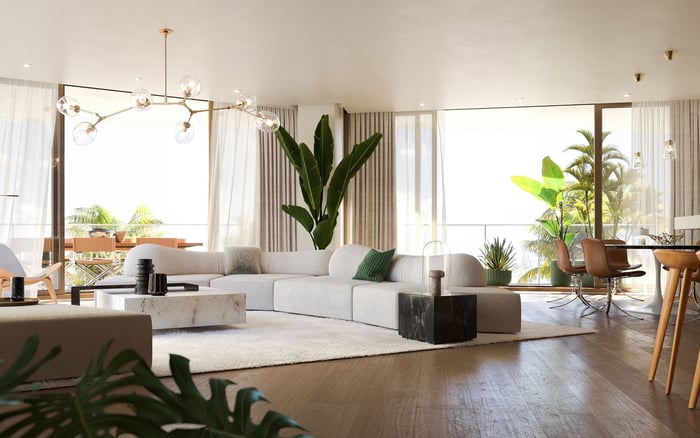
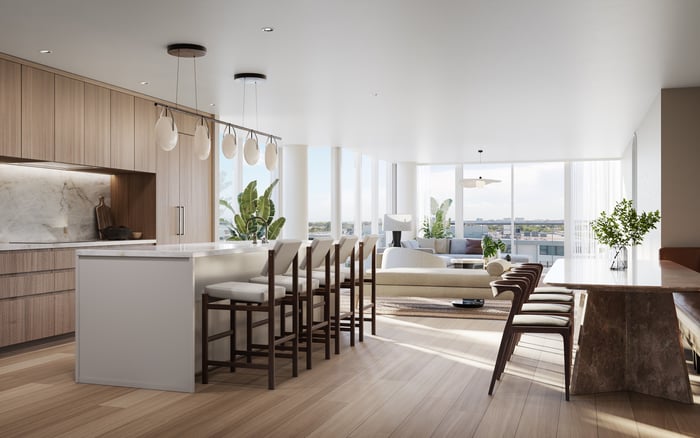
Bay Harbor Islands is evolving into a discreet wellness-forward enclave where boutique scale, proximity to Bal Harbour, and elevated amenity programs converge. This 2026-oriented buyer’s guide breaks down what “wellness residence” truly means on the ground, how to evaluate features beyond marketing language, and why the neighborhood’s next wave of buildings emphasizes filtration, recovery, and calm over spectacle.
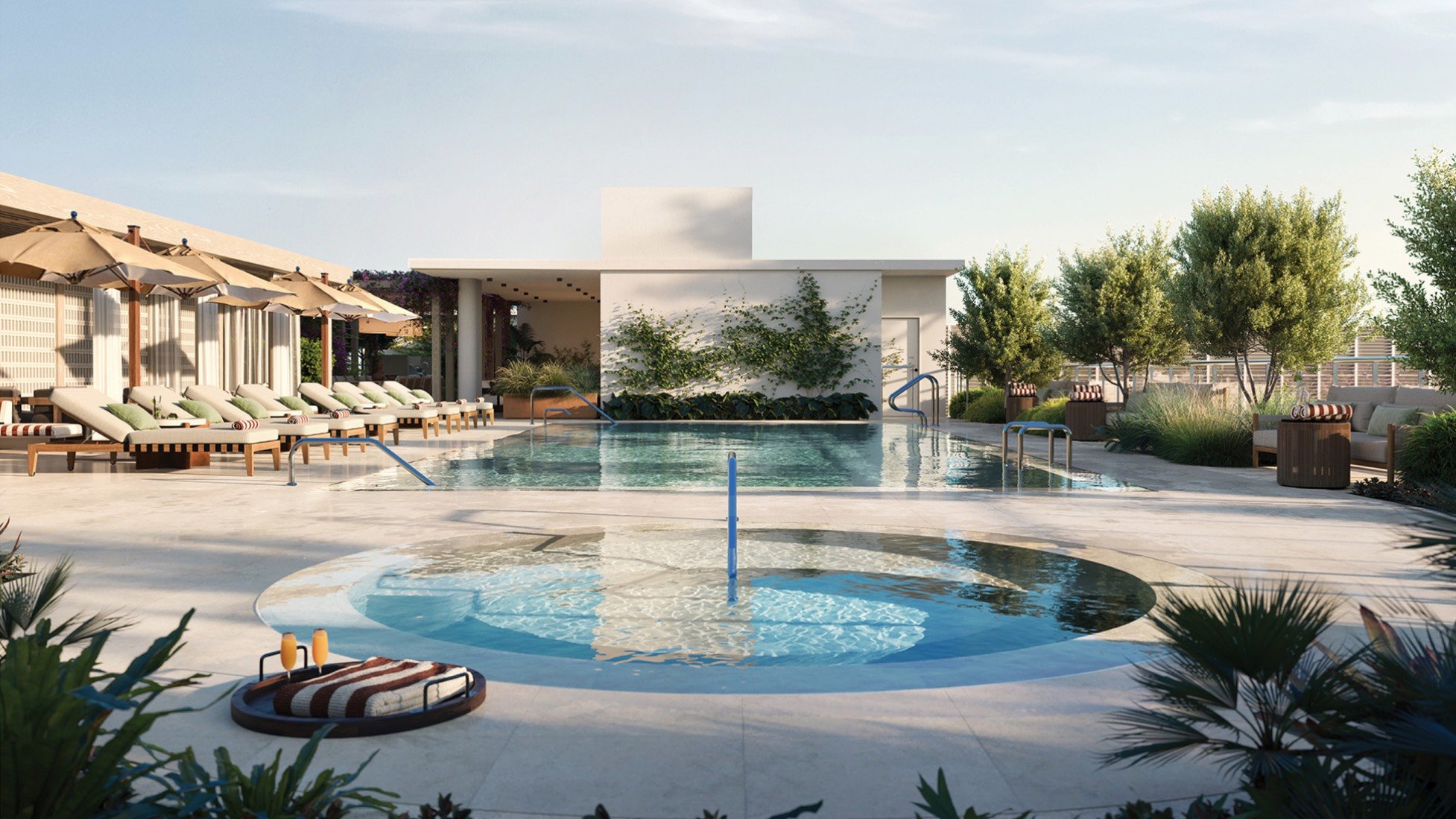
For luxury buyers who have done the Miami Beach circuit, Bay Harbor Islands increasingly reads as the quieter counterpoint: boutique in scale, residential in cadence, and close enough to tap the retail and dining gravity of Bal Harbour without living inside it. The draw is not only location-it’s that newer condominium concepts are using wellness as a design brief, not a marketing add-on.
In practice, “wellness” here is less about statement amenities and more about the daily mechanics of living well: air quality you can feel, water you can trust, recovery spaces that function like private clubs, and an underlying calm that protects routines. It’s also why buyers looking at Bay Harbor Islands often cross-shop nearby Surfside and Bal Harbour, then return for the softer tempo and boutique inventory.
A useful way to frame the neighborhood in 2026: Bay Harbor Islands isn’t trying to out-spectacle Downtown or out-brand Miami Beach. It’s trying to out-perform them in livability.
“Wellness” has become a broad label, so a disciplined buyer’s approach starts with definitional clarity. The highest-integrity wellness residences typically deliver in three categories.
First, environmental quality inside the home. Some new development in Bay Harbor Islands is marketed with integrated air and water filtration, along with aromatherapy-oriented features designed to make the residence itself part of the wellness stack. The point isn’t fragrance-it’s controlling inputs, reducing irritants, and creating consistency for sleep and recovery.
Second, an amenity program that goes beyond an upgraded condo gym. A true wellness facility includes movement classes, spa and therapy services, and recovery-focused experiences that are curated and staffed. When a building positions its on-site club as a full wellness facility, read it as an operational promise-not just a room with equipment.
Third, a building culture that supports routines. Wellness is easiest to maintain when it’s frictionless: elevator down, class or treatment, back upstairs. For second-home owners and frequent travelers, that convenience can matter as much as square footage.
For buyers comparing options, the key is separating “nice amenities” from “wellness infrastructure.”
Among the neighborhood’s most discussed entries is The Well Bay Harbor Islands, a nine-story, 54-residence concept positioned explicitly as wellness residences, with more than 22,000 square feet of dedicated wellness amenities. The development is a partnership between Terra Group and THE WELL wellness brand, with architecture by Arquitectonica and interiors by Meyer Davis.
What distinguishes this model is the intention to make wellness the building’s core operating system. In-home features marketed for the residences include integrated air and water filtration and aromatherapy, translating the wellness thesis into day-to-day living. On the amenity side, the on-site club concept is framed as a full wellness facility: movement classes, spa and therapy services, and recovery experiences that feel closer to a membership club than a condominium fitness room.
Sophisticated buyers will also note the emphasis on thermal and recovery rituals. The project has been publicly associated with “Miami’s first caldarium,” signaling a wellness offering that isn’t generic. In a market saturated with pools and fitness equipment, a more specialized hydrothermal suite can be the differentiator that changes how often owners actually use the amenities.
Not every buyer wants a branded wellness narrative. For some, wellness is simply a home that supports movement, water access, family life, and a sense of quiet. In that lane, La Baia North Bay Harbor Islands is a useful reference point.
La Baia North is a boutique Bay Harbor Islands condominium development located at 9481 E Bay Harbor Dr and is marketed with 20,000+ square feet of amenities, plus a rooftop amenity deck concept with pools and lounge areas. It also includes a state-of-the-art fitness center, alongside family-oriented amenities such as a children’s splash pad and kids area.
Where it becomes distinctly Bay Harbor Islands is boating. The project emphasizes a private marina with resident boat slips, along with watersports launching and storage features. For buyers whose wellness routine is tied to water time, a boat-slip and marina component can be more meaningful than any spa menu. The ability to leave from your own dock for a morning ride often becomes the habit that sustains everything else.
Residences are marketed as fully finished, with features such as European wood flooring, marble bathrooms, and floor-to-ceiling impact glass. Kitchens are marketed with Italian cabinetry by Snaidero and Miele appliances. Pricing is marketed from roughly the high-$900Ks/low-$1M+ range into the multi-millions, depending on size and view.
Luxury buyers tend to tour beautifully, but live practically. Wellness-forward buildings reward practical due diligence. Consider these checkpoints.
Start with the recovery stack. Is there a coherent set of spaces and services designed for restoration-or just a sauna attached to a gym? A caldarium-style environment, a thoughtfully programmed therapy offering, and spaces designed for post-workout recovery indicate wellness is being treated as a system.
Then check circulation and privacy. Boutique buildings can outperform larger towers because amenities feel closer, calmer, and more usable. The “club” idea works best when it’s quiet enough to become routine.
Next, look for operational credibility. Movement classes and therapy services require consistent staffing and programming. If a building positions itself around wellness, ask how that commitment is maintained over time.
Finally, test the home itself. Wellness isn’t only what happens downstairs. In-residence features like integrated air and water filtration matter because they move wellness into the hours you spend sleeping, working, and recovering.
Bay Harbor Islands’ positioning is strengthened by proximity to Bal Harbour Shops, delivering luxury retail and dining that can feel international-yet remains close enough to be part of a normal week, not a special trip. The advantage is you can dip into Bal Harbour’s energy, then return to a more residential rhythm.
This is also why Bay Harbor Islands increasingly competes for buyers who might otherwise default to oceanfront neighborhoods. For some, the right balance isn’t oceanfront at all-it’s water access, privacy, and a building that supports a wellness lifestyle without feeling performative.
For those comparing nearby options, it can be helpful to tour boutique product in adjacent enclaves to calibrate finishes, scale, and neighborhood feel, such as Oceana Bal Harbour in Bal Harbour and Arte Surfside in Surfside. The point isn’t to switch neighborhoods; it’s to sharpen your sense of value and livability.
Wellness residences in Bay Harbor Islands tend to resonate with three buyer profiles.
First, the routine-driven primary resident who wants a calmer address, a boutique building, and amenities that feel like a private extension of home. They value predictable mornings, easy movement, and a recovery environment that’s never crowded.
Second, the second-home owner who wants the lifestyle to switch on immediately. Fully finished residences, spa-grade amenity concepts, and staff-supported programming reduce friction and decision fatigue.
Third, the water-centric buyer who defines wellness as time on the bay. For them, a marina, boat-slip capability, and watersports infrastructure can be the difference between a “nice idea” and a daily habit.
In all cases, Bay Harbor Islands’ advantage is the combination of discretion and access: a quieter home base with a short line to Miami Beach, Surfside, and Bal Harbour.
As you compare opportunities, keep the questions simple and specific.
Does the building’s wellness offering have depth, or is it a collection of trendy elements? Are there in-home environmental features marketed as standard, such as integrated air and water filtration? Is there a clearly defined club component with programming, classes, and therapy services? If water is part of your routine, is there resident boat access you would truly use? And does the overall building scale support privacy and consistency?
Bay Harbor Islands is one of the few South Florida pockets where those questions can be answered at a boutique scale, with new development that treats wellness as a core identity.
What makes Bay Harbor Islands different from nearby beach neighborhoods? It offers a quieter, boutique residential feel while staying close to Bal Harbour and the coastline.
What is a “wellness residence” in practical terms? It typically combines in-home health features with spa and recovery amenities designed for routine use.
Does THE WELL Bay Harbor Islands include wellness features inside the residences? Yes. It is marketed with integrated air and water filtration plus aromatherapy-oriented features.
How large is THE WELL Bay Harbor Islands as a project? It is planned as a nine-story building with 54 residences and 22,000+ square feet of wellness amenities.
Who designed THE WELL Bay Harbor Islands? Architecture is by Arquitectonica, and interiors are by Meyer Davis.
What is the caldarium concept mentioned at THE WELL? It is a thermal, recovery-oriented wellness environment and has been described as Miami’s first caldarium.
Is La Baia North designed for families as well as fitness-focused buyers? Yes. It is marketed with family-oriented amenities like a children’s splash pad and kids area.
Does La Baia North offer boating access? Yes. It emphasizes a private marina with resident boat slips and watersports launching and storage.
What finishes are marketed for La Baia North residences? They are marketed as fully finished with European wood floors, marble bathrooms, and impact glass.
What is a realistic price range for new boutique options in Bay Harbor Islands? Marketing commonly spans from the high-$900Ks/low-$1M+ into the multi-millions, with some offerings around $1.25M to $5M depending on residence type.
For a discreet conversation and a curated building-by-building shortlist, connect with MILLION Luxury.
If branded residences are on your mind — as a home or as an allocation — we would be glad to share what we are seeing, privately.
Begin a quiet conversation