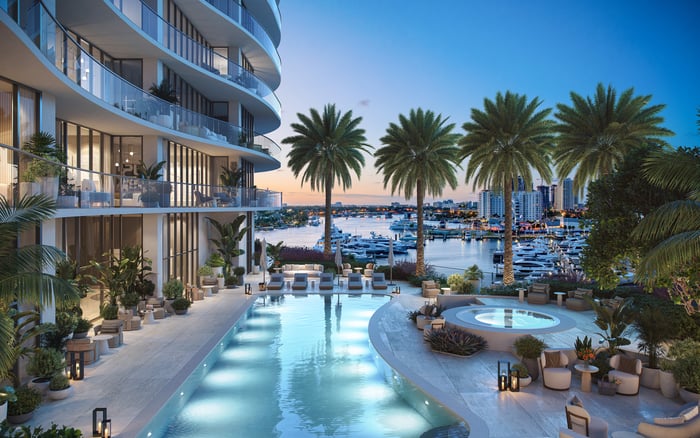
A buyer-focused comparison of The Surf Club Four Seasons Surfside and Five Park Miami Beach through planning logic, secondary-suite quality, staff-room utility, and long-term flexibility rather than branding alone.
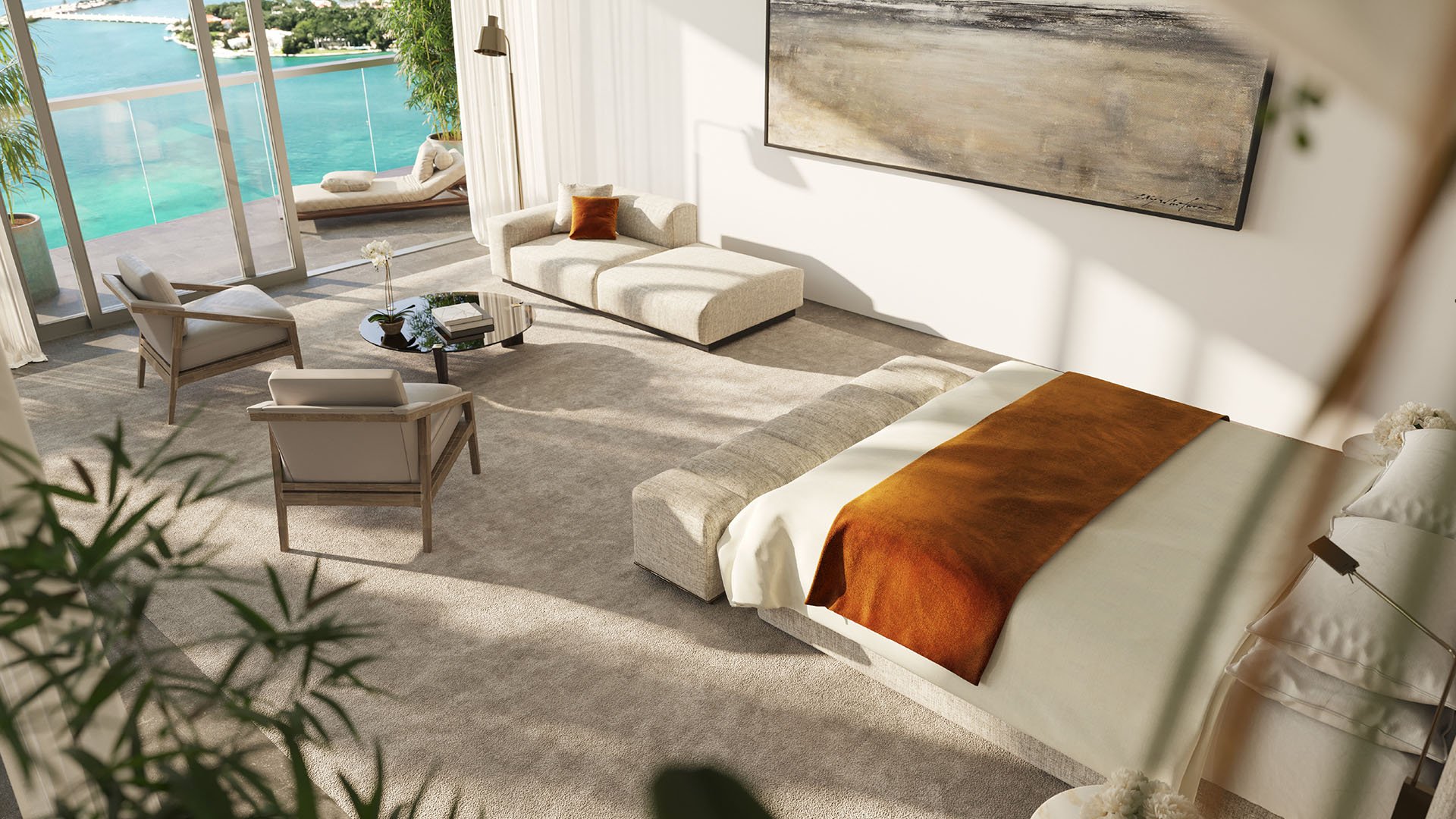
At the upper end of South Florida residential buying, branding can be useful shorthand, but it is rarely the final answer. The more durable question is architectural: which residence will still work when children age into privacy, guests become longer-stay visitors, work requires enclosed space, and staff needs shift from occasional help to daily support?
That is the more revealing comparison between The Surf Club Four Seasons Surfside and Five Park Miami Beach. One is understood through oceanfront resort-residence living in Surfside. The other is understood through a newer vertical tower format at the southern gateway to Miami Beach, with a more urban and park-oriented context than a purely beachfront-resort setting.
For a 10- to 20-year hold, the decision should move away from logo psychology and toward floor-plate geometry, column placement, wet-stack locations, elevator sequence, and the relationship between private rooms and service areas. These are the bones that determine whether a home can absorb a changing household gracefully.
The Surf Club side of the comparison begins with horizontal generosity. Its planning logic is closer to classic oceanfront apartment design than to a compact skyline tower. For the buyer who values ocean-facing frontage, lateral movement, and a legible distinction between entertaining and sleeping zones, that can be a meaningful advantage.
The key is not simply that a residence feels larger. It is whether the width creates rooms with independent identities. A broad plan can allow the primary suite to sit apart from secondary bedrooms, place public rooms along the view, and give service circulation a more discreet role. When done well, the result is a home that entertains elegantly without making every bedroom feel exposed to the social life of the apartment.
That matters in Surfside because buyers often compare several expressions of oceanfront living. A residence at The Delmore Surfside may appeal to someone studying newer interpretations of low-density coastal scale, while The Surf Club speaks more directly to resort-campus living and a heritage setting. In either case, the serious question is whether the plan gives secondary rooms enough autonomy to function as real suites.
Five Park Miami Beach
represents a different kind of value proposition. Its appeal is framed around vertical efficiency, a compact tower plate, skyline orientation, and a strong relationship to the southern Miami Beach gateway. The experience is less about spreading across a resort campus and more about organizing life through a contemporary tower format.
That can produce advantages for certain buyers. A newer tower framework may offer stronger elevator privacy and a more technology-driven sense of circulation than a traditional resort-residence format. If a household values arrival sequence, controlled access, and efficient movement from lobby to residence, this matters.
The tradeoff is that flexibility often depends on what can happen inside the envelope. Five Park’s floor-plan appeal is tied to reconfigurable internal partitions within a more compact vertical framework. That can be excellent for buyers who want an office today, a gym tomorrow, and a guest room later, provided wet locations, structural columns, and mechanical routes do not limit the desired changes.
Miami Beach buyers may also compare this logic with other contemporary offerings, such as The Perigon Miami Beach or Shore Club Private Collections Miami Beach. The comparison should not be about which name sounds most prestigious. It should be about which residence has the clearest internal logic for how the household will actually live.
Bedroom count is a blunt instrument. At this level, the better test is whether secondary bedrooms function as true suites. A true secondary suite has privacy, comfortable proportions, useful closet space, a bathroom relationship that does not feel borrowed from public circulation, and enough acoustic separation to support adult guests or older children.
In a broader oceanfront plan, secondary bedrooms may benefit from lateral separation and a more traditional public/private hierarchy. That can make them feel less like overflow rooms and more like legitimate private chambers. The question is whether they are positioned as part of a coherent sleeping wing or scattered as compromises around view corridors and structural constraints.
In a vertical tower plan, secondary bedrooms may depend more heavily on efficient stacking and internal reconfiguration. This can be useful when the buyer wants flexible programming, but it requires close review. If a room can only work as a den because its circulation is exposed, its closet is limited, or its bathroom access feels secondary, it should not be valued the same way as a true suite.
For a household expecting international guests, adult children, live-in relatives, or seasonal friends, this distinction becomes financially relevant. The best secondary bedroom is not the one that adds a number to the marketing description. It is the one that protects the dignity and independence of the person using it.
Staff-room usefulness is one of the most overlooked parts of luxury floor-plan analysis. A staff room should not be judged only by whether it appears on a plan. It should be evaluated as a functional back-of-house space that can realistically serve as nanny quarters, an office, a small gym, a service room, or a storage-intensive support zone.
The Surf Club’s more traditional planning logic may appeal to buyers who want staff and service functions placed in a classic, discreet manner. In that kind of residence, the staff area can support daily life without intruding on the ceremonial spaces of the home. The best version allows groceries, housekeeping, childcare, and maintenance to occur without collapsing the distinction between public rooms and working rooms.
Five Park’s advantage may be different. In a newer tower format, internal flexibility can allow the staff room or service-adjacent room to change purpose over time. A household might begin with a nanny room, later use it as an enclosed work-from-home space, and eventually convert it into a wellness or storage room. The issue is whether the room has the right adjacency, privacy, ventilation, and access to be more than a labeled leftover.
A buyer considering Five Park Miami Beach should therefore study not just the room names, but the paths between elevator, kitchen, laundry, staff room, and secondary bedrooms. A buyer considering The Surf Club should ask whether the broader resort-campus layout delivers more practical service separation over many years.
The cleanest decision begins with lifestyle hierarchy. If the household prioritizes oceanfront calm, resort integration, lateral width, and traditional separation between entertaining, sleeping, and service zones, The Surf Club Four Seasons Surfside is the more natural lens. Its appeal is architectural as much as experiential: frontage, width, and a quieter distribution of rooms.
If the household prioritizes a newer tower format, park adjacency, skyline orientation, elevator privacy, and adaptable interior programming, Five Park Miami Beach deserves close attention. Its strength is not trying to imitate a beachfront resort. It is offering a vertical, efficient, Miami Beach urban-residential experience.
The smartest buyers will request clean plan studies before they fall in love with finishes. Mark the columns. Trace the wet stacks. Walk the path from elevator to kitchen. Test where a nanny would sleep, where a teenager would retreat, where a long-term guest would unpack, and where a private office could exist without becoming part of the living room.
That is also why comparisons to Surfside and Miami Beach peers should be specific rather than emotional. The Delmore Surfside can help frame low-density Surfside expectations, while Miami Beach projects like The Perigon Miami Beach and Shore Club Private Collections Miami Beach help clarify how newer coastal residences handle privacy, arrival, and flexibility. Search language may point to Surfside, Oceanfront, and Miami Beach, but the real decision is still made inside the plan.
Is The Surf Club Four Seasons Surfside more resort-oriented than Five Park Miami Beach? Yes. The Surf Club is best understood through oceanfront resort-residence living, while Five Park is a newer vertical tower tied to an urban Miami Beach context.
Is Five Park Miami Beach directly comparable to a beachfront resort residence? Not exactly. Its appeal is more about vertical efficiency, skyline living, park adjacency, and adaptable internal programming.
Should branding decide between the two residences? No. Branding may shape perception, but the better test is floor-plate geometry, circulation, columns, wet stacks, and room usefulness.
What makes a secondary bedroom valuable in this comparison? It should function as a true suite, with privacy, proportion, storage, and a bathroom relationship that supports real long-term use.
Why do staff rooms matter so much in luxury residences? They often become the flexible back-of-house spaces that support childcare, work, fitness, storage, or household service over time.
Who is the more natural buyer for The Surf Club? A buyer who values ocean exposure, lateral width, resort integration, and traditional separation between public and private spaces.
Who is the more natural buyer for Five Park? A buyer who values a newer tower format, park adjacency, elevator privacy, vertical efficiency, and reconfigurable interiors.
What should buyers check before choosing a floor plan? They should trace circulation paths, identify structural columns, study wet-stack locations, and test how rooms might change over time.
Can a staff room become an office or gym? It can, if the location, privacy, ventilation, and access are strong enough to support uses beyond occasional service needs.
What is the main long-term ownership question? The main question is which residence has the stronger bones for changing household, guest, staff, and work needs over 10 to 20 years.
For a confidential assessment and a building-by-building shortlist, connect with MILLION.
If branded residences are on your mind — as a home or as an allocation — we would be glad to share what we are seeing, privately.
Begin a quiet conversation