A discreet Miami Beach buyer’s guide focused on elevator acoustics, landing privacy, corridor length and the subtle architecture of quiet daily arrivals.
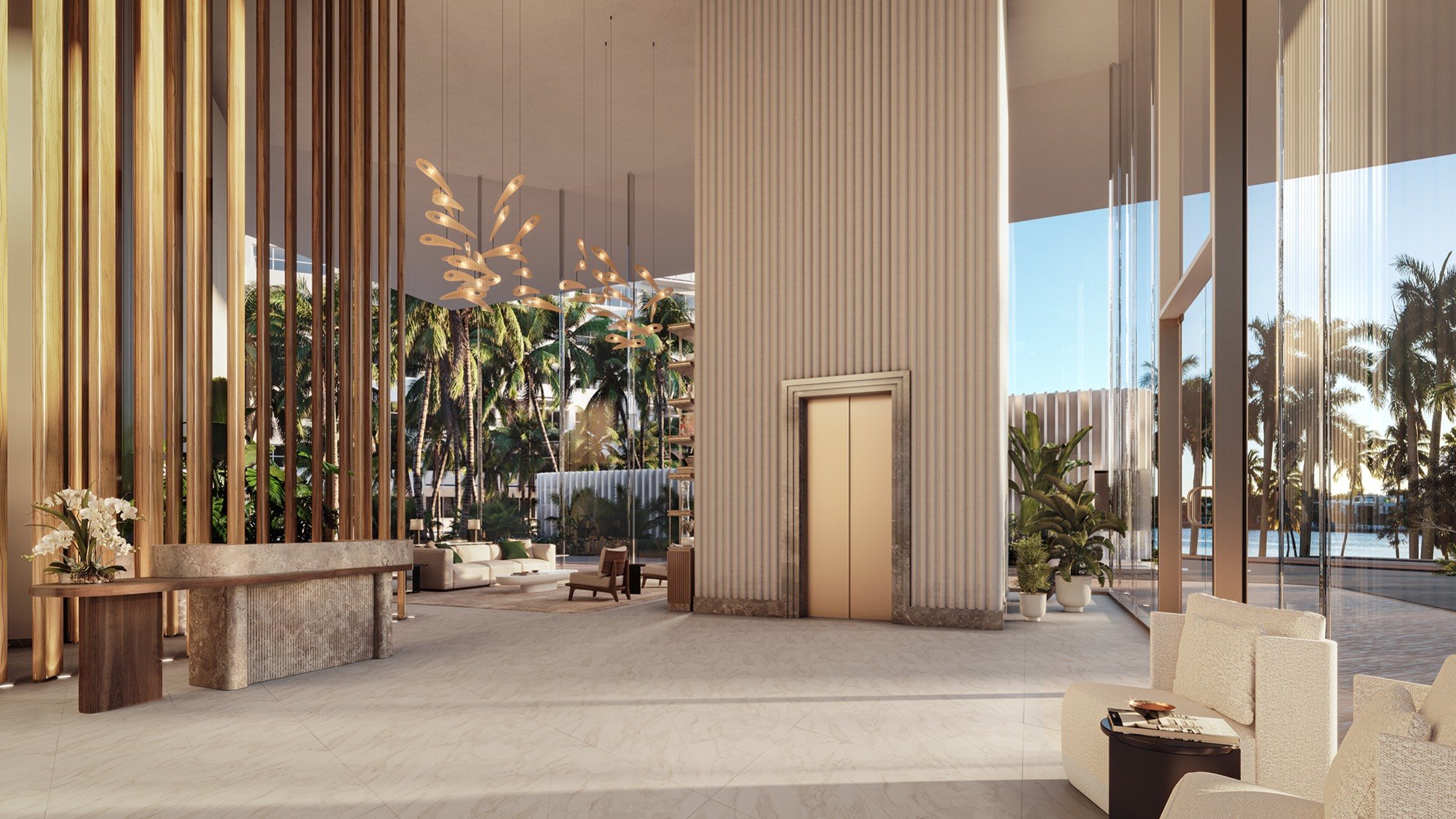
For a certain Miami Beach buyer, the most important amenity is not the most photographed one. It is not the pool deck, the wellness suite, or the view from a sunset terrace. It is the small daily sequence between arrival and home: the elevator ride, the landing, the corridor, the sound of another door closing, and the instinctive sense of whether the building breathes quietly or performs loudly.
Quiet elevators and short corridors have become serious decision points for buyers who divide time between cities, work from home, host discreetly, or simply value a calmer threshold. A residence can have dramatic architecture and still feel compromised if the elevator lobby is busy, the hallway carries sound, or the walk from lift to front door feels more hotel than private home.
In Miami Beach, this is especially relevant because buyers often compare very different residential formats: established oceanfront addresses, boutique private collections, newer branded residences, and high-service buildings near South Beach. Miami Beach is more than a location. It is a design question about how privacy, access, beach proximity, and daily circulation fit together.
1. The Perigon Miami Beach - north-of-center calm candidate
The Perigon Miami Beach belongs on the shortlist for buyers who want a Miami Beach address but are especially sensitive to how a building feels between the porte cochere, elevator, and residence entry. The key tour questions are direct: how many residences share an elevator landing, how service traffic is separated, and whether the approach to each home feels composed rather than exposed.
For this buyer profile, The Perigon Miami Beach should be evaluated less as a brochure image and more as arrival choreography. Listen for mechanical sound, pause at the landing, and notice whether the transition from elevator to door feels residential, not transient.
2. Shore Club Private Collections Miami Beach - heritage setting, private-residence test
Shore Club Private Collections Miami Beach is a natural candidate for buyers drawn to Miami Beach character but unwilling to compromise on discretion. The central question is whether the private-residence experience preserves separation from busier shared areas and maintains a serene lift sequence during peak daily movement.
Buyers should pay close attention to the rhythm of arrivals. A quiet elevator experience is not only about equipment. It is about lobby programming, staff routing, guest flow, and how intuitively residents can move without crossing unnecessary activity.
3. The Ritz-Carlton Residences® Miami Beach - service-led privacy candidate
The Ritz-Carlton Residences® Miami Beach is relevant for buyers who want a serviced residential environment but still require a calm path home. In this category, the right question is not whether service exists, but how elegantly it recedes from the resident’s private circulation.
During a private showing, study how the building handles deliveries, staff movement, guest arrivals, and resident elevators. For buyers who prize quiet, the most valuable service is often the service they do not hear.
4. 57 Ocean Miami Beach - beachfront lifestyle, corridor-sensitivity candidate
57 Ocean Miami Beach is a logical tour stop for buyers who want a beach-oriented Miami Beach life while remaining particular about hallway length and elevator feel. The residence may be appealing for the setting, but the decisive test is whether the everyday access pattern supports calm.
Walk the route at a realistic pace. Notice how long the corridor feels, whether doors are closely spaced, and whether the elevator landing has the quiet dignity of a private vestibule or the busier tone of a shared passage.
5. Five Park Miami Beach - South Beach edge, arrival-discipline candidate
Five Park Miami Beach is suited to buyers who want energy nearby, but not necessarily inside the residential sequence. For this audience, the essential question is whether the building’s internal circulation creates enough separation from the surrounding pace of South Beach.
A buyer should evaluate the elevator experience at different moments of the day if possible. Short corridors matter, but so does consistency: the best buildings feel controlled in the morning, composed in the evening, and intuitive when guests or service providers arrive.
The first showing is usually dominated by views, materials, and outdoor space. For buyers who care about quiet elevators and short corridors, the better approach is to slow down before entering the residence. Stand in the main lobby and listen. Ride the elevator without conversation. Step out and pause on the landing. Then walk to the front door as if it were an ordinary Tuesday, not a sales presentation.
A project such as The Perigon Miami Beach should be assessed through this lens: not just how the home lives once inside, but how the resident arrives, exits, receives guests, and handles daily service. A quiet building often reveals itself in seconds, through the absence of echo, friction, and unnecessary exposure.
Short corridors are not only a matter of distance. They influence how often residents pass one another, how sound travels, and how private a front door feels. A shorter, well-detailed corridor can make a condominium feel closer to a private villa. A long, highly trafficked hallway can dilute even the most expensive interior.
A short corridor can suggest a more deliberate residential plan, but it should never be judged in isolation. Buyers should consider whether the hallway is wide enough, whether lighting is soft but sufficient, whether the flooring absorbs or amplifies sound, and whether neighboring doors feel too close. The goal is not simply fewer steps. It is a calmer threshold.
At Shore Club Private Collections Miami Beach, the right buyer will look past the immediate glamour and study the separation between public atmosphere and private residence life. That separation is where true quiet often begins.
Likewise, The Ritz-Carlton Residences® Miami Beach should be viewed through the discipline of service design. In a luxury building, elevators are part of the hospitality promise. For a privacy-driven buyer, they must also be part of the acoustic strategy.
Quiet elevators and short corridors matter most to buyers who value repetition. The person who visits once a month may focus on the dramatic terrace. The person who lives there daily will notice the elevator tone, the landing traffic, and the sound of neighboring movement. Families with sleeping children, executives taking early calls, collectors receiving private guests, and second-home owners arriving after late flights all benefit from a quieter residential sequence.
This is why 57 Ocean Miami Beach and Five Park Miami Beach deserve careful circulation-focused tours rather than quick lifestyle comparisons. A buyer should ask to see the resident path, service path, and guest path as separate experiences. If those routes blur, the residence may still be beautiful, but less restful than expected.
The best Miami Beach purchase is not always the one with the loudest first impression. It is often the one that remains graceful on the hundredth arrival.
Why do quiet elevators matter in a luxury residence? They shape the daily arrival experience and can influence privacy, restfulness, and the perceived quality of the building.
Are short corridors always better? Not automatically. A short corridor must also be well proportioned, acoustically calm, and thoughtfully separated from service movement.
What should buyers listen for during a showing? Listen for elevator mechanics, hallway echo, door noise, lobby activity, and sound transfer near the residence entry.
Should I tour at more than one time of day? Yes. Morning, late afternoon, and evening can reveal different elevator patterns, staff movement, and guest activity.
Do private elevators guarantee quiet? They can help, but buyers should still evaluate mechanical sound, landing design, and how service access is organized.
What is the biggest mistake buyers make with corridors? They focus on finishes and overlook how many people pass the door, how sound travels, and how exposed the entry feels.
Is South Beach too active for quiet residential living? Not necessarily. The decisive factor is how well the building separates private residential circulation from surrounding activity.
Can a serviced residence still feel private? Yes, if service routes, resident elevators, and guest movement are carefully organized and discreetly managed.
Should elevator and corridor design affect resale thinking? Yes. Buyers increasingly value privacy, calm arrivals, and residential layouts that feel less transient over time.
What should I ask before making an offer? Ask how elevators are assigned, how deliveries move, how many residences share landings, and how guest access is controlled.
For a discreet conversation and a curated building-by-building shortlist, connect with MILLION.
If branded residences are on your mind — as a home or as an allocation — we would be glad to share what we are seeing, privately.
Begin a quiet conversation