A buyer-focused editorial on why private dining logistics, service choreography, and operational discretion matter in the quiet luxury conversation around 619 Residences by Foster + Partners + Nobu Hospitality.
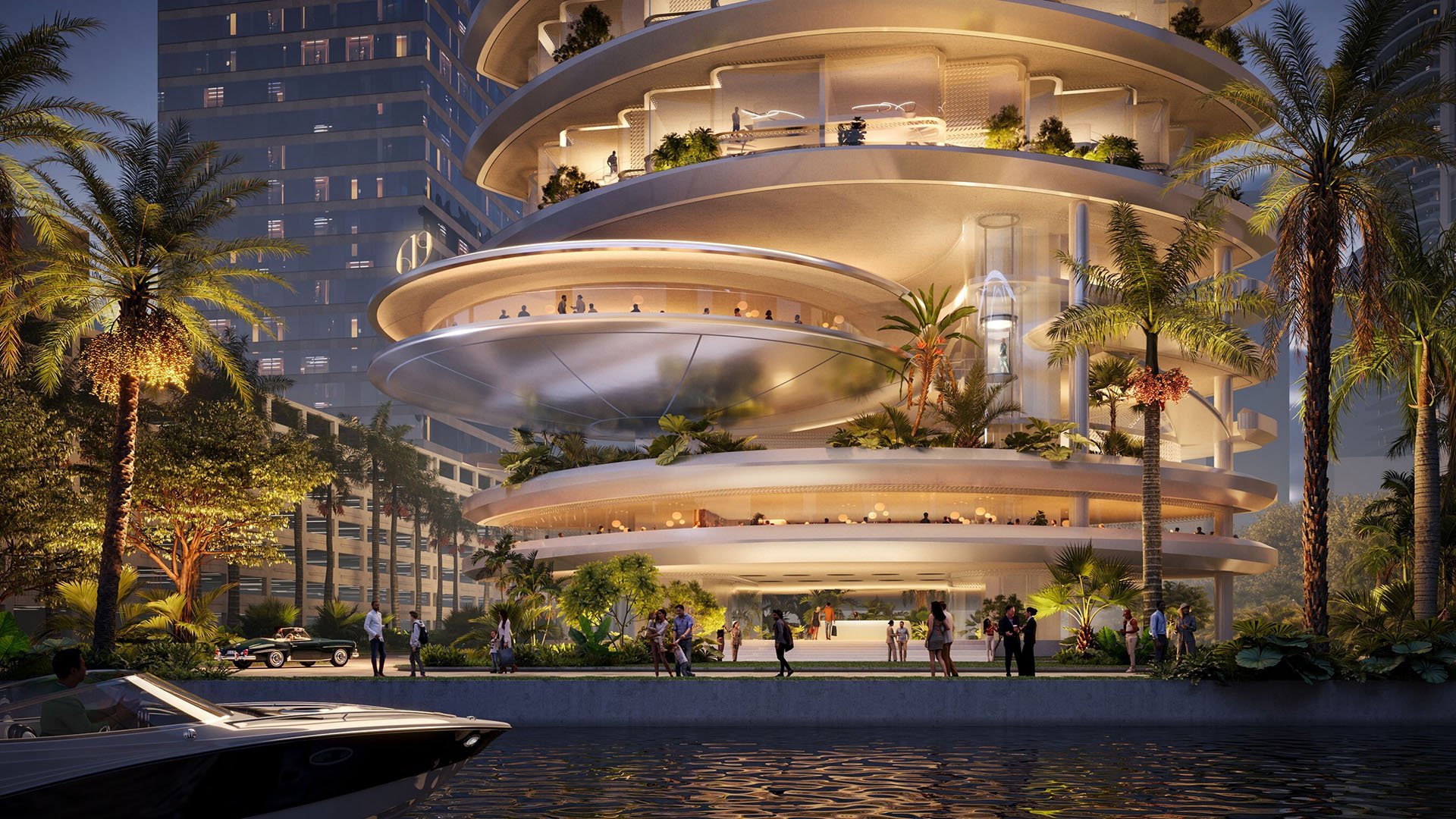
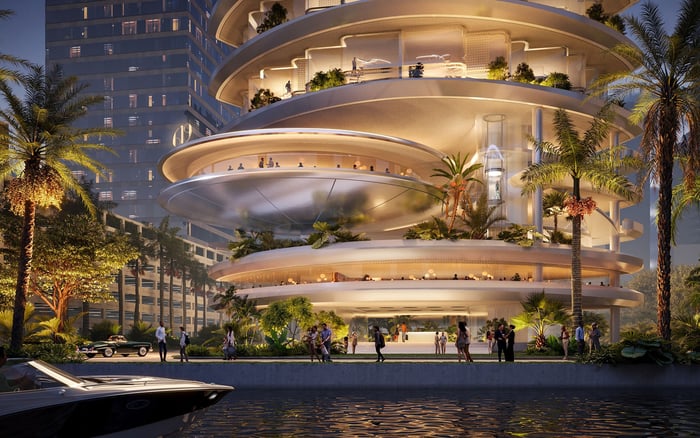
The most revealing luxury in a private residence is often not what a guest sees first. It is what happens before the door opens, after the final course is cleared, and in the silent margin between service and privacy. That is the lens through which to consider 619 Residences by Foster + Partners + Nobu Hospitality, a name that immediately brings architecture, hospitality, and residential life into conversation.
For South Florida buyers, private dining is no longer a decorative amenity category. It is a living system. The question is not simply whether a residence can host beautifully, but whether it can host without friction. Can a dinner be staged without turning the home into a workspace? Can staff move efficiently without crossing the family’s private zone? Can culinary ambition coexist with the calm that high-net-worth buyers increasingly expect from home?
That is the quiet luxury case: the most sophisticated residence is not the loudest one. It is the one where the logistics disappear.
Private dining is where design, staffing, building policy, and hospitality culture intersect. A residence may have a generous kitchen, but the sharper question is whether the building supports the full sequence of receiving, storing, preparing, plating, serving, clearing, and exiting. In true quiet luxury, choreography matters as much as the finish palette.
This matters in Brickell because the neighborhood is dense, vertical, and socially active. Owners may entertain family, visiting principals, business partners, private chefs, or wellness practitioners within the same week. A building that understands this rhythm does more than provide amenities. It reduces interruption.
In practice, buyers should focus on arrivals and handoffs. Where does a caterer enter? How is chilled food handled? Is there an intuitive path from service elevator to residence? Are private dining rooms supported by back-of-house functions, or are they simply attractive rooms? The distinction is subtle, but it shapes every hosted evening.
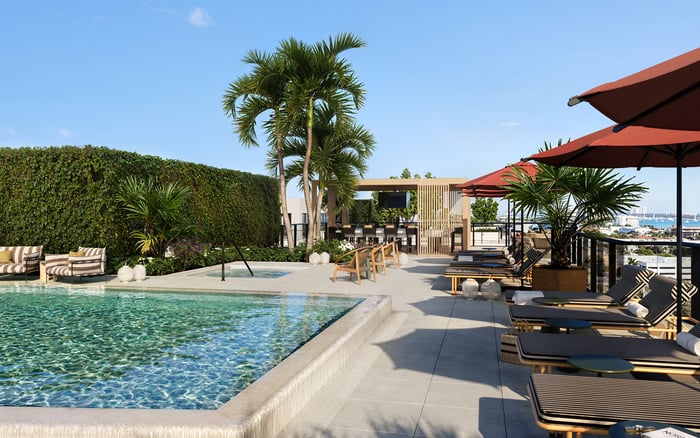
A spectacular terrace can impress during a walkthrough; a well-planned service route determines whether that same terrace dinner feels effortless.
Brickell has become one of South Florida’s most important laboratories for branded residential living. The category asks buyers to evaluate not only views and layouts, but also identity, service language, and consistency. A hospitality name can suggest a point of view, but the residence still has to function at the level of daily life.
That is why comparisons within the neighborhood are useful. ORA by Casa Tua Brickell naturally invites a conversation about food culture and residential social life, while Cipriani Residences Brickell places the idea of service heritage into a private-home context. In each case, the sophisticated buyer looks past the logo and asks how the experience is delivered.
The same discipline applies to St. Regis® Residences Brickell, where the broader branded-residence conversation centers on service expectations, ritual, and the way private living can be supported without feeling hotel-like. For a buyer considering 619 Residences by Foster + Partners + Nobu Hospitality, the relevant question is not whether the brand is recognizable. It is whether the hospitality promise can translate into residential calm.
A Foster + Partners association signals an architectural conversation, while Nobu Hospitality signals a service and dining conversation. Taken together, the buyer’s due diligence should become more exacting, not less. The appeal is not simply the pairing of names; it is the possibility of a home where spatial intelligence and culinary culture are aligned.
Private dining logistics begin with plan clarity. The best residences separate public, private, and service movements without making the home feel segmented. Guests should experience openness. Owners should feel protected. Staff should have enough practical logic to work without improvisation. When those conditions align, a dinner for six or a reception-style evening can feel equally composed.
This is also where acoustic control, elevator planning, package handling, storage, waste removal, and valet rhythm enter the luxury conversation. None photographs as dramatically as a skyline view, but each shapes the owner’s experience. Quiet luxury is built from small frictions removed in advance.
A private dining program should be tested through scenarios, not adjectives. Imagine a chef arriving with assistants during peak evening hours. Imagine wine being delivered separately. Imagine guests arriving at staggered times, a child needing privacy, and an owner taking a call before dinner. A building either supports that complexity or exposes it.
Buyers should ask how the residence and building work together. A beautiful home can still be undermined by poor circulation. Conversely, a thoughtfully serviced building can make even frequent entertaining feel controlled. The best due diligence includes questions about service elevator access, reservation protocols for private dining spaces, rules for outside chefs, staff registration, loading access, and cleanup paths.
It is also worth looking at how other Brickell addresses frame residential discretion. The Residences at 1428 Brickell adds another point of comparison for buyers studying how the neighborhood’s luxury inventory is moving beyond simple amenity counts. The most compelling buildings increasingly compete on how life is managed, not just how it is displayed.
For the ultra-private buyer, the point of private dining is control. It allows the owner to entertain at the level of a destination restaurant without surrendering timing, guest list, atmosphere, or privacy. It also supports a more residential kind of luxury, where family routines and social obligations can coexist.
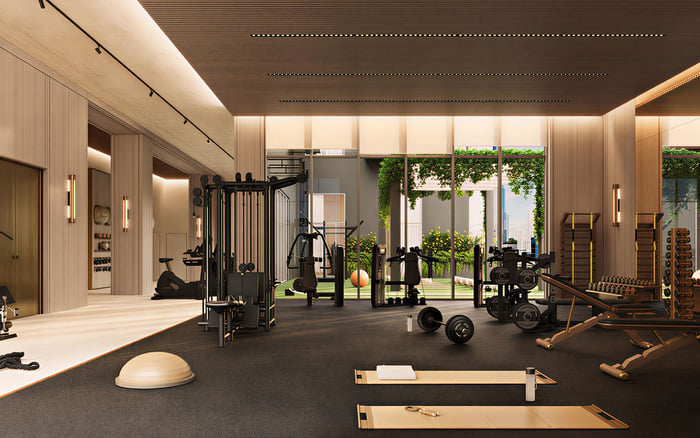
This is particularly relevant for buyers who divide time between South Florida and other cities. A second home must be easy to activate. If a residence requires too much coordination, it becomes less restful. If the building anticipates the operational needs of dining, hosting, wellness, transportation, and security, it begins to feel like a genuine base rather than a beautiful address.
That is the deeper appeal of the 619 Residences conversation. The name suggests a refined axis of architecture and hospitality, but the enduring value will be judged by how gracefully the building supports private life. For discerning buyers, the luxury is not a promise of constant service. It is the option to summon precision when needed, then return to silence.
Why are private dining logistics important in a luxury residence? They determine whether entertaining feels effortless or disruptive, especially when chefs, staff, deliveries, guests, and family routines overlap.
What should buyers ask about private dining before purchasing? Ask about service elevator access, chef protocols, food delivery routes, storage, cleanup procedures, and privacy between guest and service areas.
Does a branded residence automatically deliver better dining experiences? Not automatically. The brand may set expectations, but buyers should evaluate the operational design behind the experience.
Why is Brickell relevant to this conversation? Brickell combines vertical living, frequent entertaining, business travel, and dense urban movement, making service choreography especially important.
How does quiet luxury differ from traditional luxury in this context? Quiet luxury prioritizes discretion, ease, precision, and privacy rather than overt spectacle or amenity volume.
Should buyers focus more on private dining rooms or in-residence kitchens? Both matter, but the real test is how the full sequence of preparation, service, clearing, and staff movement is handled.
Can private dining logistics affect resale appeal? They can strengthen appeal for buyers who value entertaining, privacy, and high-functioning residences, though each purchase decision remains individual.
What role does hospitality branding play for owners? It can shape expectations around service culture, tone, and lifestyle, but execution inside the residence is what ultimately matters.
Are outdoor dining areas part of the logistics review? Yes. Buyers should consider service routes, weather flexibility, furniture planning, privacy, lighting, and cleanup from any outdoor dining area.
What is the main buyer takeaway for 619 Residences by Foster + Partners + Nobu Hospitality? Evaluate the residence through the lens of operational elegance, where architecture, privacy, and dining support the owner without intruding.
When you're ready to tour or underwrite the options, connect with MILLION.
If branded residences are on your mind — as a home or as an allocation — we would be glad to share what we are seeing, privately.
Begin a quiet conversation