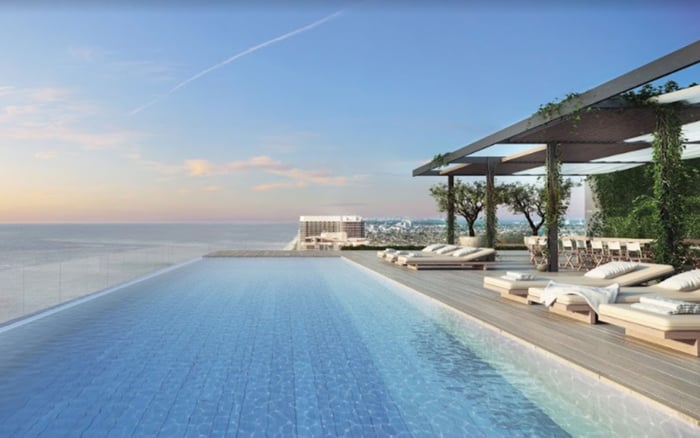
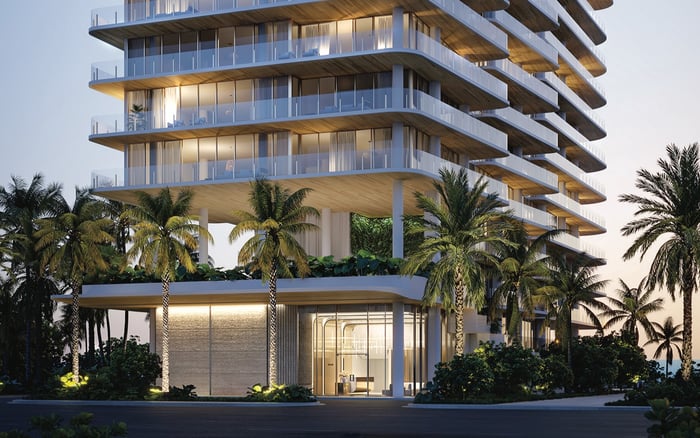
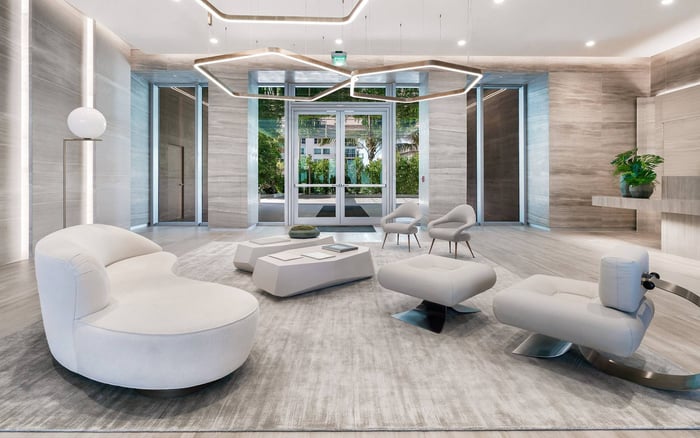
A discreet buyer’s guide to how beachfront and bayfront orientations shape privacy, daylight, terrace life, and resale positioning across South Florida luxury residences.
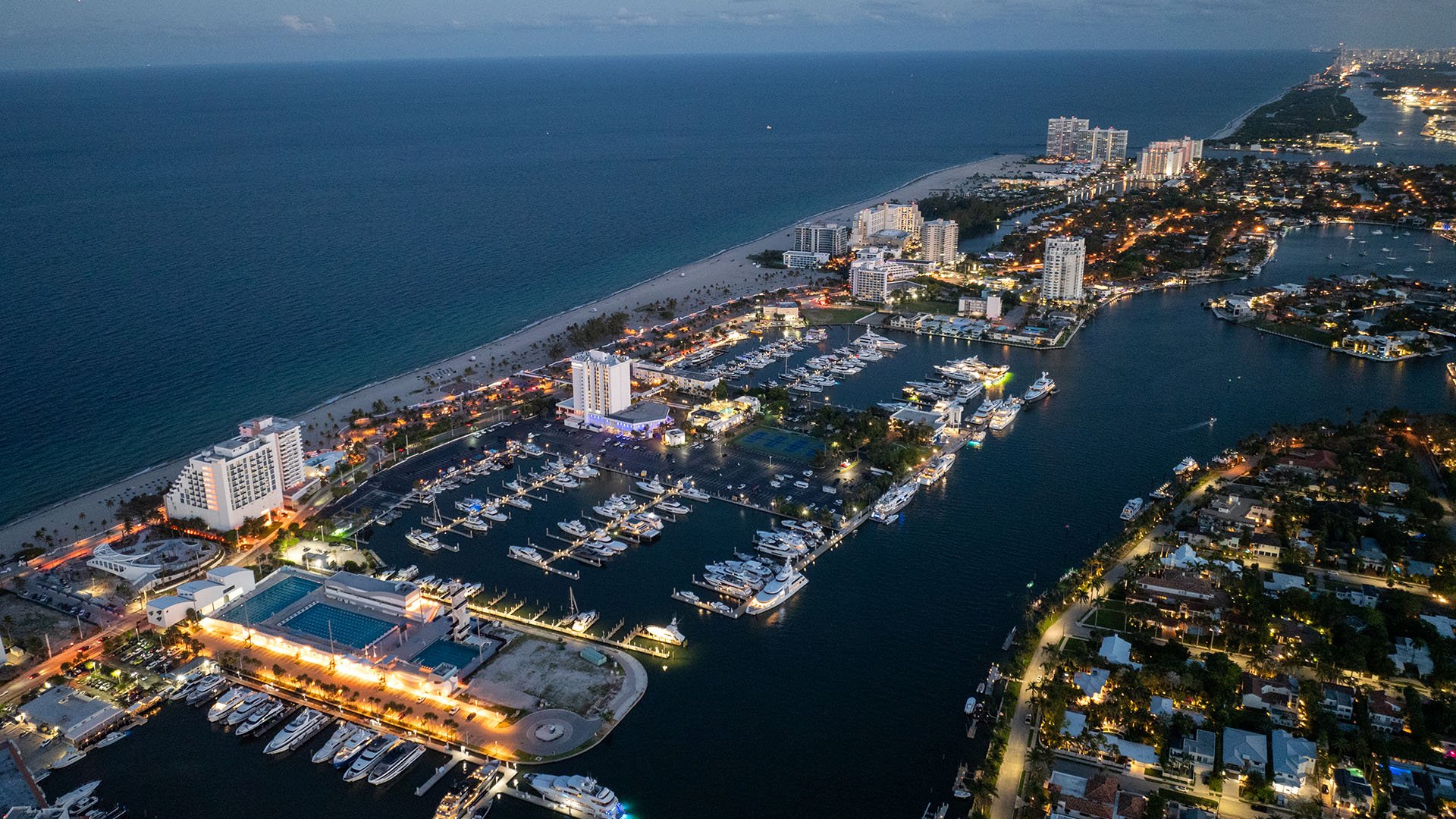
In South Florida, the most valuable rooms are often composed around what happens beyond the glass. A beachfront residence and a bayfront residence may both promise water, but they deliver distinct daily experiences. One faces the open Atlantic, with a horizon that feels elemental and uninterrupted. The other turns toward the bay, where water, skyline, boats, bridges, and sunsets create a more layered composition.
For the ultra-premium buyer, this distinction is not cosmetic. Orientation shapes how a home receives light, how private it feels from neighboring buildings and passing activity, how often the balcony or terrace is used, and how future buyers may interpret its rarity. The right choice is less about declaring one view superior than matching the view to the way a household actually lives.
Oceanfront living carries a particular emotional clarity. The view is expansive, the horizon is clean, and the soundscape is shaped by surf rather than traffic or marina movement. Buyers considering 57 Ocean Miami Beach are often drawn to this direct relationship with sand, sky, and water, where the residence feels connected to a broader coastal ritual.
The strongest beachfront homes tend to offer a sense of release. Morning light arrives with intensity, rooms can feel brighter earlier in the day, and the visual field is less interrupted by neighboring structures when the building is properly positioned. For many owners, this is the classic South Florida fantasy: wake to the ocean, walk directly toward the beach, and return to a home that feels detached from the city even when it is minutes away.
There are tradeoffs. Beachfront exposure can be more public at lower levels, where beachgoers, pool decks, and pedestrian paths may affect privacy. Wind, glare, and direct sun can influence how interiors are furnished and how terraces are shaded. A high floor with thoughtful setbacks may feel serene, while a low floor may feel animated. The word oceanfront should always be paired with a careful reading of height, angle, and the spaces immediately below.
Bayfront living is rarely static. The water reflects the hour, the season, and the city around it. In the morning, the bay may feel calm and silver. By evening, it can gather the glow of the skyline and the movement of boats. For buyers comparing residences such as La Maré Bay Harbor Islands, the appeal often lies in this quieter but more dimensional water view.
A bayfront home can feel more private when its orientation looks across open water rather than toward another tower. It can also feel more social when the view includes docks, bridges, islands, or downtown lights. This is where due diligence becomes specific. The same bay view may feel meditative in one stack and exposed in another, depending on neighboring parcels, marina activity, and the geometry of the shoreline.
Bayfront orientation can also reward buyers who prefer evening light. Western and southwestern outlooks may create dramatic sunset moments, while northern exposures can offer a softer, more consistent brightness. For collectors, frequent travelers, and second-home owners, that modulation of light can matter as much as the view itself.
Privacy is not simply a function of price or floor height. It is a function of sightlines. A beachfront residence may face the open ocean but still overlook a busy pool deck. A bayfront residence may feel tucked away yet look directly into another building across a narrow waterway. The most discreet homes are those where the primary living areas, bedrooms, and terraces avoid direct visual contact with neighboring interiors.
This is why orientation should be evaluated in person at the times of day the owner will use the home most. Morning coffee, late-afternoon reading, dinner on the terrace, and evening entertaining each reveal different privacy conditions. A residence that feels open during a midday showing may feel more exposed after sunset, when interior lights turn glass into a stage.
In Surfside, buyers looking at The Delmore Surfside may be thinking not only about water, but about scale, approach, and the feeling of arrival. In low-density luxury contexts, privacy often comes from the total composition: frontage, building spacing, landscape, amenity placement, elevator access, and the number of residences sharing the same vertical experience.
Light is the hidden architect of a waterfront residence. East-facing beachfront homes can deliver brilliant mornings and a crisp sense of energy. West-facing bayfront homes can become theatrical in the evening. North-facing views may feel elegant and balanced, while south-facing exposures often carry a warmer, brighter character throughout the day.
The best buyers study how light touches the rooms, not just the balcony. Does the primary suite wake gently or abruptly? Does the kitchen receive glare during the hours it is most used? Can art be placed safely away from direct exposure? Does the terrace remain usable at sunset, or does it require deep shading? These details shape daily comfort and long-term satisfaction.
In urban waterfront settings, orientation can be especially nuanced. A residence at Aria Reserve Miami may attract buyers who want water views within a more metropolitan rhythm, where skyline, bay, and neighborhood energy share the frame. The question becomes whether the owner wants nature to dominate the view or prefers a more composed dialogue between water and city.
Resale begins the moment a future buyer steps through the door and looks toward the glass. If the view creates an immediate emotional response, the home has an advantage. If the view requires explanation, its audience may narrow. This does not mean only direct ocean views matter. A beautifully framed bay view with privacy, sunset exposure, and usable outdoor space can be deeply compelling.
The strongest resale profiles usually combine clarity and livability. A direct horizon is easy to understand. A protected bay panorama can be equally memorable. A view corridor that depends on a vacant neighboring parcel is more vulnerable. Buyers should ask not only what the view is today, but what adjacent land, public spaces, or future construction could mean for the experience over time.
For beachfront buyers, scarcity and immediacy are persuasive. For bayfront buyers, atmosphere and usability can be the differentiators. The premium residence is the one that feels inevitable, where the view, floor plan, privacy, and light all support the same lifestyle narrative.
Start with routine. If the household is most alive in the morning, an east-facing beachfront home may feel energizing. If entertaining at sunset is central to the lifestyle, bayfront orientation may offer more emotional range. If privacy is paramount, study the neighboring buildings and amenity decks before falling in love with the water.
Then test the terrace. A large outdoor space has value only if it is comfortable enough to use. Wind, sun angle, depth, railing transparency, and adjacency to other balconies all matter. Finally, consider how the residence photographs, how it feels at night, and how simply its value can be communicated to the next buyer.
Is beachfront always more desirable than bayfront? Not always. Beachfront offers immediacy and horizon, while bayfront can offer privacy, sunsets, skyline drama, and calmer daily use.
Which orientation usually has stronger morning light? East-facing beachfront residences often receive strong morning light. The exact experience depends on floor height, overhangs, glass, and neighboring structures.
Can a bayfront residence feel more private than an oceanfront one? Yes. A bayfront home facing open water can feel very private, while a lower beachfront home may overlook active beach or amenity areas.
What should buyers study before choosing a view? Study sightlines, floor height, terrace depth, neighboring buildings, sun exposure, and how the view feels at different hours.
Does a higher floor always improve privacy? Usually it helps, but not always. A high floor can still face another tower, while a lower floor may be protected by setbacks or landscape.
Is sunset exposure better for entertaining? It can be, especially for bayfront homes with western views. Buyers should confirm glare, heat, and terrace comfort during late afternoon.
How does view orientation affect interiors? Orientation influences brightness, furniture placement, art protection, window treatments, and how often outdoor spaces feel comfortable.
What makes a waterfront view easier to resell? A clear, memorable view with privacy and usable outdoor space is easier for future buyers to understand quickly.
Should second-home buyers prioritize beach or bay? They should prioritize how they spend their limited time in residence. Some want beach rituals, while others want quiet sunsets and city lights.
What is the best way to shortlist comparable options for touring? Start with location fit, delivery status, and daily lifestyle priorities, then compare stacks and elevations to validate views and privacy.
For a confidential assessment and a building-by-building shortlist, connect with MILLION.
If branded residences are on your mind — as a home or as an allocation — we would be glad to share what we are seeing, privately.
Begin a quiet conversation