A buyer-focused comparison of The Well Coconut Grove and Ziggurat Coconut Grove, examining wellness-led living against architecture-led identity in Coconut Grove’s luxury market.
Coconut Grove has always rewarded nuance. Its most compelling residences are rarely judged on scale alone, and the strongest buyers in the neighborhood tend to look for a clear point of view: shade, privacy, walkability, design restraint, hospitality, or a more intentional way of moving through the day. That is why the comparison between The Well Coconut Grove and Ziggurat Coconut Grove is less about which building has the louder amenity sheet and more about what kind of luxury a buyer wants to inhabit.
The Well Coconut Grove is best understood as the wellness-led proposition. Its distinction lies in health, fitness, spa, lifestyle infrastructure, and the promise that the building itself can support a better daily rhythm. Ziggurat Coconut Grove occupies the other side of the conversation. It is the architectural-statement proposition, where design identity, neighborhood visibility, and the emotional pull of a recognizable residential object become central to value.
For a Coconut Grove buyer, the question is not simply practical. It is philosophical. Should a residence work hardest on the inside, shaping rituals of recovery, movement, and convenience? Or should it work hardest in the neighborhood, presenting itself as a lasting architectural marker within one of Miami’s most character-sensitive enclaves?
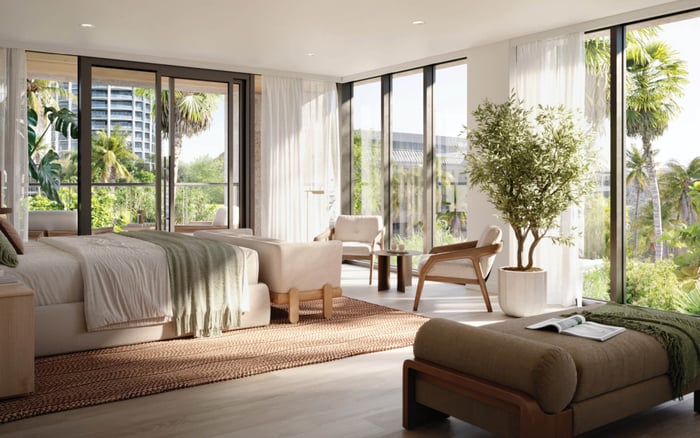
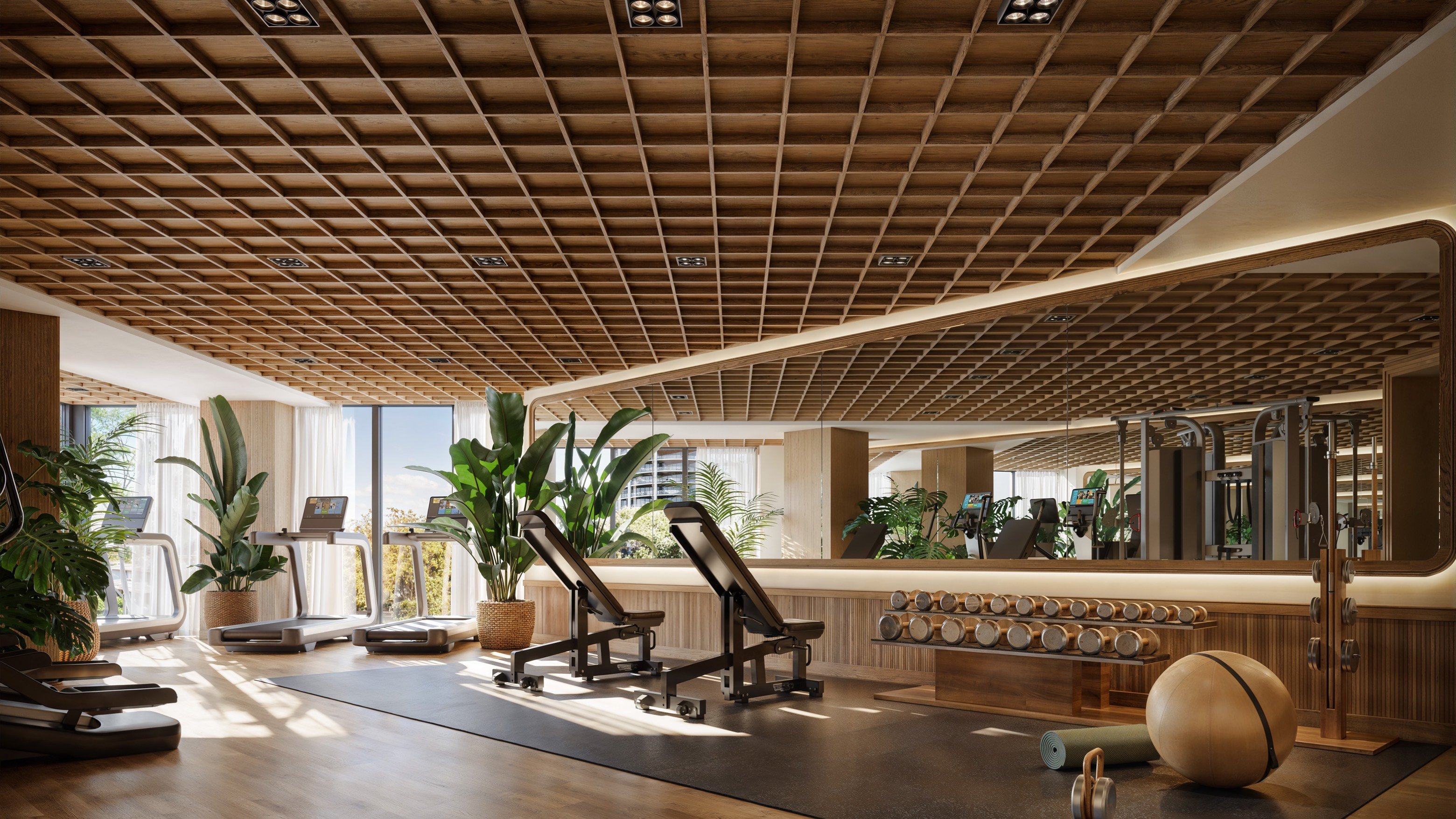
The Well Coconut Grove speaks to the affluent purchaser who treats health as infrastructure rather than an occasional appointment. In this reading, luxury is not only marble, views, or valet service. It is daily access to wellness without leaving the residential ecosystem. The building’s appeal is rooted in the idea that fitness, spa, recovery, and lifestyle services can become part of ordinary life, reducing friction and elevating routine.
That positioning matters because modern luxury buyers increasingly measure value by what a residence gives back to their time. A wellness-led project suggests that the building is not passive. It is an active participant in the owner’s health strategy, offering a resort-like environment that can support discipline, relaxation, and convenience. For buyers who travel often, work intensely, or split time between multiple homes, that level of integration can feel more valuable than spectacle.
The long-term question is whether wellness programming creates more durable buyer loyalty than visual impact. The answer depends on lifestyle. A wellness-minded owner may see The Well Coconut Grove as a functional luxury system, one that supports the body, calendar, and household cadence. The value is less about being seen from the street and more about what happens before breakfast, after a flight, or at the end of a demanding week.
Ziggurat Coconut Grove approaches luxury through a different lens. Its editorial strength is architectural character and neighborhood presence. Here, the building’s identity matters because buyers are not only purchasing interior comfort. They are choosing to live inside a design statement that may contribute to the visual language of Coconut Grove.
For design-forward buyers, architecture can operate like collectability. Scarcity is not only a matter of limited inventory. It can also come from a project with a distinctive profile, façade logic, massing, or streetscape posture. When a building becomes easy to recognize, it may carry a form of emotional and cultural value that quieter residences do not pursue.
That does not mean boldness automatically equals quality. In Coconut Grove, design must contend with an established neighborhood character that prizes canopy, texture, and a certain organic ease. Ziggurat Coconut Grove’s success as a neighborhood statement depends on how convincingly its architectural language fits that context while still asserting a clear identity. The buyer drawn to it is likely less concerned with a wellness thesis and more interested in the feeling of owning a residence with visual distinction.
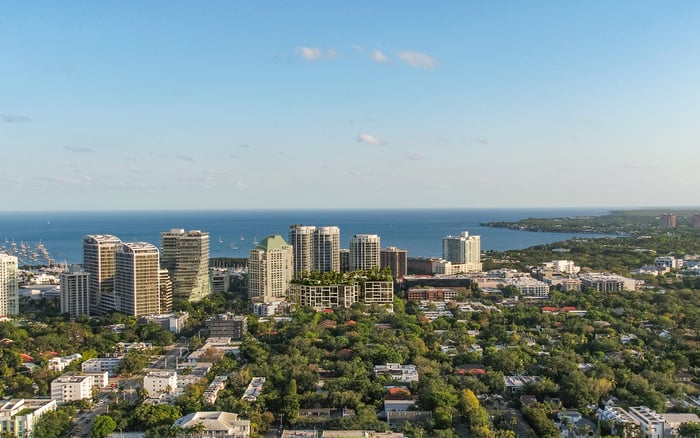
The Grove is already home to several projects that approach luxury from distinct angles, which makes this comparison more revealing. Arbor Coconut Grove has often appealed to buyers who appreciate a more intimate Grove sensibility, while The Lincoln Coconut Grove sits within the broader conversation about boutique-scale living in the neighborhood. Four Seasons Residences Coconut Grove adds another dimension, where a globally recognized hospitality name helps frame expectations around service and lifestyle.
Within that field, The Well Coconut Grove and Ziggurat Coconut Grove feel especially instructive because they are not competing on the same emotional frequency. One presents luxury as an internal ecosystem. The other presents luxury as outward identity. Both speak to differentiation beyond location, finishes, and views, which is increasingly the real test in South Florida’s premium residential market.
The most sophisticated buyers will not reduce the choice to wellness versus architecture in a simplistic way. A beautiful building still needs livable interiors, and a wellness-led residence still benefits from strong design. The sharper question is where the project places its center of gravity. The Well Coconut Grove places it in lived experience. Ziggurat Coconut Grove places it in architectural presence.
A buyer choosing between these two concepts should begin with daily behavior. If the highest priority is health-conscious routine, recovery, ease, and the ability to fold wellness into the home environment, The Well Coconut Grove has the clearer narrative. Its luxury is measured in repeated use, not occasional admiration.
If the highest priority is design identity, architectural scarcity, and the satisfaction of living in a project with a strong neighborhood signature, Ziggurat Coconut Grove becomes the more compelling thesis. Its luxury is measured in presence, recognition, and the feeling that the building itself is part of the purchase.
The decision also depends on holding strategy. Wellness infrastructure can create everyday utility for an owner-user, especially one who intends to spend meaningful time in the residence. Architectural distinction can create emotional attachment and a sense of collectability, particularly for buyers who respond to design as an asset class in its own right. Neither is automatically superior. They are different forms of confidence.
The Well Coconut Grove sells the promise of living better inside the building. Ziggurat Coconut Grove sells the power of the building as a design statement within Coconut Grove. That is the cleanest way to understand the comparison, and it is the lens most useful to serious buyers.
For those who see luxury as health, rhythm, and service-supported ease, The Well Coconut Grove is the more natural fit. For those who see luxury as form, identity, and architectural authorship, Ziggurat Coconut Grove may be more seductive. In a market where many projects can offer premium finishes, the real distinction is no longer simply what a residence contains. It is what the residence believes luxury should be.
What is the main difference between The Well Coconut Grove and Ziggurat Coconut Grove? The Well Coconut Grove is positioned around wellness-led living, while Ziggurat Coconut Grove is positioned around architectural identity and neighborhood presence.
Is The Well Coconut Grove mainly about amenities? It is better understood as a lifestyle system, with health, fitness, spa, and resident experience forming the core of its appeal.
Is Ziggurat Coconut Grove mainly about design? Yes, its strongest positioning is architectural character, visual distinction, and the idea of a building that can make a neighborhood statement.
Which project is better for an owner-user? A wellness-oriented owner-user may prefer The Well Coconut Grove if daily health routines and convenience are central priorities.
Which project is better for a design collector? Ziggurat Coconut Grove may appeal more to buyers who value architectural scarcity, visual identity, and the emotional pull of design.
Are prices, unit counts, or delivery dates central to this comparison? This comparison focuses on positioning and buyer psychology rather than unverified numerical details.
How should buyers evaluate The Well Coconut Grove? Buyers should focus on the quality of wellness programming, spa and fitness access, lifestyle services, and how often those features will be used.
How should buyers evaluate Ziggurat Coconut Grove? Buyers should study façade language, massing, streetscape presence, and how the architecture relates to Coconut Grove’s character.
Can wellness-led design support long-term value? It can, especially when buyers view health, recovery, and time efficiency as essential parts of luxury living.
Can architecture-led design support long-term value? It can, particularly when a project achieves recognizable identity and remains compatible with its neighborhood context.
For a tailored shortlist and next-step guidance, connect with MILLION.
If branded residences are on your mind — as a home or as an allocation — we would be glad to share what we are seeing, privately.
Begin a quiet conversation