In South Florida’s ultra-prime market, waterfront value is increasingly underwritten like an operating asset. Buyers still pay for light, views, and prestige, but they also price elevation, engineered protections, and insurability. With global sea level already higher than a century ago and climate analytics widening beyond FEMA maps, the luxury conversation is shifting from “Is it beautiful?” to “Is it durable?” This MILLION Luxury editorial frames the resilience premium through market pricing signals, underwriting realities, and the specific choices that help protect long-horizon ownership.
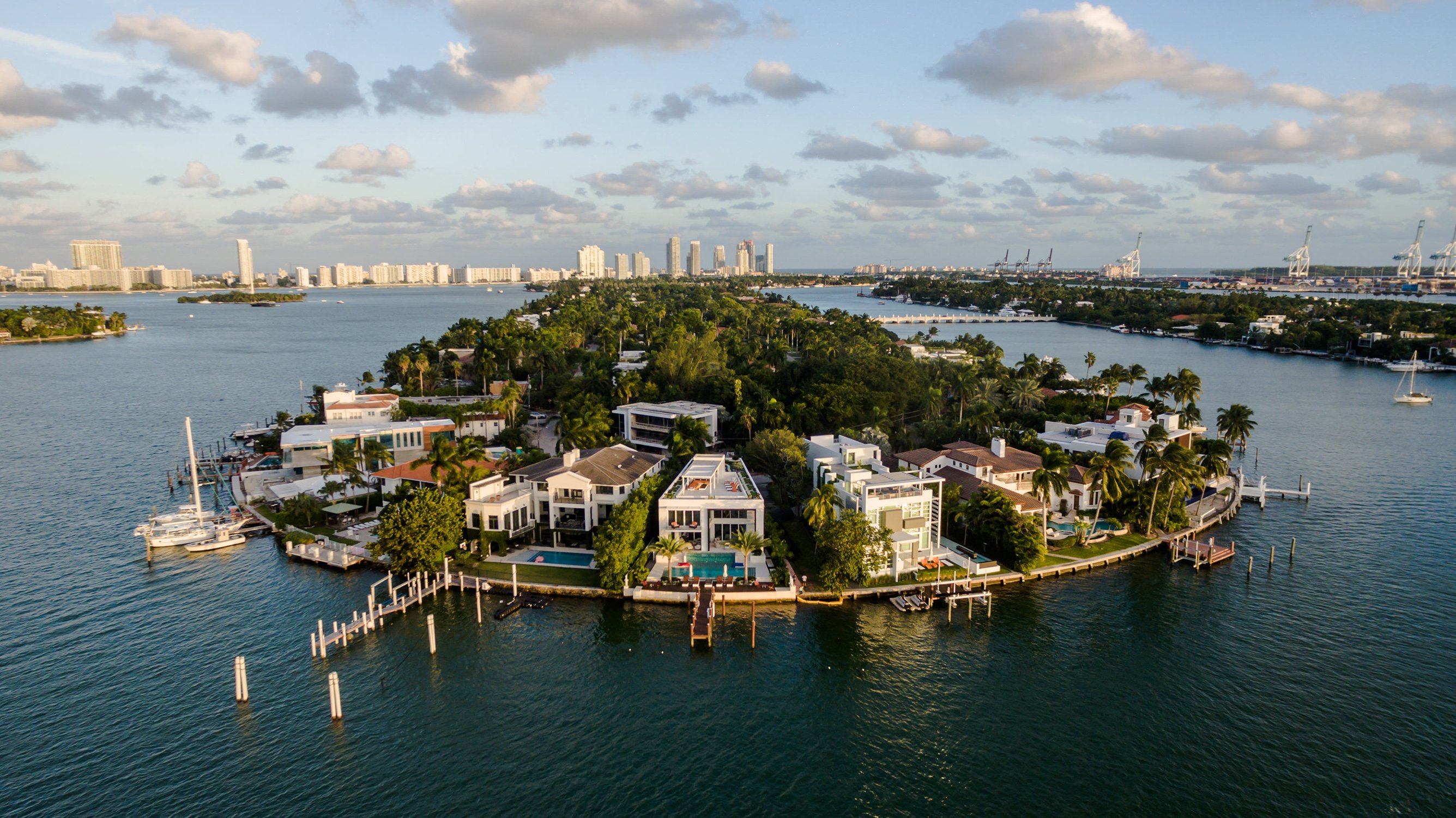
South Florida’s waterfront has always sold a clear promise: immediate access to the ocean, sunlight, views, and a lifestyle built around terraces, boating, and outdoor living. That promise remains intact. What has changed is the ownership math behind it.
Global mean sea level has risen roughly 8 to 9 inches since 1880, a baseline shift that increases the frequency and severity of coastal flooding for shoreline properties. At the same time, the broader housing conversation has moved from “climate risk exists” to “climate risk is priced.” A Realtor.com 2025 climate-risk analysis found 26.1% of U.S. homes, representing about $12.7 trillion in value, face at least one severe or extreme climate risk.
For an ultra-premium buyer, the conclusion is rarely retreat. It is discrimination within the category. The new status signal is not only a premier address, but an address that is engineered, documented, and insurable over a long holding period.
One fact defines the current moment: the top end continues to transact, even as underwriting gets stricter.
Across Miami-Dade, Broward, and Palm Beach, South Florida recorded 262 home sales priced at $10 million and above in the first nine months of 2025. In Miami Beach’s Q3 2025 luxury condo market, the median sale price was reported around $2.0 million, up about 8.1% year over year, and the average price per square foot near $1,292, up about 15.1% year over year.
This is not a market rejecting “waterfront” as a whole. It is a market segmenting the waterfront set.
That segmentation becomes obvious at the micro-market level. Fisher Island led Miami-Dade luxury pricing in Q3 2025 at roughly $2,708 per square foot and an approximately $11.2 million median sale price. Midyear 2025 reporting also described South Beach luxury condos with price per square foot rising about 37% year over year to roughly $1,538.
The takeaway is nuanced: elite coastal districts can still accelerate, but “elite” is increasingly defined by resilience signals that protect both daily livability and future liquidity.
Luxury buyers already navigate complex title, condo governance, and cross-border tax considerations. Climate exposure adds another technical layer, and it starts with the map gap.
As of 2025, nearly 4 million homes worth about $2.3 trillion sit in FEMA Special Flood Hazard Areas (SFHAs), where flood insurance and financing constraints can materially affect closing timelines and loan terms. Meanwhile, modeling from the First Street Foundation suggests roughly 2 million additional homes, worth about $1 trillion, may carry flood risk comparable to FEMA SFHAs while sitting outside FEMA high-risk zones.
In practical terms, two properties can look similar on a standard flood map and still be treated very differently by insurers, lenders, and sophisticated buyers using broader analytics. The premium audience does not need to become hydrologists. They do need to expect that a clean FEMA designation is no longer a final answer.
Realtor.com has described a “neighborhood divide,” where climate risk plus insurance and financing friction shifts demand toward better protected or higher-ground submarkets within the same coastal metro.
This is the resilience premium in action. In research summarized by The Invading Sea, lower-elevation homes have been selling for less and appreciating more slowly than higher-elevation comparables as buyers price in flood exposure. A national study cited in that same reporting found sea-level-rise–vulnerable properties sold at about 7% discounts on average, widening to roughly 19% for homes that would be underwater with 1 foot of sea-level rise.
For South Florida buyers, the lesson is simple: do not treat Miami Beach as a monolith. Sophisticated underwriting separates value by block, elevation, drainage performance, building age, and the consistency of capital improvements.
Resilience becomes most legible when it is translated into building characteristics that protect both use and resale. In the MILLION Luxury framing, it is engineered performance plus insurability, priced alongside views, brand, and location.
In buyer conversations, a practical resilience checklist often includes:
These may not be glamorous topics, but they have become luxury topics. They influence comfort during weather events, insurance pricing, and how smoothly a property can trade in the future.
Miami Beach remains a global reference point for luxury, which is exactly why resilience is being priced here rather than preached.
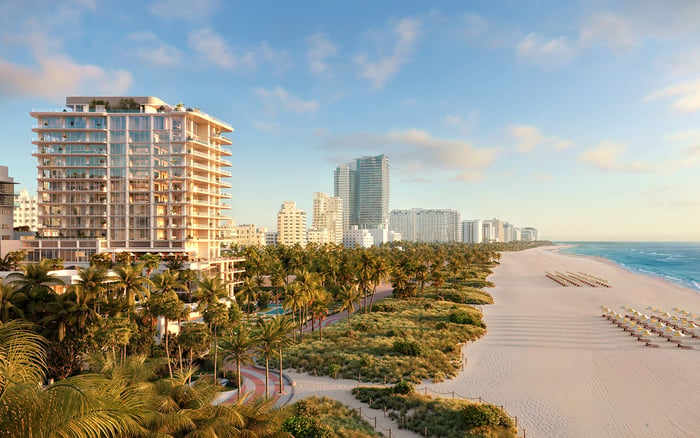
Buyers drawn to branded service, strong amenity programs, and trophy architecture often gravitate to properties such as Faena House Miami Beach, where the appeal is equal parts lifestyle and identity. Others favor the renovated-icon energy of Shore Club Private Collections Miami Beach, especially for owners who value hospitality DNA and a turnkey experience.
For those seeking an established, globally recognized Miami Beach proposition, Setai Residences Miami Beach often enters the conversation as a benchmark for service and location. And for a quieter, more residential orientation within the Beach, The Ritz-Carlton Residences® Miami Beach can resonate with buyers who prioritize discretion and daily operational polish.
Across all of these options, the constant is diligence. Beyond reviewing financials and rules, today’s buyer expects building-level clarity on storm protocols, critical systems, and how the property performs when weather is not theoretical.
Record prices can suggest risk is irrelevant at the top. The reality is more layered: trophy demand can coexist with tougher underwriting.
In 2025, a Surfside penthouse at Seaway at the Surf Club reportedly sold for $86 million and has been widely cited as a Miami-Dade condo sale record. Nationally, the most expensive U.S. home sale cited for 2025 was a Naples, Florida beachfront compound at 2200 Gordon Drive that closed for $133 million.
These trades underline that elite buyers still prize coastal scarcity. They also highlight how the modern ultra-premium buyer often pays cash or uses leverage strategically. When financing is optional, insurance and risk management still matter, but they show up as ownership discipline rather than immediate deal-breakers.
Adaptation is not only seawalls and pumps. Nature-based solutions are increasingly discussed as value-protective infrastructure, particularly where they reduce surge energy or soften flood pathways.
Research published via UC Santa Cruz on San Francisco Bay adaptation finds that nature-based approaches such as wetland and tidal marsh restoration can reduce flood risk and help avoid spillover impacts that some hard defenses can create. The same research notes wetlands can deliver on the order of about 20 cm of flood-risk reduction in some modeled scenarios, potentially changing flood frequency outcomes.
South Florida differs in ecology and governance, but the concept translates: coastal buffers, including mangroves in appropriate contexts, are not only environmental amenities. They are part of how long-horizon owners think about protecting use, value, and insurability.
Climate risk becomes real in a transaction when it affects financing, closing logistics, and annual carry costs.
Moody’s has framed the 2025 Los Angeles fires as a major insurance-market inflection point, with insured losses estimated around $30 billion to $40 billion and ongoing pressure on availability and pricing. Wildfires are not hurricanes, but the lesson is consistent across perils: insurers are repricing volatility and concentration.
For buyers, the operating posture is to treat insurance as an early-phase diligence item, not a post-contract chore. For sellers and listing teams, it is an argument for clean, readily shareable documentation: recent inspections, known upgrades, and a coherent narrative of building stewardship.
The luxury buyer does not need alarmism. They need an operational mindset.
Start with two maps, not one. Compare FEMA designations with broader third-party risk modeling when available.
Underwrite the building, not just the unit. Ask how critical systems are protected, what the storm plan is, and whether reserves and governance support long-term maintenance.
Price resilience alongside aesthetics. View corridors and terraces matter, but so do elevation, drainage performance, and the building’s track record.
Consider micro-location as a hedge. Even within the same coastal district, higher-ground pockets can behave differently in price resilience and insurance friction.
Treat indoor-outdoor as a durability question. Coldwell Banker Global Luxury’s 2025 Trend Report notes that 60%+ of luxury specialists rank indoor-outdoor living as a top client feature. The modern buyer pairs that desire with materials, glazing, and mechanical strategies that keep the lifestyle intact when weather tests the building.
What is the “resilience premium” in South Florida luxury real estate? It is the added value buyers assign to engineered protections and insurability, priced alongside location, views, and brand.
Has sea level rise already affected coastal property risk? Yes. Global mean sea level is up roughly 8 to 9 inches since 1880, raising the baseline for coastal flooding.
Are FEMA flood zones enough for underwriting a purchase? They are important, but not sufficient. Additional modeling suggests many homes outside FEMA high-risk zones can face comparable risk.
Why does insurance matter even for cash buyers? Insurance affects annual carry costs, repair timelines, and resale liquidity. It also shapes buyer confidence in future markets.
Is the luxury market still strong on the water? Recent reporting shows it remains active, with rising Miami Beach luxury pricing metrics and continued $10M+ deal volume across South Florida.
What is the “neighborhood divide” in climate risk? It is the tendency for demand to concentrate in better protected or higher-ground micro-markets as risk and insurance costs vary block by block.
What building features tend to support resilience? Common priorities include storm-rated glazing, thoughtful elevation and drainage design, protected mechanical systems, and robust backup power.
Do record condo sales mean risk is being ignored? Not necessarily. Trophy demand can coexist with stricter underwriting, especially when buyers manage risk through building selection and insurance strategy.
Can nature-based solutions really reduce flood risk? In some modeled scenarios, wetland and marsh restoration has been associated with around 20 cm of flood-risk reduction, which can change flood frequency.
What should I do first when shopping waterfront in Miami Beach? Treat insurance and risk review as day-one diligence, then evaluate the building’s engineering and governance with the same rigor as the view.
For confidential guidance on buying and underwriting South Florida luxury waterfront property, connect with MILLION Luxury.
If branded residences are on your mind — as a home or as an allocation — we would be glad to share what we are seeing, privately.
Begin a quiet conversation