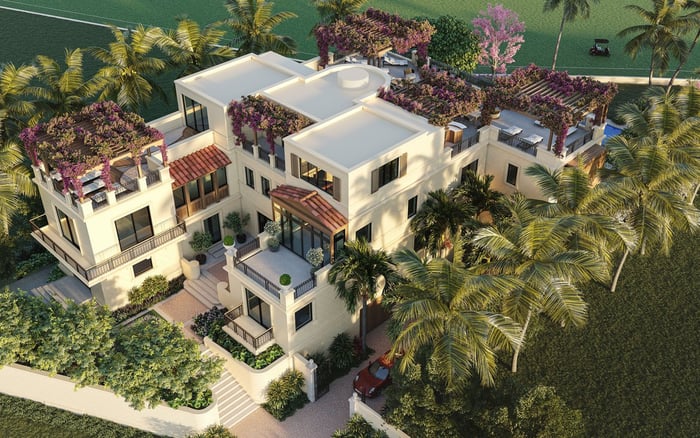
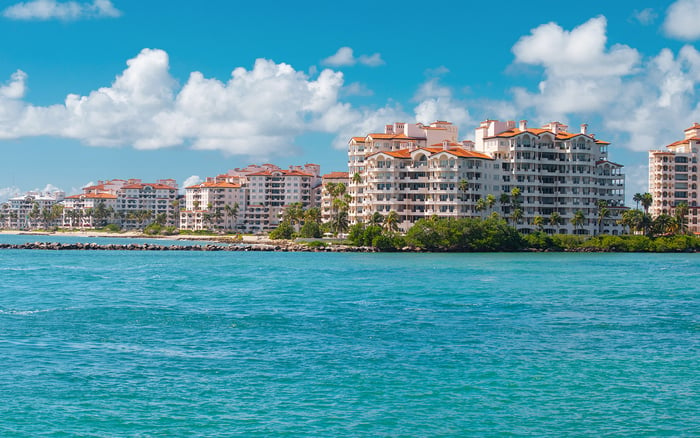
Two islands, two philosophies of privacy. Key Biscayne offers an elegant, family-oriented coastal routine with easy mainland access, while Fisher Island doubles down on seclusion, club lifestyle, and rarefied pricing.
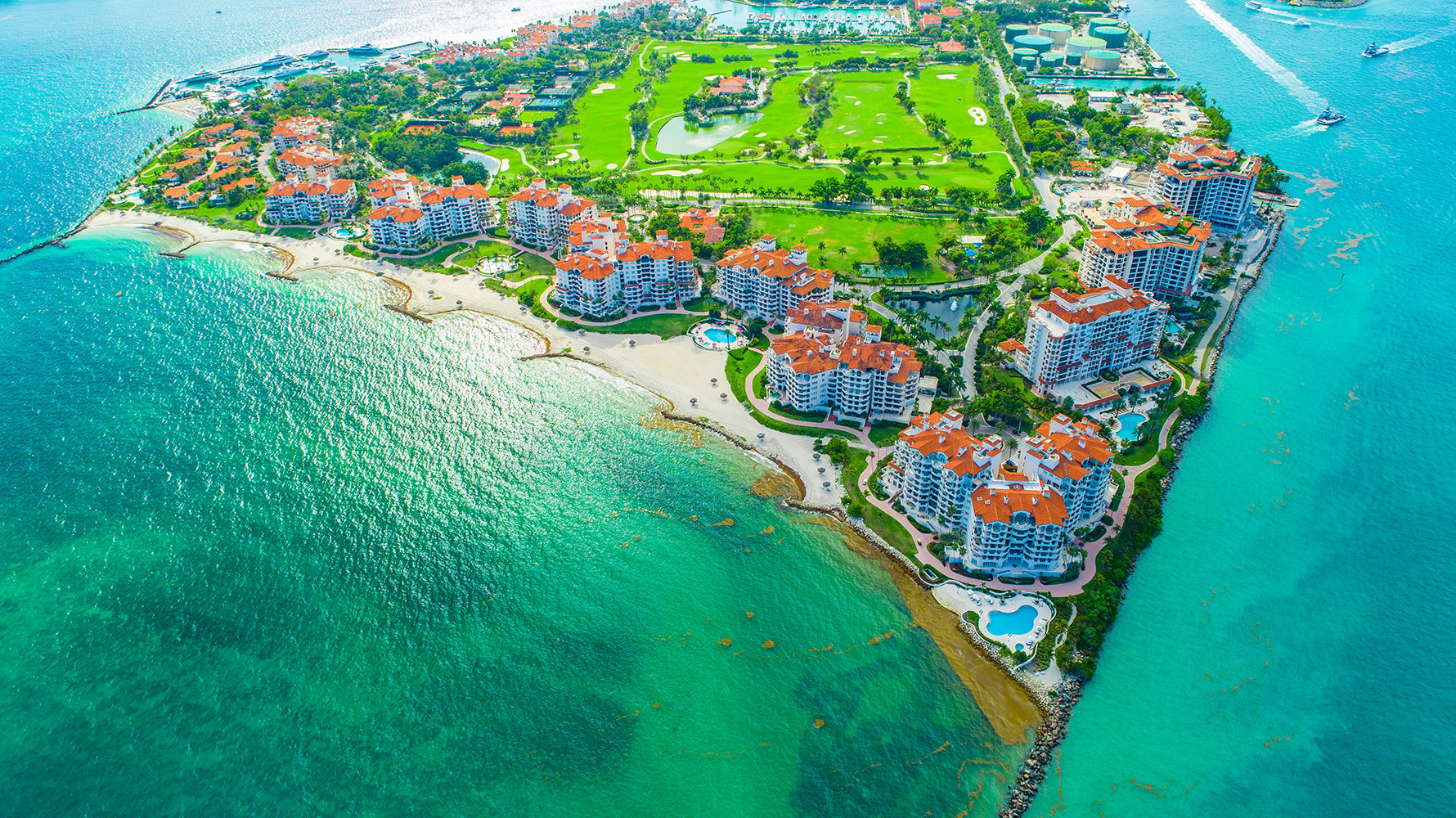
For buyers who already know Miami, the next decision is rarely about whether to live on the water. It is about the kind of water life you want to lead. Key Biscayne and Fisher Island are both shorthand for exclusivity, but they deliver it through different mechanics: one through a village-like routine anchored by beaches and parks, the other through controlled access and club-level immersion.
This is not a debate about which address is “better.” It is a calibration: convenience versus seclusion, family cadence versus resort cadence, and how connected your home should feel to the city versus how insulated you want it to be.
In the language of MILLION Luxury clients, the core question is simple: do you want privacy as a daily choice, or as a logistical fact?
Key Biscayne is connected to mainland Miami via the Rickenbacker Causeway. Frequent users can opt into toll plans designed for regular commuting. In practice, this makes Key Biscayne function like a true primary-residence option. School drop-offs, office days, and dinner in Brickell can coexist with an island home base, without turning every outing into a planned production.
Fisher Island is defined by separation. It is widely described as accessible only by boat, and the Fisher Island Club publishes transportation details that include 24/7 ferry operations with rules governing access for residents and guests. For owners, that arrival sequence is part of the value. The short transition from Miami Beach into a controlled maritime entry sets a tone of discretion that many high-profile buyers view as non-negotiable.
If your schedule demands frequent, spontaneous cross-town movement, Key Biscayne tends to feel frictionless. If your priority is to reduce unplanned contact with the outside world, Fisher Island’s ferry-only structure is precisely the point.
Key Biscayne’s luxury often reads in daylight. Public outdoor assets like Bill Baggs Cape Florida State Park and Crandon Park anchor the island’s rhythm, from beach days to cycling to unhurried weekends. The Cape Florida Lighthouse, a signature historic element within Bill Baggs, adds a sense of place that feels distinctly “old Florida,” even as the broader region continues to accelerate.
Equally important, the island’s routines are supported by a concentrated shopping and services ecosystem promoted by the Key Biscayne Chamber of Commerce. For many households, that convenience matters as much as any view line. The most coveted second homes are often the ones that function effortlessly when you are actually living in them, not just visiting.
For buyers drawn to a modern condo profile on the Key, Oceana Key Biscayne is frequently part of the conversation. It is more than a building name. It signals how the island has evolved into a market that can meet full-service expectations while still feeling residential.
Both islands are defined by water, but the texture of that water life differs. Key Biscayne is explicitly marketed for boating and watersports experiences, including kayaking and boating options that make the coastline feel participatory rather than purely scenic. Owners who want to be on the water often, without turning it into an “event,” tend to value that ease.
Fisher Island’s water life leans more private resort than public playground. The island is commonly associated with club-style amenities, including marina and beach facilities, operating as a curated ecosystem. The distinction is subtle but meaningful: Key Biscayne invites you to share the coastline with the city’s broader rhythm; Fisher Island invites you to stay inside a self-contained perimeter.
Key Biscayne’s housing market spans condos and single-family homes, with active inventory that can reach into the tens of millions, particularly for waterfront offerings. Zillow’s Home Value Index places the area’s typical home value around $1.58M, a useful reference point because it underscores how far the upper tier extends above the “typical” home.
Fisher Island, by contrast, broadcasts scarcity through its numbers. Axios reported that ZIP code 33109 was the most expensive U.S. ZIP code in 2025, with a median home sale price of $9.5M. That is not just a luxury headline. It is a proxy for the barrier to entry, the buyer profile, and the level of exclusivity that repeatedly resets the market.
Data sources that profile Fisher Island also point to exceptionally high household income levels, aligning with the island’s positioning as a global second-home and primary-residence destination for a very narrow band of buyers.
Key Biscayne tends to feel like a village with a luxury overlay. The value lives in the blend: beaches and parks, neighborhood services, and a sense that families can build a stable routine. Education is part of that appeal. MAST Academy, located on Key Biscayne, is profiled by both Niche and GreatSchools as a highly rated public school option, and that reputation can materially influence long-term residency decisions.
Fisher Island reads more like a membership-based world, even when you are not thinking about membership. The lifestyle is frequently described through resort-style amenities such as golf, tennis, spa, marina, and beach services. It presents as a private resort ecosystem because it operates like one, day after day.
For buyers who want a residential expression of that seclusion, The Links Estates at Fisher Island and The Residences at Six Fisher Island are the kinds of names that surface when discussing rare inventory and the primacy of privacy.
Island living in South Florida comes with a clear reality: exposure is part of the bargain. First Street Foundation rates the Village of Key Biscayne for wind risk through its Wind Factor model, reflecting the broader hurricane and severe wind context that any coastal buyer should underwrite carefully.
The right approach is not fear. It is sophistication. Treat building standards, insurance strategy, and storm planning as part of the purchase decision, not a post-closing administrative task. This is especially relevant for high-value furnishings, seasonal occupancy patterns, and owners who spend significant time outside the state.
Some buyers want an island address but prefer a more immediate connection to Miami’s cultural and dining gravity. In those cases, Miami Beach becomes the strategic middle ground: still coastal, still premium, yet often more integrated into everyday city life.
If you want contemporary new-build energy with a strong lifestyle component, Five Park Miami Beach is an example of how the Miami Beach market continues to evolve beyond legacy inventory. For buyers prioritizing brand-level service and a quieter luxury tone, The Ritz-Carlton Residences® Miami Beach speaks to a different type of lock-and-leave confidence.
This matters because the decision is rarely binary. Many sophisticated households maintain more than one South Florida foothold, using Key Biscayne or Fisher Island as the retreat, and Miami Beach as the social and cultural launchpad.
Use this as a high-level filter before you start touring:
At the ultra-premium level, the “right” island is the one that matches your privacy posture, not your price point.
Is Key Biscayne connected to Miami by road? Yes. It is connected via the Rickenbacker Causeway, which uses a toll system with plans available for frequent users.
Does Fisher Island require a boat to access? It is widely described as accessible only by boat, reinforcing its private-island positioning.
Does Fisher Island have regular ferry service? Yes. Fisher Island Club publishes transportation details that include 24/7 ferry operations with access rules.
What is a typical home value reference for Key Biscayne? Zillow’s Home Value Index places Key Biscayne’s typical home value at about $1.58M.
Can Key Biscayne listings reach ultra-luxury pricing? Yes. Waterfront inventory includes listings priced into the tens of millions across condos and single-family homes.
What makes Fisher Island’s market so notable nationally? Axios reported ZIP code 33109 as the most expensive U.S. ZIP code in 2025, with a median home sale price of $9.5M.
What are Key Biscayne’s signature outdoor destinations? Bill Baggs Cape Florida State Park and Crandon Park are major public draws, with the Cape Florida Lighthouse located in Bill Baggs.
Is boating a core part of Key Biscayne lifestyle? Yes. Key Biscayne is promoted for boating and watersports options such as kayaking and boating.
Are there school options on Key Biscayne that families consider? MAST Academy on Key Biscayne is profiled as a highly rated public school by education platforms.
Should wind exposure factor into an island purchase decision? Yes. Wind risk is modeled for the Village of Key Biscayne, and coastal buyers should plan for hurricane and severe wind realities.
For private guidance on choosing the right island address, speak with MILLION Luxury.
If branded residences are on your mind — as a home or as an allocation — we would be glad to share what we are seeing, privately.
Begin a quiet conversation