A buyer-focused look at how service-elevator access influences privacy, logistics, renovation control, and long-term confidence in South Florida luxury condominiums.
In the upper tier of South Florida condominium living, buyers often study the view line, arrival court, ceiling heights, and finish schedule before asking the quieter question: how does the building actually function behind the scenes? Service-elevator access sits at the center of that answer. It is not glamorous, but it can shape privacy, daily convenience, staff circulation, renovation friction, pet movement, package flow, and resale confidence.
The issue is not simply whether a building has a service elevator. Many luxury buyers assume it will. The better question is whether the service path is intelligently separated, properly governed, and compatible with the way a buyer intends to live. A penthouse owner who entertains frequently, a family with household staff, an art collector, and a seasonal resident with recurring deliveries may all use the building differently. The same access plan can feel seamless for one household and constraining for another.
In Brickell, where vertical living is part of the district’s identity, service circulation becomes especially important because residents often balance private life with dense urban movement. At The Residences at 1428 Brickell, the buyer conversation naturally extends beyond finishes into the mechanics of arrival, discretion, and daily building choreography.
The first question is simple: who is allowed to use the service elevator, and when? The answer can affect move-ins, maintenance vendors, dog walkers, catering teams, housekeeping, florists, installers, and deliveries. If the building requires advance reservations, buyers should understand how far in advance, how conflicts are handled, and whether peak seasonal periods create bottlenecks.
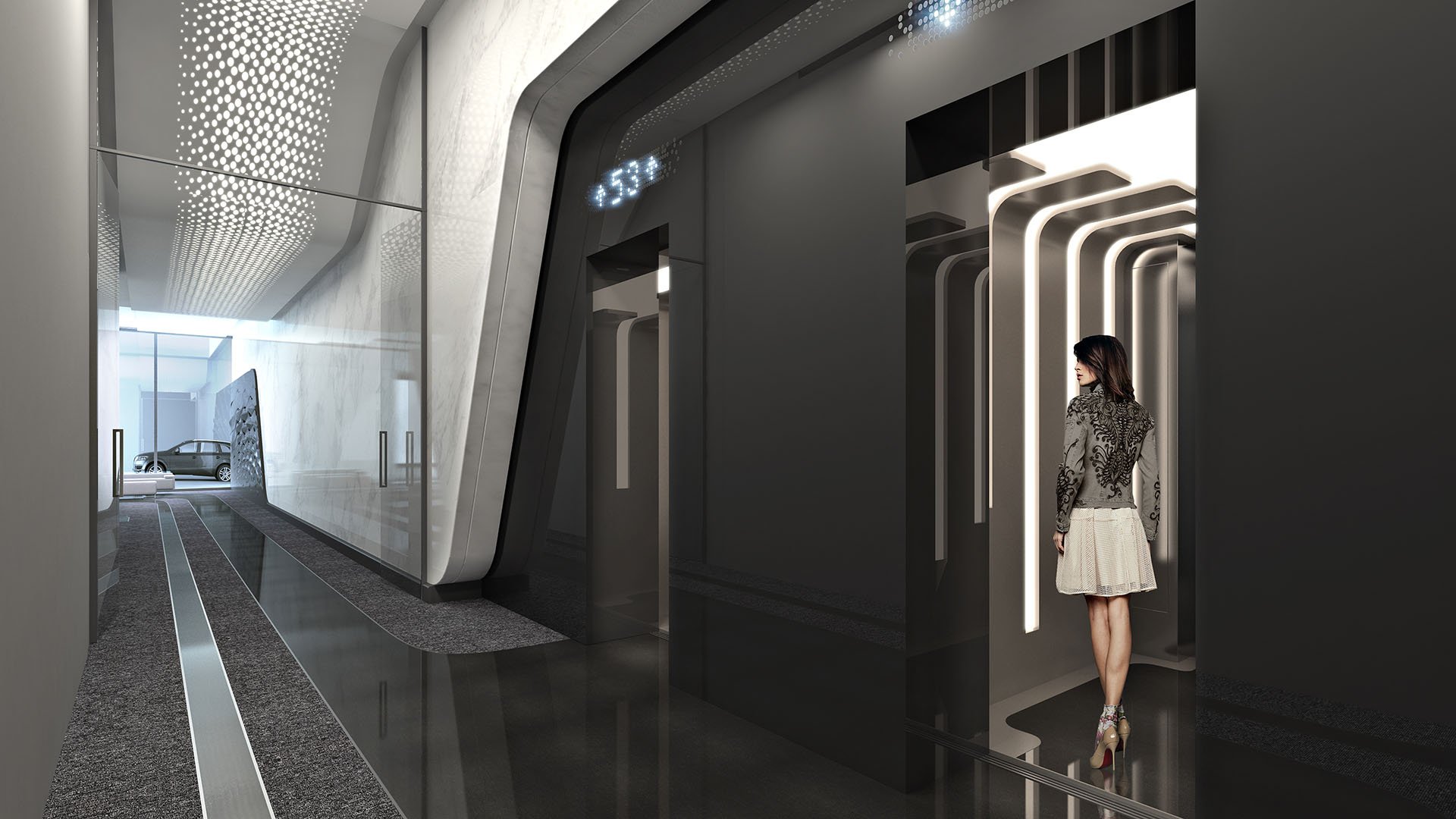
The second question is route quality. A strong service path should feel intentional rather than improvised. It should connect loading, management, storage, and residential levels without sending vendors through highly visible amenity or lobby areas. The distinction matters. In a true luxury building, privacy is not merely a front-door experience. It is a building-wide discipline.
The third question is staffing. Even a well-designed access system depends on the people administering it. Buyers should ask how deliveries are received, whether oversized items require separate coordination, how after-hours access is handled, and what happens when multiple residents need the same freight or service function at once.
New-construction buyers should be particularly careful. Renderings can communicate atmosphere, but access protocols are often understood through condominium documents, management policies, and practical questioning. A polished sales gallery may not reveal whether a future furniture delivery, wine installation, or art placement will be effortless or exhausting.
Service-elevator access is fundamentally a privacy issue. A residence can have a private foyer and still suffer from weak separation if deliveries, trades, or staff traffic pass too close to primary residential corridors. The best outcomes reduce accidental encounters without making the building feel over-controlled.
Noise is another subtle factor. Buyers should consider whether service activity is concentrated near their entry, storage room, or secondary hall. This is especially relevant for high floors, where owners may assume they are removed from operational activity. A service elevator that opens near a residence can be convenient, but convenience should be balanced against sound, traffic, and the likelihood of waiting during heavy usage windows.
In amenity-rich towers, the relationship between service circulation and leisure spaces deserves attention. A pool deck, wellness level, or private dining area can feel less serene if vendors and maintenance routes are poorly separated. In Edgewater, for example, a project such as EDITION Edgewater invites buyers to think not only about bayfront living, but also about how hospitality expectations translate into residential operations.
The service elevator becomes most visible when something goes wrong, or when a buyer needs something done. Renovations, furniture installations, appliance replacements, millwork, art hanging, and terrace enhancements all depend on access policy. A residence may be architecturally extraordinary yet difficult to personalize if the building’s service rules are narrow or poorly administered.
This is where investment thinking becomes practical. Future buyers care about the lived experience of ownership. If a building has a reputation for smooth coordination, sensible rules, and discreet execution, that can support confidence. If routine improvements become burdensome, owners may feel the cost in time, irritation, and perceived value.
Buyers should ask whether there are protected pads, dedicated loading areas, elevator dimensions suitable for large pieces, insurance requirements for vendors, and rules for weekend or holiday work. They should also ask how the building handles damage prevention. Luxury corridors with refined finishes require careful management when large items move through them.
In Downtown Miami, where vertical scale and branded hospitality increasingly influence residential expectations, logistics are part of the purchase decision. A buyer considering Waldorf Astoria Residences Downtown Miami should evaluate the elegance of the private experience alongside the unseen systems that keep that elegance intact.
Service-elevator access rarely leads a listing description, yet it can affect buyer perception during private showings. Sophisticated purchasers notice whether a building feels calm, whether staff movement is discreet, and whether back-of-house operations support the promise of luxury. The details may be quiet, but they are not minor.
For a seller, strong service access can make the residence easier to present and maintain. For a buyer, it can reduce future surprises. The value lies less in a single feature than in the building’s operational maturity. Luxury is partly a question of design, but it is also a question of what residents do not have to think about.
In Surfside, where privacy and residential calm often carry significant weight, buildings such as The Delmore Surfside place the discussion in a more intimate context. Lower-density expectations can make service protocol even more personal, because every corridor, arrival sequence, and staff interaction feels more noticeable.
A serious buyer should walk the service route if possible, not merely ask whether one exists. Where does a vendor enter? Where does the package go? How is a large sofa moved? What happens when a resident is hosting dinner and the caterer arrives at the same time as another owner’s contractor? These questions reveal how the building behaves under pressure.
The strongest buildings tend to combine discretion with clarity. They do not rely on vague promises. They have understandable rules, responsive management, and physical planning that supports the resident’s lifestyle. At ORA by Casa Tua Brickell, as with other high-expectation urban residences, buyers should think about how hospitality, dining, guests, and private living intersect with the service side of the building.
A balcony view may close the deal emotionally, but service access often determines how the home performs over time. The most confident purchase is one in which the visible beauty and the invisible logistics are aligned.
Why does service-elevator access matter in a luxury condo? It shapes privacy, deliveries, move-ins, renovations, and the daily rhythm behind the residence.
Is having a service elevator enough? No. Buyers should understand the route, rules, staffing, reservation system, and how conflicts are handled.
Should buyers ask to see the service route? Yes. Walking the route can reveal whether the building’s operations feel discreet, efficient, and well planned.
Can service-elevator rules affect renovations? Yes. Work hours, reservations, vendor insurance, loading access, and elevator dimensions can all affect improvements.
Does this matter more for larger residences? Often, yes. Larger homes may involve bigger furniture, more staff coordination, and more frequent service needs.
How does service access affect privacy? Strong separation keeps vendors, deliveries, and operational movement away from primary residential experiences.
What should seasonal owners ask? They should ask how packages, maintenance visits, and pre-arrival services are handled when they are away.
Can poor service access influence resale? It can. Sophisticated buyers notice friction, congestion, and weak operational discipline during ownership review.
Are branded residences automatically better at service logistics? Not automatically. The brand matters less than the building’s physical planning, rules, and management execution.
What is the simplest due-diligence question to start with? Ask how a large delivery reaches the residence from the street without disrupting privacy or common areas.
To compare the best-fit options with clarity, connect with MILLION.
If branded residences are on your mind — as a home or as an allocation — we would be glad to share what we are seeing, privately.
Begin a quiet conversation