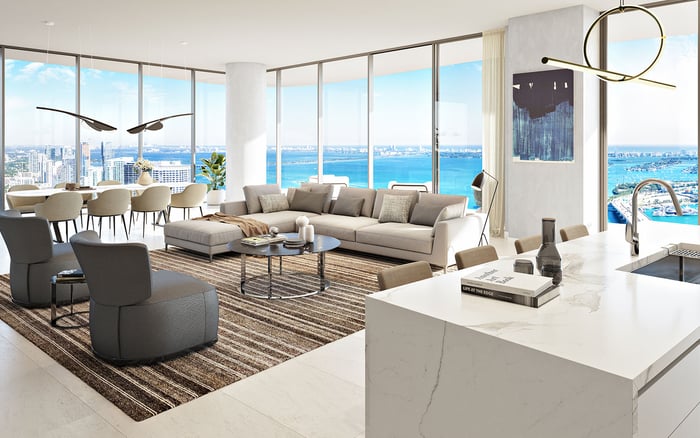
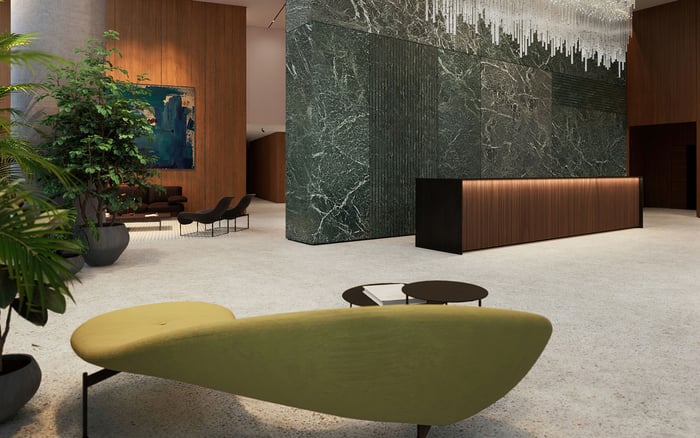
A buyer-focused comparison of Casa Bella by B&B Italia Downtown Miami, Colette Residences Brickell, and EDITION Edgewater through acoustic comfort, technology infrastructure, and remote-work privacy.
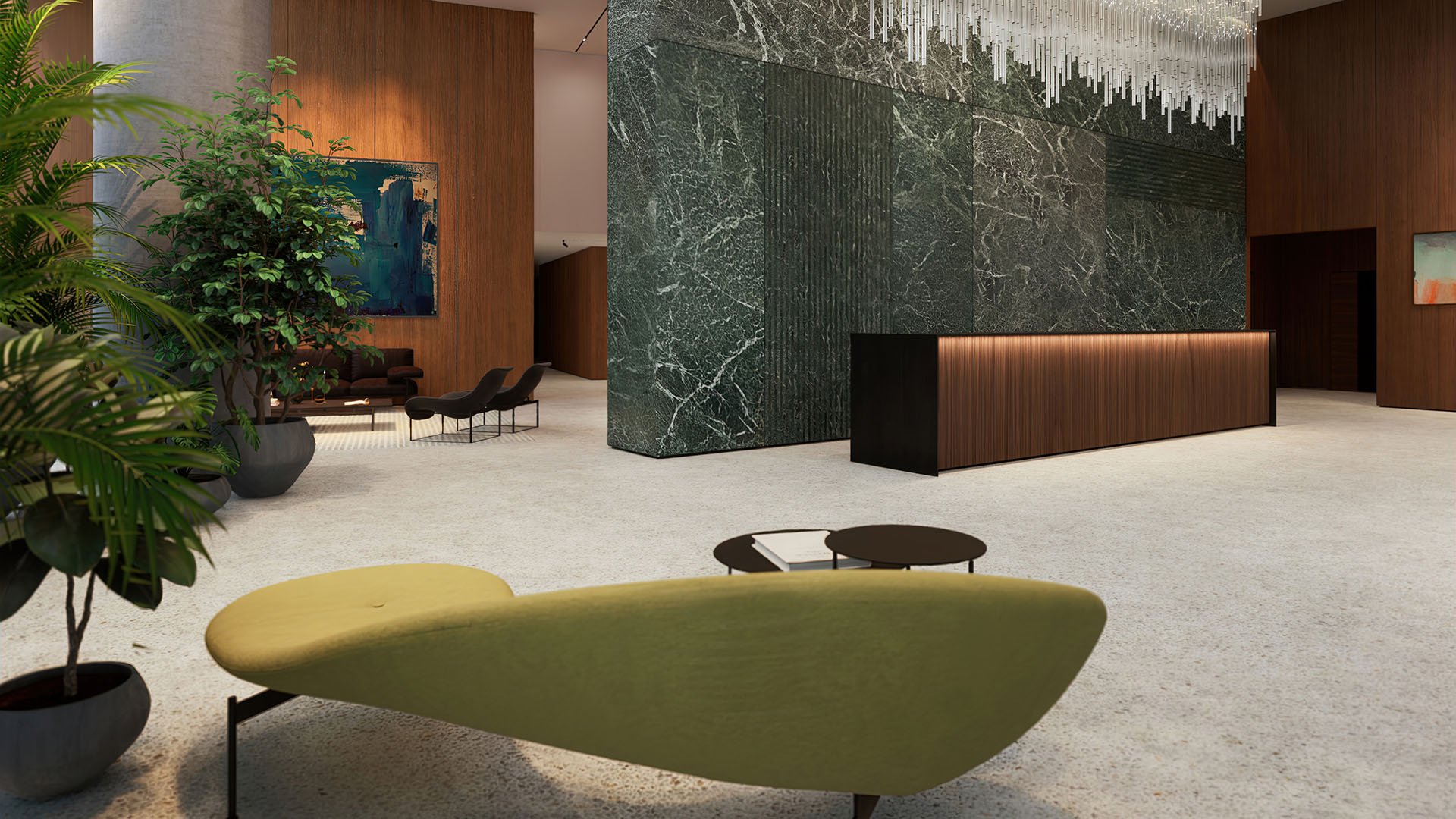
In Miami’s upper tier, the conversation has moved beyond spectacle. A residence can offer a dramatic arrival, a refined materials palette, and a privileged skyline, yet still fall short if the owner cannot take a confidential call, stream without friction, or sleep through the city’s soundtrack. Acoustic comfort, technology infrastructure, and remote-work privacy now sit beside views, terrace depth, and service culture as essential measures of livability.
That is especially true when comparing three distinct urban settings: Downtown, Brickell, and Edgewater. The question is not which neighborhood is louder, more connected, or more private in the abstract. The more useful question is how each project gives a buyer a disciplined framework for evaluating daily performance before contract, move-in, or resale.
In Downtown, Casa Bella by B&B Italia Downtown Miami enters the discussion as a design-led address where buyers should look closely at how an urban residence manages sound, devices, and private work. In Brickell, Colette Residences Brickell is best read through the lens of business-district living and the expectations that come with it. In Edgewater, EDITION Edgewater belongs to a different rhythm, one where privacy and digital readiness should still be tested rather than assumed.
Casa Bella by B&B Italia Downtown Miami is the Downtown project in this comparison, and Downtown buyers tend to understand the appeal of immediacy. The district offers a metropolitan cadence, with cultural, office, dining, and transit-adjacent patterns shaping the experience of home. That makes acoustic comfort especially important, not as a marketing phrase, but as an engineering outcome.
For Casa Bella, a prudent buyer should request practical acoustic evidence: façade glazing specifications, demising-wall assemblies, impact-noise details between floors, and any mechanical-noise targets for residences and common areas. Without those documents, one should not assume that a higher floor, thicker glass, or a luxury brand association automatically translates into superior quiet. The right comparison is not a feeling in a sales gallery. It is a set of numbers, assemblies, and testable expectations.
Technology infrastructure deserves the same discipline. A high-value Downtown residence should support multiple professionals, secure devices, video calls, media systems, and building access without requiring a patchwork of owner-installed fixes. Buyers should ask about fiber availability, low-voltage wiring standards, Wi-Fi backbone options, smart-home compatibility, and whether access-control systems are designed for convenience without sacrificing privacy.
Remote-work privacy is the third layer. For Casa Bella, the relevant question is how a specific floor plan separates public entertaining space from work, bedrooms, and service movement. If a plan includes a den or flexible room, its usefulness depends on enclosure, door placement, adjacency to noisier areas, and whether the room can handle a real workday rather than occasional laptop use.
Brickell creates a different test. The neighborhood is synonymous with executive routines, late dining, building-to-building movement, and an owner profile that often expects the residence to operate as both retreat and command center. Colette Residences is the Brickell project in this comparison, so its value should be evaluated against the demands of buyers who may run meetings from home as naturally as they host dinner.
Acoustic comfort in Brickell is not simply about blocking city sound. It is also about internal privacy: voices between rooms, corridor noise, vertical transfer between units, and the separation between primary suites and social zones. Colette buyers should ask for the same evidence that matters at any serious luxury tower: STC ratings where available, details on exterior glazing, demising walls, impact-noise performance, and mechanical systems. Until those items are documented, it is more accurate to describe acoustic quality as a due-diligence priority than as a settled advantage.
Technology infrastructure may matter even more in Brickell than in many leisure-oriented submarkets. A residence serving a finance, legal, family-office, or entrepreneurial owner needs dependable bandwidth, clean device integration, and strong coverage in rooms where doors are closed. Buyers should ask whether the building anticipates modern device density, from secure video conferencing to automated shades, lighting, climate, and access management.
Remote-work privacy comes down to spatial hierarchy. In a Brickell home, the ideal office or den is not merely a leftover rectangle. It should allow a call to happen away from the kitchen, elevator arrival, children’s rooms, and entertaining space. A buyer comparing Colette to other Brickell options should study the plan as a sequence of privacy thresholds: entry, social area, work zone, sleeping rooms, and terrace.
Edgewater brings a third perspective. It is still urban Miami, yet it is often considered by buyers who want proximity without duplicating the precise energy of Downtown or Brickell. EDITION Edgewater is the Edgewater project in this comparison, and the buyer’s task is to determine whether the residence delivers privacy and digital reliability in ways that match a more residential daily rhythm.
For acoustic comfort, the questions remain concrete. What is the glazing specification? How are demising walls assembled? What impact-noise performance is expected between residences? How is mechanical sound managed inside the unit? A project can feel serene in presentation, but the long-term experience depends on technical decisions embedded in the building.
Technology infrastructure should be reviewed with equal care. New-construction buyers often assume newer automatically means more capable, but the distinction lies in documented wiring, service options, system openness, and the ability to upgrade over time. A home that works well on day one should also be adaptable as owner expectations evolve.
Remote-work privacy at EDITION Edgewater should be judged through the household’s daily schedule. Can one person take a confidential call while another uses the living room? Does the plan allow a door to close between work and domestic life? Are bedrooms protected from social circulation? These are not minor conveniences. In the ultra-premium market, they define whether the residence feels composed under real pressure.
The strongest buyer approach is project-by-project, concern-by-concern. Start with acoustic comfort, then technology infrastructure, then remote-work privacy. For each tower, request the same categories of information and resist unequal comparisons. A beautiful Downtown residence, a polished Brickell address, and an Edgewater home may all appeal for different reasons, but none should be credited with superior soundproofing or stronger work privacy unless the details support it.
The most revealing exercise is to imagine a demanding weekday. One owner is on a video call, another is entertaining briefly before dinner, a child is resting, building systems are running, and the city is active outside. The winning residence is the one whose plan, envelope, and infrastructure keep that day elegant rather than improvised.
Casa Bella by B&B Italia Downtown Miami should be reviewed as an urban design residence where acoustic documentation, network planning, and plan separation are central to the ownership experience. Colette Residences Brickell should be tested against the demands of a business-oriented lifestyle, especially closed-door calls and device-heavy routines. EDITION Edgewater should be studied for how its plans and systems support privacy within a more residential tempo.
The luxury is not simply silence, speed, or a labeled office. It is control: control over sound, control over connectivity, and control over how visible or invisible work becomes inside the home.
Which project is best for acoustic comfort? The available details do not support naming one as superior. Buyers should compare documented glazing, wall assemblies, impact-noise data, and mechanical-noise targets.
Is Casa Bella by B&B Italia Downtown Miami a Downtown project? Yes. It is the Downtown project in this comparison and should be evaluated in the context of urban residential living.
Is Colette Residences Brickell the Brickell option here? Yes. Colette Residences is the Brickell project in this comparison, making workday privacy and connectivity especially relevant buyer concerns.
Is EDITION Edgewater the Edgewater project in this comparison? Yes. EDITION Edgewater is the Edgewater project discussed here, with privacy, acoustic comfort, and technology readiness as the key lenses.
What acoustic documents should a buyer request? Ask for STC-related information where available, glazing specifications, demising-wall assemblies, impact-noise details, and mechanical-noise expectations.
What technology questions matter most? Buyers should ask about fiber availability, Wi-Fi planning, smart-home compatibility, access-control systems, and low-voltage wiring standards.
Does a den automatically solve remote-work privacy? No. A den is only useful for serious work if it has enclosure, sensible placement, and enough separation from social and service areas.
Can a buyer assume new construction means better connectivity? No. New construction can be promising, but the real value depends on documented infrastructure and future adaptability.
Why does Brickell change the work-from-home analysis? Brickell often attracts buyers with business-driven routines, so closed-door calls, secure connectivity, and plan hierarchy become especially important.
What is the simplest way to compare all three projects? Use the same checklist for each: acoustic evidence, technology infrastructure, and floor-plan privacy before making lifestyle assumptions.
To compare the best-fit options with clarity, connect with MILLION.
If branded residences are on your mind — as a home or as an allocation — we would be glad to share what we are seeing, privately.
Begin a quiet conversation