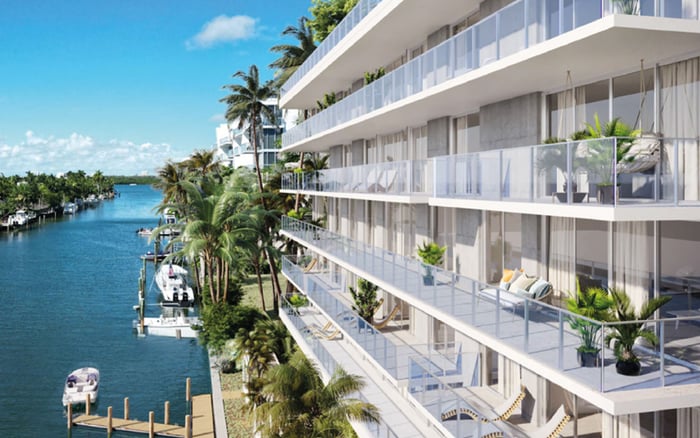
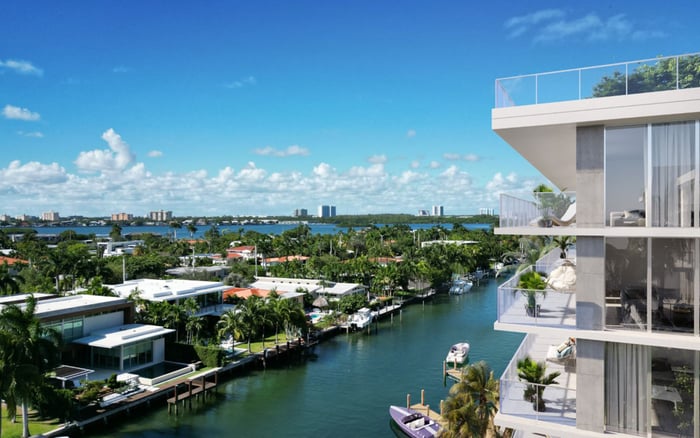
Origin Bay Harbor Islands reframes the second-home conversation around operations, governance, staffing, rentals, resilience, and the culture of a boutique waterfront building.
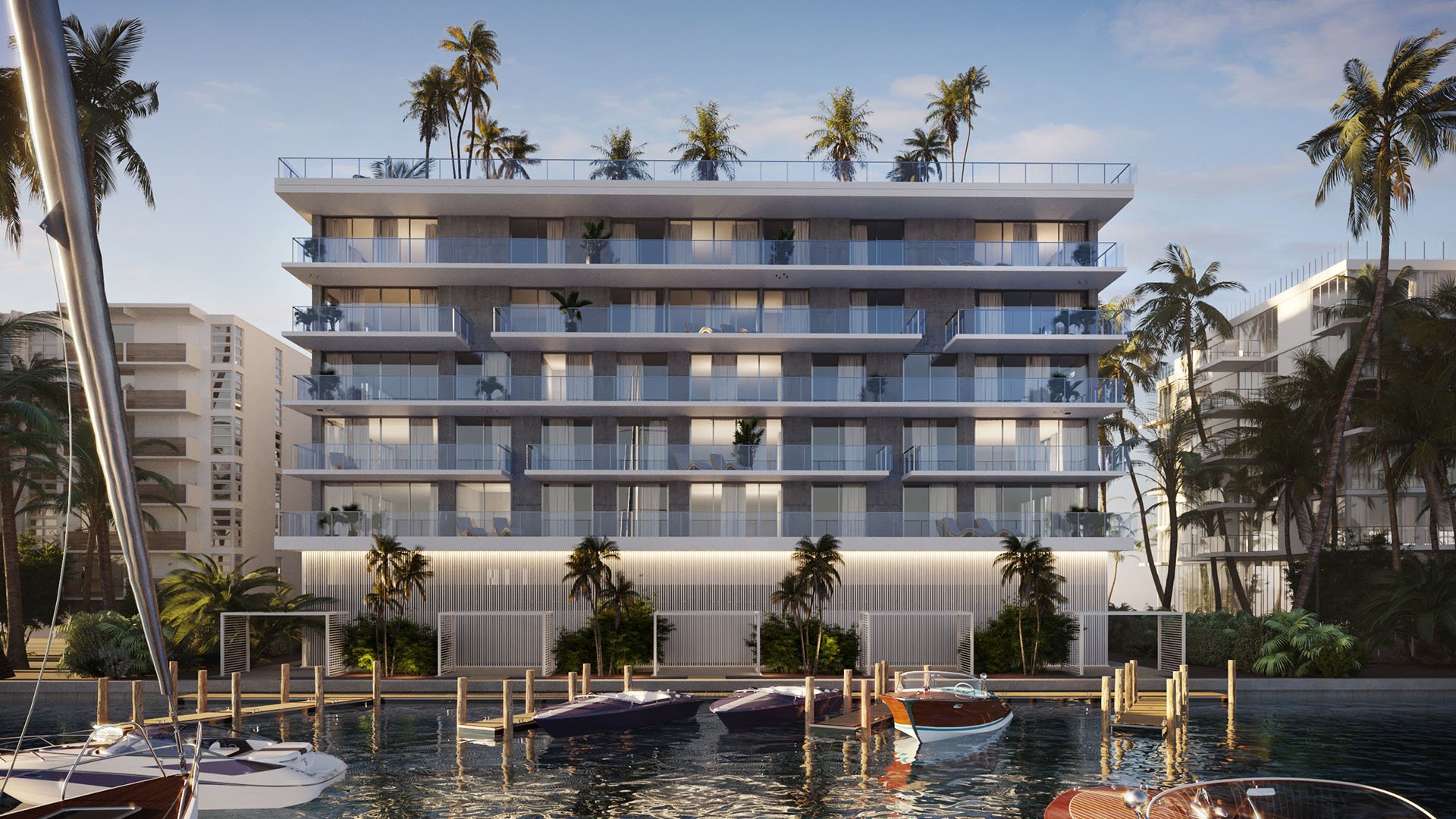
For a buyer considering Origin Bay Harbor Islands, lock-and-leave is not a convenience label. It is a complete ownership pattern. The question is not simply whether the residence is appealing enough to return to after a month away. It is whether the building can operate calmly, predictably, and discreetly while owners are absent, without compromising the daily experience for those who live there full time.
That distinction matters in Bay Harbor Islands, where the neighborhood’s low-scale residential character makes building culture easier to read. In larger high-rise markets, anonymity can absorb a wider range of ownership habits. In a boutique waterfront setting, the cadence of arrivals, guests, service requests, amenity use, and seasonal occupancy becomes part of the property’s identity.
The best buyers will read Origin through that lens. Finishes may set the first impression, but the deeper fit comes from governance, staffing, practical storage, parking, technology, resilience planning, and the expected balance between full-time residents, seasonal owners, and occasional users.
Lock-and-leave ownership is often used casually in South Florida, especially for second-home buyers who divide time among multiple residences. At the highest end, the phrase deserves more discipline. It means the residence can sit unused for extended periods with minimal friction, while the owner remains confident that access, maintenance, security, deliveries, and building protocols are being handled with precision.
At Origin, diligence should begin with the governing documents. Bylaws, rental policies, guest rules, and owner-absence protocols are not small print. They define whether the building is oriented toward residential continuity or constant turnover. A generous lock-and-leave experience can still be quiet and private, but only if the rules are precise enough to protect residents from transient patterns that feel more like hospitality than home.
This is where comparisons within the Bay Harbor market become useful. A buyer studying Alana Bay Harbor Islands and Bay Harbor Towers should not compare aesthetics alone. The more revealing question is how each building frames absence, access, rentals, and resident expectations.
The most valuable building rules are often the least visible. Rental restrictions can determine whether an owner returns to familiar neighbors or to a rotating cast of short stays. Guest-access procedures can decide whether the lobby feels residential or transactional. Noise expectations and amenity policies can influence whether shared spaces feel serene, social, or overprogrammed.
For Origin Bay Harbor Islands, those points are central to buyer fit. A lock-and-leave owner may want freedom, but full-time residents want continuity. A strong condominium culture can accommodate both if the documents make the intended balance clear. Without that clarity, a boutique building can become vulnerable to mismatched expectations, especially when some owners view the property as a pied-a-terre, others as a primary home, and others as a long-term hold.
This is also where investment thinking requires restraint. A luxury condominium may appeal as a long-term asset, but building culture should not be treated as secondary to yield. In a low-scale waterfront community, excessive transient use can change the emotional value of ownership, even when the architecture remains unchanged.
Staffing is the operational heart of the lock-and-leave test. When an owner is away, confidence shifts from the residence itself to the people and systems around it. The relevant questions are practical: who receives a delivery, who notices a maintenance issue, who manages access for approved vendors, who understands the owner’s absence protocol, and how quickly the building can respond when conditions change.
Service depth does not have to mean theatrical service. In a boutique building, the most desirable form is often quiet competence. Owners want reliability without spectacle. Full-time residents want attention without crowding. Seasonal owners want the assurance that the building continues to function elegantly whether they are present or not.
Buyers comparing Origin with Onda Bay Harbor should pay close attention to this operational layer. The difference between a residence that is beautiful on arrival and one that remains effortless after months away is usually found in staffing practices, access controls, and how well the association anticipates owner absence.
Lock-and-leave performance also depends on practical features that rarely dominate glossy conversations. Storage matters because seasonal ownership often involves multiple wardrobes, equipment, luggage, art logistics, and household inventory. Parking matters because owners may leave vehicles behind or rotate among residences. Smart-home technology matters because climate, entry, lighting, and monitoring can reduce uncertainty when the home is unoccupied.
Waterfront ownership adds another layer. The appeal of a waterfront residence is immediate, but the due-diligence file should include storm exposure, flood preparedness, and building-envelope performance. For absent owners, resilience is not an abstract sustainability term. It is part of the confidence required to leave a residence unused while weather, tides, and seasonal conditions continue in the background.
New-construction buyers often assume these concerns are automatically addressed by newer design standards. That assumption should be tested. The right question is not whether a building is new, but whether its systems, rules, and operations support the specific way the buyer intends to live.
Bay Harbor is best understood as a quieter ownership environment rather than a high-volume resort corridor. That is its appeal. The scale is more intimate, the residential character is more legible, and the culture of each building can become a meaningful part of its value proposition.
In this context, amenity programming should be evaluated carefully. A pool deck, wellness area, or shared lounge can enhance daily life when expectations are aligned. The same spaces can create tension if noise, guest volume, or event frequency exceeds what residents expected. In a boutique setting, culture is not an amenity line item. It is the lived result of policies, occupancy patterns, and owner behavior.
That is why projects such as La Maré Bay Harbor Islands and The Well Bay Harbor Islands belong in the broader conversation. Not because every buyer wants the same experience, but because the neighborhood invites a more nuanced reading of how wellness, waterfront living, privacy, and seasonal ownership intersect.
The strongest fit for Origin will depend on how the residence is intended to be used. A primary resident will likely care most about daily quiet enjoyment, stable neighbor culture, service consistency, parking, and predictable amenity use. A seasonal owner will focus on arrival readiness, absence protocols, storage, guest access, and confidence during extended time away.
An occasional pied-a-terre buyer may prioritize frictionless entry and low operational burden, but should still evaluate whether the building’s rules support infrequent use without encouraging a transient feel. A long-term holder should study governance even more closely, because the policies set today will shape the building’s culture over time.
The essential diligence is straightforward: who will occupy the units, how often they will be present, what services cover absences, how guests are managed, what rental limits apply, how noise is handled, and how the building prepares for waterfront resilience. If those answers align with the buyer’s lifestyle, Origin can be judged on more than beauty. It can be judged on fit.
Is Origin Bay Harbor Islands a lock-and-leave condominium? It should be evaluated as a potential lock-and-leave residence through its rules, services, staffing depth, and owner-absence protocols.
Why does building culture matter so much in Bay Harbor Islands? The neighborhood’s low-scale residential character makes occupancy patterns and resident behavior more visible than in larger high-rise settings.
What documents should buyers review first? Buyers should review bylaws, rental policies, guest rules, amenity rules, and any protocols that apply when an owner is away.
Are rental rules important for a boutique building? Yes. Rental restrictions help determine whether the building feels stable and residential or more transient over time.
What staffing questions should seasonal owners ask? They should ask how deliveries, maintenance access, vendor entry, emergencies, and absence-related requests are handled.
Does waterfront ownership change the diligence process? Yes. Buyers should consider storm exposure, flood preparedness, and building-envelope performance as part of ownership confidence.
Is Origin better for primary residents or second-home buyers? The answer depends on the buyer’s use pattern and whether the building’s operations support that pattern without weakening resident culture.
Do amenities affect lock-and-leave fit? Yes. Amenity programming, guest use, and noise expectations shape the daily experience for both present and absent owners.
Why are storage and parking relevant? Seasonal owners often need simple systems for vehicles, luggage, household items, and repeated arrivals or departures.
What is the main buyer takeaway? Origin should be judged not only by design, but by how well governance, operations, and culture support the intended ownership style.
For a confidential assessment and a building-by-building shortlist, connect with MILLION.
If branded residences are on your mind — as a home or as an allocation — we would be glad to share what we are seeing, privately.
Begin a quiet conversation