A discreet look at why South Florida oceanfront ownership remains compelling in 2026, blending lifestyle utility, scarcity discipline, and balance-sheet thinking for affluent buyers.
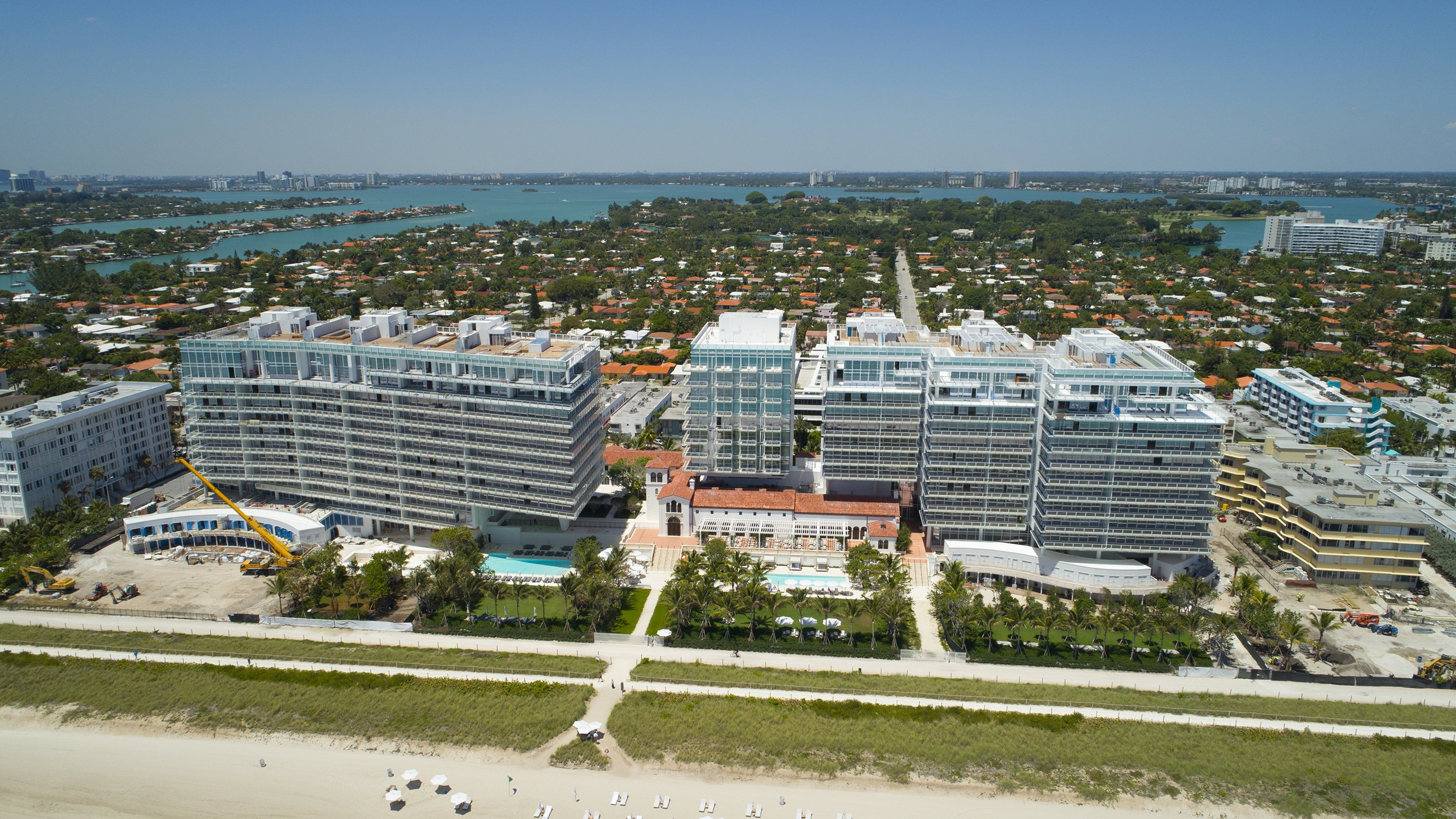
In South Florida, the most persuasive argument for oceanfront real estate is not spectacle. It is restraint. The shoreline is finite, the best addresses are already mature, and the most desirable residences occupy a geography that cannot be meaningfully replicated inland. For a 2026 buyer, the conversation is less about chasing novelty than underwriting permanence.
The lifestyle appeal is immediate: morning light over the Atlantic, direct access to sand, horizon views, privacy, and the soft rhythm of a building designed around resort-level living. Yet the deeper case is financial. Oceanfront property can function as a personal asset that is both used daily and held strategically. That dual role is rare. A residence can be a sanctuary, a family gathering place, and a long-duration store of optionality.
This is not a blanket endorsement of every beachfront condominium or estate. Scarcity only matters when paired with quality, governance, location, architecture, and enduring desirability. The discipline for 2026 is to separate irreplaceable frontage from generic luxury inventory that simply happens to face the water.
Affluent buyers increasingly evaluate homes the way they evaluate other concentrated assets. The question is not simply whether a property is beautiful, but whether it deserves a place on the family balance sheet. True oceanfront ownership can answer that question when it offers defensible location, limited substitutability, and a living experience that would be difficult to replace later.
The strongest properties tend to share three characteristics. First, they sit in locations where land assembly is difficult and new comparable supply is naturally constrained. Second, they offer a level of privacy, service, and physical quality that supports long-term use rather than short-term fashion. Third, they are governed by associations or ownership structures that protect the asset over time.
For buyers, underwriting should move beyond price per square foot. A lower entry price in a less compelling setting may not be the better value. The more relevant question is whether the residence gives the owner something scarce, durable, and personally useful. Investment discipline in this segment is not about speculation. It is about avoiding inventory that is easy to replace.
Lifestyle is often discussed as an emotional premium, but in the ultra-prime market it can be a practical metric. A residence that draws its owners back repeatedly, hosts family comfortably, reduces friction, and supports wellness has real utility. The home is not idle capital if it is actively improving quality of life.
That is why oceanfront buyers should study daily patterns as closely as finish packages. How does the residence live at sunrise, at midday, and in the evening? Is the terrace usable or merely decorative? Does the layout preserve privacy for guests and family? Does the building feel calm during peak season? Can staff, deliveries, valet, security, and beach service operate without intruding on the owner experience?
The 2026 buyer is often less impressed by a long amenity menu than by seamless execution. A serene lobby, quiet elevators, thoughtful parking, strong service culture, and well-scaled common areas can matter more than theatrical features. In constrained oceanfront markets, operational excellence becomes part of the asset.
A buyer may compare oceanfront holdings across Miami Beach, Sunny Isles, Surfside, and Palm Beach, but each market has its own rhythm. Some addresses feel more social and design-forward. Others emphasize privacy, family use, or understated legacy ownership. The right answer depends on how the property will be used, who will use it, and how long the family expects to hold it.
Miami Beach often appeals to buyers who want culture, restaurants, design energy, and immediate access to the city’s social calendar. Surfside can feel more discreet, with a residential tone that attracts buyers seeking calm without giving up proximity. Sunny Isles carries a luxury profile defined by high-rise oceanfront living, broad views, and a vertical resort sensibility. Palm Beach brings a different cadence altogether, one shaped by tradition, privacy, and a more club-like sense of place.
These distinctions matter because scarcity is local. A residence should not be judged only against the broader South Florida market. It should be judged against the small subset of properties that a future buyer would realistically consider as substitutes.
When oceanfront land is limited, design choices become more consequential. A building cannot rely on location alone. It must justify its place on the shoreline through proportion, orientation, arrival sequence, privacy, and resilience of taste.
For condominium buyers, the best plans make the water feel present without sacrificing livability. Deep terraces, generous glazing, well-separated bedrooms, protected service areas, and logical circulation can make a residence feel calm rather than performative. For estate buyers, the equation includes privacy from the street, relationship to the dune or beach edge, and the ability to host without turning the property into a stage.
A constrained market does not forgive compromise forever. If a home has awkward light, poor privacy, inefficient rooms, or a building culture that feels inconsistent with its price point, scarcity may not be enough. The strongest assets are both scarce and well executed.
The most disciplined 2026 strategy is patient selectivity. Buyers should define their non-negotiables before touring: preferred coastline, view orientation, building scale, service expectations, pet and guest needs, parking requirements, and appetite for renovation or new construction risk. Without that framework, the market can become visually seductive and analytically imprecise.
It is also useful to think in scenarios. If the property is held for personal use only, does it remain compelling through different family stages? If it becomes a seasonal base, does the building support lock-and-leave living? If liquidity is needed later, will the residence appeal to a broad enough pool of qualified buyers, or is it highly idiosyncratic?
The most resilient decisions are rarely impulsive. They come from understanding that the oceanfront premium is earned by a combination of location, scarcity, design, service, and emotional pull. Remove any one of those elements and the case becomes thinner.
Begin with the coastline, then the building, then the individual residence. A beautiful unit in the wrong context can be a compromised asset. Conversely, a slightly imperfect residence in an exceptional building and location may offer a stronger long-term proposition if the flaws are correctable.
Governance deserves particular attention. Reserve planning, maintenance culture, insurance posture, and the seriousness of ownership all shape the living experience. In a luxury building, the physical asset is only part of the purchase. The community’s standards become part of the value proposition.
Finally, buyers should resist the assumption that bigger is always safer. Scale must serve use. A precisely planned residence with exceptional views and effortless service may outperform a larger home that feels inefficient or difficult to maintain. In the ultra-prime segment, precision often carries more weight than excess.
Why do oceanfront supply constraints matter in 2026? They matter because true beachfront locations are finite, and replacement options can be limited in mature luxury districts.
Is oceanfront real estate primarily a lifestyle purchase? It is both lifestyle and balance-sheet driven when the property offers daily use, scarce location, and long-term desirability.
How should buyers compare different South Florida oceanfront areas? Buyers should compare use patterns, privacy, service expectations, neighborhood character, and the likely future buyer pool.
Does scarcity make every oceanfront property a strong asset? No. Scarcity must be paired with quality, governance, design, and a location that remains desirable over time.
What should condominium buyers study beyond the view? They should evaluate floor plan efficiency, terrace usability, service culture, privacy, parking, and building management.
Why is governance important in a luxury condominium? Governance affects maintenance, capital planning, resident standards, and the long-term condition of the asset.
Should buyers prioritize new construction or resale? The better choice depends on execution, location, timing, and whether the residence fits the buyer’s long-term use.
How does lifestyle utility affect value? A home that is used often and supports family, wellness, and privacy delivers value beyond financial appreciation.
What is the biggest mistake buyers make in constrained markets? The biggest mistake is paying for scarcity without confirming that the residence itself is durable, livable, and well governed.
What is the best mindset for 2026 buyers? The best mindset is disciplined patience, with a clear focus on irreplaceable location and lasting personal utility.
For a confidential assessment and a building-by-building shortlist, connect with MILLION.
If branded residences are on your mind — as a home or as an allocation — we would be glad to share what we are seeing, privately.
Begin a quiet conversation