Surfside’s ultra-compact footprint, ocean-to-bay orientation, and adjacency to Bal Harbour create a rare South Florida micro-market where privacy, walkability, and prestige converge. For luxury buyers, the decision is less about “whether Surfside” and more about selecting the right building type, exposure, service model, and long-term lifestyle fit within a town that measures just over half a square mile. This MILLION Luxury guide distills what matters most: how Surfside’s geography shapes daily life, why branded and design-forward residences command attention, and which practical checks should sit behind any offer, especially when weighing beachfront versus bay-side positioning.
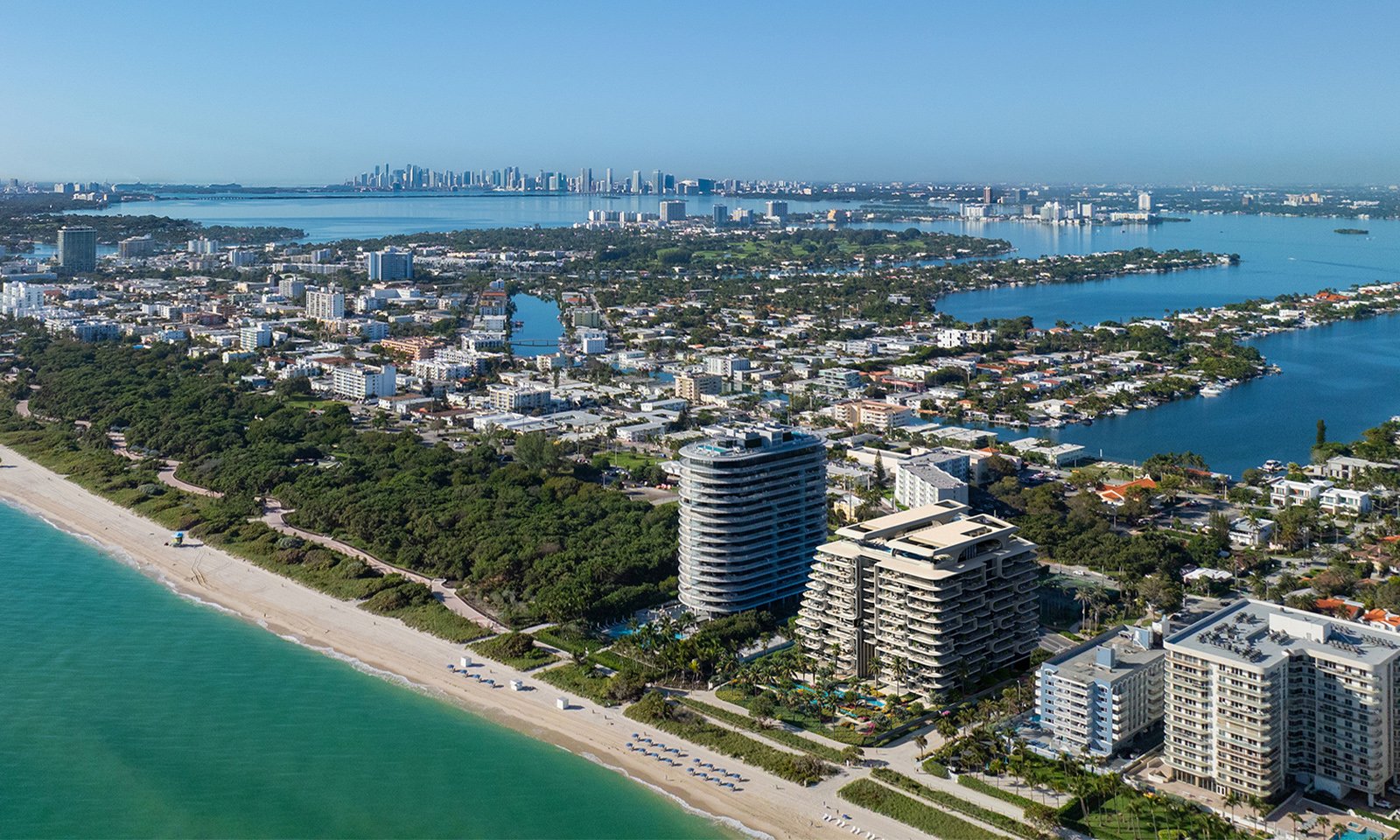
Surfside is a small barrier-island town in Miami-Dade County with a total area of about 0.564 square miles. That scale changes everything. Rather than the sprawling feel of much of the oceanfront strip, Surfside’s experience is inherently edited: fewer blocks, shorter drives, and a day-to-day rhythm that reads more residential than resort.
Geography does the heavy lifting. Surfside sits between the Atlantic Ocean and the Biscayne Bay and Indian Creek waterways, bordered by Miami Beach to the south and Bal Harbour to the north. For buyers, that positioning creates a clean choice: true oceanfront living or a calmer, waterway-facing orientation-while remaining moments from some of South Florida’s most established luxury infrastructure.
The result is a micro-market where address carries weight because it is scarce. With a 2020 population of 5,689 residents and a density that reflects its tiny land area, Surfside feels intimate. For second-home and primary buyers alike, that intimacy often translates to discretion, quieter streets, and the kind of walkable “small-town” convenience that’s difficult to replicate along a global resort corridor.
The town’s luxury identity is not new. The Surf Club, a historic private club, opened on New Year’s Eve 1930 and remains closely tied to Surfside’s cultural positioning today. That legacy matters because it signals continuity: Surfside’s top end isn’t simply a recent wave of capital, but a place with long-running social DNA.
On the civic side, Surfside’s oceanfront Community Center was rebuilt and reopened in 2011, reinforcing the idea that the beachfront isn’t only the domain of private clubs and towers. Surfside Beach is also widely recognized for a quieter, more family-friendly atmosphere than much of Miami Beach, and that tone shapes buying decisions. In practice, it tends to attract purchasers who want calm mornings, a predictable routine, and a less performative version of the coastal lifestyle.
Dining adds another layer of credibility. The Surf Club Restaurant is chef Thomas Keller’s restaurant at the Four Seasons Hotel at The Surf Club and is included in the MICHELIN Guide. For many luxury buyers, that isn’t about checking boxes-it’s about knowing the neighborhood can support excellence without needing to cross town.
Surfside’s inventory leans toward fewer, more intentional buildings. Instead of sheer verticality, the market is defined by boutique beachfront offerings and high-design residential concepts.
Branded residence buyers have a clear reference point in Surfside: Four Seasons operates a landmark property here, and private residences associated with the Four Seasons Surfside ecosystem deliver hotel-style services and amenities. For purchasers who value turnkey living and predictable service standards, the proposition is straightforward: minimize friction, maximize consistency.
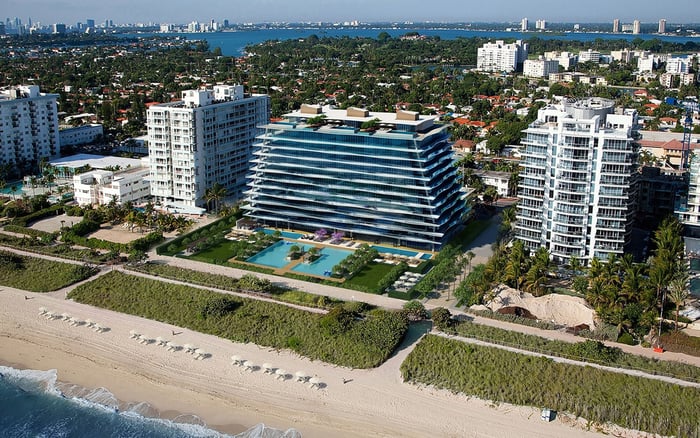
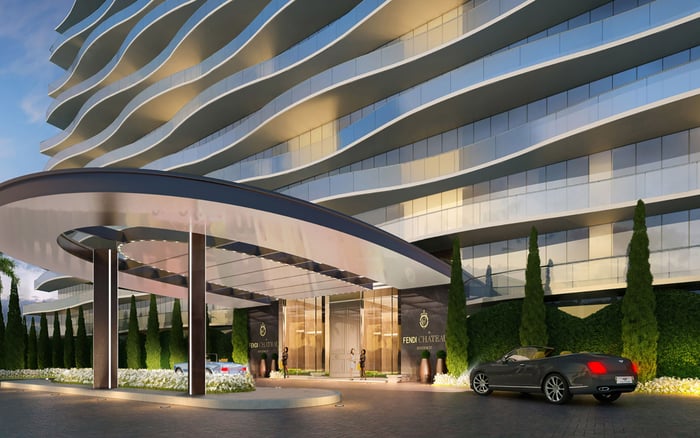
At the boutique end, fashion and design branding also plays a role in Surfside’s story. Fendi Chateau Residences, positioned as the Fendi brand’s first residential real estate venture, is a 12-story building with 58 residences. In a market where many buildings aim for scale, that limited count can read as a more contemporary expression of exclusivity.
Design-forward development remains part of the pipeline as well. The Delmore is a planned ultra-luxury condominium development in Surfside designed by Zaha Hadid Architects-a signal that architectural authorship continues to be a differentiator buyers will pay for.
Oceanfront owners who want beach immediacy and a resort-adjacent cadence.
Waterway-facing buyers who prioritize privacy, calmer views, and a more “residential” feel.
Service-seeking buyers who want branded operations, hospitality staffing, and low-touch ownership.
Surfside’s compactness can make it tempting to assume every address performs the same. In reality, small distances can still produce meaningful lifestyle differences.
Start with exposure and orientation. Oceanfront living is cinematic, but it can be more active. A residence built around quiet may need a different relationship to the water, the street, and the daily flow of beach activity. Conversely, buyers who want full sensory immersion often accept energy as part of the trade.
Next, scrutinize the service model. Some owners want a staffed lobby, hotel-style operations, and an amenity environment that feels curated daily. Others want privacy with minimal shared programming. Neither is “better,” but each leads to different building choices, cost structures, and resale audiences.
Then evaluate building scale and neighbor profile. Boutique buildings can feel more controlled, with fewer owners and a more personal atmosphere. Larger buildings can offer more extensive amenities and deeper staff layers. Surfside’s best outcomes tend to happen when buyers choose the model that matches their actual week-to-week habits-not aspirational weekend fantasies.
Finally, treat due diligence as non-negotiable. Surfside is a sophisticated market, and the post-2021 era has increased buyer attention on building standards, governance, and long-term capital planning across coastal South Florida. The goal isn’t to be alarmist. It’s to be exacting.
Surfside continues to evolve, and the next cycle is defined by ultra-luxury positioning and architectural distinction. Publicly covered plans include a luxury condominium project proposed for the Champlain Towers South site, with residences marketed starting at about $15 million. Regardless of where that project ultimately lands in the market, it reinforces a central point: Surfside’s top tier is pricing itself among the region’s most rarefied offerings.
The implication for buyers is twofold. First, the neighborhood’s prestige is being reinforced, not diluted. Second, the competitive set for Surfside increasingly includes trophy assets across Miami Beach and the North of Fifth corridor, where buyers weigh oceanfront pedigree against a building’s design signature and service standards.
This is also where adjacent neighborhoods matter. Surfside’s proximity to Bal Harbour Shops gives residents immediate access to one of the region’s most recognizable luxury retail destinations. For second-home buyers, it’s the kind of convenience that quietly changes behavior: less planning, more spontaneity.
Surfside is small enough that you can “read” the market quickly, but nuanced enough that you shouldn’t.
If your priority is a design-led, boutique beachfront statement, Fendi Château Residences Surfside is often discussed in that context, with a limited residence count that supports a more private ownership feel.
If you want an oceanfront tower experience that still reflects Surfside’s comparatively quiet tone, Ocean House Surfside speaks to buyers who value new luxury development energy without leaving the enclave.
If your preference is for contemporary, architecture-forward living in Surfside, Arte Surfside enters the conversation as a modern residential option within the same compressed, walkable geography.
And for buyers who see Surfside as part of a broader “north beach to Bal Harbour” luxury continuum, it is natural to benchmark against nearby addresses such as Oceana Bal Harbour, especially when evaluating how boutique exclusivity compares with a larger luxury ecosystem just beyond the town line.
These aren’t interchangeable choices. They’re different answers to a single question: do you want Surfside as a discreet beach town, as a service platform, or as a design collectible.
In many markets, “small” is a constraint. In Surfside, small is a feature.
A town that spans just over half a square mile can deliver what luxury increasingly values: time. Less time in transit. Less time coordinating daily logistics. More time living within a tight radius of the ocean, dining, wellness, and the types of retail and services that typically require a larger neighborhood footprint.
Surfside also benefits from being framed by two powerful neighbors. To the south, Miami Beach supplies cultural momentum and breadth. To the north, Bal Harbour supplies polished retail and an established luxury cadence. Surfside sits between them as the residential palate cleanser.
For buyers who are sensitive to noise, pace, and privacy, that “in-between” identity can be precisely the point.
Is Surfside more residential than Miami Beach? Many buyers experience it that way due to its smaller footprint and quieter beach vibe.
How big is Surfside, Florida? Surfside covers about 0.564 square miles, which helps keep daily life compact and walkable.
What neighborhoods border Surfside? It is bordered by Miami Beach to the south and Bal Harbour to the north.
Does Surfside have public beach access? Yes, Surfside Beach is a public beach destination with a calmer atmosphere.
What is the Surf Club’s significance in Surfside? The Surf Club opened in 1930 and remains a defining part of Surfside’s luxury identity.
Are there branded luxury residences in Surfside? Yes, Four Seasons operates in Surfside and offers private residences with hotel-style services.
What makes boutique buildings appealing in Surfside? Fewer residences can support a more private ownership experience and a tighter community feel.
Is there notable architecture planned for Surfside? The Delmore is a planned ultra-luxury condominium designed by Zaha Hadid Architects.
How does Bal Harbour influence Surfside living? Immediate proximity to Bal Harbour’s luxury retail and services expands day-to-day convenience.
What is a practical first step when buying in Surfside? Align building type, service model, and exposure with how you actually plan to live there.
If you'd like a private walkthrough and a curated shortlist, connect with MILLION Luxury.
If branded residences are on your mind — as a home or as an allocation — we would be glad to share what we are seeing, privately.
Begin a quiet conversation