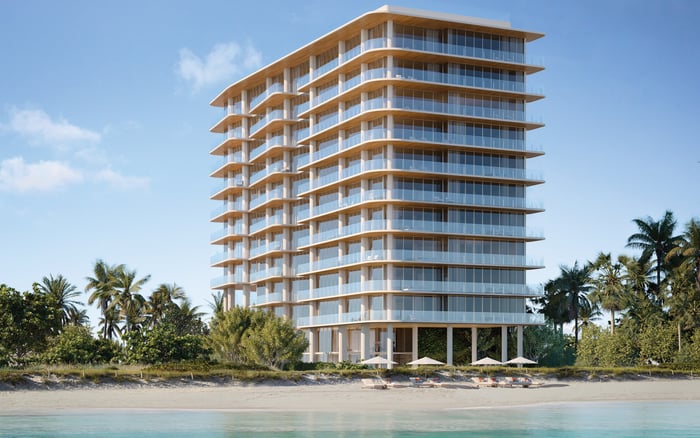
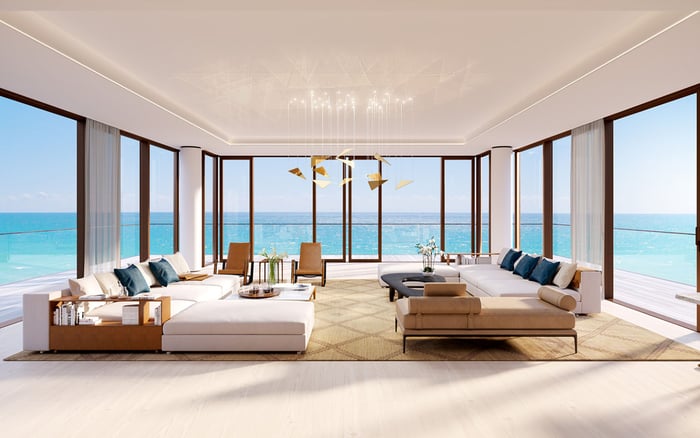
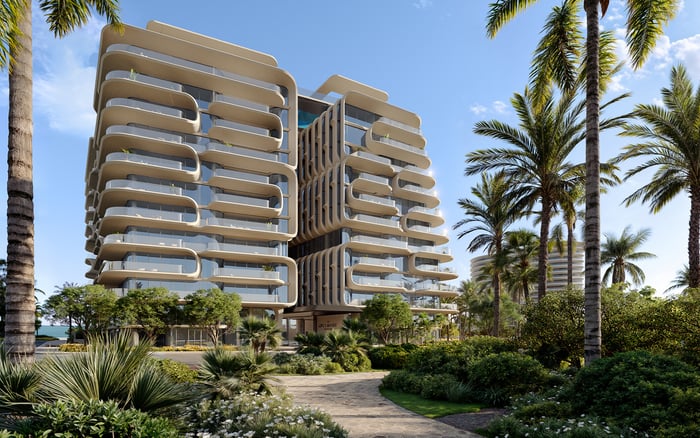
A buyer-focused look at The Bristol Palm Beach and Ocean House Surfside, centered on service expectations, privacy rhythms, and the daily-use questions that shape ownership.
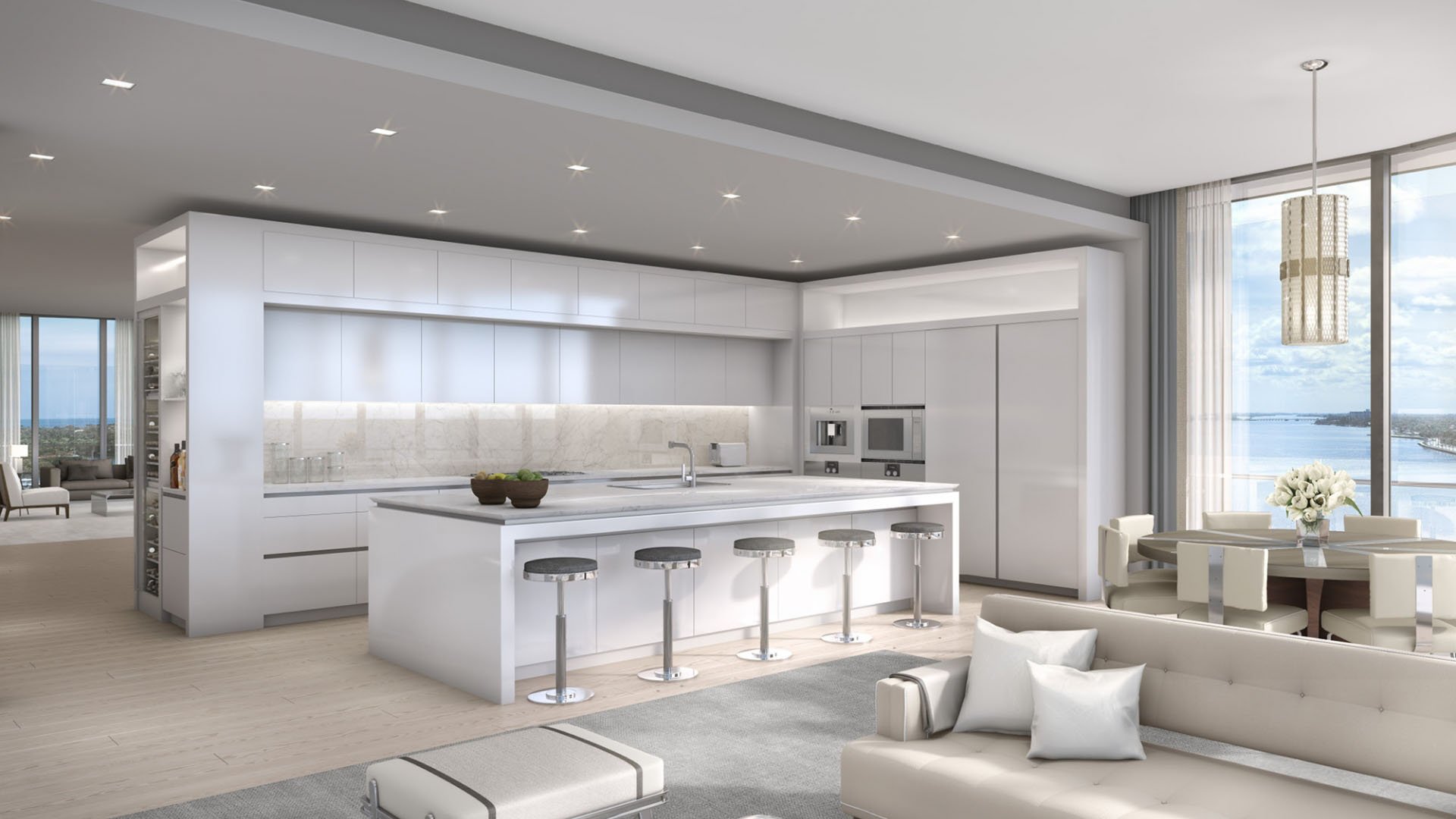
For buyers weighing The Bristol Palm Beach against Ocean House Surfside, the visible distinction is geography: Palm Beach on one side, Surfside on the other. The more consequential distinction is operational. How will the building function at 8 a.m., at 6 p.m., over a holiday weekend, or when family, staff, drivers, guests, pets, luggage, and deliveries all converge?
A sophisticated comparison should resist assumptions. Service, privacy, and daily-use value are not established by a rendering or a polished amenity phrase. They are proven through staffing models, building protocols, circulation design, and the habits of residents over time.
That is why the right buyer conversation is less about declaring one property superior and more about identifying which questions matter before a residence becomes part of daily life.
Luxury service can mean many things. In one building, it may center on attended arrival, package coordination, and maintenance response. In another, it may extend to broader lifestyle support. The distinction matters because owners experience service as consistency, not vocabulary.
A buyer considering The Bristol Palm Beach should ask for a clear service matrix: who is on site, during which hours, with what scope of authority, and how special requests move through the building. The same standard should apply at Ocean House Surfside. A polished concierge desk is not the same as a fully defined service program, and a warm welcome is not a substitute for written procedures.
For a second-home owner, this becomes even more important. The real test is what happens when the owner is not present. Who receives deliveries? How are vendors admitted? Can management coordinate with household staff? Are there limits on storing items before arrival? Does the building communicate proactively before major weekends or storms? These questions are not glamorous, but they define whether the residence feels effortless or merely beautiful.
Service should also be evaluated in relation to privacy. The more expansive the service promise, the more important it is to understand discretion, access control, and the boundary between helpfulness and intrusion.
Privacy in ultra-prime condominium living is rarely one feature. It is a sequence. It begins at arrival, continues through the lobby or private-entry experience, moves through elevators and corridors, and ends at the residence door. A buyer should physically or visually trace that path at both properties.
At Ocean House Surfside, the Surfside context may appeal to buyers who want a coastal address with a quieter residential tone than larger urban districts. At The Bristol Palm Beach, the Palm Beach association may appeal to those who value a more established island sensibility. Those are lifestyle impressions, not operational guarantees. The practical diligence is the same: ask how guests are announced, how service providers enter, how deliveries are routed, and how resident identity is protected.
The most revealing privacy questions are specific. Can a driver wait without disrupting arrivals? Are household employees handled through the same entrance as residents? Is there a separate route for maintenance? How are short-notice guests cleared? Are cameras and access systems monitored continuously or passively? If an owner keeps a high public profile, the answers may matter as much as views or finishes.
Buyers who are also considering other Surfside options may compare the tone of Ocean House Surfside with The Delmore Surfside, while Palm Beach-oriented shoppers may use Palm Beach Residences as another reference point for how private residential expectations are framed in that market.
Daily use is where luxury either compounds or erodes. The most impressive residence can become frustrating if elevators are slow at peak hours, parking is awkward, storage is limited, or pets and packages require constant negotiation.
For both The Bristol Palm Beach and Ocean House Surfside, buyers should request clarity on parking procedures, valet policies if applicable, guest parking, bicycle or beach-equipment storage, pet protocols, move-in rules, package rooms, cold storage, housekeeping access, and elevator reservation requirements. None of these details should be treated as minor. They determine whether the building supports real life.
Oceanfront expectations should also be separated from daily convenience. A buyer may want water orientation, immediate coastal atmosphere, or beach access, but those desires should be measured against how residents actually move between residence, lobby, parking, pool, sand, and street. The same applies to boutique living. A smaller-feeling environment may offer intimacy, but it can also make operating rules more personal and more visible. A larger service platform may offer more infrastructure, but it can feel less private if circulation is not carefully managed.
For buyers who split time between South Florida addresses, the daily-use checklist should include airport arrival, grocery stocking, luggage handling, and the ability to prepare a residence before family arrives. These are the moments that distinguish a showpiece from a home.
The Bristol Palm Beach and Ocean House Surfside sit in different buyer imaginations. Palm Beach often signals a more traditional luxury rhythm, with privacy, formality, and residential composure at the center of the decision. Surfside suggests a coastal Miami-area setting with proximity to a broader collection of oceanfront, dining, and cultural routines.
Neither profile automatically answers the question of fit. A Palm Beach buyer may still prioritize highly responsive service. A Surfside buyer may care most about quiet arrival and minimal social exposure. The task is to translate lifestyle preference into operational requirements.
If the buyer hosts frequently, the better question is not which address sounds more elegant, but which building handles guests more gracefully. If the buyer travels often, the better question is which management structure supports absence without friction. If wellness and beach routines define the day, pool access, outdoor circulation, storage, and staff coordination may deserve more attention than formal entertaining space.
A buyer expanding the comparison beyond these two properties might also look at The Berkeley Palm Beach for a broader Palm Beach-area lens, but the same rule applies: compare operations before comparing adjectives.
A private showing should be treated as an interview with the building. Ask who handles the first call when something goes wrong. Ask how after-hours issues are escalated. Ask whether the service team is employed directly, contracted, or shared through a broader structure. Ask how many people can access owner information. Ask whether owners receive written service standards.
Then ask to walk the ordinary route, not only the ceremonial one. Enter as a resident would enter after dinner. Review the route a housekeeper would use. Discuss how a guest is cleared. Ask where a large delivery waits. Clarify how a pet is moved through the building. The answers will often reveal more than the finishes.
For The Bristol Palm Beach, the central question is whether the residence experience matches the Palm Beach lifestyle a buyer expects. For Ocean House Surfside, the question is whether the Surfside setting aligns with the owner’s desired balance of coastal ease, privacy, and service. In both cases, the best decision will come from operational clarity rather than assumption.
Can buyers assume one building has better service than the other? No. Service should be evaluated through documented staffing, hours, procedures, and resident protocols.
What is the most important privacy question to ask first? Ask how residents, guests, vendors, deliveries, and staff move through the building from arrival to residence.
Why does daily-use diligence matter in luxury condominiums? Daily comfort depends on elevators, parking, storage, pets, packages, maintenance access, and communication.
Should a second-home buyer ask different questions? Yes. Absentee ownership makes vendor access, delivery handling, security, and pre-arrival coordination especially important.
Does Surfside automatically mean a quieter ownership experience? Not automatically. The address may appeal to buyers seeking a coastal setting, but building operations determine lived privacy.
Does Palm Beach automatically mean more formality? It may suggest a certain residential expectation, but the actual experience depends on rules, staffing, and resident culture.
What should buyers request before making a decision? Request service standards, access procedures, parking rules, guest protocols, pet policies, and management contacts.
How should buyers compare boutique and larger luxury buildings? Compare the tradeoff between intimacy, infrastructure, staff depth, privacy, and how often shared spaces will be used.
Why should buyers walk ordinary service routes during a showing? The everyday routes for residents, guests, staff, pets, and deliveries often reveal whether the building will feel smooth in real use.
What is the best way to shortlist comparable options for touring? Start with location fit, delivery status, and daily lifestyle priorities, then compare stacks and elevations to validate views and privacy.
For a confidential assessment and a building-by-building shortlist, connect with MILLION.
If branded residences are on your mind — as a home or as an allocation — we would be glad to share what we are seeing, privately.
Begin a quiet conversation