A refined look at why in-town Palm Beach residences can hold special appeal for buyers who prioritize walkability, Worth Avenue access, cultural rhythm, and daily usability over direct ocean adjacency.
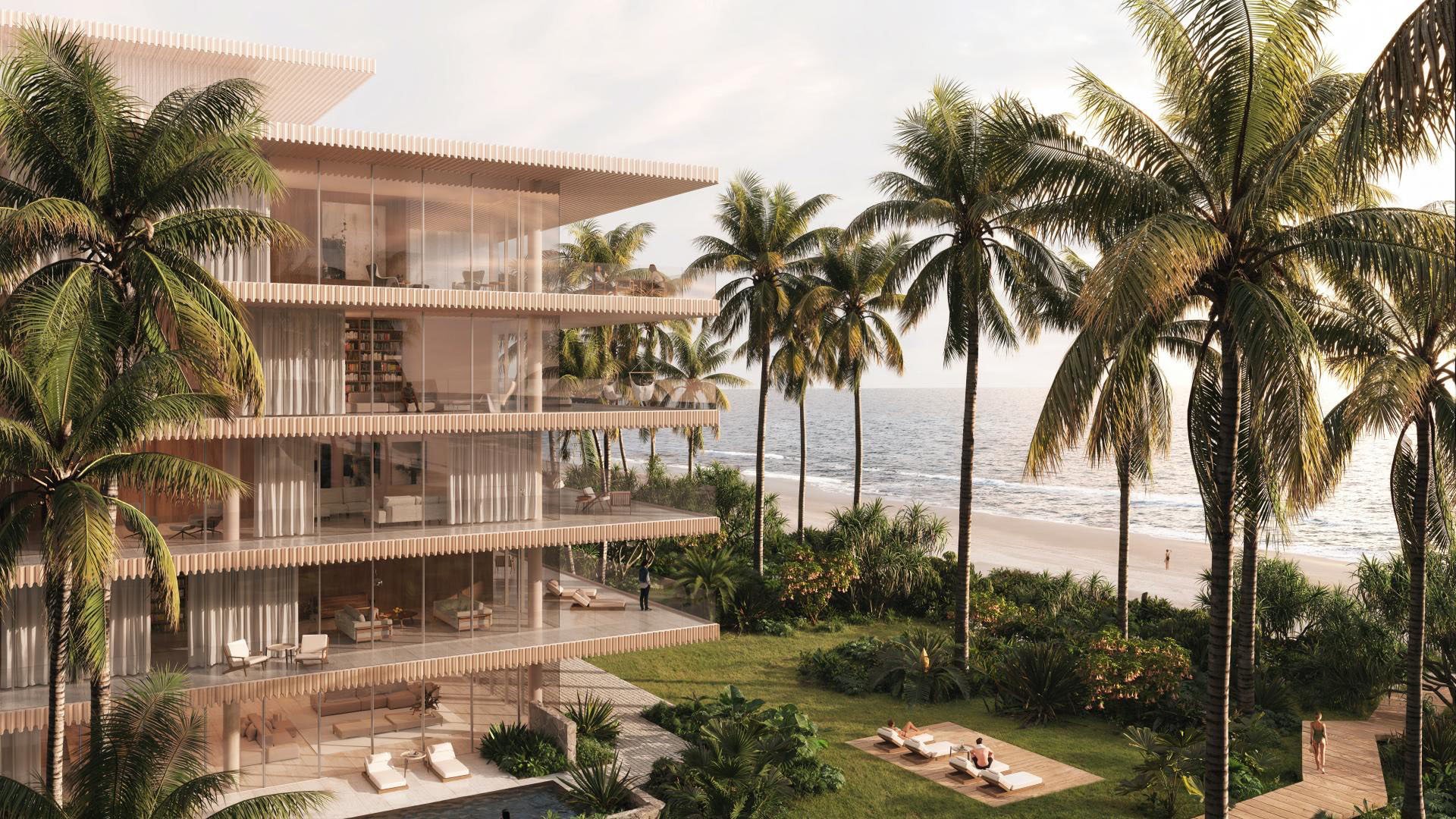
For generations, Palm Beach luxury has been understood through a coastal lens: the closer to the ocean, the more coveted the address. That logic still carries weight. Views, breezes, beach access, and the quiet prestige of ocean proximity remain deeply desirable. Yet for a certain buyer, especially one with a full social calendar, professional obligations, wellness routines, and an appetite for culture, the daily usefulness of an in-town address can be just as compelling.
At Palm Beach Residences, the more interesting question is not whether the ocean matters. It does. The sharper question is whether the best residence is the one nearest the shoreline, or the one that makes Palm Beach feel effortlessly available from morning to evening.
In that sense, in-town living represents a more nuanced form of luxury. It is less about a singular trophy feature and more about the choreography of daily life: breakfast nearby, errands without friction, a boutique appointment between meetings, dinner within a short walk, and the ability to move with the town’s rhythm without turning every outing into a formal excursion.
The in-town Palm Beach proposition begins with walkability. Not urban density for its own sake, but the discreet pleasure of having restaurants, boutiques, galleries, cultural venues, professional services, and wellness amenities close at hand. For buyers accustomed to efficiency in New York, London, or other global capitals, that access can feel less like a compromise and more like a return to civilized convenience.
Oceanfront living has its own seductions, but it can also be more private, more contained, and in certain cases less integrated with the town’s everyday life. The buyer who wants quiet separation may prefer that model. The buyer who wants to step into Palm Beach rather than simply look toward the Atlantic may read value differently.
This is where the definition of prestige becomes personal. A residence that places daily amenities within easy reach may serve its owner more often than a dramatic view enjoyed at set moments of the day. For the second-home buyer, that distinction can be decisive. Limited time in Palm Beach often heightens the importance of simplicity: less driving, less planning, more living.
Worth Avenue remains one of the central anchors of the in-town lifestyle. Its relevance is not only retail. It represents proximity to the established social and cultural fabric of Palm Beach: dining, shopping, galleries, services, and the polished public realm that gives the town its particular cadence.
In-town buyers are not necessarily rejecting the beach. They are prioritizing adjacency to the places they actually use. A morning walk, a gallery visit, a late lunch, a salon appointment, a private meeting, an evening reservation: these are not secondary details for the affluent resident. They are the practical framework of a well-run life.
That is why the phrase Palm Beach can mean more than a coastal postal identity. For discerning buyers, it can also signify intimacy with the town center, the ability to participate in its rituals, and the quiet confidence that comes from being positioned where life already happens.
The Palm Beach tradeoff mirrors a wider South Florida pattern. Across the region, premium buyers are examining whether an address delivers daily ease, not merely visual drama. In West Palm Beach, for example, buyers considering Alba West Palm Beach or Mr. C Residences West Palm Beach may be drawn to a similarly access-oriented conversation, where convenience, services, dining, and neighborhood momentum shape the lifestyle calculus.
The same principle can be seen in residences along Flagler Drive and nearby districts, where Forté on Flagler West Palm Beach offers another reference point for buyers comparing waterfront atmosphere with access to a more active daily setting. These examples matter because they show how luxury buyers increasingly think in terms of use patterns. The question is not only, “What is the view?” It is also, “How does this address improve my day?”
Boutique scale, service, privacy, and design remain central to the luxury equation. Yet the most sophisticated buyers often evaluate those attributes through the lens of time. A beautiful residence that reduces friction may feel more luxurious than a larger or more dramatic property that requires constant logistical effort.
None of this diminishes the enduring appeal of the ocean. Oceanfront property remains a classic Palm Beach benchmark for good reason. It offers atmosphere, sensory pleasure, and a form of prestige that is difficult to replicate. For some owners, direct beach adjacency is the dream and will remain non-negotiable.
But the modern Palm Beach buyer is not monolithic. One owner may value solitude and horizon views above all else. Another may prefer the social connectivity of an in-town neighborhood, where the day can unfold through a sequence of walkable experiences. A third may want both, and accept that no single address will satisfy every desire equally.
The more useful approach is to stop treating ocean proximity as the only luxury benchmark. It is one benchmark. Daily usability is another. Cultural access, service convenience, wellness proximity, and social ease are equally capable of shaping value, particularly for buyers who live actively rather than retreat passively.
The most revealing question is not whether an in-town Palm Beach residence is “better” than one closer to the ocean. It is better for whom. Buyers should begin with routine. How often will they dine out? How much do they value walking? Do they want to be near boutiques, galleries, and professional services? Is the residence primarily for seasonal leisure, year-round living, or shorter stays woven around travel and events?
A privacy-focused owner may favor a more secluded setting. A socially engaged owner may prefer the central core. A buyer with an active professional schedule may find that ease of movement outweighs the symbolic power of direct ocean adjacency.
For many, the ideal Palm Beach residence is the one that makes the town feel immediate. Not merely nearby, but integrated into the day. That is the quiet luxury of in-town living: the ability to move gracefully through Palm Beach without overplanning it.
Why might an in-town Palm Beach residence appeal more than one near the ocean? It can offer easier access to dining, shopping, galleries, services, and social life, which may matter more in daily use than beach proximity alone.
Does this mean ocean proximity is becoming less desirable? No. Ocean proximity remains prized for views, breezes, beach access, and prestige, but it is not the only way luxury value is defined.
What is the role of Worth Avenue in this lifestyle? Worth Avenue anchors the in-town experience through its concentration of shopping, dining, galleries, and established Palm Beach atmosphere.
Who is most likely to prefer an in-town address? Buyers with active social, cultural, professional, or wellness schedules may place a premium on walkability and quick access to daily amenities.
Is in-town living less private than oceanfront living? It can feel more socially connected, while oceanfront settings may feel more secluded. The better choice depends on the buyer’s desired rhythm.
Can in-town convenience support a luxury lifestyle? Yes. For many affluent buyers, convenience itself is a luxury because it preserves time and makes the residence easier to enjoy.
Should seasonal buyers consider in-town Palm Beach? Yes. When time in Palm Beach is limited, proximity to restaurants, boutiques, services, and cultural life can make each stay feel more complete.
How should buyers compare in-town and ocean-adjacent homes? They should evaluate daily routines, privacy preferences, access needs, and whether the address supports the way they actually intend to live.
Are in-town residences only for full-time residents? No. They can also suit seasonal and second-home owners who want Palm Beach to feel convenient from the moment they arrive.
What is the best way to shortlist comparable options for touring? Start with location fit, delivery status, and daily lifestyle priorities, then compare stacks and elevations to validate views and privacy.
For a tailored shortlist and next-step guidance, connect with MILLION.
If branded residences are on your mind — as a home or as an allocation — we would be glad to share what we are seeing, privately.
Begin a quiet conversation