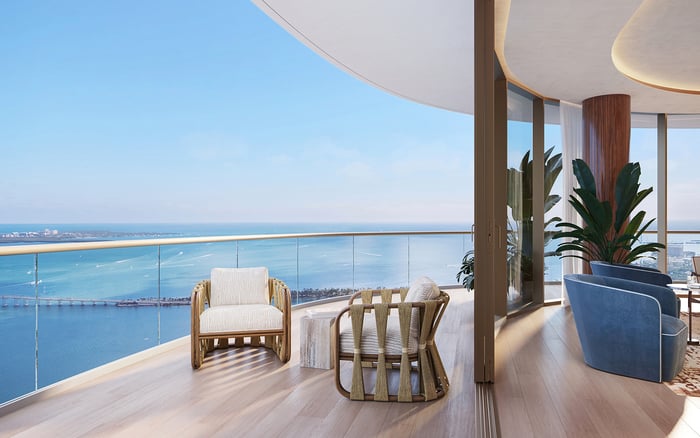
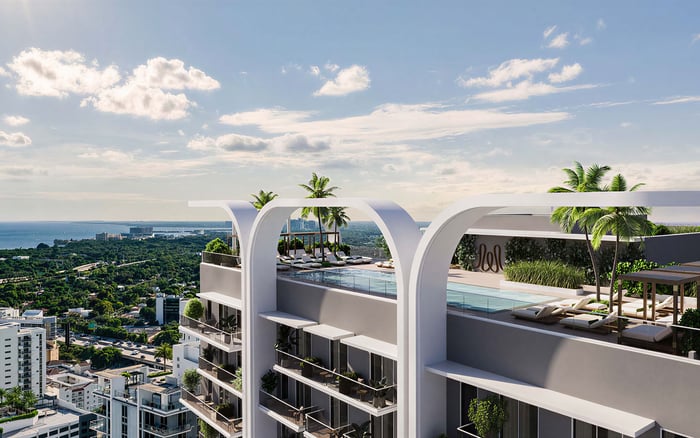
A refined buyer’s guide to evaluating terrace drainage, waterproofing, maintenance history, and association responsibility before purchasing a South Florida luxury condominium.
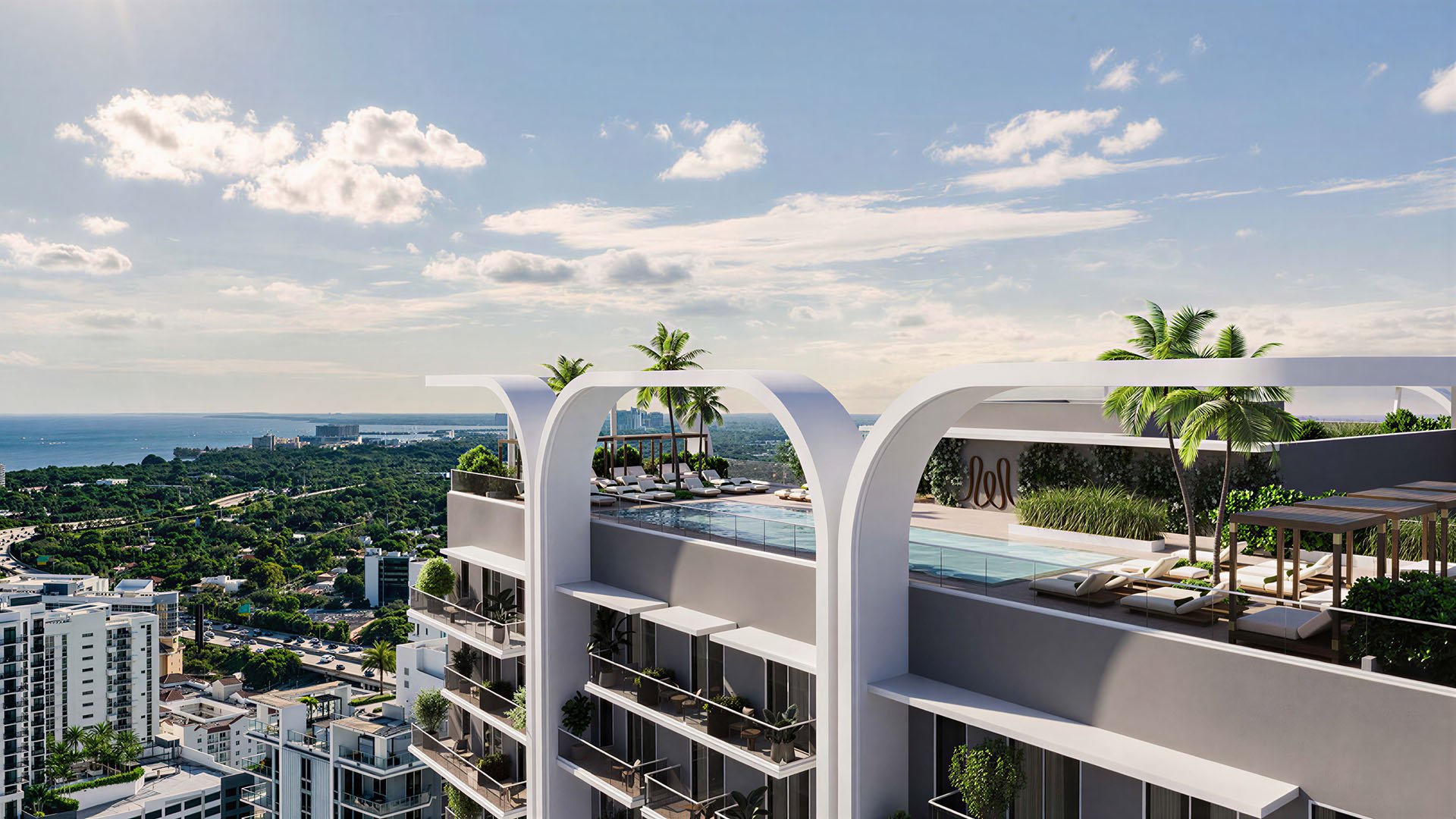
A private outdoor room is one of the great privileges of South Florida condominium living. It frames the view, extends the living area, and gives a residence its daily rhythm. Yet for discerning buyers, a terrace is not merely a lifestyle feature. It is a technical assembly of structure, waterproofing, slope, drains, thresholds, finishes, and maintenance obligations.
Even the most elegant terrace can become a costly distraction if water does not move correctly. Before committing to a luxury condo, the objective is not to become an engineer. It is to ask the right questions early, request the right records, and understand where personal responsibility ends and association responsibility begins.
This matters across very different markets. A Brickell buyer comparing vertical urban residences such as The Residences at 1428 Brickell may evaluate terrace drainage differently than a buyer focused on Miami Beach, Sunny Isles, Surfside, Fort Lauderdale, Aventura, or Boca Raton. Still, the discipline is the same: private outdoor space should be reviewed with the same seriousness as the kitchen, the primary suite, and the building’s financials.
The first question is deceptively simple: where is the water intended to go? A terrace should not merely appear level. It should have a drainage logic. Ask whether the surface is pitched toward area drains, scuppers, trench drains, or another designed discharge point. If pavers are installed, ask what sits beneath them and whether water is expected to pass through, collect below, and exit through a concealed system.
During a showing, look for subtle clues. Staining at corners, mineral deposits near drains, soft or uneven pavers, swollen baseboards at adjacent interiors, and repeated patching around thresholds all deserve follow-up. None is automatically disqualifying, but each should lead to documentation and professional review.
The word terrace may sound simple in marketing language, but in ownership it can involve several layers: surface finish, setting bed, waterproofing membrane, structural slab, rail penetrations, door tracks, and drainage hardware. Each layer has a different life cycle and a different party responsible for maintaining it.
Drainage and waterproofing should be discussed together. Ask when the terrace waterproofing was last installed, repaired, tested, or inspected. If the residence has been renovated, ask whether any outdoor flooring, planters, built-in seating, drains, or lighting penetrations were added with association approval.
A beautiful renovation can create hidden risk if it changes how water moves. Large planters, outdoor kitchens, heavy furniture, or raised deck systems may alter access to drains or make it harder to spot ponding. If a balcony or terrace has been customized, request permits, association approvals, contractor details, warranties, and any available closeout documents.
For buyers considering coastal residences, the visual seduction of air, light, and water should be paired with practical review. In a Miami Beach search around The Perigon Miami Beach, for example, a buyer may be focused on architecture and setting, but the terrace conversation should still include membranes, thresholds, drainage access, and long-term serviceability.
Ask how many drains serve the terrace and whether there is an overflow path if a primary drain is blocked. The goal is to understand redundancy. A single clogged drain can be inconvenient; a terrace with no clear overflow strategy can be far more serious.
Ask who cleans terrace drains, how often common drains are maintained, and whether owners are permitted or required to keep private drains clear. In some buildings, the association may handle certain components. In others, the owner may be responsible for routine clearing of visible drains while the association controls larger shared systems. The governing documents and maintenance rules should answer this clearly.
A thoughtful buyer should also ask whether drains are accessible without removing major finishes. If a paver system, pedestal system, or custom deck covers the drainage points, access should be straightforward enough for maintenance. Luxury should never depend on hiding essential infrastructure so completely that it cannot be serviced.
The most valuable questions are documentary. Ask for association rules affecting terrace finishes, drainage, furniture, planters, irrigation, exterior rugs, hurricane preparation, and owner improvements. Request any available history of terrace-related leaks, waterproofing projects, drain repairs, or recurring water complaints affecting the unit or the stack.
For resale condos, ask the seller directly whether there has ever been water intrusion from the terrace, ponding after rain, drain backup, waterproofing work, or disputes with the association about exterior areas. The answer should be confirmed through disclosures, meeting minutes when available, repair records, and inspection findings.
For pre-construction or new residences, ask for specifications rather than assumptions. What is the intended terrace finish? How is drainage handled? Are thresholds designed to manage wind-driven rain? What is the process for future owner alterations? A buyer considering Sunny Isles options such as Bentley Residences Sunny Isles should still treat terrace performance as a due-diligence item, not an afterthought to branding, views, or arrival experience.
A standard visual inspection may not be enough for a high-value residence with extensive outdoor area. Ask whether the inspector has specific experience with condominium terraces, waterproofing interfaces, and coastal high-rise conditions. If there are warning signs, consider whether a specialist review is appropriate before the contingency period expires.
The inspection should include door thresholds, drainage points, surface pitch, transitions at exterior walls, rail base conditions, visible sealants, tile or paver movement, ceiling conditions below when accessible, and interior finishes adjacent to the terrace. If a residence has multiple exposures, compare how each outdoor area drains. Oceanfront exposure, side exposure, and sheltered courtyard exposure may behave differently during weather.
In Fort Lauderdale, where waterfront living may be central to the decision, buyers looking at residences such as The Ritz-Carlton Residences® Fort Lauderdale can use the terrace review to bring romance and discipline into balance. The question is not whether the view is exceptional. The question is whether the outdoor space has been designed, maintained, and documented with equal care.
The most refined transaction is one in which expectations are clear. Ask whether the terrace is a limited common element, part of the unit, or governed by another designation in the condominium documents. Then ask what that designation means in practical terms: who repairs the membrane, who replaces tile, who clears drains, who approves alterations, and who pays if water affects another residence.
This is especially important if the terrace is large, landscaped, or unusually customized. Private outdoor space can be a signature asset, but it should not come with ambiguous maintenance exposure. In buyer shorthand, terrace performance, balcony detailing, oceanfront exposure, Brickell convenience, Miami Beach lifestyle, Sunny Isles views, Surfside calm, and Aventura access all belong in the same conversation: beauty is strongest when supported by clarity.
What is the first drainage question to ask before buying? Ask where terrace water is designed to go and whether the surface pitch, drains, and overflow path support that plan.
Should I be concerned if water remains after rain? Standing water deserves follow-up, especially if it appears repeatedly, sits near thresholds, or leaves staining.
Who usually maintains terrace drains in a condo? Responsibility varies by building documents, so confirm whether the owner, association, or both are responsible.
Can outdoor rugs or planters affect drainage? Yes, they can block flow, cover drains, trap moisture, or make routine maintenance harder if poorly placed.
What records should I request from the seller? Ask for disclosures, repair invoices, waterproofing records, renovation approvals, and any terrace-related correspondence.
Is a general home inspection enough? It may be a starting point, but extensive terraces or visible concerns may justify specialist review.
Do new-construction condos still need drainage questions? Yes, buyers should ask for specifications, maintenance procedures, warranty information, and alteration rules.
Why do thresholds matter so much? Thresholds are where exterior water management meets interior finishes, making them critical inspection points.
Can I renovate a terrace after closing? Often only with association approval, permitted work when required, and materials that preserve drainage and waterproofing.
What is the best mindset for evaluating a luxury terrace? Treat it as both an outdoor room and a building system, then require documentation before relying on appearance alone.
For a discreet conversation and a curated building-by-building shortlist, connect with MILLION.
If branded residences are on your mind — as a home or as an allocation — we would be glad to share what we are seeing, privately.
Begin a quiet conversation