A discreet buyer’s guide to evaluating how luxury residential amenities perform when South Florida is at full seasonal intensity.
In South Florida’s upper tier, the most revealing amenity is often not the one shown first in a presentation gallery. It is time. How long a resident waits for an elevator on a Friday evening, how naturally a valet team handles a dinner rush, how easily a spa appointment can be held during winter season, and whether a pool deck still feels private when every second-home owner is in residence all speak to the daily quality of ownership.
This is the amenity wait-time test. It is not about impatience. It is about whether a building’s promise of ease survives peak demand. In a market where buyers compare oceanfront privacy, brand service, wellness programming, and arrival experience with increasing sophistication, friction is easier to detect. The best residences do not merely provide amenities. They choreograph access to them.
A buyer comparing Brickell, Surfside, Aventura, Edgewater, Downtown, and the pool experience should think less like a guest touring a beautiful room and more like an owner arriving at the most demanding hour of the season.
South Florida has a pronounced seasonal rhythm. During quieter months, almost any amenity can feel generous. Elevators arrive quickly, lounge chairs are available, spa calendars feel open, and valet stations have room to breathe. Peak season is different. Families arrive, guests visit, restaurants fill, private drivers stack at entry courts, and residents use the building as intended.
That is when design, staffing, operations, and residential density begin to matter. A tower can look composed at noon on a Tuesday and feel entirely different on a Saturday at sunset. For luxury buyers, the question is not whether a building has a pool, spa, garage, porte cochère, or club room. The question is whether those features remain graceful when everyone wants them at once.
This is especially relevant in buildings that lean heavily into lifestyle. A branded residence may offer a polished service vocabulary, while a boutique waterfront building may offer intimacy and fewer competing users. Neither is automatically better. The superior choice is the one whose operational rhythm matches the owner’s actual life.
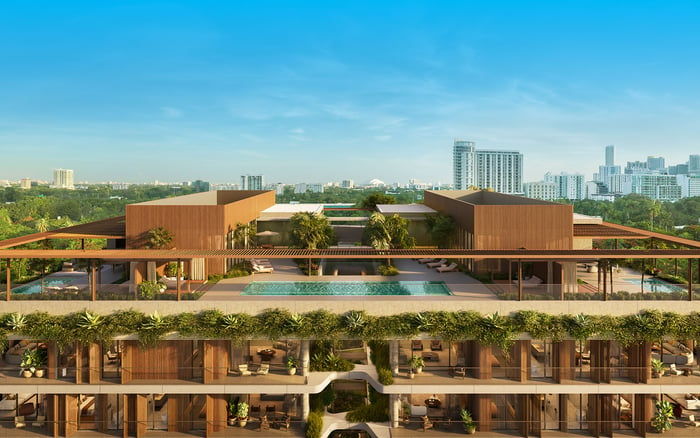
A pool deck is often the emotional center of a South Florida residence. Yet its value depends on more than water, cabanas, and views. During peak season, buyers should consider how the space absorbs demand. Does the deck offer distinct zones for families, quiet reading, lap swimming, and entertaining? Are service paths discreet? Does the layout create natural privacy, or does every chair feel exposed?
The strongest pool environments feel calm even when active. They provide enough separation for residents to choose their mood without negotiating the mood of the crowd. Oceanfront properties such as The Perigon Miami Beach place particular pressure on the relationship between beach, pool, and residence, because the transition from private home to resort-style outdoor life should feel seamless rather than congested.
For buyers who entertain frequently, the pool question also includes guest management. A beautiful deck can become difficult if guest access, towel service, food and beverage coordination, and reservation policies are unclear. The most desirable buildings make these rules feel invisible because they are already well understood by staff and residents.
Elevator performance is one of the least glamorous topics in luxury real estate, yet it shapes the daily experience more than many visible finishes. A resident may forgive a crowded club room. They are less likely to forgive repeated delays between home, lobby, garage, and amenity levels.
In tall urban buildings, the elevator test should include more than speed. Buyers should observe how service elevators are separated from residential circulation, how move-ins and deliveries are managed, and whether amenity traffic competes with daily resident movement. A polished lobby loses force if residents routinely feel delayed at the threshold.
This is why vertical living in Brickell demands a different lens from boutique coastal ownership. At St. Regis® Residences Brickell, buyers are not only evaluating residences and views. They are evaluating how a high-service urban address handles the compressed timing of morning departures, evening returns, guests, drivers, staff, and deliveries.
The ideal elevator experience is forgettable in the best possible way. Doors open, movement is intuitive, and residents do not plan their day around vertical transit.
Wellness has become central to luxury residential marketing, but the wait-time test separates genuine utility from decorative programming. A spa suite, treatment room, sauna, cold plunge, fitness studio, or wellness lounge has limited value if residents cannot use it when their schedule allows.
The key questions are practical. Can residents reserve preferred time windows without excessive advance planning? Is the facility sized for real use, not simply photographed use? Are peak morning and late afternoon hours managed with discipline? Does the wellness program serve residents first, or does it become overextended by guests and events?
Projects such as The Well Coconut Grove reflect the broader shift toward wellness as a residential pillar. For buyers, the important distinction is between wellness as an aesthetic and wellness as a dependable part of daily life. The former photographs well. The latter changes how a residence feels to own.
A serious buyer should ask how spa, fitness, and recovery spaces are scheduled, maintained, and staffed during high occupancy. The answer often reveals whether wellness is operationally embedded or simply amenity-rich.
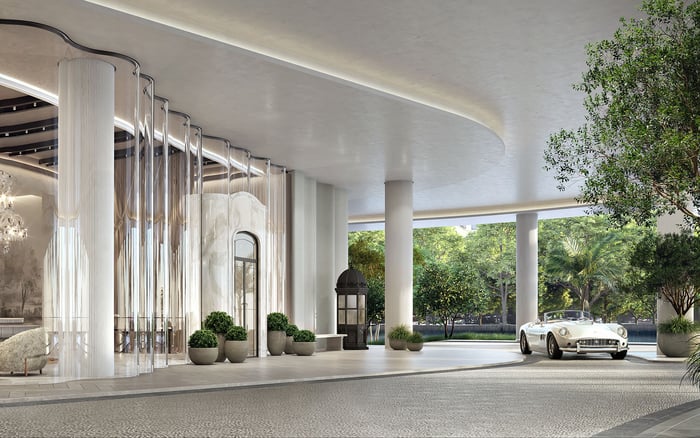
Valet is where the building meets the city. It is also where peak-season friction becomes visible first. A gracious arrival court should handle residents, guests, private drivers, service vehicles, deliveries, and ride-share activity without turning the entry sequence into a negotiation.
In Fort Lauderdale, Miami Beach, Sunny Isles, and the urban core, arrival experience can vary dramatically by site configuration. A waterfront setting may feel serene once inside, but the approach still matters. At Four Seasons Hotel & Private Residences Fort Lauderdale, the service expectation is inseparable from the residence itself, which makes arrival choreography part of the ownership equation.
Valet strength is not only speed. It is recognition, communication, luggage handling, guest discretion, and recovery when several residents arrive at once. The best teams make pressure appear manageable. The weakest ones allow small delays to become social exposure.
There is no single winning format. Boutique buildings may offer fewer residents sharing the same amenity base. Branded residences may offer service culture, training, and hospitality fluency. High-rise towers may deliver dramatic views and larger amenity programs. Each model carries a different wait-time profile.
A buyer considering The Delmore Surfside may be drawn to a more rarefied coastal cadence, while a buyer looking at Bentley Residences Sunny Isles may be focused on a highly designed ownership experience with a strong identity. The relevant question is not which sounds more luxurious. It is which one will feel more effortless during the weeks when the building is fully alive.
The best due diligence is experiential. Visit at meaningful times. Watch how staff moves. Notice whether residents appear relaxed or mildly inconvenienced. Observe whether amenity spaces feel generous or merely full. Luxury is not the absence of people. It is the absence of avoidable friction.
The wait-time test is a simple mental framework for private showings and return visits. Arrive near a busy hour, not only during a polished sales window. Ask how reservations are handled for pool cabanas, wellness rooms, treatment spaces, private dining, and guest access. Understand how elevators separate residents from service activity. Look at the valet court as carefully as the lobby.
Buyers should also consider household patterns. A seasonal owner with frequent guests has different needs from a full-time resident who values morning fitness access. A family that uses the pool daily will feel pressure points differently from a couple focused on restaurant proximity and spa recovery. The right building is the one whose systems support the way the owner actually lives.
In the ultra-premium market, the most persuasive amenity is not abundance. It is composure. When a residence can absorb peak season without making ownership feel crowded, scheduled, or exposed, it earns the distinction that matters most.
What is the amenity wait-time test? It is a buyer’s way of evaluating how smoothly pools, elevators, spas, valet, and other services perform during peak demand.
Why does peak season matter so much in South Florida? Peak season places real pressure on amenities, staff, parking, guest access, and shared spaces, revealing how a building actually operates.
Should buyers visit a building more than once? Yes. A second visit during a busier hour can reveal service rhythm and resident flow that a quiet appointment may not show.
Is a larger amenity deck always better? Not necessarily. Layout, privacy, staffing, and reservation discipline can matter more than size alone.
What should buyers watch for at the pool? Look for privacy, seating availability, service efficiency, guest management, and whether the deck feels calm when active.
Why are elevators important in luxury towers? Elevators shape daily convenience, privacy, and movement between the residence, lobby, parking, and amenity levels.
How should spa amenities be evaluated? Focus on access, scheduling, maintenance, staffing, and whether wellness spaces are usable at preferred times.
What makes valet service feel luxury-grade? Strong valet service combines speed, discretion, recognition, communication, and calm handling of simultaneous arrivals.
Are boutique buildings better for wait times? They can be, but only if their staffing, circulation, and amenity policies match the needs of residents.
What is the biggest red flag for buyers? The clearest warning sign is visible friction that staff cannot quickly soften, especially at arrival, elevators, or high-demand amenities.
If you'd like a private walkthrough and a curated shortlist, connect with MILLION.
If branded residences are on your mind — as a home or as an allocation — we would be glad to share what we are seeing, privately.
Begin a quiet conversation