A private dining room can give luxury buyers a controlled, elegant way to entertain without the rituals, visibility, or commitments of a traditional club setting.
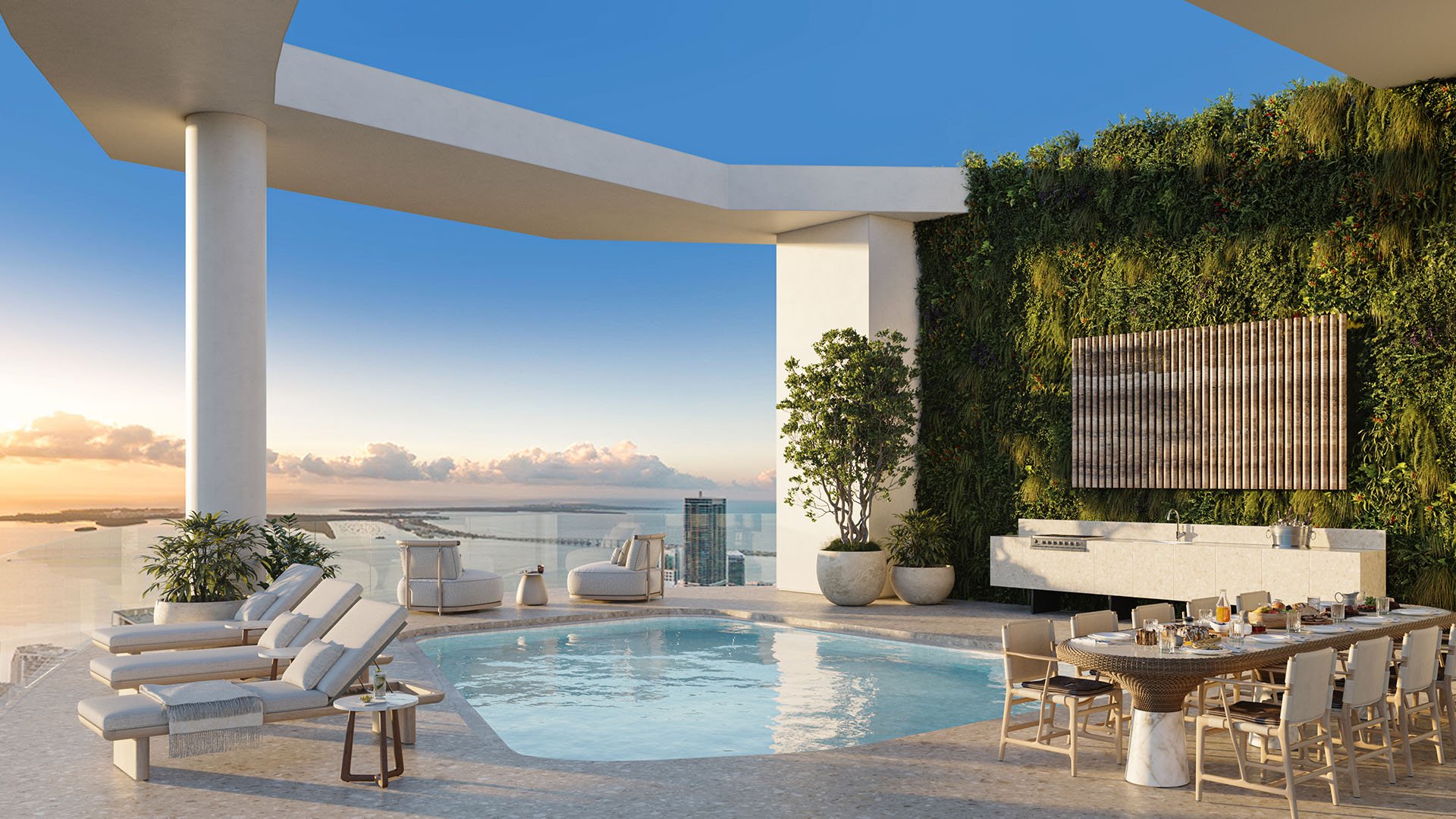
For buyers who entertain often, the question is no longer simply whether a building has amenities. It is whether those amenities allow an owner to host with precision, privacy, and ease. A private dining room sits at the center of that discussion because it offers what a club cannot always guarantee: control over the room, the rhythm, the guest list, and the tone of the evening.
This is not about replacing the home dining table. It is about extending the residence when the occasion calls for more space, more service, or a clearer separation between personal life and social performance. A dinner for twelve can feel intimate in a well-designed private dining room. The same dinner can feel intrusive inside a residence if it overtakes the kitchen, staff circulation, elevator entry, and family areas.
For South Florida buyers comparing Brickell, Surfside, Edgewater, and quieter waterfront neighborhoods, private dining is best understood as a lifestyle instrument. It is valuable when it removes friction. It matters when it lets a host be generous without making the building feel like a hotel or the residence feel like an event venue.
A club is often defined by membership, schedule, culture, and visibility. A private residential dining room, at its best, is defined by discretion. It allows a host to gather friends, family, investors, colleagues, or visiting guests in a composed setting without stepping onto a broader social stage.
That distinction matters. Some buyers enjoy hospitality but do not want a clubhouse identity attached to their address. They may want a beautiful table, attentive logistics, and a polished environment, but not the implied obligation to socialize beyond their own group. A private dining room solves for that nuance. It provides ceremony without exposure.
In dense urban settings, this can be especially useful. A buyer considering ORA by Casa Tua Brickell, The Residences at 1428 Brickell, or other city residences should look beyond whether a dining room exists. The sharper question is whether the room feels like a private extension of ownership rather than a shared lounge with a table.
Not all private dining rooms carry the same meaning. Some are photogenic but impractical. Others appear more modest yet operate beautifully. The difference usually emerges in details a serious host notices immediately.
Arrival is the first test. Can guests reach the room smoothly, without confusion or unnecessary exposure? Is there a natural waiting area, a discreet place for flowers or gifts, and a clear path from elevator to table? The best experience begins before anyone sits down.
Service flow is the second test. A room may be beautiful, but if catering, plating, glassware, and cleanup collide with guests, the evening loses its grace. Buyers should ask how food arrives, where staff can stage, whether there is storage for service pieces, and how noise is managed. These questions are not fussy. They are the difference between entertaining and merely reserving a space.
Acoustics are equally important. A private dining room should allow conversation to feel protected. It should not amplify voices into adjacent amenity areas, nor should it force guests to compete with music, pool activity, or lobby traffic. A room that photographs well but sounds careless will not be used often.
South Florida entertaining has its own cadence. Even without making an event large, many owners want the possibility of indoor-outdoor movement, a pre-dinner drink, a waterfront view, or a sequence that begins casually and ends formally. The private dining room becomes more compelling when it connects naturally to the broader residential experience.
In Miami Beach and Surfside, buyers touring properties such as The Perigon Miami Beach or The Delmore Surfside should consider the transition from beach life to evening hosting. Can the building support a dinner that feels elegant after a day by the water, without requiring guests to leave the property? Can the host create occasion without the logistics of a separate venue?
In Edgewater, a buyer considering Villa Miami may evaluate the same amenity through a more urban lens. The dining room is not only about the meal. It is about having an alternative to a crowded restaurant, a neutral setting for business conversation, and a more composed way to receive visitors who are already moving through the city.
A private dining room should never be treated as a checkbox. It deserves the same scrutiny a buyer would apply to ceiling height, terrace depth, elevator privacy, or kitchen planning.
Ask how reservations are handled. Ask whether the room can be used for breakfast, lunch, dinner, or only during certain windows. Ask how many guests it comfortably seats, and how that comfort changes when service is active. Ask whether outside culinary teams are allowed, whether building staff coordinates setup, and whether the room can be personalized with flowers, linens, or tableware.
For new-construction buyers, renderings can be seductive. The more important work is imagining a real evening. Where does a guest place a handbag? Where does a host stand for the first toast? Is there a natural place for wine service? Is the pool nearby in a way that adds ambiance or in a way that adds distraction? If there is a terrace connection, is it graceful or merely adjacent?
These practical details matter because the highest form of luxury often feels invisible. Guests remember ease. Hosts remember whether the evening demanded management or allowed presence.
Private dining is not essential for everyone. A buyer who rarely hosts may prefer wellness, marina access, a larger residence, or more outdoor space. But for the buyer who entertains with purpose, it can be one of the most meaningful shared spaces in a building.
It is especially relevant for owners who do not want their social life dictated by restaurants, clubs, or public rooms. They want a setting close to home, but not inside the home. They want hospitality, but not performance. They want guests to feel cared for, but not surrounded by the host’s private household.
That is the quiet strength of the private dining room. It can make a building feel more complete without making it feel more crowded. It can elevate hosting without announcing itself. And for buyers who understand the difference between access and intimacy, that restraint is precisely the point.
Why do private dining rooms matter in luxury residences? They give owners a polished place to host larger or more formal meals without moving the entire event into the residence.
Is a private dining room the same as a club room? No. A strong private dining room is more controlled, more intimate, and less socially exposed than a typical club-style space.
What should buyers inspect first? Start with arrival, privacy, acoustics, service flow, and whether the room feels genuinely separate from busier amenity areas.
Does every luxury buyer need this amenity? No. It matters most for buyers who host often, value discretion, or want a refined alternative to restaurants and clubs.
Should the room connect to outdoor space? It can help, especially in South Florida, but only if the transition feels natural and does not compromise privacy or service.
How important is reservation policy? Very important. A beautiful room has limited value if access is too restricted, unclear, or difficult to coordinate.
Can private dining replace a large in-residence dining room? It can reduce pressure on the residence, but it should complement the home rather than substitute for thoughtful interior planning.
What makes a private dining room feel truly luxurious? Quiet acoustics, dignified arrival, graceful lighting, discreet service support, and a sense that the room was designed for real use.
Are these rooms useful for business entertaining? Yes, when privacy and conversation quality are strong, they can be well suited to business dinners or small strategic gatherings.
How should buyers compare buildings with similar amenities? Focus on how the room operates during an actual evening, not only how it appears in renderings or marketing images.
For a confidential assessment and a building-by-building shortlist, connect with MILLION.
If branded residences are on your mind — as a home or as an allocation — we would be glad to share what we are seeing, privately.
Begin a quiet conversation