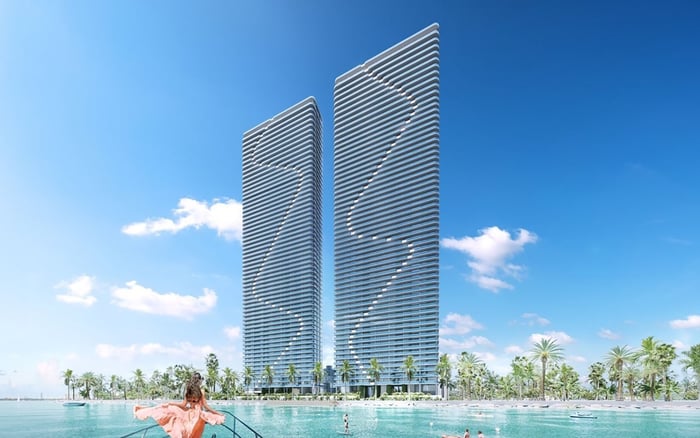
Post-tensioned concrete slabs are one of the quiet, high-impact structural choices that can shape how an ultra-luxury tower lives day to day: ceiling heights, column spacing, vibration feel, and long-term adaptability. For buyers comparing new Edgewater product, the conversation often lands on how structure supports design intent. This editorial breaks down what post-tensioning is, why developers use it, and how to think about it when evaluating residences at Cove Miami and Aria Reserve Miami, alongside comparable South Florida benchmarks.
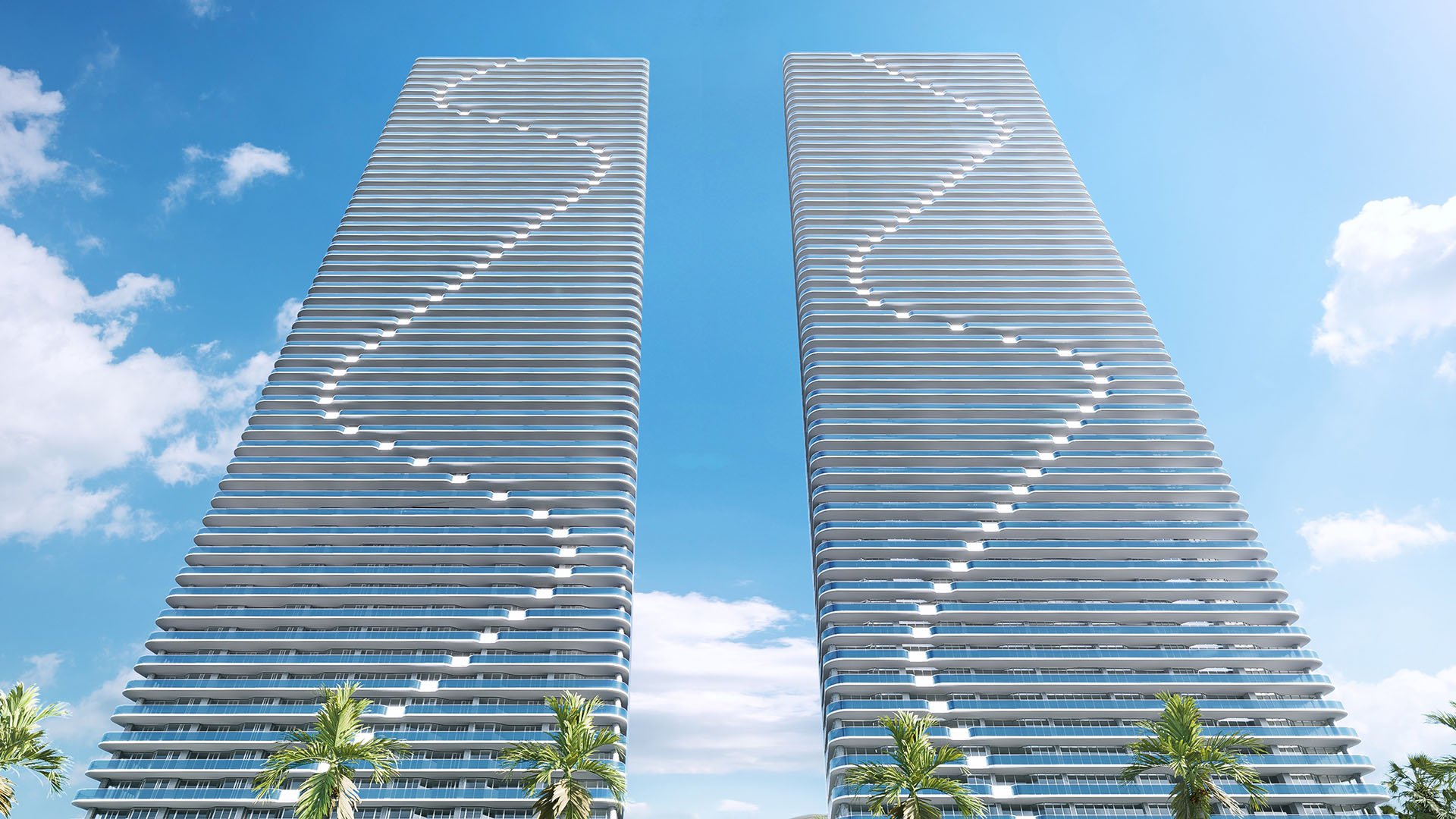
In a market where finishes can be upgraded and furniture can be curated, the structural system is the one element you cannot swap later. It shapes what you notice immediately-wide, uninterrupted living rooms-and what you experience over time: how floors feel underfoot, how sound carries, and how gracefully a building can accommodate future technology.
In Edgewater, buyers often compare contemporary high-rises such as Cove Miami and Aria Reserve Miami not only for views and amenities, but for how the tower is engineered to deliver privacy, proportion, and calm.
One structural choice commonly associated with premium high-rise construction is the post-tensioned concrete slab. It is not the only way to build a refined tower, but it is frequently selected because it can support architectural hallmarks buyers prioritize: generous spans, open plans, and efficient floor assemblies.
A post-tensioned slab is a concrete floor system where high-strength steel tendons are tensioned after the concrete has gained sufficient strength. That tension places the slab into compression, helping the floor resist bending and cracking under load.
For a buyer, the engineering matters less than the downstream effects. Post-tensioning is often used to:
Reduce the need for closely spaced columns by spanning longer distances.
Control deflection, which can help floors feel more stable, particularly in large rooms.
Achieve a thinner structural floor profile compared to some conventional reinforced slabs.
When it is executed well, the result is a floor plate that supports luxury the way luxury is actually lived: clean sightlines, flexible furnishing, and layouts that feel composed rather than negotiated around structure.
Ultra-luxury buyers value quiet geometry-rooms that read as intentional, not as a series of workarounds. Longer spans can translate into fewer interior columns and fewer protrusions, which matters most in great-room living where art walls, large-format stone, and bespoke millwork depend on uninterrupted surfaces.
When comparing new construction in Edgewater, this is a practical early filter: do primary living areas and bedrooms present clean walls and predictable corners, or do you end up designing around structure? Even a single column placed poorly can change how a space furnishes and photographs.
In high-rises, the floor-to-floor dimension is where structure, mechanical routing, sound assemblies, and ceiling design compete for inches. A thinner slab profile can give designers more flexibility to allocate height where it matters-whether that becomes higher finished ceilings, deeper recessed lighting details, or more coherent mechanical distribution.
Buyers should not assume post-tensioning automatically means higher ceilings, since ceiling height is ultimately a design decision. Still, post-tensioning can be part of the toolkit that makes refined proportions easier to deliver.
Concrete moves as it cures and as a building ages. By placing the slab into compression, post-tensioning can help manage cracking behavior. In finished residences, fewer uncontrolled cracks can mean fewer surprises that telegraph through rigid finishes over time.
Even in luxury, performance still depends on thoughtful detailing at transitions and proper installation of stone, tile, and wood flooring systems. Structure supports durability; it does not replace craftsmanship.
High-rise design is a constant negotiation between strength, weight, and buildability. Post-tensioned slabs can offer structural efficiency, which is one reason they are common in tower construction. For buyers, the relevance is indirect: structural efficiency can support architectural ambition, which may show up as more dramatic layouts, longer balconies, and cleaner public spaces.
Post-tensioning is not a marketing slogan. It is a real system with rules, constraints, and ownership implications.
Because tendons are stressed within the slab, cutting, coring, or drilling must be tightly controlled. A casual contractor approach-common in single-family renovations-is inappropriate in a post-tensioned high-rise. If you anticipate future changes such as relocating plumbing for a wet bar, adding built-ins that require meaningful anchoring, or reworking lighting with new drops, you want a clear approvals process and an experienced team.
The best ownership experience is one where building management provides straightforward protocols for scanning, approvals, and licensed execution.
Buyers sometimes ask whether post-tensioned floors feel more solid. The accurate answer is that floor feel depends on span lengths, slab thickness, detailing, finishes, and the overall structural scheme.
Diligence should include a tactile evaluation. In showrooms or model spaces, walk the floor, note any perceptible vibration, and listen for the acoustic character. A refined tower reads as quiet and composed-even when someone crosses the room in hard-soled shoes.
A concrete slab helps, but true privacy is an assembly: slab plus underlayment, ceiling build-out, wall construction, and window systems. Post-tensioning can be part of the story, but it is not the entire story.
If privacy is paramount, prioritize questions about floor underlayments, wall detailing between residences, and the performance of glazing systems.
A structural system is a means to an end. For an ultra-luxury buyer, the end is a residence that feels generous, quiet, and durable.
When comparing Cove Miami and Aria Reserve Miami, consider three buyer-oriented lenses:
Which residences deliver the cleanest living spaces and the least structural intrusion into prime walls?
Which interiors feel more vertical and composed, particularly in living areas and primary suites?
Which building environment makes it easier to execute future work properly, from lighting upgrades to millwork?
Because marketing materials tend to spotlight lifestyle and amenities, the most valuable conversations often happen on the technical side: permissible alterations, building standards for penetrations, and the typical process for contractor access. In ultra-luxury, the best building is the one that protects your investment through disciplined, consistent controls.
To keep the conversation concrete and buyer-focused, here are questions that tend to produce meaningful answers, regardless of which Edgewater tower you prefer.
What is the slab system and what are the restrictions on coring or anchoring? You want a clear boundary and a documented process.
How are ceilings built out and where do mechanical runs go? This clarifies whether the building’s coordination supports clean, minimalist interiors or forces compromises.
What is the floor sound assembly? Ask about underlayment, and whether the building has standards for hard flooring and area rugs.
What are the rules for balcony or terrace modifications? Even small items like outdoor kitchens or heavy planters can trigger engineering review.
How does the building manage water intrusion risk at wet areas? Luxury is as much about invisible reliability as it is about visible design.
In South Florida, tower buyers often focus on view corridors and amenity decks, but the most enduring value is frequently structural and operational.
Edgewater’s new wave of residential construction sits within a broader continuum of high-design, high-performance projects. Buyers cross-shop across neighborhoods, comparing how buildings live-not only how they present.
For perspective, Brickell’s super-prime positioning often brings structural discussions into sharper focus, particularly when buyers compare skyline offerings like 2200 Brickell and branded vertical living such as 888 Brickell by Dolce & Gabbana. Along the sand, the conversation shifts toward salt-air durability and acoustic calm, where a project like 57 Ocean Miami Beach can help frame what quiet luxury means when the environment is dynamic.
These references are not about declaring a single best answer. They reinforce the larger point: in ultra-luxury, structure is the platform beneath every other promise.
Post-tensioned slabs can be a meaningful advantage when paired with disciplined detailing, thoughtful acoustic assemblies, and clear building standards for ownership.
If you are evaluating Cove Miami versus Aria Reserve Miami through a structural lens, focus on outcomes you can verify: room shapes, ceiling experience, acoustic behavior, and the building’s rules for future work. Luxury is not only what you see on day one, but what continues to perform flawlessly after years of living, entertaining, and upgrading.
What is a post-tensioned slab in a condo tower? It is a concrete floor system reinforced with stressed steel tendons to improve strength and control deflection.
Do post-tensioned slabs always mean higher ceilings? Not necessarily; they can enable a thinner structure, but final ceiling height depends on design and mechanical layout.
Why do buyers care about fewer columns? Fewer columns often means cleaner rooms, better furniture placement, and more usable wall space for art and millwork.
Is drilling into a post-tensioned slab risky? It can be if done improperly; penetrations typically require approvals and specialized scanning and execution.
Does post-tensioning make floors feel more solid? Sometimes, but floor feel depends on span lengths, detailing, finishes, and the overall structural scheme.
Are post-tensioned buildings quieter? Concrete helps, but true acoustic privacy depends on the entire floor and wall assembly, not the slab alone.
Can I renovate kitchens and bathrooms in a post-tensioned high-rise? Often yes, but structural and waterproofing constraints may limit where drains, vents, and heavy loads can go.
What should I ask about when touring Cove Miami or Aria Reserve Miami? Ask about slab restrictions, acoustic assemblies, ceiling build-outs, and the approval process for future work.
Do post-tensioned slabs crack less? They are designed to better control cracking behavior, though finish performance also depends on installation quality.
Is post-tensioning a sign of better construction? It can indicate a more engineered approach, but quality still hinges on detailing, execution, and building operations.
If you'd like a private walkthrough and a curated shortlist, connect with MILLION Luxury.
If branded residences are on your mind — as a home or as an allocation — we would be glad to share what we are seeing, privately.
Begin a quiet conversation