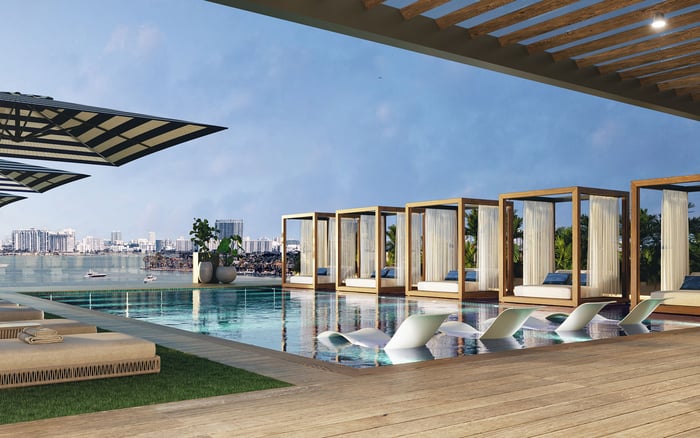
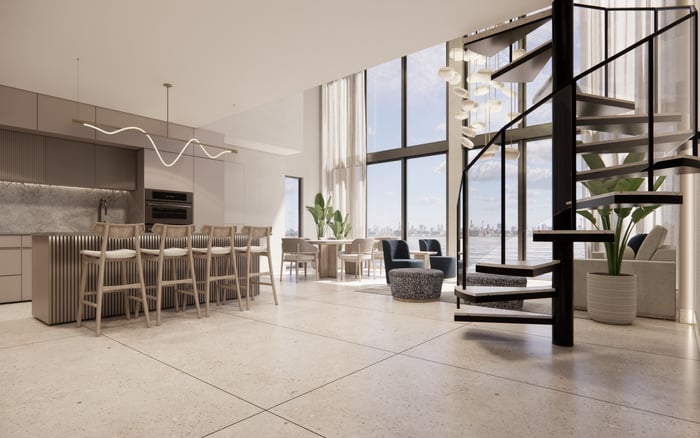
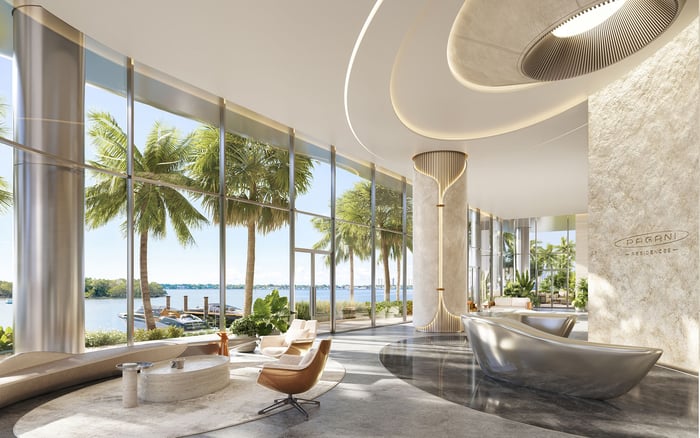
A buyer-oriented comparison of how short-term rental flexibility and potential blackout dates can influence ownership strategy at Shoma Bay and Pagani Residences in North Bay Village.
For many North Bay Village buyers, the short-term rental conversation is not about whether a residence is “investment friendly.” It is about control.
Control of your calendar-especially during high-demand weeks. Control of who shares the elevator with you on a Friday night. Control of how much operational complexity you are willing to absorb, and how much rule-making authority you delegate to an association.
When evaluating Shoma Bay North Bay Village versus Pagani North Bay Village, the right lens is not a single checkbox that says “short-term rentals allowed.” It is the relationship between three forces:
The building’s legal rental framework (minimum stay, approval process, caps).
Operational reality (front desk protocols, guest vetting, key control, security).
Calendar restrictions, including “blackout dates” and event-period limitations.
Because rules can evolve through condominium governance, sophisticated buyers underwrite the direction of travel: how a building is likely to respond when owners disagree, when neighbors complain, and when enforcement becomes non-negotiable.
Luxury short-term rental flexibility is often framed as pure upside. In reality, it sits on a spectrum-with clear trade-offs.
At the most permissive end, owners can rent frequently, with short minimums and minimal friction. That can increase revenue optionality, but it also tends to increase turnover, guest traffic, and the need for professional oversight.
At the most restrictive end, owners see fewer guest rotations and a more residential atmosphere. That typically supports quiet enjoyment and a consistent security posture, but it reduces the ability to monetize shoulder seasons or offset carrying costs with short stays.
The middle is where many luxury buyers prefer to land: enough flexibility to rent selectively, paired with guardrails that preserve the building’s tone. The guardrails are the point. Look for how the building defines:
Minimum rental terms and how they are measured.
Frequency limits (how many rentals per year).
Whether leases must be registered, approved, or screened.
Whether rentals must be handled through a centralized program.
Guest access rules for amenities, parking, and deliveries.
When comparing Shoma Bay and Pagani, ask which model aligns with your ownership identity: an asset you operate, or a residence you selectively share.
Blackout dates can be explicit-or effectively created through policy.
An explicit blackout date is a defined period when rentals are not permitted, often aligned with high-impact weekends, major events, or operational peak-load periods. An “effective” blackout can emerge through higher minimum stays, stricter guest approval, higher fees, or tightened elevator and amenity access rules that make short stays unattractive.
For a buyer underwriting short-term revenue, blackout periods can remove the very weeks that command premium nightly rates. For a buyer focused on personal use, the effect can be the opposite: blackout rules can protect your ability to arrive on short notice to a calmer building with fewer transient neighbors.
The sophisticated move is to model your own calendar first. If you only rent during three or four windows each year, a handful of blackout periods can matter more than a broadly permissive policy. Conversely, if you plan to rent frequently, even modest restrictions can create real operational churn.
Rather than leaning on promises, treat this as a governance-and-positioning comparison.
In buildings where short-term rentals are culturally embraced, staff and residents expect guest turnover. The result can be a hospitality-adjacent rhythm: more luggage, more ride-share activity, more key management.
In buildings that aim for a purely residential tone, even permitted rentals may be socially discouraged, with stronger informal pressure to restrict, amend, or enforce.
Decide which environment you prefer-then confirm whether the building’s operational systems actually support that preference.
Two buildings can have similar written rental allowances and feel entirely different.
Enforcement posture is defined by how violations are handled, how fines are structured, whether staff is empowered to intervene, and whether the board acts quickly when residents complain. In luxury properties, inconsistency is the real risk: it fuels neighbor conflict, drives reputational drift, and makes the owner experience unpredictable.
When touring, watch for process cues: package rooms, visitor check-in, elevator access, key protocols, and the clarity of staff communication.
Even when rentals are allowed, the true constraint may be cost and complexity. Common friction points include administrative fees, security deposits, application processing, and requirements for professional property management.
If you intend to rent, you want a policy that is predictable and scalable. If you intend to live primarily in the residence, you want a policy that does not import hotel-like traffic into a residential setting.
Use this hierarchy to choose between Shoma Bay and Pagani-independent of any single promise.
You want the building with the most durable ability to support short stays, not simply the most permissive language today. “Durable” means the building’s identity, resident mix, and governance culture are aligned with short-term activity.
Operationally, you benefit from systems that can absorb turnover without compromising security. Consider whether a concierge-led process, structured check-in, and clear amenity rules are in place to protect the building’s tone.
For additional context on how South Florida’s branded and lifestyle-led properties handle owner use and guest dynamics, compare the experience-driven posture of Setai Residences Miami Beach with the more classical residential expectations of select non-hotel towers.
You want fewer unknowns. Here, even modest short-term flexibility can work-if it is paired with strict guardrails: minimum stays that discourage party-weekends, strong screening, and amenity access controls that keep the property feeling like a private address.
This mindset is increasingly common among second-home owners who view rental ability as a contingency, not a business plan.
Many owners want the ability to rent, without living inside a revolving door.
The strongest “balanced” buildings tend to operate as if they are protecting a club: guests are welcome, but rules are clear, consistently enforced, and designed to keep the ownership community intact.
In North Bay Village, you can also benchmark this balance against other nearby waterfront lifestyle projects such as Continuum Club & Residences North Bay Village, which signals how the neighborhood is evolving in tone and expectation.
In a luxury transaction, the underwriting file should include the documents that actually govern the lived experience.
Request the current condominium documents and the most recent rental and guest policies, including any separate rules adopted by board resolution. Specifically, confirm:
Minimum lease term and how it is enforced.
Caps on rental frequency, if any.
Whether the association can impose or has imposed blackout dates.
Required registration, screening, deposits, and fees.
Move-in and move-out procedures that may affect guest turnover.
Amenity access policies for tenants and guests.
Then interpret the documents through the lens of building identity. If you are buying for flexible use, prioritize the property where the culture is most likely to defend that flexibility over time. If you are buying for privacy, prioritize the property where residents consistently favor residential quiet.
For a contrasting case study in a high-demand neighborhood where usage rules often shape the value proposition, consider how a tower like 2200 Brickell typically attracts owners focused on full-time living, which tends to influence policy direction and enforcement style.
North Bay Village is increasingly treated as a strategic midpoint between Miami’s core and Miami Beach. Buyers who want water, views, and access often want optionality: the ability to live in the residence, leave for extended periods, and still keep the asset productive.
That is exactly why short-term rules and blackout dates matter here. They are not minor line items. They shape the building’s social fabric, security posture, and your ability to treat the residence as both sanctuary and flexible-use asset.
Between Shoma Bay and Pagani, the “right” answer is rarely universal. It depends on whether you prefer a more hospitality-forward rhythm or a more private, residential cadence. The most effective buyers decide on the experience first-then choose the rule set that best supports it.
Do Shoma Bay and Pagani allow short-term rentals? Policies vary by building and can change over time; review the current governing documents before committing.
What is a blackout date in a condo rental context? A blackout date is a defined period when rentals are restricted or effectively discouraged through tighter rules and access limits.
Can a condo board add blackout dates later? Depending on the governing documents and voting thresholds, boards may adopt or recommend additional restrictions.
Are minimum-stay rules the same as blackout dates? No. Minimum stays apply year-round, while blackout dates target specific calendar windows.
Do stricter rental rules always help resale value? Not always; they can enhance privacy for end-users while reducing appeal for flexible-use buyers.
Will short-term rentals change the day-to-day feel of the building? Yes; higher turnover typically increases lobby activity and requires stronger operational controls.
Should I assume rental income will cover carrying costs? No; underwrite conservatively and treat rental revenue as optional unless rules and demand are clear.
What documents should I review before buying for rental flexibility? Review the condominium declaration, bylaws, house rules, and any current rental and guest policy addenda.
Do tenants typically have full amenity access? It depends on building policy; some limit access to protect the resident experience.
What is the cleanest way to compare two buildings’ rental posture? Compare minimum terms, frequency caps, enforcement, and any calendar-based restrictions side by side.
For a discreet conversation and a curated building-by-building shortlist, connect with MILLION Luxury.
If branded residences are on your mind — as a home or as an allocation — we would be glad to share what we are seeing, privately.
Begin a quiet conversation