A buyer-oriented look at how Biscayne Bay vistas read differently from Edgewater and Brickell, and what “unobstructed” truly means in day-to-day living, resale, and lifestyle.
In South Florida luxury real estate, an “unobstructed water view” is often treated like a yes-or-no promise. In reality, it’s a lived condition shaped by geometry, surrounding entitlements, and the exact corridor your residence occupies. Comparing the unobstructed Biscayne Bay views at Missoni Baia against Una Residences Brickell is less about crowning a single winner and more about aligning a buyer’s lifestyle and risk tolerance with two distinct vantage points on the same body of water.
“Unobstructed” can signal a direct, wide-angle bay panorama that’s difficult to interrupt thanks to shoreline conditions and setbacks. It can also describe a more cinematic composition-water as the constant, framed by islands, bridges, and skyline. Both can be extraordinary. Both can also shift meaningfully from one line to the next, and from one floor plate to another.
A disciplined buyer approach starts with three questions:
What is the view corridor from the specific residence, not the building marketing imagery?
What sits between you and the horizon today, and what could plausibly appear tomorrow?
How does the interior layout treat the view: as a backdrop, or as the organizing element of daily life?
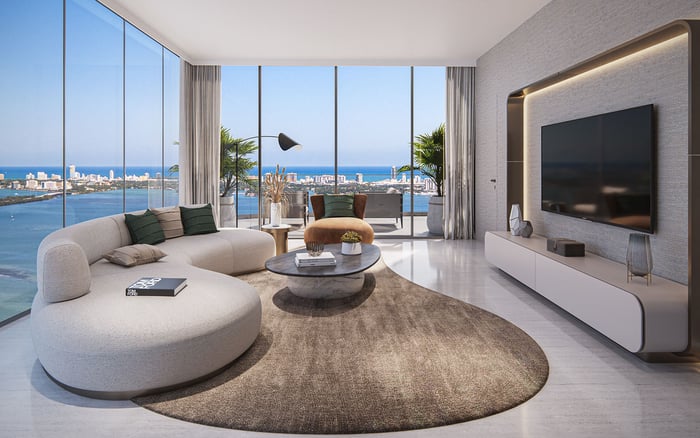
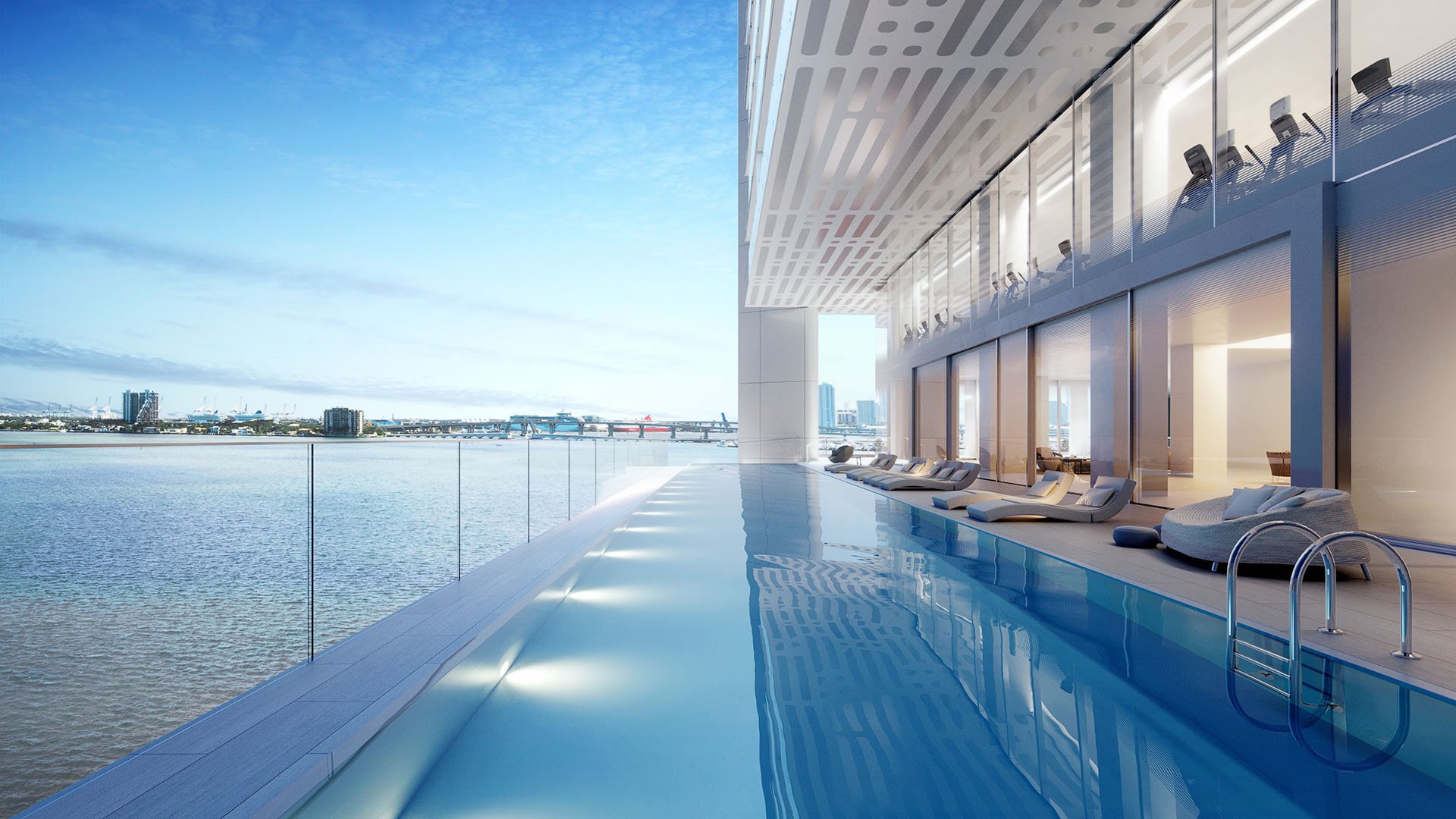
Missoni Baia’s view experience is defined by Edgewater’s relationship to the bay. Edgewater typically delivers expansive, open-water sightlines and a stronger sense of distance. The bay reads as a broad plane, while the skyline becomes either a focal point or a lateral companion depending on orientation. For buyers who want the bay to feel like a private landscape rather than an urban stage, this can be a powerful emotional fit.
Una Residences Brickell, by contrast, sits where the water meets the city more directly. Brickell’s bayfront identity is inherently layered: water, traffic arteries, and the vertical density of downtown-adjacent towers. When views are protected, they can be spectacular precisely because the city is present. The bay becomes a luminous foreground to a skyline that feels closer and more animated.
This difference matters beyond aesthetics. It influences noise perception, the rhythm of boat traffic you notice, how sunset light plays into interiors, and how private you feel with shades open after dark.
Brickell also offers a breadth of ultra-luxury choices that calibrate view and lifestyle differently. Buyers cross-shopping Una often also consider other Brickell statements such as 2200 Brickell or the more vertical, fashion-forward energy of 888 Brickell by Dolce & Gabbana. The point isn’t equivalency, but context: Brickell’s view corridors can carry an urban premium-and an urban complexity.
With no Fact Table specifics to anchor line numbers, floor ranges, or exact orientations, the safest-and most useful-way to compare Missoni Baia and Una is to evaluate the mechanics of view protection rather than repeating claims.
Key variables to request and verify during your due diligence:
A true bay-facing exposure can still feel narrow if neighboring towers compress the angle. Conversely, a slightly off-axis orientation can feel wider if the corridor opens toward open water.
The closer you are to the shoreline, the more your view can hinge on what is permitted on nearby sites. A longer “runway” across the bay can reduce perceived obstruction risk.
A green buffer or public baywalk can preserve sightlines in a way that a purely private frontage does not.
Deep terraces can be a luxury, but they can also change how the horizon reads from primary seating positions.
In other words, unobstructed isn’t only about what you see-it’s about how you live with what you see.
A buyer choosing between Edgewater and Brickell is also choosing the daily cadence of the view.
In Edgewater, the bay can feel calmer, with broader sky and more consistent light. The visual emphasis tends to shift with sun angles and weather patterns rather than the city’s activity. For many second-home buyers, that steadiness is the luxury: you arrive, exhale, and let the bay do the work.
In Brickell, the bay view often comes with an urban counterpoint. Nighttime can be especially decisive. The skyline’s illumination becomes part of the composition, and the water reflects it back. For some, this is the ultimate Miami signature. For others, it can feel less private-particularly if neighboring towers look back.
If your priority is a quieter, more residential waterfront mood, it can help to tour a range of neighborhoods that express that atmosphere differently. Even outside Miami proper, properties like 2000 Ocean Hallandale Beach can sharpen your preferences: is your definition of luxury closer to resort-front serenity, or to city-water interplay?
Luxury buyers often ask for a guarantee of unobstructed views. In practice, what you can secure is a thoughtful assessment of future view risk.
A practical way to frame it:
Some vistas are protected by geography. Water is the ultimate “setback,” but islands and shoreline parcels can still introduce future verticality.
In dense districts, additional development is easier to imagine. That doesn’t mean your view will be lost, but it does mean your corridor deserves more rigorous analysis.
Even if the water remains unobstructed, nearby glass can introduce a feeling of being observed. Privacy is part of the view.
For a buyer comparing Missoni Baia and Una, the central question is whether you want your view defined primarily by open bay, or by bay-plus-city. Both can be unobstructed. Only one may feel psychologically unencumbered.
Two residences can share a similar bay exposure and still deliver completely different lived experiences based on plan.
Consider:
If the living room seating naturally turns toward the bay, you live with the view. If it turns inward, the view becomes occasional.
In many luxury lifestyles, the kitchen is a social hub. A view-forward kitchen changes daily life.
Waking to the bay is different from visiting it from the living room.
When touring, spend time standing in the exact positions you’ll occupy: at the dining table, at the kitchen island, at the foot of the bed. The highest floor isn’t always the best if the plan treats the view as secondary.
At the ultra-premium end, resale is less about “days on market” and more about the depth of the buyer pool that emotionally connects with the property.
Brickell’s buyer pool often includes global urbanists who want immediacy: restaurants, offices, and a skyline identity. For those buyers, an unobstructed bay view that still feels connected to the city can command a strong premium. That’s one reason Brickell trophy projects stay on short lists, from Una Residences Brickell to newer icons.
Edgewater attracts a slightly different mindset: buyers who still want Miami’s core, but prefer the bay to read as the primary luxury. The resale story can be equally strong when the view is wide, legible, and difficult to replicate.
The deciding factor is often not price per square foot, but narrative: “This is the water view I cannot replace.” Your goal is to buy the view that future buyers will describe in the same language.
Use this framework to keep the comparison honest-and deeply personal:
Morning haze, afternoon clarity, and nighttime reflections can change perceived value.
Do you see uninterrupted water-to-sky, or water-to-structures-to-sky? Both are valid; only one may be your preference.
Bridges, boat lanes, and skyline lighting add dynamism. Decide whether you find that energizing or distracting.
A generous terrace can be the reason you buy, but verify what you see while seated.
Ask what could realistically change in the corridor without assuming worst-case outcomes.
For additional context in other Miami waterfront pockets, a quiet comparison tour can be helpful. Even a different district like Edgewater’s Aria Reserve Miami can clarify whether your eye prefers open-bay breadth or a more architectural, skyline-forward composition.
Missoni Baia versus Una Residences Brickell is ultimately a choice between two luxury archetypes.
If your ideal Biscayne Bay view is expansive and restorative-where water and sky do most of the talking-the Edgewater viewpoint will often feel more aligned. If your ideal view is cinematic and urban-where the bay becomes a luminous foreground to Miami’s vertical identity-Brickell’s version can feel more electric.
Unobstructed is the baseline. The differentiator is how the view behaves across your day, your privacy needs, and your sense of permanence. Buy the corridor you’ll still find irresistible when the novelty fades and the view becomes everyday.
What does “unobstructed Biscayne Bay view” typically mean in practice? It generally means a clear sightline to the bay from primary living areas, but the exact corridor can vary by line, floor, and neighboring sites.
Is a higher floor always better for a bay view? Not necessarily; a slightly lower floor can feel more connected to the water, while higher floors can emphasize horizon and skyline.
How do Edgewater and Brickell views feel different at night? Edgewater often reads calmer and darker, while Brickell tends to feel more illuminated and city-forward due to proximity to the skyline.
Can two units in the same building have different “unobstructed” experiences? Yes; orientation, corridor width, balcony depth, and interior layout can change the experience dramatically.
What should I ask to evaluate future view risk? Ask about the parcels in the view corridor and how setbacks and surrounding development patterns could affect sightlines over time.
How important is terrace design in a view-driven purchase? Extremely; terrace depth and rail design can influence what you see while seated, which is how you will live with the view.
Does skyline visibility add value compared to pure open water? It depends on buyer psychology; some pay for the iconic city-water composition, while others pay for uninterrupted water-and-sky calm.
How can I compare views objectively during tours? Visit at different times of day and stand in real living positions such as the dining table, sofa location, and primary bedroom.
Are bay views more about lifestyle than investment? At the ultra-luxury level, yes; the best-performing homes often have a view narrative that buyers emotionally prioritize.
What is the simplest way to choose between Missoni Baia and Una? Decide whether you want the bay as a restorative landscape (more Edgewater) or as a cinematic foreground to the city (more Brickell).
If you'd like a private walkthrough and a curated shortlist, connect with MILLION Luxury.
If branded residences are on your mind — as a home or as an allocation — we would be glad to share what we are seeing, privately.
Begin a quiet conversation