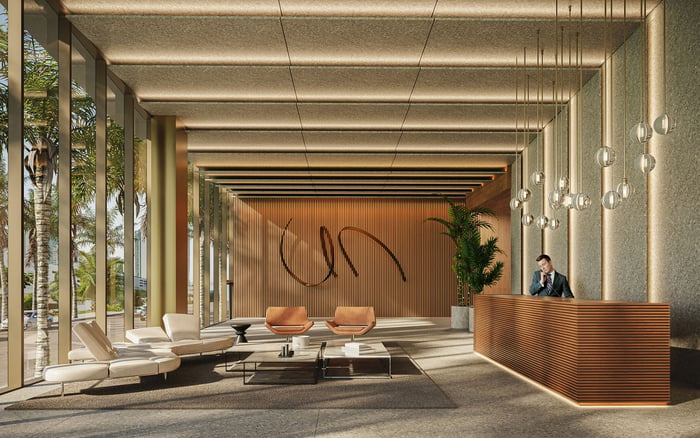
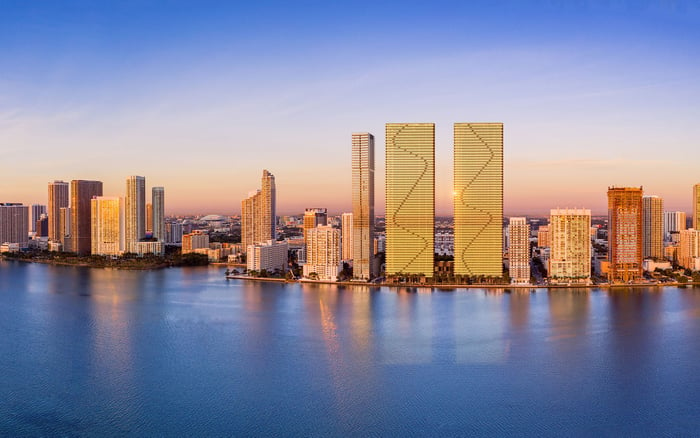
In Edgewater, the most consequential differences between Cove and Aria Reserve rarely come down to finishes. They show up in the lived experience: how private your arrival feels, whether your home reads as a calm sequence or a corridor, and how naturally the plan handles entertaining, work, and overnight guests. This comparison focuses on privacy and layout flow, the two variables that quietly define long-term satisfaction for full-time and seasonal owners alike.
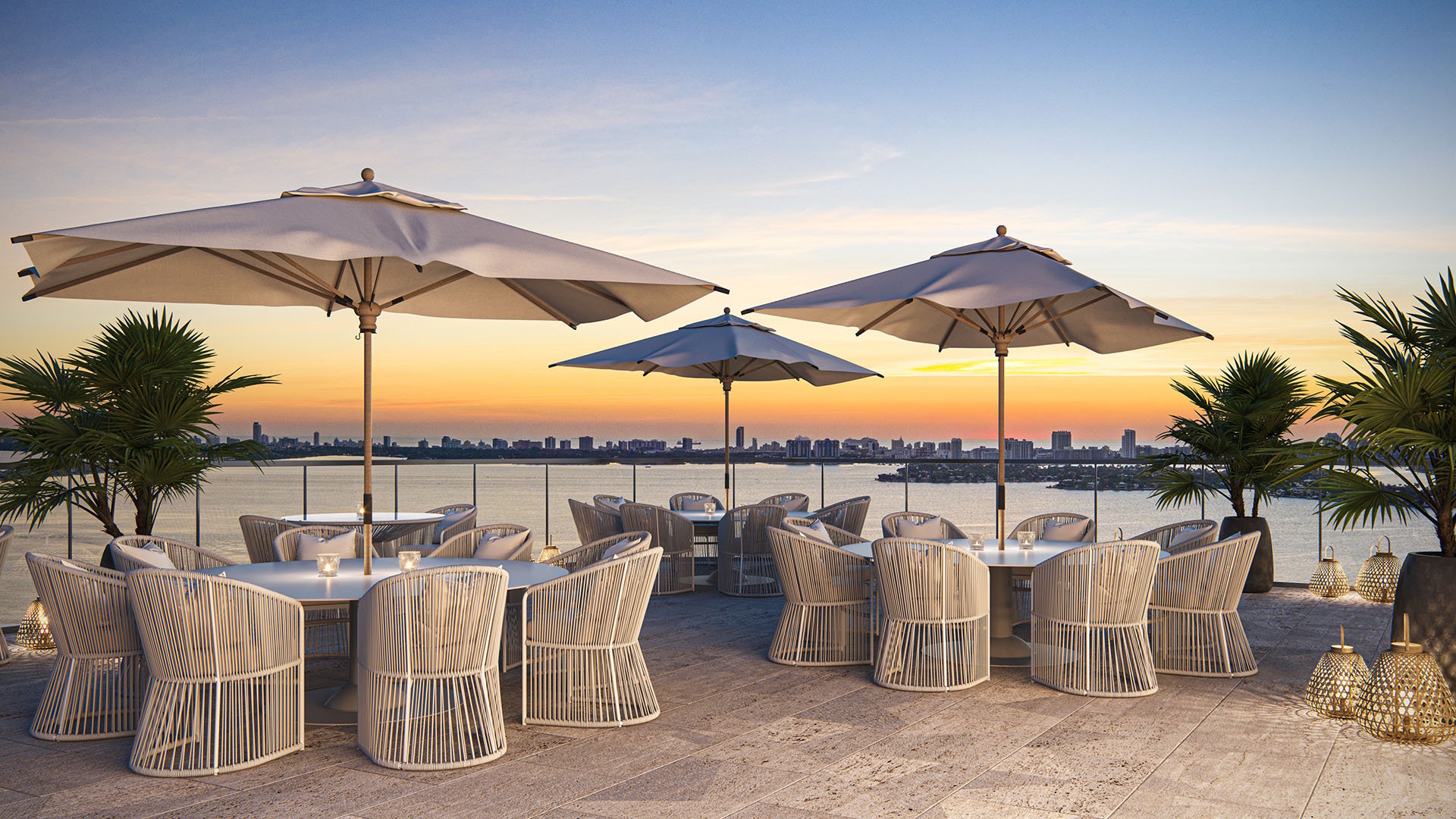
Edgewater has matured into a waterfront address where buyers can still secure expansive views while staying minutes from the Design District, Wynwood, and the cultural core downtown. In that setting, the Cove vs Aria Reserve decision is less about name recognition and more about which building experience matches your day-to-day rhythm.
Privacy and layout flow are the two variables that most often separate a residence that photographs beautifully from one that truly supports real life. Privacy isn’t just a doorman and a gate-it’s your arrival sequence, how often you cross paths with neighbors, and whether your front door opens into calm or into exposure. Layout flow isn’t a synonym for “open-concept.” It’s the order of spaces, the logic of circulation, and how naturally the plan moves from morning routine to quiet work to evening entertaining.
Both Cove Miami and Aria Reserve Miami belong in the same Edgewater conversation, but they can deliver different answers to the same buyer question: “Will I feel truly at ease here?”
When buyers say they want privacy, they usually mean one of three things: fewer touchpoints, fewer sightlines, or fewer compromises.
Touchpoints
are the moments your routine intersects with the building: lobby density at peak hours, elevator patterns, and corridor traffic. A residence can be undeniably prestigious and still feel socially porous if the path from car to door is consistently busy.
Sightlines
are quieter-and often more consequential. The strongest private arrivals manage what’s visible from the hall. Ideally, you don’t open your front door to a direct view of the kitchen island, living room, or terrace. The first reveal should feel curated, not shared with the corridor.
Compromises
tend to show up as noise bleed, doors clustered too tightly, or entries that force you to “announce” yourself with each arrival.
For a Cove vs Aria Reserve tour, keep the privacy test simple:
Stand at the elevator vestibule and note whether the walk to your door feels discreet or exposed.
Open the door slowly and observe what the corridor can see.
Step inside and ask whether there’s a true threshold before the social spaces begin.
If you travel often, live with staff, or host frequently, these micro-moments compound quickly.
Flow isn’t one feature-it’s the relationship between entry, kitchen, living, outdoor space, bedroom wing, and service areas. Buyers naturally fixate on view corridors, but the satisfaction that lasts tends to come from circulation that feels deliberate.
A practical way to evaluate flow is to walk a “day-in-the-life loop”:
Enter with groceries.
Set keys and bags down.
Move to the kitchen without cutting through the main seating zone.
Transition to the living area and terrace without passing bedroom doors.
Access a powder room without routing guests through private areas.
If any of those steps feels strained, the plan will likely wear on you over time-even if the finishes are impeccable.
In Edgewater, where many owners balance full-time living with entertaining, the most livable layouts typically separate public and private zones while still reading visually open. Look for a residence that gives you both: openness when you want it, separation when you need it.
Within the same submarket, buildings can deliver privacy through different design decisions.
Building scale and “social frequency.”
Larger communities can feel energetic and amenity-forward, but it’s worth being precise about how much daily interaction you actually want. If you prefer a quieter, more residential cadence, weight the lobby, elevator bank, and hallway experience more heavily than amenity-deck photos.
Door placement and entry choreography.
The most refined residences treat the entry as a buffer. A small gallery, a turn, or a subtle wall can protect the living area from immediate exposure. In both towers, this is often determined at the unit level-not the brochure level.
Outdoor space as a privacy amplifier.
Terraces and balconies only feel private when adjacency supports them. Notice whether outdoor seating reads as a natural extension of your living room-or as a stage for neighboring sightlines.
For buyers also considering nearby new luxury inventory, it can help to calibrate your preferences by touring a third option with a different “privacy personality,” such as EDITION Edgewater. Even if you don’t intend to buy there, the contrast can clarify what you value in Cove or Aria Reserve.
Edgewater buyers often ask for “flow-through” because they associate it with cross-breezes and multiple exposures. Flow-through can be exceptional-but only when the circulation stays clean.
A flow-through plan succeeds when:
The living area anchors the center of the home.
Bedrooms sit in a true wing, not as doors off the main entertaining path.
The kitchen connects to living and dining without becoming the hallway.
A single-aspect plan can feel equally luxurious when it:
Prioritizes one dramatic view wall.
Establishes a strong entry gallery.
Tucks service functions (laundry, storage, secondary bath) away from the main axis.
If serenity is your priority, don’t assume more exposures automatically equal more comfort. Sometimes the best flow comes from a plan that’s simpler, quieter, and less corridor-driven.
The most persuasive way to decide between Cove and Aria Reserve is to define your primary use case, then match it to the plan.
If you entertain frequently:
prioritize a layout with a true powder room, a kitchen that can serve without being constantly on display, and a living-to-terrace connection that reads as one continuous entertaining zone. Guests should be able to circulate without brushing past bedroom doors.
If you work from home:
the ideal plan places an office niche or den in a naturally quiet position that doesn’t borrow noise from the living room. If the only “office” option is a corner of the dining area, be honest about whether that fits your schedule.
If you host overnight guests:
look for a guest bedroom that lives like a suite, not an afterthought. The best guest experience includes a bath that doesn’t double as the primary powder room, with a bedroom location that protects your privacy.
This is where layout flow becomes luxury. A beautiful lobby can’t compensate for a home that makes daily life feel improvised.
In many Edgewater towers, amenity programs can be robust-and that can be a true lifestyle asset. But amenities also create movement: more visits, more visitors, more elevator trips, more lobby activity.
If your definition of luxury is calm, you may prefer a building that feels residential first and resort second. If your definition is convenience and social energy, the opposite may be true. Either way, decide on purpose.
A useful tactic: tour at two different times. A quiet mid-day showing can mask a building’s peak-hour personality. Long-term satisfaction is shaped by the building at its busiest, not its emptiest.
Bring a checklist that forces clarity.
Privacy checklist
Is there a discreet pause between elevator and front door?
Does the entry conceal the living area from corridor view?
Do balcony/terrace lines feel overlooked?
Do you hear corridor activity with the door closed?
Flow checklist
Can two people pass in the kitchen without friction?
Can guests reach a bathroom without crossing private areas?
Is there meaningful storage where you need it (entry, laundry, linens)?
Does the plan have any “dead hallway” that steals usable area?
Then run a final test: stand in the primary living area and look back toward the entry. The best homes present a composed sequence-not a direct line to the front door.
Even if your search is focused on Edgewater, it can be smart to sanity-check what you’re paying for by touring one or two projects outside the neighborhood known for strong residential planning.
For example, Brickell’s newer luxury inventory often leans into hotel-adjacent service and arrival choreography, which can recalibrate your privacy expectations. A quick walkthrough of 2200 Brickell can clarify whether you prefer a more intimate, residential approach or a more activated, concierge-forward experience.
The goal isn’t to change neighborhoods. It’s to sharpen your definition of privacy and flow so your Edgewater decision is anchored in lived experience.
Because floor plan variants and stack behavior can differ within each tower, the most reliable conclusion is profile-based.
Choose Cove when you prioritize:
a more hushed residential mood, controlled thresholds, and a plan that feels composed the moment you enter.
Choose Aria Reserve when you prioritize:
a grander sense of scale, a more activated building lifestyle, and layouts that support a broader range of entertaining patterns.
The nuance: either building can satisfy either profile if you select the right line and floor plan. That’s why privacy and flow should be evaluated in person-at the unit door, with your furniture plan in mind.
What does “privacy” mean in a condo building, beyond security? It’s the daily experience of arrival, corridor exposure, and how often you intersect with neighbors.
How can I tell if a layout has good flow in under five minutes? Walk from entry to kitchen to living to terrace, and see whether you cross bedrooms or dead hallways.
Is an open kitchen always better for entertaining? Not always; the best entertaining kitchens serve the room without turning the home into a corridor.
Do higher floors automatically feel more private? They can, but privacy is often driven more by entry sightlines, corridor traffic, and adjacency.
What should I look for at the front door during a tour? Whether opening the door exposes private living areas to the hallway-and whether there’s a buffer.
How important is a powder room in a luxury condo? Very, if you host; it protects bedroom privacy and keeps guest circulation out of private zones.
Can a flow-through plan ever feel choppy? Yes; multiple exposures can enhance views, but poor circulation can still create long hallways and awkward turns.
Which matters more: view corridor or layout flow? For long-term living, flow usually wins because it impacts every day, not just the highlight moments.
Should I prioritize amenities if I value quiet? Only if you’ll use them often; large amenity programs can increase movement and social frequency.
What is the best next step if I’m deciding between these two towers? Tour two comparable units back-to-back and evaluate entry privacy, guest circulation, and storage.
For a tailored shortlist and next-step guidance, connect with MILLION Luxury.
If branded residences are on your mind — as a home or as an allocation — we would be glad to share what we are seeing, privately.
Begin a quiet conversation