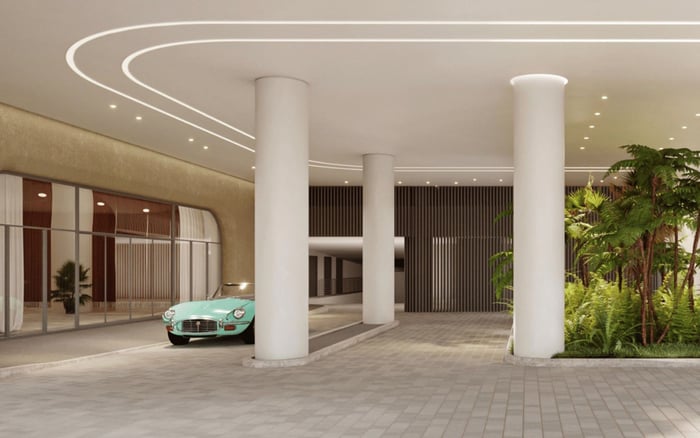
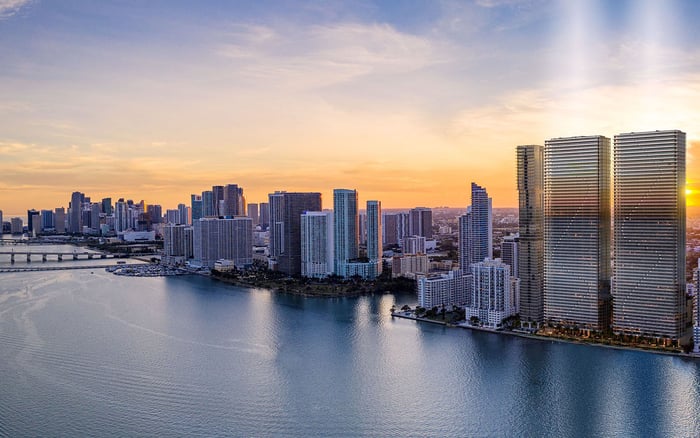
Cove Miami and Aria Reserve Miami represent two distinct interpretations of Edgewater luxury: one prioritizes a quieter, more intimate ownership experience, the other delivering a large-scale, skyline-defining lifestyle. This MILLION Luxury editorial frames the decision the way sophisticated buyers actually make it: by matching building scale to daily rhythm, privacy expectations, amenities, and long-term flexibility.
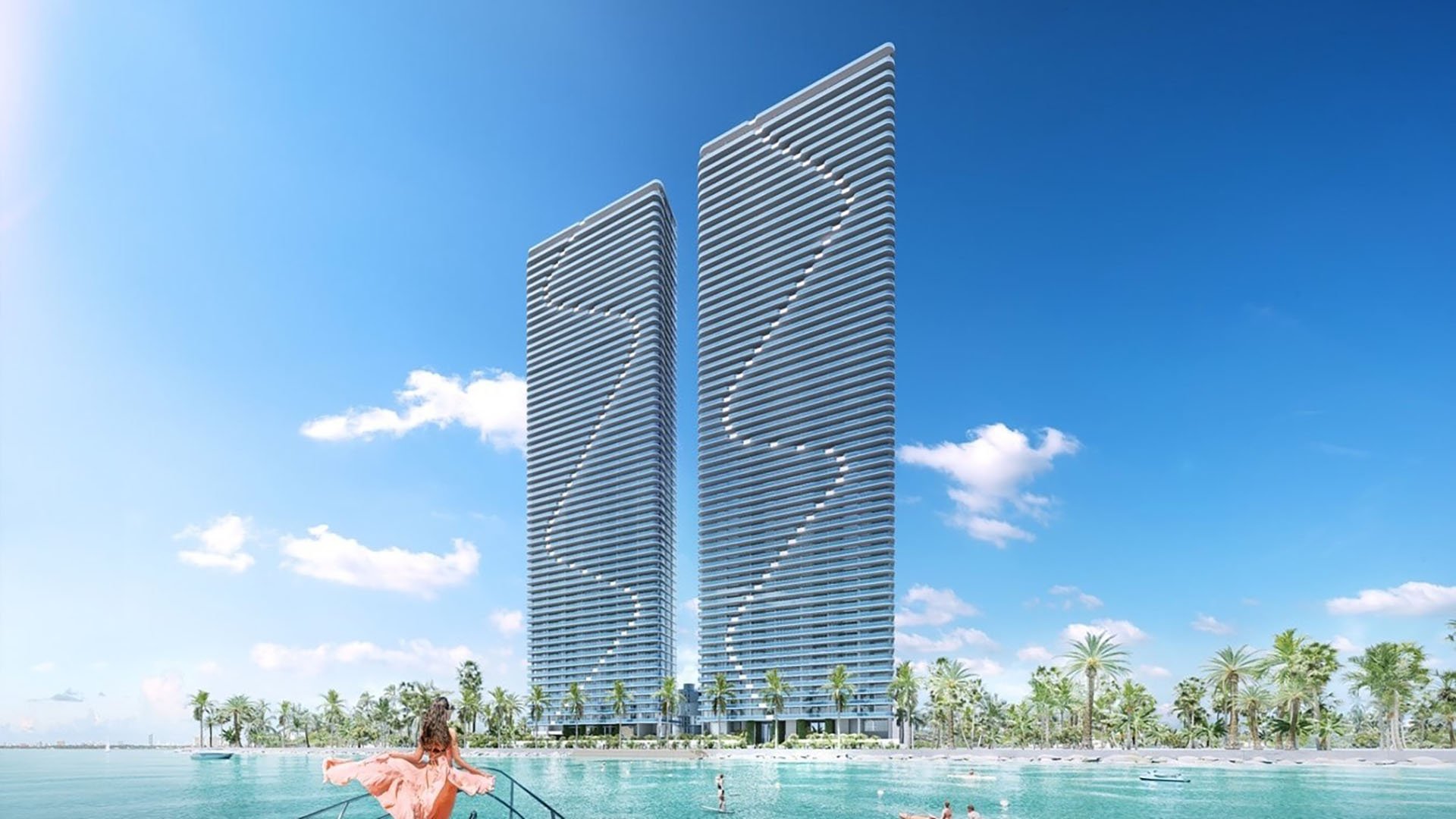
In Edgewater, two distinct impulses tend to shape buying decisions. One is intimacy: a smaller community, fewer moving parts, and the ability to feel recognized without feeling managed. The other is grandeur: expansive amenity programming, a more theatrical arrival sequence, and the sense that your building is a destination in itself.
That is what makes the comparison between Cove Miami and Aria Reserve Miami so useful for luxury buyers. Both sit within the same broader Edgewater orbit, yet they answer to different definitions of “best.” One favors a boutique tone and a quieter daily cadence. The other leans into scale, spectacle, and the social gravity that comes with it.
MILLION Luxury’s lens is straightforward: your building should support your routines, safeguard your privacy, and deliver the kind of service you will actually use. Everything else is secondary.
Intimacy in a condominium is not about being understated. It is about reducing friction.
A more intimate building experience shows up most clearly in the moments you cannot “upgrade” later: the ease of coming and going, the likelihood that amenities are available when you want them, and the quiet comfort of not constantly navigating crowds. The perceived luxury is often acoustic as much as aesthetic. Hallways feel calmer. Elevators feel less transactional. Common areas feel like extensions of private space, not public venues.
For buyers who treat Miami as a primary residence, that rhythm matters. If you value an early workout without a wait, a lobby that stays composed at peak hours, and a community where staff can recognize patterns, intimate scale can be a meaningful quality-of-life upgrade.
Cove Miami, as positioned within Edgewater’s new-residential conversation, aligns naturally with this preference. It is the kind of choice that appeals to buyers who want a clean architectural experience and an ownership environment that prioritizes discretion over pageantry.
Grandeur is not merely “bigger.” It is a promise: the promise that your building can replace part of the city.
In a large-scale residential environment, amenities become layered and programmatic. Rather than a single pool deck, you think in zones. Rather than a modest fitness room, you expect a wellness ecosystem that can accommodate different training styles and daily schedules. Social areas can be dynamic, with an energy that some owners find motivating-and others find draining.
For a certain buyer profile, that energy is the point. If you entertain frequently, keep an active calendar, or simply enjoy the sensation of living somewhere globally oriented, a grand project can deliver everyday momentum. It can also suit second-home owners who want “vacation mode” to begin the moment they arrive.
represents this idea in the Edgewater market: a statement property whose scale can support the resort-style expectations modern luxury buyers increasingly bring to Miami.
Luxury is often decided at the threshold.
In an intimate building, arrival tends to be quiet by design. The lobby becomes less of a social theater and more of a controlled transition from city to sanctuary. Privacy is easier to maintain because there are fewer simultaneous arrivals and fewer “unknowns” moving through shared spaces.
In a grand building, arrival is an experience. The lobby may operate like a hotel-grade space-exhilarating if you enjoy the sense of place and the social buzz. The tradeoff is that anonymity cuts both ways: it can protect privacy when you want to blend in, but it can also feel less personal when you want service to be anticipatory.
Ask yourself the candid question: do you want your building to feel like a private club or like a polished resort? Both can be luxurious. They simply reflect different priorities.
Sophisticated buyers increasingly separate amenity value into two categories: functional and aspirational.
Functional amenities are the ones that elevate a normal Tuesday: fitness and wellness spaces that feel genuinely usable, work-from-home environments that support focus, and outdoor areas that are designed to be lived in rather than photographed.
Aspirational amenities are the ones that elevate a weekend or help the home perform socially: dramatic entertaining spaces, expansive decks, and environments that feel more hospitality than residential.
Cove Miami’s intimate scale tends to favor the functional side of luxury: fewer spaces, but potentially a higher likelihood that those spaces feel available and calm. Aria Reserve Miami’s grandeur leans toward the aspirational: more variety, more programming potential, and more destination energy.
If your calendar is full and your home is a basecamp, functional amenities usually matter more. If you want your residence to feel like a curated escape, aspirational amenities rise to the top.
In Edgewater, view corridors and light quality can be primary value drivers. Yet how you experience views is influenced by building scale.
A grand project can offer a wider range of elevations and orientations, which is attractive if you are targeting a specific line, a specific panorama, or a particular relationship to the bay and skyline. A larger building ecosystem may also create more internal comparables, which can help buyers and sellers “price” within a familiar set of references.
An intimate project can feel more curated in how it frames the outdoors. Depending on layout and orientation, the experience can read more residential, with terraces and glazing integrated into daily living rather than serving as a backdrop to a high-traffic amenity deck.
For buyers who are highly sensitive to noise and privacy, scale can also shape perception-not because one is inherently louder than the other, but because the density of shared areas and the rhythm of common spaces can change what “quiet” feels like.
Every building has a social temperature: the combination of how people use the property, how often they are in residence, and whether the culture leans toward privacy or sociability.
Intimate buildings often develop a more familiar resident mix. Owners may recognize one another, staff may learn preferences faster, and the building can feel settled sooner.
Large-scale luxury buildings can feel more international and dynamic. That can be a virtue if you enjoy movement and an elevated social scene. It can also be a drawback if you prefer predictability and low interaction.
Neither is “better.” The question is whether your ideal lifestyle is quiet and controlled, or energetic and expansive.
Edgewater’s appeal is its proximity to Miami’s cultural and waterfront energy while retaining a more residential sensibility than certain neighboring cores. That is why Edgewater attracts buyers who want design-forward living without necessarily signing up for the most intense version of the city.
If you are cross-shopping other parts of Miami, it helps to calibrate what you mean by “urban.” A Brickell buyer is often comfortable with vertical density and a highly social everyday environment, which is why properties like 2200 Brickell can enter the conversation for those who want a quieter expression of Brickell living. By contrast, Miami Beach shopping often carries a different priority set: coastal lifestyle first and city tempo second, which is why options like 57 Ocean Miami Beach resonate with buyers who want the ocean as their primary daily view.
For a buyer torn between Edgewater’s bayfront energy and a more classic “resort” coastal posture, it can also be useful to benchmark a beachfront standard like 2000 Ocean Hallandale Beach, which frames luxury around oceanfront living and a more removed, retreat-like cadence.
This wider context clarifies the Cove vs Aria decision: it is not only about two buildings. It is about choosing how much city you want in your bloodstream each day.
The cleanest way to decide is to recognize yourself in the use case.
Cove Miami often appeals to:
Primary-residence buyers who want privacy and a calmer daily routine.
Owners who prefer a more residential feel in shared spaces.
Buyers who value simplicity and predictability over constant programming.
Aria Reserve Miami often appeals to:
Buyers who want resort-scale amenities and a larger lifestyle ecosystem.
Second-home owners who want “arrival impact” and destination energy.
Owners who enjoy a social environment with a sense of movement.
The decision becomes clearer when you stop asking which is “more luxurious” and instead ask which is more aligned with your daily life.
Before stepping into a sales gallery or scheduling a private showing, define the terms of your luxury.
Do you want a lobby that feels like a private threshold or a hospitality-grade stage?
Are you paying for amenities you will use weekly, or amenities you want available occasionally?
Do you prefer fewer neighbors and a quieter cadence, or more energy and variety?
Is your priority view specificity and height options, or a more curated, residential experience?
Are you buying a home base or a lifestyle destination?
When you can answer these cleanly, the Cove vs Aria comparison becomes less about taste and more about fit.
Is Cove Miami considered a boutique-style option in Edgewater? It is often discussed as a more intimate alternative, suited to buyers seeking a calmer residential tone.
Is Aria Reserve Miami designed for a resort-style lifestyle? It is positioned around grandeur and lifestyle scale, typically attracting buyers who want extensive amenities.
Which choice is better for privacy, Cove Miami or Aria Reserve Miami? Buyers who prioritize privacy often lean toward a more intimate building experience, all else equal.
Do larger buildings always have better amenities? Not always, but scale can support greater variety and programming; the key is what you will actually use.
Is Edgewater a good fit for primary residences? Yes, many buyers choose Edgewater for a residential feel with convenient access to Miami’s core areas.
How should I compare value if floorplans and lines differ? Focus on livability: light, view orientation, privacy, and how the building’s scale affects daily comfort.
Should I also compare Brickell options when considering Edgewater? If you want a more urban tempo, it can help to benchmark against Brickell projects like 2200 Brickell.
What if I prefer oceanfront over bayfront? Consider touring Miami Beach or Hallandale oceanfront options such as 57 Ocean Miami Beach or 2000 Ocean.
Does building culture matter for resale? It can, because resident mix and lifestyle positioning influence buyer demand and how the property is perceived.
What is the best next step after narrowing to these two projects? Tour both with a clear checklist for arrival, amenities, noise, and how the space feels at different times.
If you'd like a private walkthrough and a curated shortlist, connect with MILLION Luxury.
If branded residences are on your mind — as a home or as an allocation — we would be glad to share what we are seeing, privately.
Begin a quiet conversation