Buying into a New-construction or Pre-construction tower in Miami means planning around the moment the city clears your building for move in. This article demystifies the Temporary Certificate of Occupancy (TCO) and the final Certificate of Occupancy (CO) in the context of high end condominiums, explains how each approval affects closings, financing, amenities and day to day living, and offers a practical framework for deciding whether to move in at TCO or wait patiently for the final CO.

Buying into a glass wrapped tower on Biscayne Bay is a long, choreographed process. You may sign a Pre-construction contract years before the building appears on the skyline, pay deposits as the structure rises, and watch the marketing renderings slowly become your future lobby. Yet the moment that truly decides when you can sleep in your new residence is administrative rather than glamorous: the issuance of a Temporary Certificate of Occupancy, followed by a final Certificate of Occupancy. For Miami's high rise luxury condominiums, understanding how TCO and CO work is essential to planning move in dates, cash flows, and the practical side of enjoying your Investment.
A Temporary Certificate of Occupancy is the city's way of saying that a building is substantially complete and safe for people to live in, even if a list of minor items remains open. Structural elements are finished, life safety systems such as sprinklers, alarms and emergency power are functioning, elevators have been tested, and electrical and plumbing inspections are passed. What may be missing at TCO are details that do not affect safety or basic habitability, such as final landscaping, artwork in corridors, a few unfinished cabanas on the pool deck, or a lounge that is still waiting for furniture.
In Miami, a TCO typically grants the same legal right to occupy the building as a final CO, but only for a defined period. City guidelines commonly provide validity periods that range from roughly ninety to up to three hundred sixty days, with the exact duration depending on the scope of outstanding work and approvals. Developers can sometimes request extensions if they need more time, but their clear incentive is to close out punch lists quickly and move the building to full completion. For buyers, the key takeaway is that a TCO is not a shortcut or a loophole; it is part of a regulated process that allows a safe building to open while finishing touches are completed.
The final Certificate of Occupancy is the end of that journey. A CO is issued only once every required inspection has been signed off and the building matches the approved plans in all essential respects. At this stage, the tower's amenity program should be fully open, from spa circuits and fitness centers to kids rooms, lounges, business suites and any private Marina or dock facilities. When a CO is granted, the city is confirming that nothing material remains under construction and that the property meets code for unrestricted ongoing use. From an Investment standpoint, that piece of paper signals that the physical risk linked to completion has largely fallen away.
Almost every serious New-construction condo in Miami will pass through the TCO phase before reaching final CO. Rarely does a project wait to welcome its first residents until every last palm tree is planted. Instead, the TCO to CO path has become the standard rhythm for openings in neighborhoods such as Brickell, Downtown Miami, Edgewater and Coconut Grove. For a discerning buyer, the question is not whether a tower will use a TCO, but how that TCO will be managed and what it means for your personal timeline.
In the final months before opening, a building transitions from construction site to operating address. Behind the construction fence, teams are completing façade work, testing mechanical systems and fine tuning interiors while city inspectors move through the property in planned sequences. Structural engineers sign off that the frame performs as designed. Specialists test fire alarms, sprinklers and emergency lighting. Elevator contractors conduct ride tests and safety checks. Only when these core systems satisfy Miami's building officials can a Temporary Certificate of Occupancy be issued.
For luxury developers, that first TCO is the moment when spreadsheets turn into keys. Closings are scheduled, buyers are invited to final walkthroughs, and residence handovers begin. In practice, many premier towers start delivering units within days or weeks of receiving TCO. At the sail shaped Aston Martin Residences Downtown Miami, for example, the Temporary Certificate of Occupancy allowed owners to begin moving into the 66 story tower while its final celebrations and branding moments were still unfolding. Rather than waiting in limbo, residents started enjoying river and bay views as the last pieces of the project were polished.
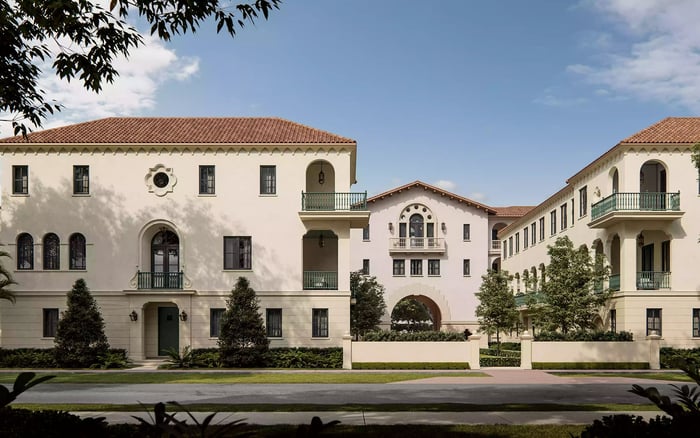
Once a building is open under TCO, the developer enters what is essentially a sprint to the finish line. Remaining inspections are scheduled, punch lists are logged and tracked, and any incomplete areas are methodically closed out. For most high rise New-construction projects, the period between TCO and final CO is measured in weeks or a handful of months, not years. A boutique address such as The Village at Coral Gables illustrates the goal: allow residents to enjoy completed residences quickly while the team quietly resolves the last items in amenity areas and public spaces.
During this interval, the property is already operating as a building, not a work site. Management teams recruit and train concierges, security staff, engineering and housekeeping. Valet services are tested under real conditions as early residents begin arriving with furniture deliveries. Access control systems, package rooms and service corridors are refined based on how people actually move through the building. From the resident perspective, it feels like arriving at a soft opening of a luxury hotel. The building functions, but a few subtle signs still reveal that you are among the first to experience it.
For buyers who signed Pre-construction contracts years earlier, this phase is often emotionally charged. You are finally walking into a home that has existed only in renderings and finish boards, and you may already be planning how the property fits into your broader Investment strategy. Perhaps the residence will replace another home, serve as a seasonal base, or stand as a long term asset in a portfolio of Miami and Brickell holdings. Understanding the cadence from TCO to CO helps you decide when to schedule interior designers, art installers and your first guests.
What is day to day life actually like in a building that holds a Temporary Certificate of Occupancy rather than a CO? Inside your residence, it should feel indistinguishable from any completed luxury condominium. Appliances are installed and tested, climate systems are balanced, finishes are cleaned, and you can move furniture in without stepping over tools. The legal ability to occupy your home is already in place; the city would not have issued a TCO otherwise.
The differences tend to reveal themselves in shared spaces. You may find that one of several pools is still closed, or that a lounge level is beautifully finished but temporarily cordoned off while the final inspection is scheduled. A restaurant operator may be fitting out a kitchen behind frosted glass, or a private spa could be waiting on last specialist approvals before opening its wet areas. Outdoors, you might see landscapers adding plantings to planters or refining lighting around a pathway. None of these items prevent you from living comfortably, but they do mean the experience is still ramping up to its full expression.
On the operational side, management generally stages move ins carefully during the TCO window. Service elevators are reserved in advance, delivery trucks are directed to limited time windows, and staff guide vendors through back of house routes so that the lobby remains as calm as possible. It is common to see a handful of contractors in the building during business hours, but reputable developers and managers insist that any noisy or disruptive work is scheduled during limited daytime periods. The goal is to protect residents from feeling like they live in a building that is still under heavy construction.
Many buyers appreciate the exclusivity of this moment. Resident counts are low, amenity areas that are open feel unusually quiet, and staff have time to learn your preferences one by one. If you enjoy being part of the story of a building, the TCO phase can be a sweet spot, allowing you to watch the last layer of the design vision materialise while already waking up to your view of the bay or skyline.
For others, TCO living is less appealing. If you prefer to arrive only once every artwork is hung and every pool cabana is service ready, you may decide to delay occupancy until closer to final CO. That choice can make particular sense if the amenities that guided your purchase decision are central to your lifestyle. A buyer who chose a tower for its private Marina, for example, may want confirmation that slips and services will be operational by a specific date before shipping a yacht to Miami. Clear communication with the developer and building management about timelines is crucial.
There is no universal right answer to the question of when to move in. Two buyers in the same building can reach very different conclusions based on how they use the property, their tolerance for minor inconvenience, and their financing structure. The TCO period simply gives you an additional choice.
Closing at TCO suits owners who want access as early as possible. If your Pre-construction contract price now sits below current market values, taking possession quickly can allow you to capture that uplift by renting or reselling sooner, subject to building rules. Investors who plan to hold for the long term may also want to start the clock on appreciation and depreciation schedules as early as they reasonably can. There is often a psychological benefit as well: transforming an abstract purchase into a tangible home, installing custom millwork, and hosting your first dinner in the sky tends to feel better than waiting in another house while the building finishes around you.
Waiting for final CO can appeal to buyers who see their residence primarily as a lifestyle rather than Investment move, or whose financing requires full completion. Some banks and insurance providers are more conservative and prefer to see a final Certificate of Occupancy on record before releasing certain funds or policy endorsements, particularly in complex mixed use projects. If you already maintain several homes, it may be simpler to stay where you are and let the developer complete every aspect of the New-construction process before you take possession. By the time you arrive, amenity programming is usually running smoothly and any early operational wrinkles have been ironed out.
Whichever path you take, the most important step is to ask precise questions. Request a written outline of which amenities will be available at TCO and which will follow later, and ask for target dates where possible. Clarify whether any key building systems, such as backup power or security technology, are scheduled for changes during the TCO period. In a high profile Brickell or Downtown tower, you should also understand how many units the developer expects to close during the initial months so you can plan around elevator and move in traffic. Your attorney and financial advisers can help interpret contract language around occupancy and completion so that your move in strategy supports your broader Investment goals.
An experienced adviser can also help you benchmark timing against other Miami openings. Studying how towers such as Aston Martin Residences Downtown Miami and The Village at Coral Gables handled their early occupancy phases gives useful context for what is reasonable to expect from any Top Project in the pipeline. The role of a firm like MILLION Luxury is to distil that market knowledge into clear, practical guidance tailored to your family, your calendar and your Investment priorities.
What is the main difference between a TCO and a CO in Miami?
A TCO indicates that the building is substantially complete and safe for occupancy, but with non critical work still outstanding. A CO means that all required inspections are finished, every major space is complete and the building has full, ongoing approval for unrestricted use. Most New-construction towers will pass through both stages.
How long does it usually take to go from TCO to CO?
There is no fixed rule, but in well managed Miami projects the TCO period is often between one and six months. Simpler buildings can close the gap faster, while very large or complex mixed use developments may need more time to complete their final inspections and paperwork. You should always request the developer's best estimate for your specific tower.
Is it safe and legal to live in a building that has only a TCO?
Yes. The city issues a Temporary Certificate of Occupancy only after verifying that core life safety systems and structural work meet code. The certificate grants you the legal right to occupy your residence, subject to any conditions noted by officials. What may still be evolving are aesthetic details and non essential amenities.
Can I rent or resell my condo while the building is under a TCO?
In many luxury developments you can lease or resell once you have closed on your residence, even if the building holds only a TCO, but the details depend on condominium documents and local regulations. Some buildings restrict short term rentals or staged occupancy until after CO. Your attorney and brokerage team should review the rules so your Investment plans align with what is permitted.
What should I ask the developer before agreeing to close at TCO?
Ask for a clear list of which amenities and services will be fully operational at TCO, the expected timeline for anything that will open later, and whether any significant construction will continue near your residence. Clarify how move ins will be scheduled and whether there are any financing or insurance conditions tied to the final CO. For bespoke advice on a specific project, you can connect with MILLION Luxury to structure move in timing that supports both your lifestyle and your long term Investment goals.
If branded residences are on your mind — as a home or as an allocation — we would be glad to share what we are seeing, privately.
Begin a quiet conversation