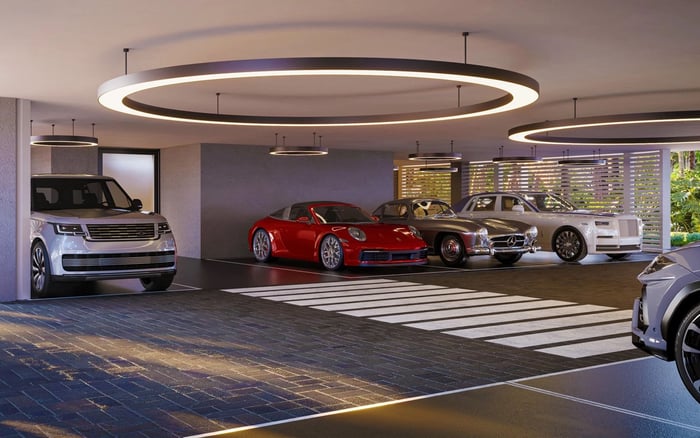
A buyer-oriented look at what a private vehicle elevator changes about daily living, security posture, and building operations in South Florida, versus the best-in-class traditional secure garage.
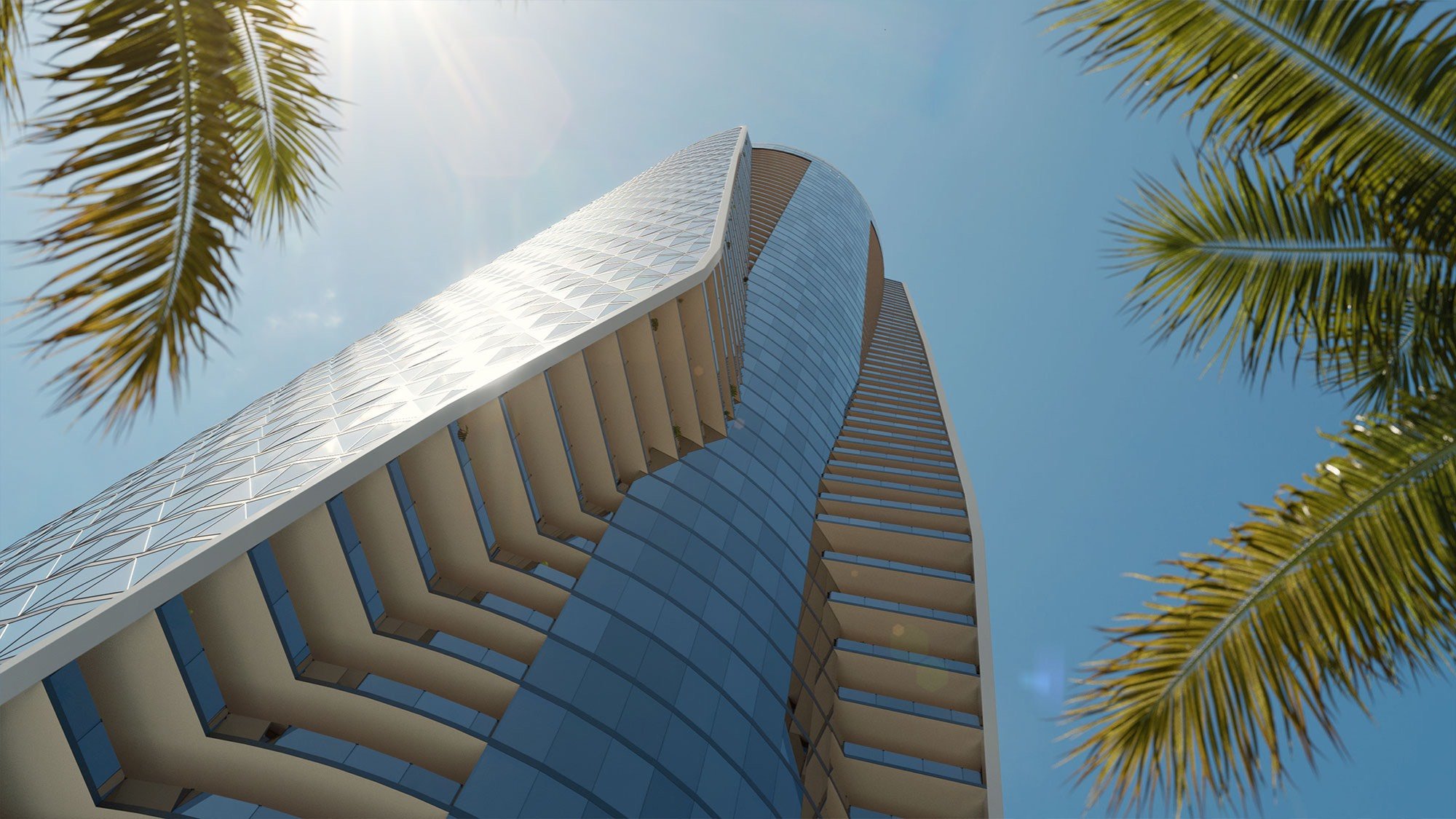
In South Florida’s ultra-premium condo market, the most telling luxury is often not the lobby or the view, but the final 60 seconds between the street and your front door. That micro-journey decides whether arrival reads as a private residence-or a managed facility. It also dictates who comes near your vehicle, what cameras record, and how many variables stand between you and a clean, quiet departure.
At Bentley Residences Sunny Isles, the defining distinction is the idea of taking your car upward as part of the arrival sequence. Traditional secure garages, by contrast, are built for throughput, predictable circulation, and operational resilience. Both can be “secure.” They simply secure different things.
This comparison isn’t about novelty for novelty’s sake. It’s about mechanics, risk surfaces, and how architecture governs privacy for people who prefer not to be noticed.
A supercar elevator concept reframes parking as vertical conveyance: your vehicle enters a controlled bay, moves via an elevator system, and is delivered to a higher level-potentially closer to the residence. The owner experience is intentionally singular and curated: fewer touchpoints, fewer strangers, fewer opportunities for friction.
A traditional secure garage takes the opposite approach. It functions as a distribution network-ramps, aisles, and a field of stalls designed to serve many users. Security and privacy are achieved through layers, including controlled entry, resident-only access points, CCTV coverage, lighting, and sometimes staffing. The advantage is familiarity, serviceability, and tolerance for high daily volume.
In buyer terms, an elevator system is a precision instrument; a secure garage is an infrastructure asset.
Even without diving into spec sheets, the mechanical differences show up as lifestyle differences.
1) Controlled interface vs open circulation.
An elevator-based arrival sequence typically begins with a defined loading zone. That alone matters: a controlled bay reduces cross-traffic from other residents, delivery drivers, and guests. Traditional garages still require shared choreography, even in very expensive buildings.
2) Moving parts and dependency.
Elevators depend on specialized equipment and maintenance protocols. A conventional garage depends on concrete, signage, and standard systems like gates and cameras. Both require management, but the dependency profile is different: elevator downtime becomes a concentrated point of friction, while garage issues are often distributed-and more workaround-friendly.
3) Geometry and clearance.
Exotic cars are unforgiving of steep approach angles, abrupt transitions, or tight turning radii. A carefully planned elevator entry can reduce those conflicts. A ramp garage can be designed well, but it still asks a low-slung vehicle to navigate circulation engineered for many vehicle types.
The takeaway is straightforward: the supercar elevator proposition isn’t only about displaying a vehicle. It’s about reducing compromise.
“Secure parking” can mean everything and nothing. For a collector, a principal, or anyone with heightened privacy needs, security is best judged as a chain of custody.
In an elevator-forward model, the chain of custody can be tighter. Fewer people need to be physically near the vehicle. Fewer residents observe where you park. Fewer transitional moments occur in spaces that tend to be lightly monitored in practice.
In a traditional secure garage, security can be strong, but the chain of custody is broader. You may still pass other drivers, pedestrians, and staff. The vehicle’s location is more discoverable. In many garages, the most vulnerable points aren’t the stall itself, but the routes to and from it: stairwells, doors held open, and the human habit of tailgating.
If you evaluate security as an operational system, the key questions become:
How many access points exist, and how are they controlled?
How visible is the vehicle from common paths?
How do cameras, lighting, and sightlines perform in real life at night?
What is the building’s posture toward visitor and vendor access?
Those questions apply in Sunny Isles, Brickell, and beyond-whether you’re considering an oceanfront icon or a high-rise in the urban core.
Luxury buyers often focus on finishes because finishes are easy to compare. Privacy is harder to measure-and harder to retrofit.
A car elevator concept is, at its core, privacy architecture. It can reduce the number of times you’re seen entering and exiting. It can reduce the need to walk through shared parking fields. It can compress the public-to-private transition.
Traditional secure garages can be made more discreet through design and policy: separate resident entries, restricted floors, and clear separation between valet and self-park. But most garages remain communal by nature, and communal spaces create incidental exposure.
For buyers who value discretion, this is where the contrast sharpens. You can renovate a lobby. You can’t easily unbuild a circulation system.
A sophisticated system is only as strong as its day-to-day management. Before choosing a building for the promise of a private arrival sequence, it’s smart to think like an operator.
Maintenance and service continuity.
Ask how service is handled, what redundancy exists, and what happens when equipment is offline. A traditional garage can typically absorb disruption. An elevator-centric experience may require a clear plan B.
Rules, reservations, and peak times.
If a system requires scheduling-or creates practical bottlenecks at certain hours-it changes the “grab the keys and go” spontaneity many owners expect.
Staffing and oversight.
Security is partly technology and partly people. The best buildings run on consistent procedures, clear accountability, and a culture that treats resident privacy as non-negotiable.
These considerations matter whether your lifestyle is beach-forward in Sunny Isles or more urban in Brickell, where residences such as 2200 Brickell reflect a different rhythm of daily movement-and a different relationship with the street.
For some owners, the car isn’t transportation. It’s an asset. That shifts the priority from convenience to preservation.
A controlled elevator bay can reduce incidental risks: careless door dings from neighboring stalls, tight turns near columns, and the unpredictability of other drivers searching for parking. It can also support a more deliberate routine, where the vehicle isn’t left to chance in a busy environment.
Traditional secure garages can still excel for preservation when they offer generous stall sizing, low traffic density, and smart separation between resident parking and guest circulation. But many garages-even in premium towers-are engineered primarily for efficiency.
In Miami Beach, for example, the calculus may feel different in a project like 57 Ocean Miami Beach, where lifestyle often emphasizes walkability and beachfront access. In that context, the vehicle may be used less frequently, and the owner may prioritize secure storage and uncomplicated access over an arrival sequence that is itself an event.
Sunny Isles is distinctive for its concentration of oceanfront high-rises and a buyer base that often includes second-home owners, international residents, and collectors who arrive with a preference for privacy. In that environment, compressing arrival into a private, controlled sequence can align with the broader ethos of the market.
But South Florida is not one market. In Bay Harbor and similar enclaves, the appeal may be quiet, low-key, and residential in spirit. In those settings, a secure garage can feel entirely sufficient because ambient exposure is lower and the culture is inherently more discreet. In contrast, in high-energy nodes like Brickell, the building’s relationship to traffic patterns, curbside activity, and valet culture can become as important as the garage itself.
Zoomed out, the right parking solution often tracks how you use the residence: daily driver vs weekend car, primary home vs pied-a-terre, and whether you value stealth or ceremony.
Both approaches can be “best,” depending on what you optimize.
Choose an elevator-forward experience when you prioritize:
A shorter, more controllable chain of custody.
Maximum discretion in arrival and departure.
Reduced friction for low-clearance vehicles.
An ownership experience where the vehicle is part of the home’s ritual.
Choose a traditional secure garage when you prioritize:
Operational simplicity and familiar logistics.
Predictable, scalable access for multiple drivers and guests.
Less dependency on specialized equipment.
A lower-profile ownership experience where the car is stored, not staged.
Ultimately, the most sophisticated luxury isn’t the mechanism itself. It’s the confidence that the mechanism will serve you quietly-every day-for years.
What is the core difference between a supercar elevator and a secure garage? An elevator system prioritizes a controlled, private arrival sequence; a secure garage prioritizes shared circulation supported by layered access control.
Is a car elevator automatically safer than a traditional garage? Not automatically. It can reduce exposure points, but overall safety still depends on procedures, access control, and management.
Do traditional secure garages still work for exotic cars? Yes-especially when ramps, clearances, and stall layouts are generous-but they can require more compromise than a controlled bay.
What should I ask about reliability and downtime? Ask how maintenance is handled, what redundancy exists, and what the fallback parking procedure is if equipment is offline.
Does a private arrival sequence increase privacy meaningfully? It can, because it reduces incidental visibility and limits how many people share the same circulation routes.
Will an elevator-based system slow down my departures at peak times? It can if use is concentrated. Understanding any scheduling or queueing expectations is important.
How do I evaluate “security” beyond marketing language? Look at the chain of custody: access points, camera coverage, staffing, and how well routes are controlled in practice.
Is a traditional secure garage better for households with multiple drivers? Often, yes-because it’s designed for parallel access and higher throughput without specialized steps.
Does location in Sunny Isles change the parking decision? It can, since privacy expectations and daily patterns differ from places like Brickell or Miami Beach.
Which option best protects the car’s condition over time? The best option is the one that minimizes traffic exposure, tight maneuvers, and uncontrolled access around the vehicle.
If you'd like a private walkthrough and a curated shortlist, connect with MILLION Luxury.
If branded residences are on your mind — as a home or as an allocation — we would be glad to share what we are seeing, privately.
Begin a quiet conversation