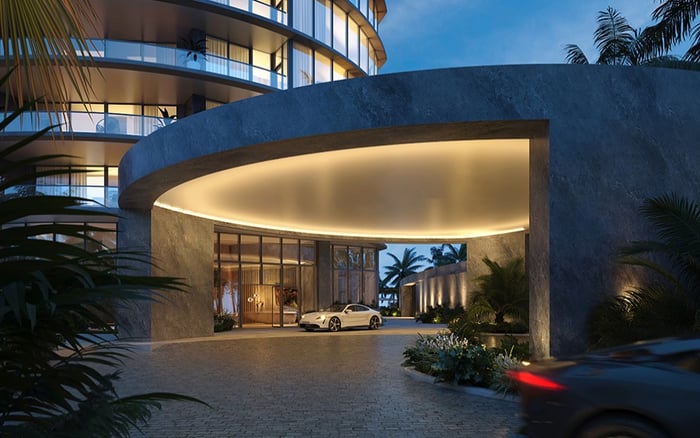
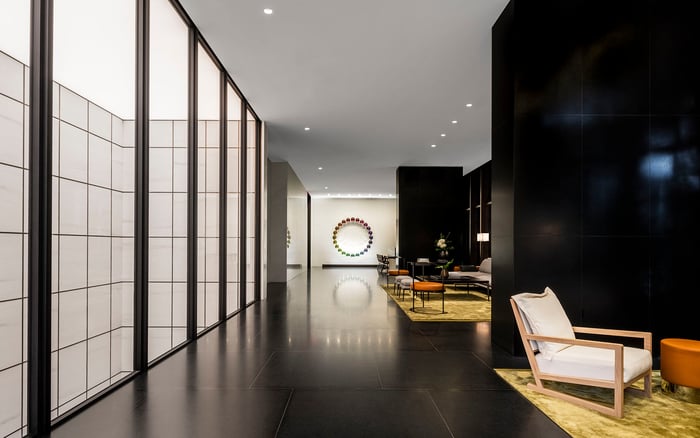
A discreet buyer’s guide to choosing between Surfside and Bal Harbour when a serious art collection, storage protocol, climate stability, security, and service circulation are part of the residential brief.
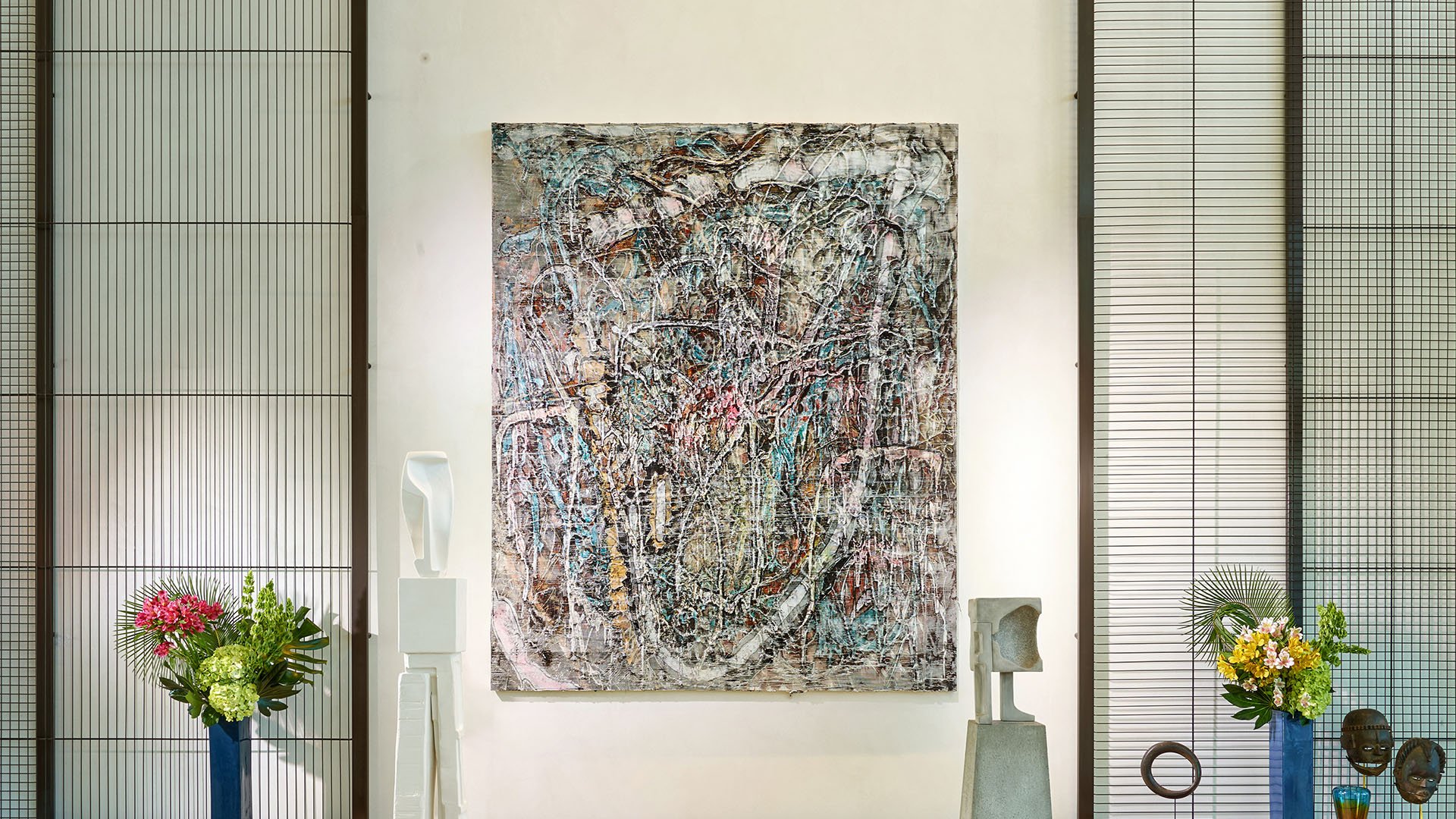
For the art-led buyer, the choice between Surfside and Bal Harbour is rarely about which name carries more cachet. Both occupy the rarefied northern edge of Miami Beach’s luxury corridor, and both speak to privacy, ocean air, design culture, and international wealth. The sharper question is quieter: which setting best supports the life of a serious collection?
Collector-grade art storage is not a decorative afterthought. It reaches into architecture, service access, humidity discipline, light exposure, insurance comfort, staff coordination, and the owner’s daily rhythm. A residence may photograph beautifully, yet still require deeper review before it can be trusted with paintings, works on paper, sculpture, photography, design objects, or delicate mixed media.
That is why a buyer considering Surfside or Bal Harbour should begin with the collection itself. Does the work rotate frequently? Will pieces travel between homes? Is there an advisor, registrar, conservator, or art handler involved? Is the goal to display extensively, store discreetly on site, or maintain a leaner residence supported by off-site storage? The neighborhood decision becomes clearer once those answers are established.
Surfside tends to appeal to buyers who want oceanfront living with a more residential cadence. The atmosphere is discreet rather than theatrical, which can be attractive for collectors who prefer the home to feel private, calm, and intentionally edited. For owners who live with art daily, that mood matters. A quieter setting can make the residence feel less like a social stage and more like a controlled environment for family, guests, and carefully curated interiors.
Within Surfside, buildings such as Arte Surfside, Fendi Château Residences Surfside, and The Surf Club Four Seasons Surfside sit naturally in conversations about design-minded oceanfront ownership. The important point is not to assume that any name alone resolves the art question. Instead, use the address as the beginning of diligence: how will oversized works enter the property, where can crates be staged, who coordinates access, and how gracefully can those logistics occur without disturbing the privacy of the home?
Surfside may be the more intuitive choice for a collector whose works are meant to remain largely in place. If the collection is emotionally personal, installed with restraint, and not constantly circulating to fairs, loans, or other residences, the neighborhood’s calmer rhythm can be a strength. It supports long-view ownership, measured interiors, and residences where art is part of the daily atmosphere rather than a performance.
Bal Harbour often attracts buyers who want luxury to feel immediately serviced, polished, and connected. For certain collectors, that is a decisive advantage. If the owner entertains frequently, hosts visiting curators or advisors, or wants a residence close to the social current of the area, Bal Harbour can feel more convenient and ceremonial.
In Bal Harbour, residences such as Oceana Bal Harbour and Rivage Bal Harbour belong in the broader conversation about refined coastal ownership. Again, the collector’s due diligence should be specific. A buyer should ask how deliveries are managed, whether service routes feel discreet, how elevators accommodate large works, and whether building procedures are compatible with professional art handling.
Bal Harbour can be compelling for the owner whose collection is part of a larger lifestyle ecosystem: dinners, guests, fashion, design, philanthropy, and seasonal movement. If art is regularly viewed by others, rearranged for entertaining, or connected to a broader social calendar, the neighborhood’s more polished energy may fit naturally.
Before choosing either market, the buyer should separate three ideas that are often blurred: display, storage, and protection. Display is what guests see. Storage is what the owner lives with behind the scenes. Protection is the invisible discipline that keeps value intact.
The first question is climate consistency. A collector should understand how the residence manages temperature and humidity, not only in the main rooms but also in closets, corridors, storage rooms, and transitional areas. A beautiful secondary room can be unsuitable if it is exposed to moisture fluctuation, harsh light, or repeated door openings.
The second question is light. Oceanfront residences are prized for glass, views, and sun, yet art can demand restraint. Buyers should think carefully about wall placement, glazing, window treatments, lighting controls, and the difference between dramatic daylight and conservation-minded illumination.
The third question is movement. Art rarely enters a residence the way furniture does. Crates, lifts, handlers, pads, temporary staging, and insurance documentation all require choreography. The better building for a collector is often the one where this movement can happen calmly, privately, and predictably.
A collector should study the plan with different eyes than a typical luxury buyer. Long walls matter. So do ceiling heights, corner conditions, elevator proximity, service entries, and the ability to create a secure, conditioned room that does not feel like leftover space. A powder room wall may be perfect for a small work, while a sun-drenched gallery corridor may be risky for something fragile.
The ideal residence offers both spectacle and restraint. There should be places for major pieces to breathe, but also protected zones where sensitive works can rest unseen. Storage should not feel improvised. If the plan requires art to live in a humid utility area, an overfilled closet, or a room with uncontrolled light, the buyer should pause.
Security is similarly nuanced. The conversation should include access control, staff protocol, vendor management, camera placement, privacy during installation, and how many people need to know what is entering or leaving the residence. For high-value collections, discretion is part of preservation.
Choose Surfside if the collection is intimate, contemplative, and intended to live quietly within the home. It is especially persuasive when the owner values privacy, limited spectacle, and an atmosphere where interiors can be highly personal. Surfside suits collectors who want the art to shape the residence from within.
Choose Bal Harbour if the collection is tied to a more active social rhythm. It may be the better match for owners who entertain often, receive advisors, or want the residence to operate with a heightened sense of arrival. Bal Harbour suits collectors who want art, lifestyle, and access to feel closely aligned.
In both cases, the right answer is not simply a neighborhood. It is a building, a floor plan, a service protocol, and a team. The finest residence is the one that lets the owner forget the mechanics because the mechanics have already been solved.
Is Surfside better than Bal Harbour for collector-grade art storage? Surfside may suit buyers seeking a quieter residential setting, but the correct answer depends on the specific residence, floor plan, and building protocols.
Is Bal Harbour more convenient for an active art lifestyle? It can be, particularly for owners who entertain frequently or want a more polished, socially connected rhythm around the home.
Should I assume a luxury condo is suitable for serious art? No. Every residence should be evaluated for climate control, light exposure, service access, security, and storage suitability.
What is the first question to ask before buying around an art collection? Ask how the collection actually lives: displayed, stored, rotated, loaned, or moved between residences.
Do ocean views create challenges for art display? They can. Expansive glass and strong sunlight require thoughtful planning around shades, glazing, lighting, and wall placement.
Can art storage be handled inside the residence? Sometimes, but only if the space is secure, conditioned, discreet, and appropriate for the medium and value of the works.
Are service elevators important for collectors? Yes. Large works, crates, and professional handlers need predictable circulation that protects both the art and the owner’s privacy.
Should I involve an art advisor before signing a contract? For a significant collection, early input from an advisor, conservator, or registrar can prevent costly compromises later.
Does a larger residence automatically solve art storage? Not necessarily. Layout, climate consistency, wall quality, and service paths can matter more than total square footage.
What is the simplest way to compare Surfside and Bal Harbour? Think of Surfside as quieter and more residential, while Bal Harbour may feel more polished and socially connected.
For a discreet conversation and a curated building-by-building shortlist, connect with MILLION.
If branded residences are on your mind — as a home or as an allocation — we would be glad to share what we are seeing, privately.
Begin a quiet conversation