A buyer-focused look at Origin Bay Harbor Islands and why boutique scale, waterfront living, privacy, and calmer operations may resonate in South Florida luxury condos.
In South Florida luxury real estate, spectacle is easy to understand. A dramatic skyline profile, an expansive amenity deck, a hotel-scale lobby, and an ever-growing menu of resident programming can make an immediate impression. Yet for some buyers, especially those looking beyond the first tour, the more important question is quieter: how will the building actually live over time?
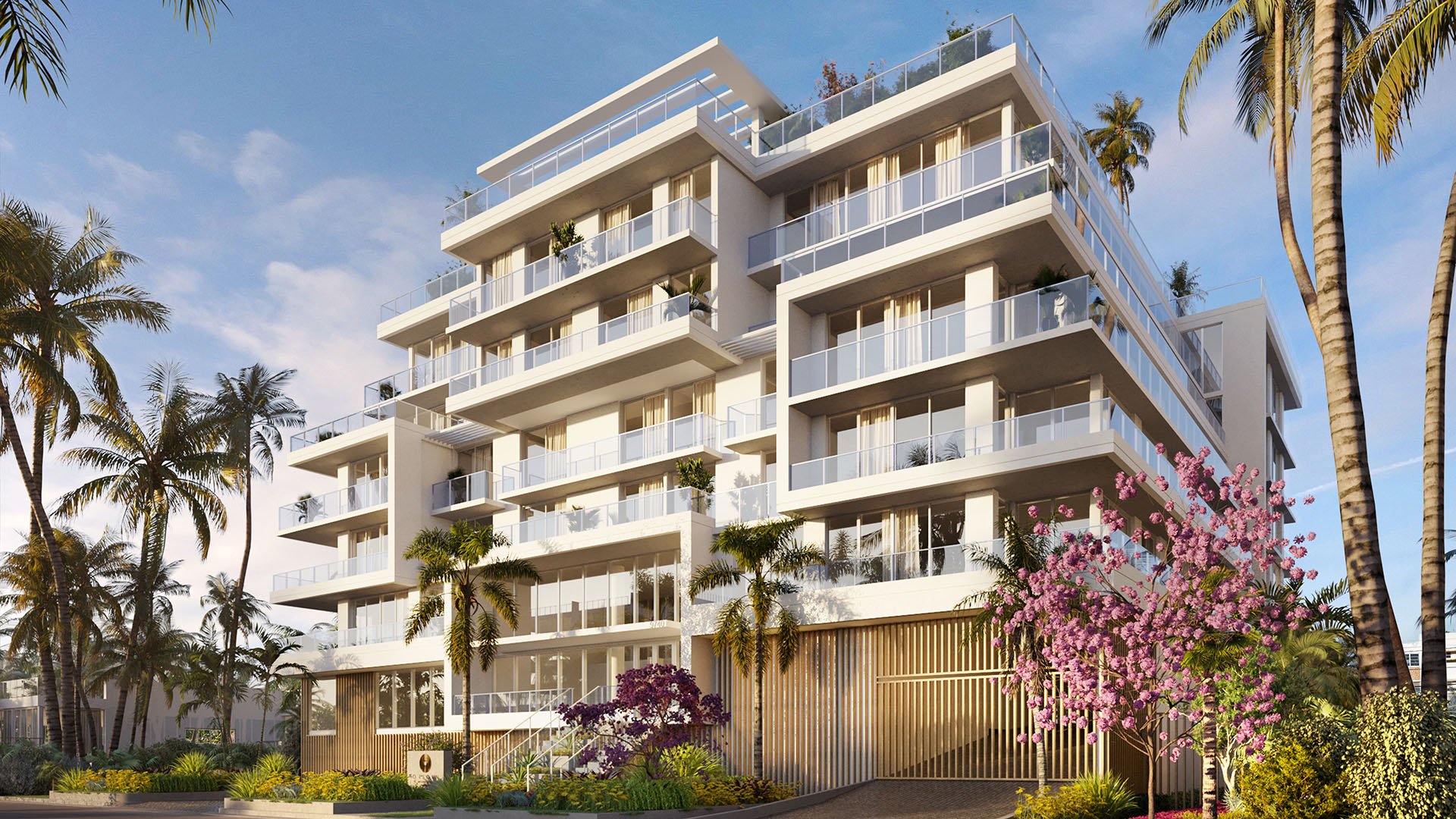
That is the lens through which Origin Bay Harbor Islands becomes compelling. Origin Bay Harbor Islands is positioned not as a large, spectacle-driven tower, but as a boutique condominium in Bay Harbor Islands with a more intimate residential scale. Its value proposition is less about overwhelming the buyer with theatrical volume and more about concentrating luxury into daily usability, privacy, waterfront orientation, and a calmer ownership experience.
That distinction matters in a market where more does not always mean better. More amenities may also mean more staffing, more maintenance, more scheduling, more rules, and more common-area friction. Operational simplicity does not automatically translate into lower costs, and buyers should never assume that without reviewing building documents carefully. But it can be a meaningful consideration for those who want luxury to feel seamless rather than constantly managed.
Boutique, in this context, is not code for modest ambition. It is a different definition of luxury. A more intimate building model can make the spaces residents actually use feel more available, more personal, and less performative. The benefit is not simply fewer amenities. The benefit is the possibility that the amenities and shared spaces that do exist are more likely to support ordinary life.
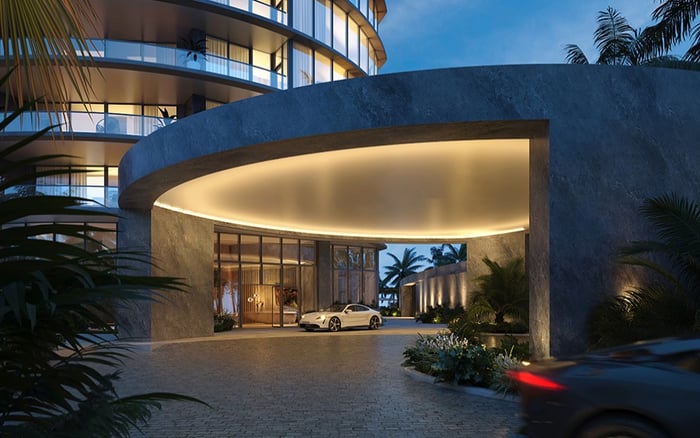
A large building may offer many destinations within its walls, but the experience can depend on occupancy, circulation, reservations, guest volume, staff coordination, and the ongoing condition of heavily used common areas. A smaller residential setting can offer a quieter rhythm. Elevators, arrival sequences, amenity spaces, service interactions, and waterfront access may feel less burdened by density.
For buyers comparing Bay Harbor Islands residences, that is a significant point. Nearby choices such as Alana Bay Harbor Islands, Onda Bay Harbor, and The Well Bay Harbor Islands each sit within a market where scale, privacy, and daily convenience are central to the decision. Origin’s appeal is its clear focus on a residential experience that feels composed rather than crowded.
Waterfront living is often described as a feature, but in the strongest South Florida condominiums it functions as the organizing principle. At Origin, the bayfront is not simply a view line. It is the emotional center of the project’s positioning, giving the building an amenity that does not require spectacle to feel valuable.
A waterfront setting can change how residents use a home. Morning light, outdoor terraces, quieter evenings, and a visual connection to the bay can become part of the daily routine. This is where private living space begins to compete with shared amenities in importance. Residences presented as luxury homes with strong indoor-outdoor appeal suggest a buyer who wants the experience of South Florida to begin at home, not only at the pool deck or lounge.
That approach feels especially relevant in Bay Harbor Islands, where the neighborhood context supports a slower cadence than busier urban-core tower districts. The luxury is not isolation. It is proximity without constant intensity.
Bay Harbor Islands occupies a particular position in Miami-Dade’s luxury geography. It gives residents access to Bal Harbour, Surfside, and Miami Beach while preserving a quieter neighborhood atmosphere. For buyers who want high-end shopping, dining, beaches, and waterfront lifestyle nearby, the location can feel strategic rather than remote.
The distinction is subtle but important. A buyer may want the polish and convenience associated with Bal Harbour, the coastal ease of Surfside, and the cultural and leisure access of Miami Beach, yet not want to live inside a high-traffic tower district. Origin’s location supports that preference. It offers a residential base close to major lifestyle anchors without making the building itself a stage for constant activity.
That is one reason Bay Harbor Islands continues to draw attention from buyers who are not simply chasing height or brand theater. The neighborhood rewards projects that understand restraint. In that context, Origin’s contemporary waterfront design language aligns with a market segment that values elegance, privacy, and function over maximalism.
Spectacle has its place. South Florida’s luxury market is built in part on extraordinary architecture, branded hospitality, and buildings that transform the skyline. Projects in more dramatic settings, from oceanfront corridors to urban centers, can deliver a powerful sense of arrival. A buyer considering Rivage Bal Harbour, for example, may be evaluating a different expression of luxury than one focused on boutique Bay Harbor Islands living.
The question is not whether spectacle is good or bad. The question is whether the operational structure behind it matches the owner’s lifestyle. The more elaborate the amenity program, the more a buyer should understand how it is maintained, staffed, reserved, governed, and funded. A highly programmed building can be rewarding for residents who use its services constantly. It can be less compelling for owners who spend most of their time in their residence, on the waterfront, or out in the neighborhood.
Origin works as a case study because its positioning suggests a more focused form of luxury. It does not need to out-shout the market. Its argument is that a curated set of design and lifestyle features, paired with an intimate residential scale, may be more meaningful over a long ownership horizon than a longer list of amenities used only occasionally.
Operational simplicity should be evaluated carefully. Buyers should look beyond renderings and ask how a building is intended to function day to day. How many residents are likely to share key amenities? How calm is the arrival sequence? How private do the residences feel? Does the waterfront carry the lifestyle, or is the building dependent on programmed common areas to feel luxurious?
They should also consider the relationship between private space and shared space. In some buildings, the amenity package is the headline. In others, the residence itself does more of the work, with indoor-outdoor living, waterfront orientation, and a more residential sense of retreat. Origin appears to sit in the latter category, where the home and setting are not secondary to the amenity narrative.
For the right buyer, that can be a compelling proposition. A building with fewer moving parts may feel less demanding to own, easier to understand, and more aligned with a lock-and-leave or second-home lifestyle. Again, this is not a promise of lower fees or effortless governance. It is a framework for evaluating whether a condominium’s complexity is serving the owner or simply impressing the visitor.
The most enduring luxury residences often understand restraint. They do not confuse attention with value. They recognize that privacy, usable amenities, thoughtful circulation, and a strong relationship to place can be more powerful than excess.
Origin Bay Harbor Islands reflects that quieter side of the market. Its boutique scale, waterfront focus, contemporary design language, and Bay Harbor Islands setting create a clear proposition for buyers who want access to South Florida’s premier lifestyle nodes without living in a building that feels operationally overextended.
In a region fluent in architectural drama, Origin’s appeal is that it asks a more mature question. Not how much can a condominium display, but how well can it support the life its residents actually intend to live?
What is the main appeal of Origin Bay Harbor Islands? Origin Bay Harbor Islands is positioned around boutique waterfront living, privacy, and a calmer residential ownership experience.
Why does operational simplicity matter in a luxury condo? It can mean fewer moving parts for residents to evaluate, from amenity use to circulation and day-to-day building rhythm.
Does a boutique building always mean lower carrying costs? No. Buyers should review all documents carefully, because simpler positioning does not automatically guarantee lower fees.
How does waterfront living shape Origin’s appeal? The bayfront functions as a core amenity, making views, outdoor space, and daily connection to the water central to the lifestyle.
Is Origin close to Bal Harbour? Yes. The Bay Harbor Islands setting offers proximity to Bal Harbour while maintaining a quieter residential context.
Is Surfside part of the lifestyle radius? Yes. Surfside is nearby, adding beach access and coastal convenience without requiring residents to live in a busier tower corridor.
How does Miami Beach factor into the location? Miami Beach is accessible from Bay Harbor Islands, giving residents broader dining, culture, and beach lifestyle options.
Is Origin more about private space or shared amenities? Its positioning suggests that private indoor-outdoor living and the waterfront setting matter as much as shared amenity programming.
Who is the likely buyer for this type of condominium? The likely buyer values privacy, calm circulation, waterfront living, and a refined home base close to major luxury destinations.
How should buyers compare Origin with larger luxury towers? They should weigh visual drama against daily usability, amenity access, staffing needs, maintenance complexity, and long-term livability.
When you're ready to tour or underwrite the options, connect with MILLION.
If branded residences are on your mind — as a home or as an allocation — we would be glad to share what we are seeing, privately.
Begin a quiet conversation