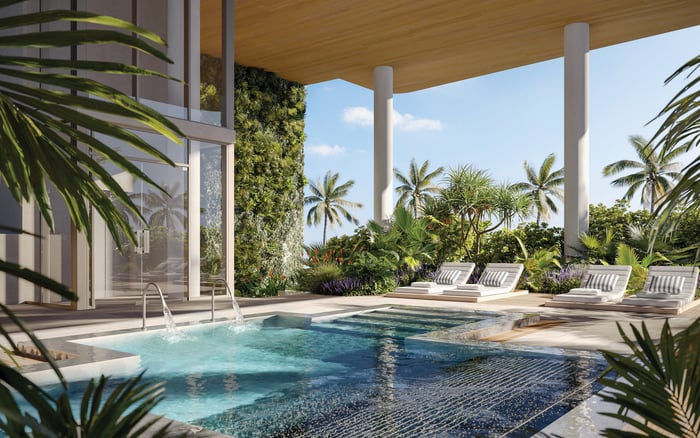
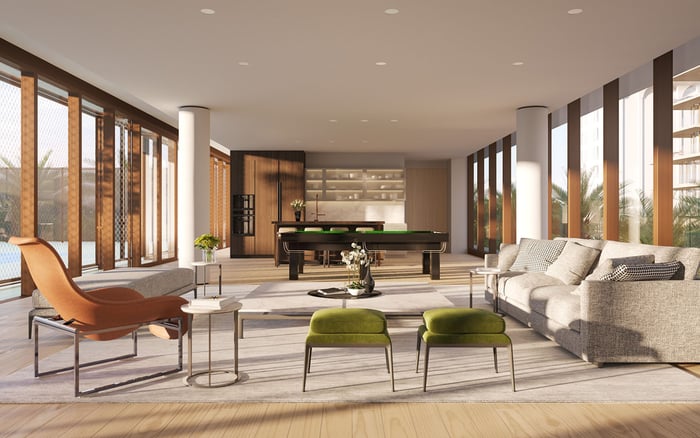
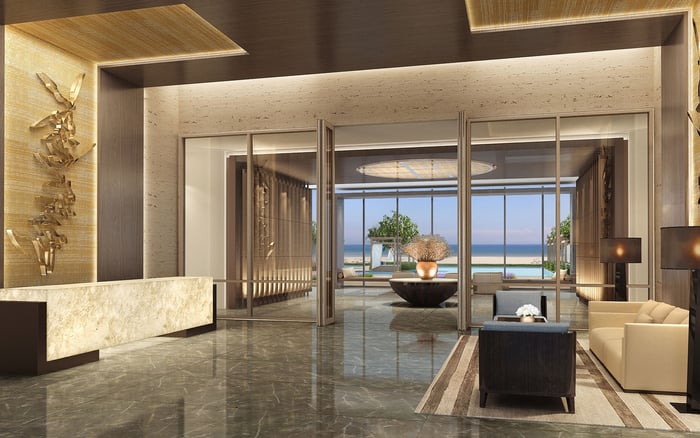
In Surfside, “the view” is not a single sightline. It is a composite of orientation, site width, glazing strategy, and how much space the building has to breathe. This MILLION Luxury editorial compares three of the area’s most discussed oceanfront addresses through the lens that matters most to sophisticated buyers: exposure.
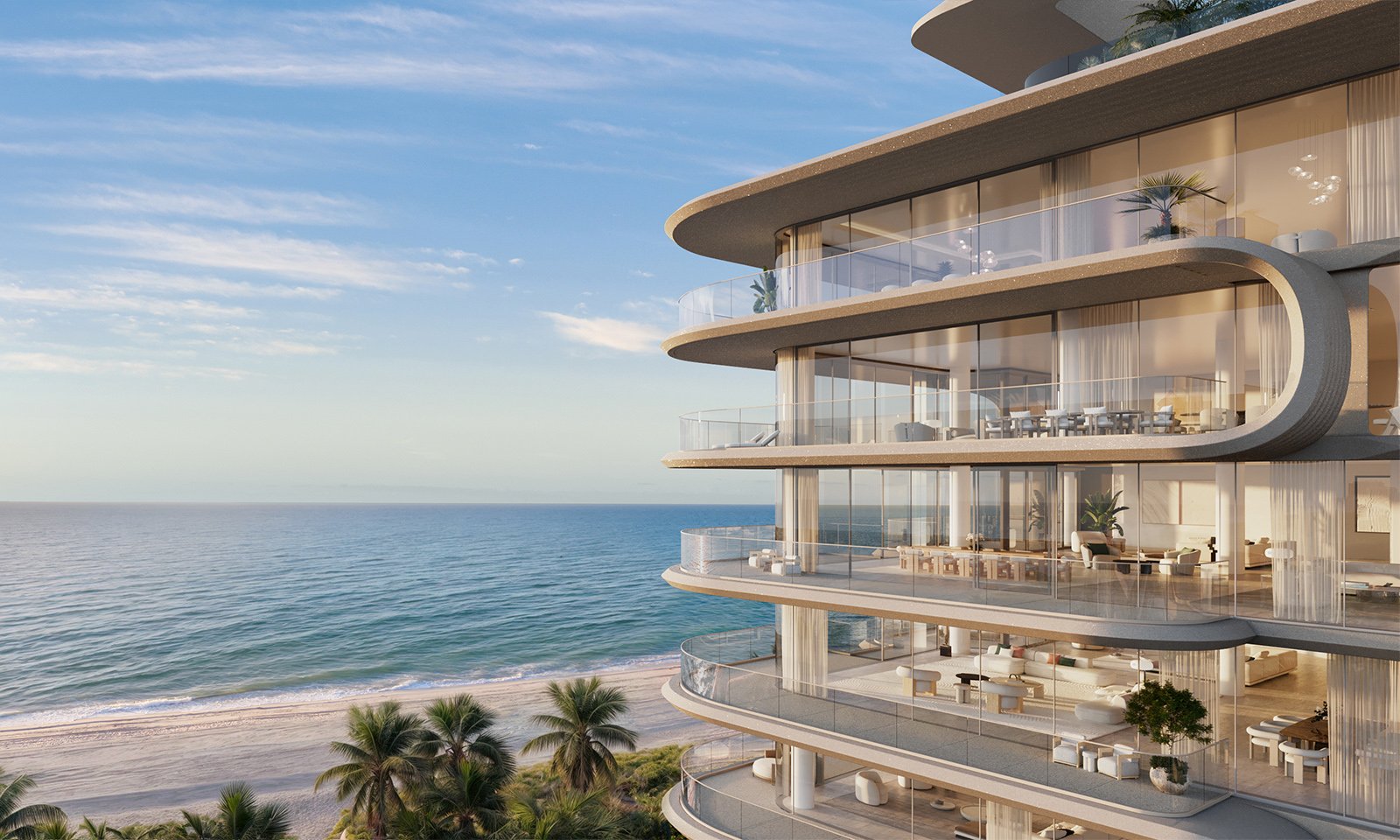
Surfside’s stretch of Collins Avenue is one of the rare South Florida corridors where an address can feel close to Miami Beach’s momentum while remaining intentionally quiet. For seasoned buyers, “oceanfront” is not a yes or no. The premium is exposure: what the residence captures at sunrise, what remains compelling at golden hour, and how stable those sightlines feel as neighboring parcels change.
MILLION Luxury clients tend to value views the way designers do. They look past staged photography and ask practical questions. Does the plan truly present two water bodies, or only a partial angle? Is the glazing positioned to hold the horizon from primary rooms, not just a corner? Are terraces deep enough to live on, or simply to photograph?
In Surfside, three addresses are repeatedly compared through this lens: Fendi Château Residences Surfside, Ocean House Surfside, and The Surf Club Four Seasons Surfside. Each sits oceanfront. Each presents a boutique or boutique-adjacent experience. Yet the daily reality of the view can differ materially based on orientation, frontage, density, and terrace design.
To compare oceanfront buildings without being guided by marketing, focus on four variables that translate directly into lived experience.
1) Orientation and whether it is guaranteed. Some buildings default to primarily ocean-facing layouts, while others emphasize multi-directional exposure. The most buyer-friendly condition is predictability: a plan type that reliably delivers a consistent exposure from stack to stack.
2) Linear beachfront and site width. A wider ocean edge can mean broader view corridors, more separation from adjacent structures, and a stronger feeling of openness even on lower floors. It also often reflects how much space a project has for landscaping and arrival without compressing the shoreline experience.
3) Density and privacy. Fewer residences can mean fewer competing sightlines from neighboring balconies and less circulation through elevators and amenities. In practice, it often translates into calmer common areas and a quieter cadence of daily living.
4) Terrace depth and usability. A shallow balcony may read well in photos but live like a ledge. Depth changes how the view is used: shade control, outdoor dining, lounging, and the ability to stay outside longer while still enjoying the same outlook.
Some buildings sell lifestyle. Others sell geometry. Fendi Château Residences Surfside is widely associated with the second category because its defining promise is the east-to-west flow-through residence. In practical terms, that means glazing on both sides, bringing ocean views and bay or intracoastal views into the same home. For buyers who want a sunrise-and-sunset rhythm without shifting their entire routine from one side of the residence to the other, this plan logic is unusually clear.
The tower is a 12-story boutique building, often discussed for a low-density feel compared with larger resort-style configurations. Another metric frequently referenced is approximately 300 linear feet of beachfront, a figure that view-driven buyers use as a shorthand for how “wide” the parcel feels from the sand and how much breathing room the site may support.
Authorship also matters. The project is developed by Château Group, designed by Arquitectonica, with Fendi Casa-branded interiors. That combination tends to appeal to buyers who want a disciplined modern exterior and interiors that feel deliberate rather than generic.
Availability still comes down to stack and floor, but the positioning is consistent: flow-through as a default, not a rarity. In buyer language, it functions as a category leader for Flow-Through-units.
You can explore the project directly at Fendi Château Residences Surfside.
Ocean House Surfside pursues the same end goal, maximizing light and openness, through a different approach. Like Fendi Château, it is a 12-story building, but its identity is defined by its limited count: 25 residences. For many luxury buyers, that number sets expectations immediately. Fewer neighbors usually means fewer shared moments, less ambient activity, and often less visual overlap from adjacent terraces.
Designed by Arquitectonica, with Bernardo Fort-Brescia cited in project materials, Ocean House emphasizes multi-directional exposure. Public positioning highlights views to the east, south, and west, which can translate into ocean plus skyline within a single residence depending on stack and floor. Floor-to-ceiling glass and large terraces are core to the sales narrative, and the pairing matters. Glass alone can feel like a display; meaningful outdoor space tends to make the view feel like part of daily living.
Scale also affects the view from inside the residence. Ocean House is marketed with residences starting around 2,093 square feet for a two-bedroom and reaching approximately 7,143 square feet at the penthouse level. Larger floorplans often allow more frontage along the glass line, which can widen the sightline and create more flexibility in how the interior is furnished near the view.
This is a natural fit for buyers who prioritize Surfside’s quiet but want a composition that includes more than a single ocean plane.
Project details are available at Ocean House Surfside.
The Surf Club Four Seasons Surfside is the outlier for one decisive reason: land. While it offers private residences within a luxury hotel context, its view advantage is rooted in a far larger site. The property is marketed at roughly nine acres with approximately 965 feet of ocean frontage, a linear measure that stands apart in Surfside.
For view-first buyers, that width matters beyond what is framed through glass. It also shapes what remains between you and the next structure. A larger site can preserve horizon lines, extend garden perspectives, and reduce the sense of visual compression that can come with narrower oceanfront parcels.
The Surf Club carries additional cultural weight through the integration of the historic Surf Club, originally designed by Russell Pancoast. The newer residential towers are designed by Richard Meier, a name often associated with a disciplined approach to glazing and bright, light-forward interiors. Terraces are another meaningful distinction, with deep outdoor spaces marketed up to roughly 18 to 20 feet in some layouts. That depth can materially change how often owners use the exterior and how sheltered the view feels when sun and wind intensify.
Where other buildings compete on plan logic or boutique intimacy, The Surf Club competes on breathing room.
You can view the project at The Surf Club Four Seasons Surfside.
Luxury buyers rarely regret paying for a view. They do sometimes regret paying for the wrong kind of view.
If you want dual-water moments without compromise, a consistent flow-through concept can be the cleanest solution. You are not choosing between sunrise and sunset; you are planning for both as a daily baseline.
If you want privacy as a view amenity, unit count can matter as much as floor height. A boutique environment often reduces the sense of living in parallel with dozens of neighbors.
If you live on terraces, not just behind them, prioritize depth and usability over simple square footage. A generous terrace makes an ocean view feel like an everyday room rather than a special-occasion backdrop.
If you worry about what happens next door, site width and spacing can be the most durable hedge. No view is truly guaranteed indefinitely, but more land often supports openness for longer.
Across all three, the disciplined rule holds: exposures vary by stack, floor, and surrounding development. Evaluate the specific residence and its orientation, not only the building’s headline.
Many Surfside buyers also consider Miami Beach for a different rhythm: more dining, more nightlife, and in some cases a more overt resort-social calendar. When Surfside becomes the benchmark for calm, Miami Beach often becomes the counterpoint for energy.
For view-first buyers looking south, compare how a project frames the ocean relative to Collins Avenue and how it manages privacy at arrival. A boutique oceanfront building such as 57 Ocean Miami Beach is often included in these cross-market conversations because it signals a similar preference for lower density than the mega-tower era.
The takeaway is not that one coastline is “better.” It is that Surfside’s most compelling value proposition remains restraint. When restraint is paired with deliberate exposure and terraces designed to be used, the view stops being décor and becomes the organizing principle of the home.
What does “flow-through” mean in a Surfside condo? It typically refers to a residence with windows and/or terraces on both the ocean side and the bay or intracoastal side, allowing light and views in two directions.
Why do buyers care about linear beachfront footage? A wider ocean edge can support broader view corridors and more spacing, which may help preserve a sense of horizon and privacy.
Are all oceanfront units guaranteed to have the same view? No. View angles and potential obstructions vary by stack, floor, and nearby buildings, even within the same tower.
Does a 12-story building always feel “boutique”? Not necessarily. Height is less important than unit count, floorplate size, and how many residences share elevators and amenities.
How does a small residence count change daily living? Fewer residences often means fewer neighbors, quieter common areas, and less visual overlap from adjacent terraces.
Do deeper terraces really matter in South Florida? Yes. Depth can improve shade, comfort, and usability, making it easier to treat outdoor space as a true extension of the interior.
What is the view advantage of a larger oceanfront site? More land can allow greater spacing, landscaping, and setbacks that support more open sightlines and a calmer arrival experience.
Is Surfside more about privacy or proximity to Miami Beach? It is both, but Surfside is widely chosen for a quieter atmosphere while remaining close to the culture and dining of Miami Beach.
Which tag best describes the dual-water layout preference? Flow-Through-units is the most direct shorthand for buyers prioritizing both sunrise and sunset water exposures.
What should I review before prioritizing a building for views? Confirm the residence’s stack orientation, terrace depth, and how the building’s site and neighbors influence long-term sightlines.
For private guidance on Surfside and Miami Beach view-driven residences, connect with MILLION Luxury.
If branded residences are on your mind — as a home or as an allocation — we would be glad to share what we are seeing, privately.
Begin a quiet conversation