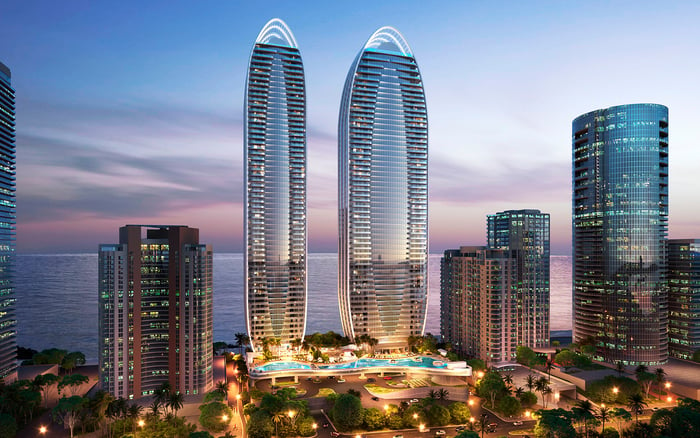
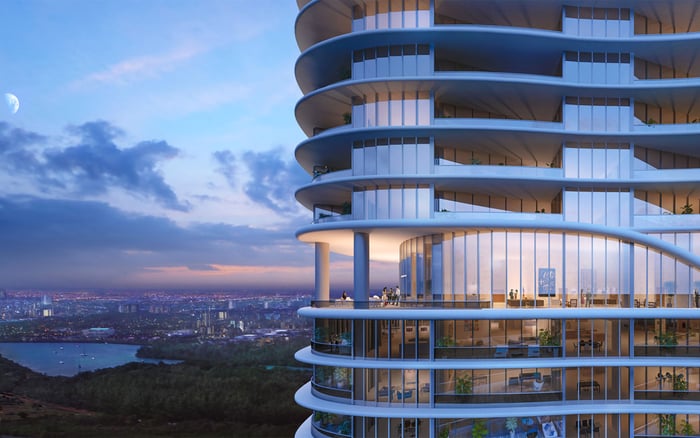
Sunny Isles Beach has undergone one of South Florida’s most visible reinventions, evolving from mid-century Motel Row into a dense oceanfront market where branded residences, hotel-grade services, and statement architecture shape value.
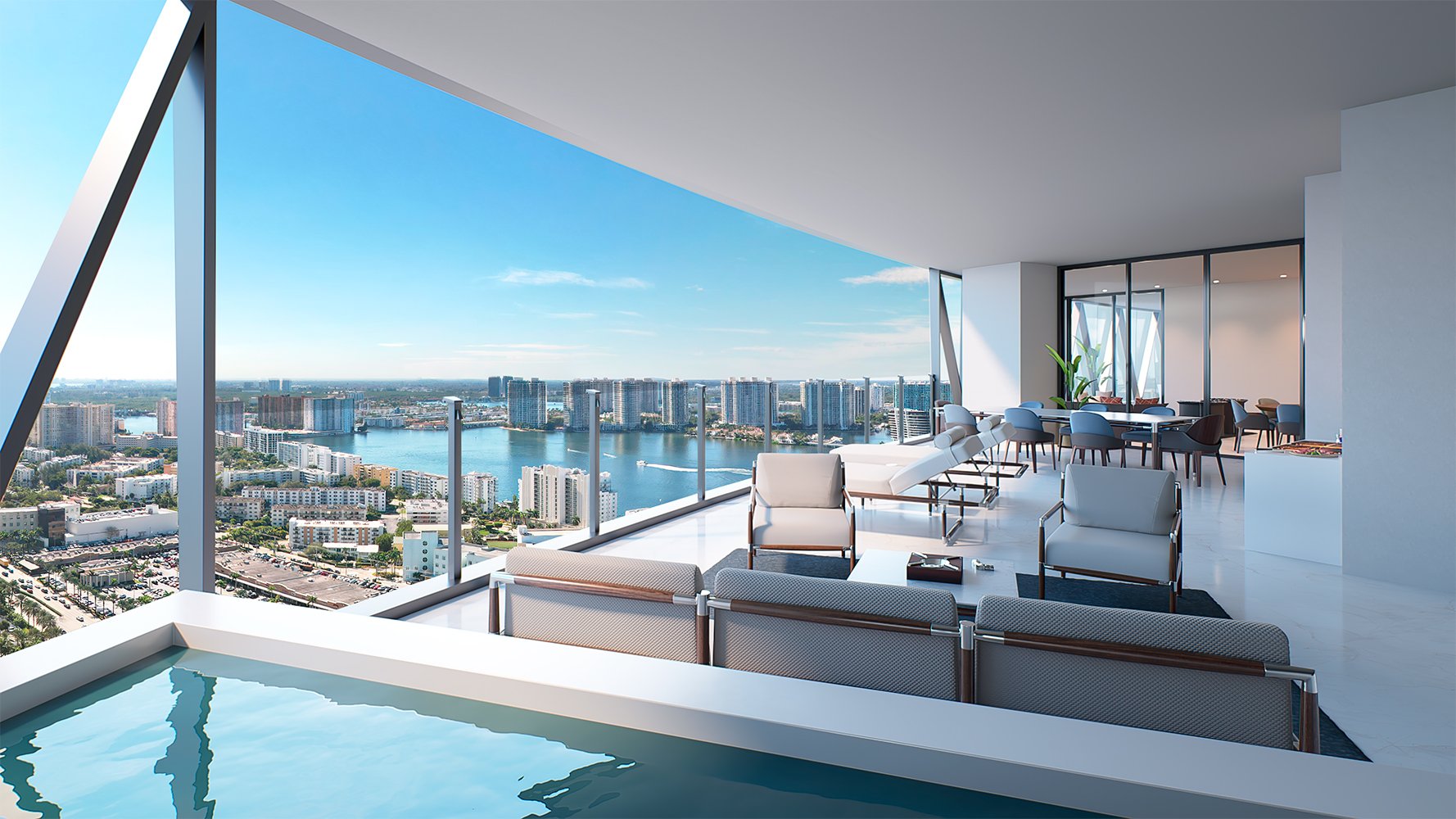
Sunny Isles Beach occupies a slender barrier island in northeast Miami-Dade County, a narrow band of sand where the Atlantic is always in frame and reinvention has been the constant. The city is often summarized by its skyline, but the more useful lens is its sequence of eras: roadside tourism, redevelopment, and then a deliberate pivot toward ultra-luxury residential living.
For buyers, that evolution is not background color. It is the reason Sunny Isles is not simply “Miami Beach, but north.” This is a market built around high-rise, oceanfront condominium living, where a building’s identity, operations, and service delivery can matter as much as square footage. Pricing also tends to split into distinct lanes. Trophy oceanfront inventory can behave differently than older, non-oceanfront stock, a divergence that shows up repeatedly across market dashboards and transaction summaries.
That structure is precisely why the city continues to attract global attention. Sunny Isles offers a concentrated selection of towers competing on amenities, privacy, and branding. In a competitive skyline, a buyer’s advantage is clarity: understand the past that set the stage, the logic behind today’s positioning, and the specific signals that separate a truly strong building from one that only photographs well.
Before the towers, Sunny Isles was widely known for “Motel Row,” a Collins Avenue strip of themed mid-century motels designed for mass-market tourism. Local historical accounts describe a corridor of roadside-style properties that became culturally recognizable, and later, increasingly exposed to the economics of oceanfront land values.
The transition from low-rise nostalgia to high-rise redevelopment was decisive. As demolition and construction accelerated, the built form tilted vertical and condominium towers became the defining typology. Sunny Isles’ reputation shifted with it, moving from kitsch familiarity to dense coastal living built around views, amenities, and turnkey convenience. Early, widely recognized examples of the condo wave include Trump Towers, a three-tower oceanfront residential project developed by Dezer Development in association with the Trump Organization.
Today, the skyline is cataloged and tracked building-by-building in tall-building databases, which aligns with what residents experience day to day. Sunny Isles functions as a distinct vertical resort market, with an unusually tight cluster of high-rises given its small geography.
That density also explains why governance and infrastructure appear so often in serious buyer conversations. The city’s Comprehensive Plan, with a horizon year of 2030, reflects a formal approach to growth management, services, and long-term planning. Sunny Isles is a lifestyle purchase, but it is also a bet on how a small municipality supports big-city intensity on a thin strip of land.
Sunny Isles’ contemporary calling card is the branded residence. In practice, “branded” can point to different source identities: a luxury hotel flag, a fashion house, an auto marque, or a hospitality operator whose service standards are folded into the building’s promise. The common denominator is differentiation. When many towers share the same ocean, the same sunrise, and similar floor-to-ceiling glazing, branding becomes shorthand for an expected experience.
In the Sunny Isles market, branding often functions as both narrative and operating model. It shapes staffing, concierge culture, amenity programming, and the overall cadence of living. The promise is not only the residence itself, but also the feeling of arrival, the tone of service, and the credibility of the name at the porte cochere.
This is also where comps become headlines. A widely reported benchmark was a record-breaking penthouse sale at St. Regis Sunny Isles Beach, reported at $55 million. In a market like this, singular transactions do more than set a number. They recalibrate expectations, influence how sellers frame value, and signal to the broader buyer pool what the top of the market is willing to support.
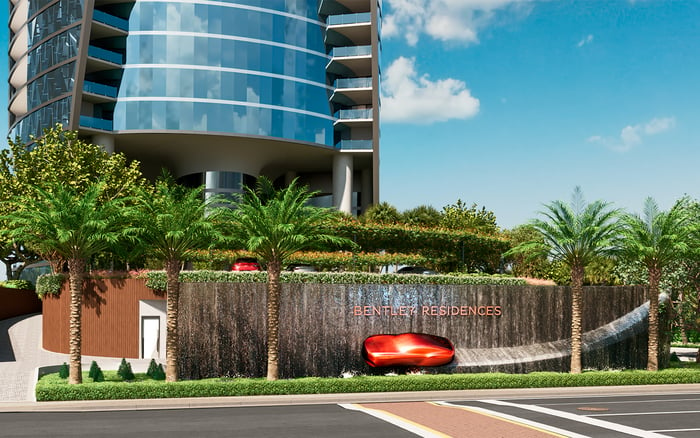
You can see the same branding logic across the city’s collection of statement towers. Armani Casa, frequently referenced as part of Sunny Isles’ ultra-luxury inventory, illustrates how a design language can be marketed as a lifestyle signature. Auto-branded projects have also shaped perception. Porsche Design Tower is repeatedly cited as a signature building, and Bentley Residences is marketed as a Bentley-branded residential tower.
For buyers, the discipline is to separate the name from the execution. A brand can elevate expectations, but day-to-day performance is still driven by management, resident-to-staff ratios, maintenance standards, amenity wear, and whether the building’s culture matches your own.
Sunny Isles is best understood as a series of micro-markets stacked along the shoreline, each with its own value drivers.
First is the trophy oceanfront layer, where privacy, arrival experience, and service tend to carry the conversation. Buildings like Regalia are known for an ultra-luxury, low-unit-count profile and privacy positioning, often described in marketing as full-floor or near full-floor living. This tier tends to appeal to buyers who want the security and simplicity of a condominium format without the tradeoff of feeling overexposed or overprogrammed.
Next is the amenity ecosystem layer, where scale supports breadth. Developments adjacent to or associated with Acqualina are central reference points in the city’s luxury narrative. The Estates at Acqualina is marketed as a large-scale luxury condo development with extensive amenities and resort-adjacent living. Mansions at Acqualina is positioned as a boutique, estate-style alternative with a smaller number of large residences.
Finally, there is the identity-driven layer: towers that compete through an instantly legible signature. This is where design-forward branding and distinctive positioning become particularly important for resale, especially for international buyers who may be purchasing from afar and relying on recognizable markers of quality.
Within this landscape, branded projects remain the most direct path for buyers who want hotel-grade services as part of the value proposition. Many shoppers begin by touring The Ritz-Carlton Residences® Sunny Isles, which is positioned around resort-style service and amenities, then cross-shop St. Regis® Residences Sunny Isles for a comparable promise of brand-driven living.
The point is not that one approach is universally “better.” The point is fit. Sunny Isles offers multiple versions of luxury, and the strongest purchases align a building’s operating reality with your daily expectations, whether that means quiet privacy, family-forward amenities, or a more social, resort-like atmosphere.
Sunny Isles is not a static skyline. Development coverage continues to point to additional branded luxury proposals tied to major developers, reinforcing that the city’s identity as a branded-residence pipeline remains intact.
For buyers evaluating pre-construction, Sunny Isles presents a clear mix of opportunity and risk.
On the upside, new inventory can mean modern mechanical systems, contemporary amenity programming, and layouts aligned with current preferences. It can also mean the chance to buy into a narrative early, before resale comps have fully matured and before the market has had time to rank the building within its peer set.
On the caution side, Sunny Isles is a high-visibility market with sophisticated buyers. The more a project relies on brand identity, the more important it becomes to evaluate how the building will actually operate once the initial marketing momentum fades and the realities of staffing, maintenance, and budget discipline set the tone.
Auto-branded living captures this tension. Bentley Residences Sunny Isles is marketed as a Bentley-branded residential tower, a concept that immediately communicates design intent and status signaling. A prudent underwriting, however, still comes back to fundamentals: how the common areas will age, what the long-term service model looks like in practice, and whether the building’s positioning matches the depth of the buyer pool likely to support it at resale.
In Sunny Isles, the best pre-construction decisions are rarely about “getting in early” as an abstract strategy. They are about selecting projects that can sustain durable demand after the launch cycle ends.
Sunny Isles sits inside a regional conversation with two nearby archetypes that frequently shape buyer expectations.
To the south, Miami Beach carries its own luxury corridor narrative, often discussed through the lens of reinvestment and the concept of “Billionaires’ Beach.” For buyers, Miami Beach can offer a different kind of glamour and cultural density, with a lifestyle defined by restaurants, design, and walkability in certain pockets. Buyers who want branded services in that environment often look at The Ritz-Carlton Residences® Miami Beach, or explore private-club adjacent concepts such as Casa Cipriani Miami Beach.
To the north, Bal Harbour is frequently framed as a lower-density, scarcity-driven beachfront narrative when compared with Sunny Isles’ many tall, amenity-rich towers. The difference is not only aesthetic. It is market mechanics. Scarcity markets can behave differently in downturns, while high-rise clusters can offer more choice but also more competition among comparable buildings.
Sunny Isles lands between these models. It borrows the brand sophistication that buyers associate with Miami Beach, and it competes for the same global attention as Bal Harbour, but it expresses that competition through verticality, variety, and a more overt emphasis on service-forward condominium living.
A Sunny Isles condo can be an uncomplicated pleasure, but it should still be a disciplined decision. A few buyer-focused filters tend to clarify the landscape quickly.
Service model and staffing: In a branded building, service is part of what you are buying. Ask how the experience is delivered day to day, how consistent staffing feels relative to the promise, and whether the building’s operating culture aligns with the brand narrative.
Amenity realism: Sunny Isles towers are marketed heavily on amenities. Focus on what you will actually use and what is maintained at a high standard. A smaller, impeccably run program can deliver more value than an expansive menu that feels tired or underutilized.
Privacy and density: Some buyers thrive in a larger building with visible energy; others prefer a quieter profile. Low-unit-count positioning, as in Regalia Sunny Isles Beach, is not a luxury flourish. It is a lifestyle choice that affects elevator traffic, neighbor visibility, and the overall feel of daily living.
Resale logic: Market-trend sources emphasize how varied the Sunny Isles condo market can be. Evaluate how a building competes within its peer set, not just in absolute price. Consider where the building sits in the local hierarchy of service, finishes, and reputation, because those factors often shape liquidity.
Municipal outlook: High-density beachfront living depends on planning. Familiarity with the city’s long-term governance posture, including its Comprehensive Plan framework, helps buyers think beyond the unit and into the longevity of the location.
At its best, Sunny Isles is a highly legible market: a narrow strip of oceanfront land where towers communicate their intent clearly, from privacy-first to resort-forward to identity-led design. The winning move is to choose the intent that matches your life and then verify that the building’s day-to-day operations deliver on the promise.
Is Sunny Isles Beach mostly condos or single-family homes?
Sunny Isles Beach is widely characterized by a heavy concentration of condominium high-rises, particularly along the oceanfront corridor.
What makes branded residences matter in Sunny Isles?
Branding is used as a differentiator in a dense skyline, often signaling a service model, amenity programming, and a specific lifestyle promise.
Is the market only about ultra-trophy pricing?
No. While trophy oceanfront product can set headlines, pricing is often dispersed across older and newer inventory, and location within the city matters.
Should I consider pre-construction here?
Pre-construction can offer modern design and early access to new concepts, but buyers should underwrite the long-term operating reality, not only the brand.
For discreet guidance on Sunny Isles and beyond, connect with MILLION Luxury.
If branded residences are on your mind — as a home or as an allocation — we would be glad to share what we are seeing, privately.
Begin a quiet conversation