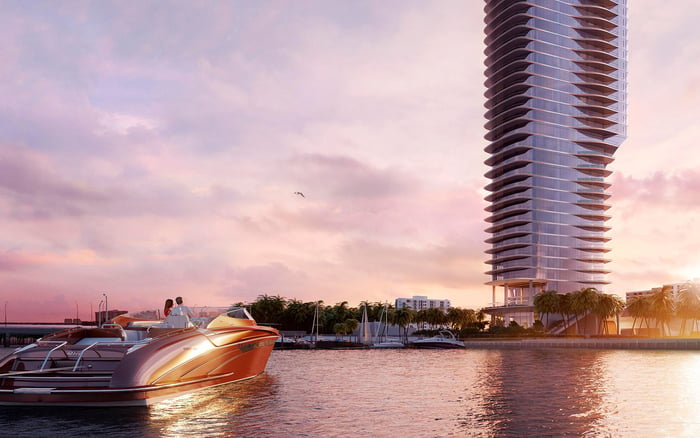
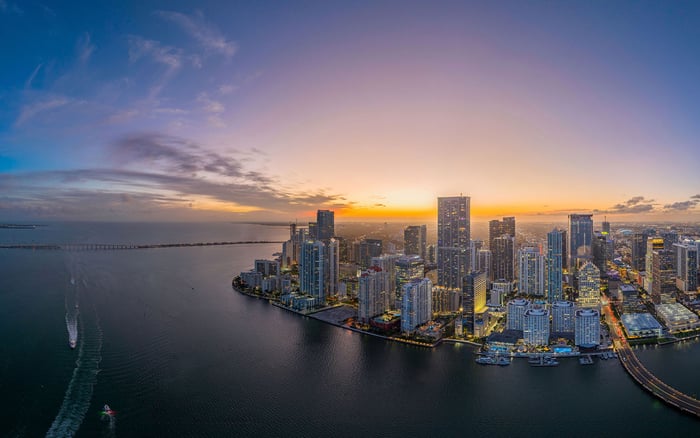
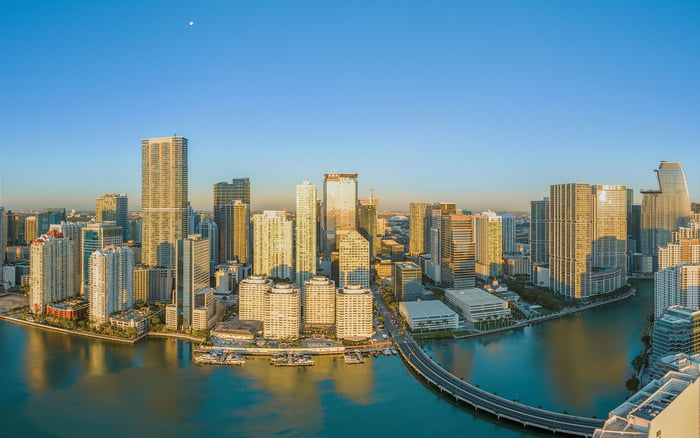
In South Florida’s top tier, food is no longer an amenity. It is a signature, curated like art, staged like hospitality, and engineered into the daily rhythm of living well. Developers have learned that the most persuasive luxury today is not only a view or a floorplan, but a lifestyle that feels effortless from morning espresso to a late dinner that never requires a car ride. Culinary partnerships, including collaborations associated with Michelin-starred chefs, sit at the center of that shift. When done well, they create more than a branded restaurant. They influence service standards, private dining options, in-residence catering, and even the design of kitchens, lounges, and entertaining spaces. For buyers, the question is not whether a building has a celebrity name attached. It is whether the culinary program is integrated, consistent, and aligned with how you actually live in South Florida.
Luxury in South Florida has always been social. Residences are built for hosting, arriving, and disappearing when you choose. What’s changed is the standard for what happens inside the building. Today’s buyer increasingly expects hotel-level rhythm without hotel exposure-and dining is the clearest expression of that promise.
A culinary partnership is powerful because it aims for repeatable excellence. Not a single “opening night” peak, but a sustained standard that shapes everything from poolside service to private events. At its best, it becomes a cultural anchor for the property: the restaurant turns into the meeting point, the lounge reads like a natural extension of the living room, and teams learn resident preferences with the fluency of a longstanding private club.
For ultra-premium owners, the appeal is often practical. South Florida’s calendar revolves around entertaining: family visits, seasonality, philanthropic events, and impromptu nights that begin at home. A disciplined culinary program removes friction. You’re not chasing reservations, coordinating logistics, or trading away privacy. You’re simply living.
In today’s market, “Michelin-starred” is often used as shorthand for seriousness. It implies discipline, technique, and a point of view. But in residential living, the stronger signal is operational continuity. A chef’s name can set the tone; day-to-day delivery is determined by the operator, training, and the building’s service culture.
Buyers should evaluate culinary collaborations in layers:
First, brand and concept: the restaurant identity, the menu philosophy, and the social energy it brings to the address.
Second, access: priority reservations, dedicated seating, delivery protocols, and whether resident events feel substantive rather than promotional.
Third, privacy and control: discreet entry points, the ability to host without spectacle, and staff who understand that a resident’s “regular” table is never a talking point.
And finally, integration into the residence itself: kitchens designed for real cooking, service corridors that support quiet catering, and amenity spaces that function as true entertaining rooms.
Brickell is where culinary branding meets tempo. It’s a neighborhood defined by proximity, vertical living, and a clientele moving between business, travel, and social commitments with little tolerance for inefficiency. In that context, a chef-driven restaurant isn’t just a perk-it becomes an extension of a resident’s schedule.
That’s why hospitality-led concepts land so well here: they formalize convenience while keeping the experience elevated. A property such as 619 Brickell - NOBU reflects how dining and residential life increasingly converge in the urban core, where a recognizable culinary identity can operate like a private amenity without feeling closed-off.
Nearby, the broader evolution of Brickell’s luxury inventory is also shaping expectations. In new towers, service is expected to be neither seasonal nor improvised. Owners want a system: room-style dining when needed, a polished bar when desired, and spaces that can handle everything from a quiet breakfast meeting to a celebratory dinner.
For buyers weighing options, look closely at how the building supports culinary operations: separate circulation for staff and deliveries, acoustic control, and whether the public restaurant energy is buffered from residential arrival. Even in a high-energy district, the most expensive luxury is still discretion.
Miami Beach has always understood dining as theater, but the next era is more calibrated. The most coveted residential experiences here are glamorous in finish yet controlled in exposure. The modern buyer wants the option to be seen-and the option not to be-often in the same weekend.
In that environment, culinary partnerships perform best when they can pivot: a lively dining room when you want atmosphere, and a private dining format when you want intimacy. Residences that emphasize curated lifestyle, such as 57 Ocean Miami Beach, align with this Miami Beach preference for refined beachfront living where service and sociability can coexist without tipping into chaos.
The strongest culinary programs in Miami Beach also understand timing. Late dinners are part of the culture, but so are early mornings and wellness-forward routines. Look for flexibility: lighter options, high-quality coffee service, and an approach that doesn’t treat “healthy” as an afterthought. In a market where owners often split time between cities, consistency matters more than novelty.
North of the core, culinary partnerships are increasingly tuned to multigenerational living. The win here isn’t necessarily the flashiest tasting menu-it’s the ability to feed a family well, host with ease, and still access a world-class experience within a controlled environment.
In these neighborhoods, the ideal program feels like a private clubhouse: strong lunch service, thoughtful kids’ options, and the ability to scale from casual to formal with minimal lead time. This is one reason hospitality-heavy residences continue to draw attention, including branded projects such as Bentley Residences Sunny Isles, where the broader promise is high-touch living supported by a strong lifestyle narrative.
For buyers, the most revealing questions are straightforward: Can you reserve space for a birthday without turning it into a production? Can visiting family be hosted with seamless catering? Is the service culture built for year-round owners, not just peak season? The best culinary programming feels resident-first.
When culinary is truly integrated, it shows up in the architecture-less in decorative motifs and more in practical decisions that support entertaining.
Kitchens matter. Many luxury condos offer showpiece kitchens that photograph beautifully but underperform in real use. A culinary-forward building should prioritize functional layouts, proper ventilation, generous refrigeration, and storage that supports actual cooking and catering.
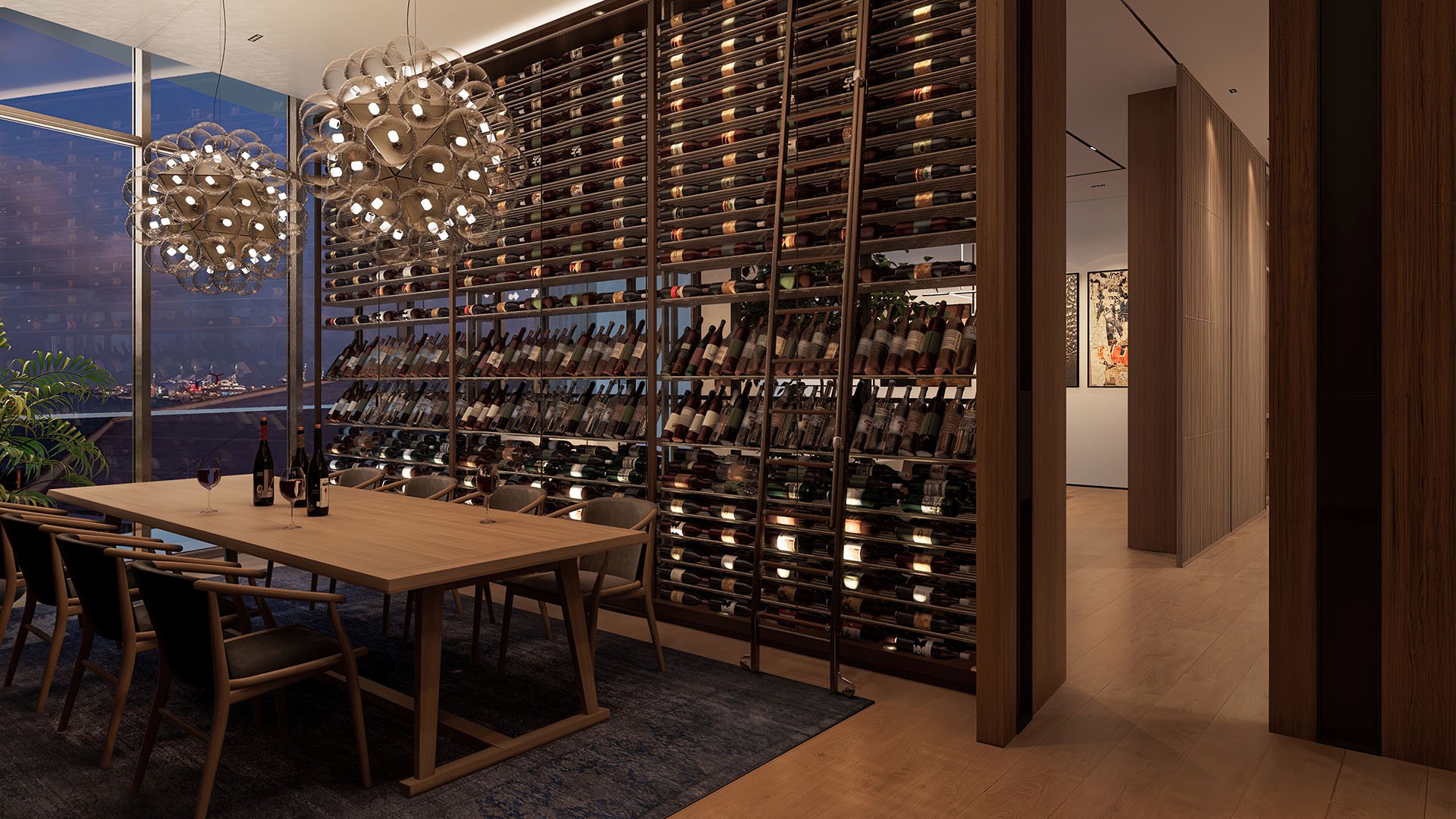
Amenity spaces matter, too. A private dining room only earns its place if it’s easy to book, acoustically comfortable, and serviced to the same standard as the main restaurant. Likewise, lounges and pool decks should be designed for efficient service so teams can deliver quickly and quietly.
Even in boutique properties, intelligent back-of-house planning signals true sophistication: where deliveries arrive, how staff circulates, and how odors and noise are managed. These details protect value because they protect the lived experience.
The most reliable way to assess a culinary partnership is to look for signs of permanence and alignment.
Start with clarity on what residents actually receive. Priority reservations and preferred seating are typical. The differentiators are more private: in-residence dining executed to restaurant standards, event programming that feels intentional, and a team that learns resident preferences over time.
Next, consider fit. A high-energy scene can elevate a Brickell address, but it can undermine a quieter beachfront residence if it introduces unwanted foot traffic or noise.
Also evaluate hours and staffing. A partnership that only comes to life during peak periods carries less value for full-time owners. In South Florida-where ownership ranges from primary to seasonal to investor-held-your personal usage should determine how much weight you place on daily service.
Finally, look for coherence across lifestyle categories. Culinary should connect naturally to wellness, hospitality, and social spaces. If a building promises a complete lifestyle, dining should read as a core pillar-not a detachable feature.
In ultra-luxury, scarcity is rarely just about square footage. It’s about access, ease, and the sense that your time is protected. Culinary programming-especially when associated with top-tier chef talent-has become a way to make that scarcity feel real.
The most discerning buyers remain selective. The goal isn’t to collect brand names. It’s to choose a building where dining improves daily life, supports the way you entertain, and strengthens resale appeal through durable service standards.
Ultimately, the culinary residence is a bet on consistency: that the experience will still feel polished five years from now, and that the building’s culture will keep attracting owners who value discretion as much as design.
For anyone exploring the next generation of lifestyle-led living, it helps to evaluate each address as a complete ecosystem. In a market where new development is increasingly experiential, the most compelling homes are the ones that make luxury feel simple.
What is a culinary residence? A culinary residence is a building where dining and hospitality are central to the lifestyle, often anchored by a notable restaurant concept and service program.
Do Michelin-starred chef partnerships guarantee a Michelin-level experience onsite? Not automatically. The chef association signals ambition, but the daily experience depends on the operator, staffing, and execution.
What resident benefits typically come with a chef-driven partnership? Common benefits include priority reservations, preferred seating, catering options, and resident-only events or tastings.
How can I tell if the culinary program is integrated into the building? Look for private dining spaces, well-planned service access, and amenity areas designed for efficient, discreet food service.
Will a restaurant in the building affect privacy? It can. Strong buildings manage separation between public dining energy and private residential arrival and circulation.
Is this lifestyle better for full-time owners or seasonal owners? It can work for both, but full-time owners benefit most when the program is consistent year-round and not only seasonal.
Does a culinary partnership impact resale value? It can, when it contributes to a durable service culture and a recognizable lifestyle that appeals to future buyers.
Should buyers prioritize the chef name or the operating team? Prioritize the operating team and service standards. A name sets expectations, but operations determine the lived reality.
What questions should I ask during a sales presentation? Ask what resident privileges are guaranteed, how reservations work, and what in-residence dining or catering protocols exist.
Can I still entertain privately if there is a signature restaurant onsite? Yes, if the building offers private dining options and the staff is trained for discreet, resident-first service.
For a discreet conversation and a curated building-by-building shortlist, connect with MILLION Luxury.
If branded residences are on your mind — as a home or as an allocation — we would be glad to share what we are seeing, privately.
Begin a quiet conversation