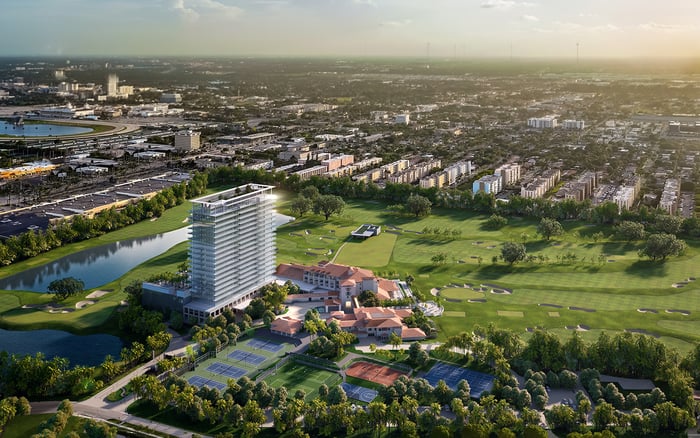
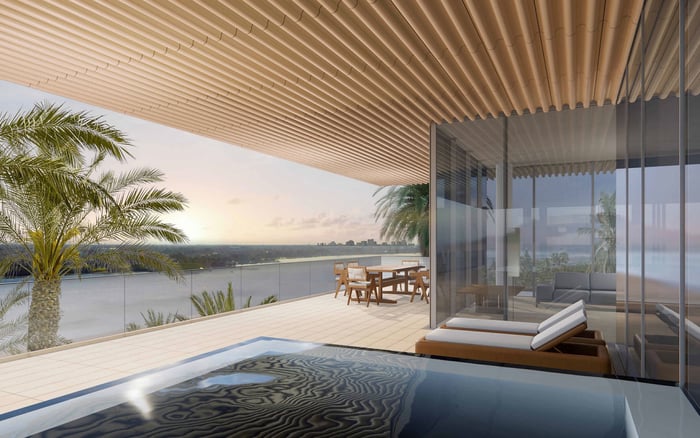
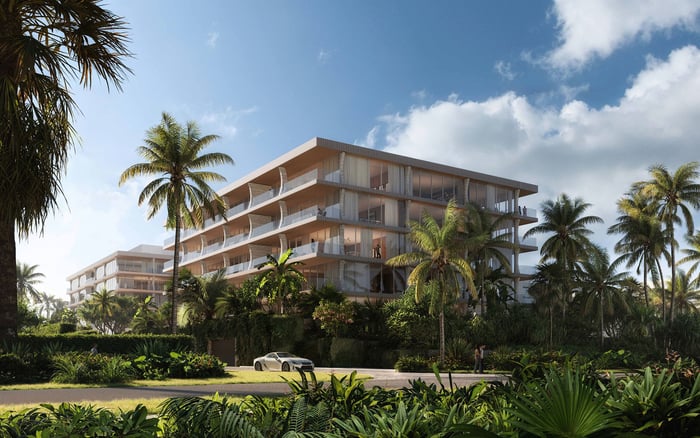
An authoritative look at the upcoming Mandarin Oriental Residences, Boca Raton within Via Mizner, including location, service model, residences, and the timeline considerations buyers should weigh.
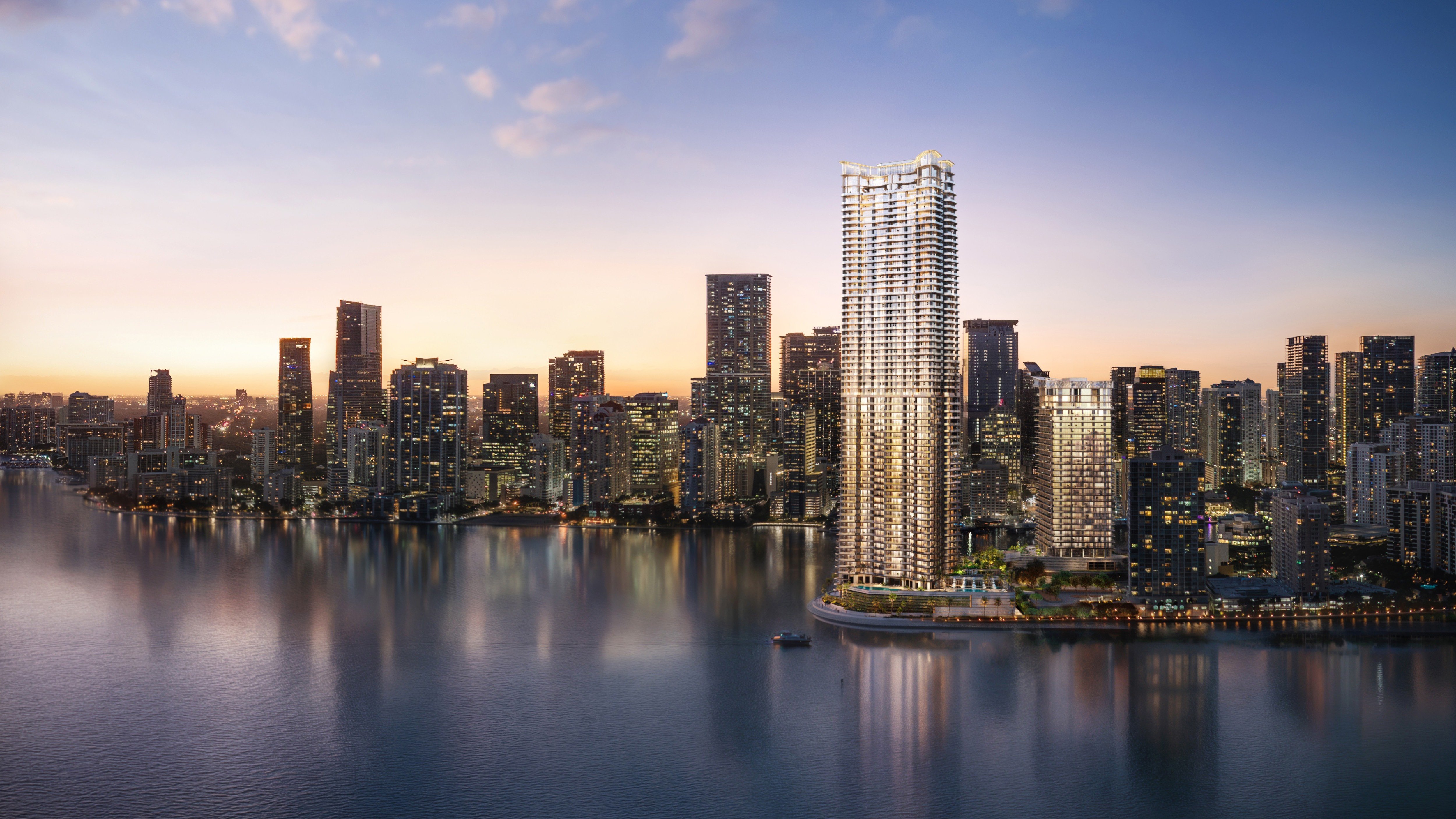
Branded residences have become one of the most reliable indicators of where South Florida’s ultra-prime buyer believes value is heading: toward service, discretion, and an ownership experience that feels closer to a great hotel than a conventional condominium. In Boca Raton, much of that conversation has concentrated on a forthcoming addition to the Mandarin Oriental Residences portfolio: The Residences at Mandarin Oriental Boca Raton.
The project is positioned publicly as a Mandarin Oriental branded and serviced residential tower within Via Mizner, the larger mixed-use vision by Penn-Florida Companies. For buyers, the draw is not simply a recognizable name on the renderings. It is the promise of a cohesive, walkable lifestyle in Boca’s luxury core, paired with the service culture Mandarin Oriental is known for.
At the same time, sophisticated purchasers are aware of a parallel narrative: the project has been widely covered for extended delays, along with frustration among some buyers. In this tier of the market, the decision is rarely a yes or no question. It tends to be a deliberate trade between lifestyle fit, long-term positioning, and the level of certainty a buyer requires about timing.
This guide is designed to frame that decision with clarity. It focuses on what is being marketed, what is commonly reported, and what questions matter most when evaluating a pre-construction branded residence in South Florida.
The residences are planned for 105 E Camino Real, Boca Raton, Florida 33432, within the Via Mizner site. In practical terms, this places owners in a central downtown corridor where luxury demand has increasingly favored mixed-use districts over isolated, single-purpose towers.
Via Mizner is consistently described as a mixed-use destination, and the residential component is framed as an “urban resort” inside a broader ecosystem. Public materials and reporting have also described a Mandarin Oriental hotel component of roughly 164 rooms as part of the overall plan. For residents, that detail matters because the strongest branded-residence experiences often benefit from operational overlap: staffing depth, culinary programming, wellness standards, and a daily rhythm that feels genuinely service-led.
The broader district has also been marketed with luxury retail and dining under the “Shoppes at Via Mizner” banner, commonly reported around a 60,000 to 65,000 square foot range. As with most multi-phase developments, the specific figure can vary by phase and publication, but the intent is consistent: to create a location where a significant share of day-to-day needs can be met on foot.
For buyers who prioritize club culture, Via Mizner is also frequently associated with a private club and golf component tied to Nicklaus Design and the Jack Nicklaus brand. That connection is especially relevant in Boca Raton, where golf is not merely recreational. It is a meaningful part of the local social infrastructure, and for certain buyers it influences both lifestyle and resale appeal.
The takeaway is straightforward: the address is not being sold as a standalone building. It is being sold as a position within an evolving, high-convenience downtown environment.
Marketing descriptions commonly characterize the residential building as a 12-story luxury tower. Unit count is frequently reported in the approximate range of 85 to 92 residences, depending on the source and the way inventory is counted.
In the ultra-luxury segment, scale and density are not footnotes. A smaller collection can translate into fewer owners per elevator bank, fewer competing design agendas, and a quieter building cadence. That is a meaningful part of the appeal for buyers who want privacy, predictability, and a more curated sense of community.
Pricing is generally presented at the upper end of the Boca Raton market. Many marketing and brokerage-style sources place entry pricing in the multi-million range, while penthouse opportunities have been described as reaching into the high eight figures, subject to availability and timing. In other words, this is positioned as a true ultra-luxury offering, not simply a premium condo with a badge.
It is also firmly in New Project territory. That comes with the standard pre-construction reality: buyers are not only selecting a floor plan, they are underwriting a future building, a future amenity culture, and the eventual day-to-day operations that will define whether the brand promise feels real after move-in.
Branded residences resonate with experienced buyers for a practical reason: they are usually conceived for turnkey living, not just for marketing photography. For Mandarin Oriental Residences, Boca Raton, a publicly circulated features and specifications brochure outlines interior finishes and appliance packages, giving buyers a clearer view of the intended standard.
Several themes recur in the project’s marketing narrative.
First, ceiling heights are presented as tiered by residence type or level, with distinctions among suites and penthouse-style offerings. That signals a common luxury strategy: reserve the most volume and drama for the topmost homes while maintaining elevated proportions across the broader collection.
Second, residences are marketed as technology-ready. In this segment, buyers often expect structured wiring, centralized panels, and the ability to integrate automation without reopening walls and ceilings later. Whether an owner prefers a minimalist setup or a fully programmed smart-home environment, readiness frequently determines whether customization is manageable or effortless.
Third, kitchens are positioned around premium appliance packages, with Sub-Zero and Wolf repeatedly cited in marketing for this project. In the ultra-luxury category, that is less a brag and more a baseline signal. It communicates a level of performance and brand consistency that most buyers understand immediately.
The bigger point is that interiors are being sold as a system: proportion, finish, function, and ongoing support. That framing is aligned with what buyers typically expect from a Mandarin Oriental branded residence, where daily livability is meant to match the address and the service model.
When buyers say they want a branded residence, what they usually want is less friction. The marketing for the Boca Raton residences emphasizes Mandarin Oriental style residential living, including concierge-led support, housekeeping options, valet-style arrival, wellness programming, and access to dining experiences within the Via Mizner ecosystem.
In a conventional luxury condominium, amenities can read like a finite menu: a pool, a fitness room, a lounge. In the branded model, the amenity list is only half the equation. The other half is the operating culture, meaning how consistently service is delivered and how well the building anticipates resident needs without compromising discretion.
A buyer evaluating this project should focus on three practical questions.
First, what services are core versus a la carte. The strongest offerings are explicit about what is included in ownership and what is arranged on request.
Second, how discretion is protected. True luxury service is attentive, but it should not feel intrusive. The arrival experience, resident circulation, and staff protocols matter as much as the spa and the pool.
Third, how the mixed-use setting will influence daily life. An “urban resort” concept can be an advantage because it concentrates convenience and energy. Still, owners should understand how privacy, security, and traffic patterns are handled, especially during high-activity periods.
In short, “hotel-style” is meaningful only if it translates into consistent execution. Buyers should treat service as a core component of due diligence, not a marketing line.
No serious conversation about this project can avoid the timeline narrative. Local reporting has described extended delays, along with buyer complaints and lawsuits tied to shifting delivery expectations and deposits. Reporting has also described a Chapter 11 filing affecting the project owner for the hotel component, while still targeting a 2026 completion.
For a buyer, the goal is not to speculate. It is to structure decisions around what can be verified and what cannot.
If you are considering a purchase, treat public dates as targets rather than promises. Make sure counsel has a clear view of deposit schedules, milestone definitions, and remedy language. In pre-construction, the contract is part of the product, and in this segment the contract deserves the same scrutiny as the finishes.
It is also worth noting that presales have been reported at a high percentage, often cited around 90% in coverage at different points in time. That kind of demand can be interpreted in more than one way. It can be read as validation of long-term desirability and brand appeal, and it can also highlight how strongly the concept has resonated even with the timing concerns in the public record.
In Boca Raton, many buyers are second-home owners with flexibility, which can make timelines more tolerable when the end state is perceived as exceptional. For full-time residents planning a move tied to school calendars, staffing, or business logistics, timeline certainty becomes a higher-order requirement. The right decision depends on your personal timeline, not the market’s optimism.
Brand-literate buyers often compare Boca’s branded pipeline with what is emerging in West Palm Beach, where the luxury residential narrative increasingly includes hospitality-grade service and amenity programming.
For example, Mr. C Residences West Palm Beach expresses a different brand language, more Italian and lifestyle-forward, but similarly oriented around service and a curated daily experience. Cross-shoppers are often deciding between two versions of convenience: Boca’s established downtown ecosystem and West Palm’s momentum as a cultural and business node.
Meanwhile, The Ritz-Carlton Residences® West Palm Beach sits within a hospitality lineage many buyers already trust, especially those who view consistency as non-negotiable. The Ritz-Carlton approach is often perceived as classic, with an emphasis on operational standards and predictability.
And for buyers drawn to waterfront energy and a more intimate residential scale, Alba West Palm Beach offers another lens on modern South Florida luxury. The point is not that any one building is “better.” The branded buyer is choosing among different operating cultures, different neighborhood dynamics, and different versions of what daily life should feel like.
This context is why Mandarin Oriental’s Boca proposition stands out. It aims to place a globally recognized service brand inside a Boca-specific mixed-use district, with retail, dining, and club positioning tied into the same overall story.
The most satisfied owners in branded residences tend to share a clear reason for choosing service-based living. While every buyer is unique, three profiles often align naturally with this type of offering.
The discreet second-home owner. If you want to arrive to a residence that can be prepared, stocked, and maintained without assembling a long vendor chain, the brand model is compelling. A well-run concierge function can reduce the complexity of a lock-and-leave lifestyle.
The socially anchored Boca buyer. If your calendar revolves around dining, wellness, and club life, Via Mizner’s “urban resort” framing may fit that rhythm, particularly with the golf and club narrative tied to Nicklaus Design.
The legacy-minded purchaser. For buyers focused on long-term positioning, branded residences can hold a distinct place in the resale ecosystem, especially when the brand remains actively engaged in service delivery and the building’s standards are maintained over time.
These are not guarantees of satisfaction. They are indicators of alignment. In a branded residence, alignment is often the difference between a home that feels effortless and one that feels like an expensive compromise.
This project’s appeal is nuanced, and the diligence should be equally disciplined. A buyer considering a pre-construction branded residence within a mixed-use master plan should push beyond the brochure and ask for clarity on the points that shape real life after closing.
Confirm what is actually branded. In branded real estate, the distinction between “branded,” “affiliated,” and “managed” can influence service delivery, staffing, and the day-to-day operating culture. Ask how the brand is contracted and what role it plays once residents are living in the building.
Ask how the residential and hotel components interact. If the hotel remains a separate operational story, understand what that means for dining access, spa programming, staffing scale, and the overall service ecosystem. The value proposition changes depending on how integrated operations ultimately are.
Review the specifications and upgrade pathways. When the finish palette is already positioned as high-level, the best upgrades are often invisible: lighting controls, acoustic improvements, and storage engineering. Buyers should understand what can be customized, when decisions must be made, and what the process looks like.
Most importantly, align expectations with the reality of a large mixed-use build-out. Convenience can be real, and so can complexity. The right buyer is not the one who ignores that complexity, but the one who prices it in and still wants the end state.
Is Mandarin Oriental Residences, Boca Raton a finished building today? No. It is publicly marketed as an upcoming branded-residences project within Via Mizner.
Where is the project located? It is located at 105 E Camino Real in downtown Boca Raton, within the Via Mizner site.
How many residences are planned? Sources commonly report a range of roughly 85 to 92 residences, depending on how the project is described.
What should buyers understand about timing? Public reporting has described delays and shifting timelines. Treat completion as targeted rather than guaranteed, and review contract terms carefully.
Explore South Florida’s most discreet new development opportunities with MILLION Luxury.
If branded residences are on your mind — as a home or as an allocation — we would be glad to share what we are seeing, privately.
Begin a quiet conversation