Finance and tech expansion is reshaping Miami’s buyer profile, neighborhood priorities, and pricing psychology. From Brickell’s office-driven intensity to Downtown’s supertall ambition and Miami Beach’s lifestyle moat, the next cycle favors assets with durability: walkability, privacy, service, and long-term livability.
Miami has long treated lifestyle as a real asset. What has shifted is the engine behind the city’s momentum. Over the past several years, Miami’s narrative has expanded from leisure capital to something more structural: a finance-and-tech magnet often labeled “Wall Street South.” One of the most visible signals was Ken Griffin’s widely covered decision to move Citadel and Citadel Securities headquarters from Chicago to Miami.
That kind of corporate relocation matters to luxury real estate because it changes how buyers underwrite value. Demand becomes less dependent on seasons and more connected to careers, capital markets, and sustained corporate presence. The Miami metro area has been cited as adding roughly 26,000 net professional, scientific, and technical services jobs and about 20,000 net finance and insurance jobs from early 2020 to early 2024. Venture capital activity is also frequently used as a proxy for ecosystem maturity, with 2024 funding cited at $4.6B.
For a luxury buyer, these signals translate into a more competitive ownership and rental environment, a larger base of year-round residents, and heightened expectations for turnkey living. In practical terms, the premium is evolving from “the view” to “the view plus a frictionless life.” Buildings that reduce daily complexity, streamline arrival and departure, and offer reliable service are increasingly priced not just as amenities, but as time-saving infrastructure.
This shift also changes how buyers weigh location. A great address still matters, but it now competes with questions about livability: Is the building managed at a level consistent with global gateway standards? Can the residence support remote work without sacrificing comfort? Does the neighborhood function well on a weeknight when the owner is living in Miami, not just visiting it?
Brickell has always been Miami’s financial district. The difference now is intensity, and that intensity has measurable implications. As more firms compete for top-tier space, Brickell office rents have been reported as exceeding $100 per square foot. When office becomes that expensive, the surrounding neighborhood is effectively re-priced. Housing that shortens commutes, improves privacy, and reduces the logistics of city life becomes more valuable, especially for buyers who treat time as their most limited resource.
The clearest emblem of this phase is the planned Citadel headquarters: a 54-story tower at 1201 Brickell Bay Drive, designed by Foster + Partners, reported at roughly 1.7M square feet with a hotel component. The project’s cost has been reported as escalating to around $2.5B. For residents and investors alike, that level of institutional commitment tends to reinforce a district’s long-term trajectory. It also sharpens the meaning of “walkable to work” in Miami, shifting it from a nice-to-have to a genuine lifestyle differentiator.
In parallel, Brickell’s luxury inventory is leaning further into hospitality-caliber service. Many buyers arriving with a significant portfolio, a security mindset, and a travel-heavy calendar are not merely shopping for finishes. They are prioritizing staffed arrivals, discreet circulation, and building operations that feel intentional rather than improvised. Layouts also matter more: a residence needs to support working from home without feeling like an office.
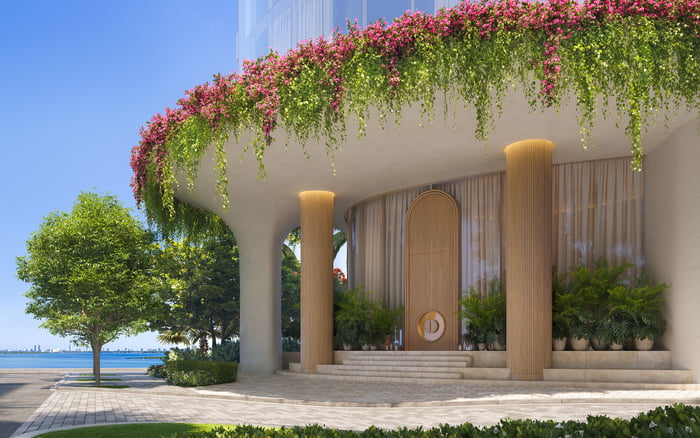
This context is why Baccarat Residences Brickell fits naturally into the current conversation. It sits within Brickell’s broader move toward branded, service-oriented living that feels globally familiar, particularly to buyers who compare Miami to other international markets.
Brickell is also increasingly framed as a startup and operator district, not only a banking corridor. The implication for residential demand is subtle but decisive. Founders and executives do not just want nightlife nearby. They want density that supports meetings, talent, and capital access, and then quiet at home. In this environment, strong performers tend to be residences that offer calm above the street, clear privacy controls, and a building experience that is managed with consistency.
Downtown’s renaissance is no longer a theory. It is visible in the scale of development that reshapes the skyline and, more importantly, the daily rhythm of the urban core. One of the most discussed projects is Waldorf Astoria Miami, planned as a 100-story, approximately 1,049-foot tower at 300 N Biscayne Blvd, often described as Florida’s tallest and Miami’s first “supertall.” It is marketed as including 360 condo residences and penthouses within a mixed hotel-and-residential concept.
Nearby, the branded-tower narrative continues with Aston Martin Residences at 300 Biscayne Boulevard Way, widely described as a roughly 70-story tower with 391 residences and substantial amenity programming. The shared theme is not simply height. It is the positioning of buildings that function like private clubs: concierge-forward, design-conscious, and calibrated for buyers who may treat Miami as one node in a multi-city life.
Downtown’s value proposition is strengthened when the neighborhood itself feels built-out, not just iconic tower-by-tower. Miami Worldcenter is described as a roughly $6B, 27-acre master-planned mixed-use district. That scale matters because luxury pricing tends to hold more reliably when the surroundings support daily living, retail, dining, and walkability, rather than relying on a single address to carry the entire premium.
Transit adds another layer of durability. Brightline has described MiamiCentral as including 816 residential units above the station, retail, and approximately 300,000 square feet of office space, supported by 5.5M+ annual foot traffic in and around the hub. For buyers who value optionality, transit-oriented living is a rare Miami advantage: the ability to access the city’s energy without being fully dictated by traffic.
For sophisticated buyers, Downtown also becomes an underwriting question about liquidity. Branded towers and mixed-use districts can concentrate demand, but they also concentrate competition for the best views, exposures, and floor plans. In a market with global interest, the most compelling lines often trade like scarce inventory.
As Brickell and Downtown densify, luxury demand continues to expand along the waterfront edges where views, air, and a calmer daily cadence can be easier to secure than in the tightest core blocks. Edgewater benefits from this logic. It offers Biscayne Bay as a constant, while remaining close enough to the business districts to stay connected.
A clear example of Edgewater’s scale is Aria Reserve, described as a twin 62-story development by Melo Group with Arquitectonica. Project progress has been reported on a tower-by-tower basis, which reflects how today’s large waterfront districts increasingly deliver in phases rather than as single, all-at-once events.
For the luxury buyer, the Edgewater proposition is often “distance without disconnect.” The neighborhood can feel more residential while still allowing quick access to Brickell and Downtown. That balance appeals to buyers who want a bayfront orientation and a home environment that supports recovery and quiet, not just proximity.
In that sense, Aria Reserve Miami represents the type of waterfront inventory that aligns with current preferences: Biscayne Bay as the daily horizon, with the urban core minutes away.
Edgewater also fits the broader shift in Miami’s luxury psychology. Buyers who once prioritized being in the middle of everything are increasingly willing to trade a few minutes of travel for more predictable calm, better sightlines, and the feeling of space. In a city where density is rising, that perception of breathing room can become a pricing feature.
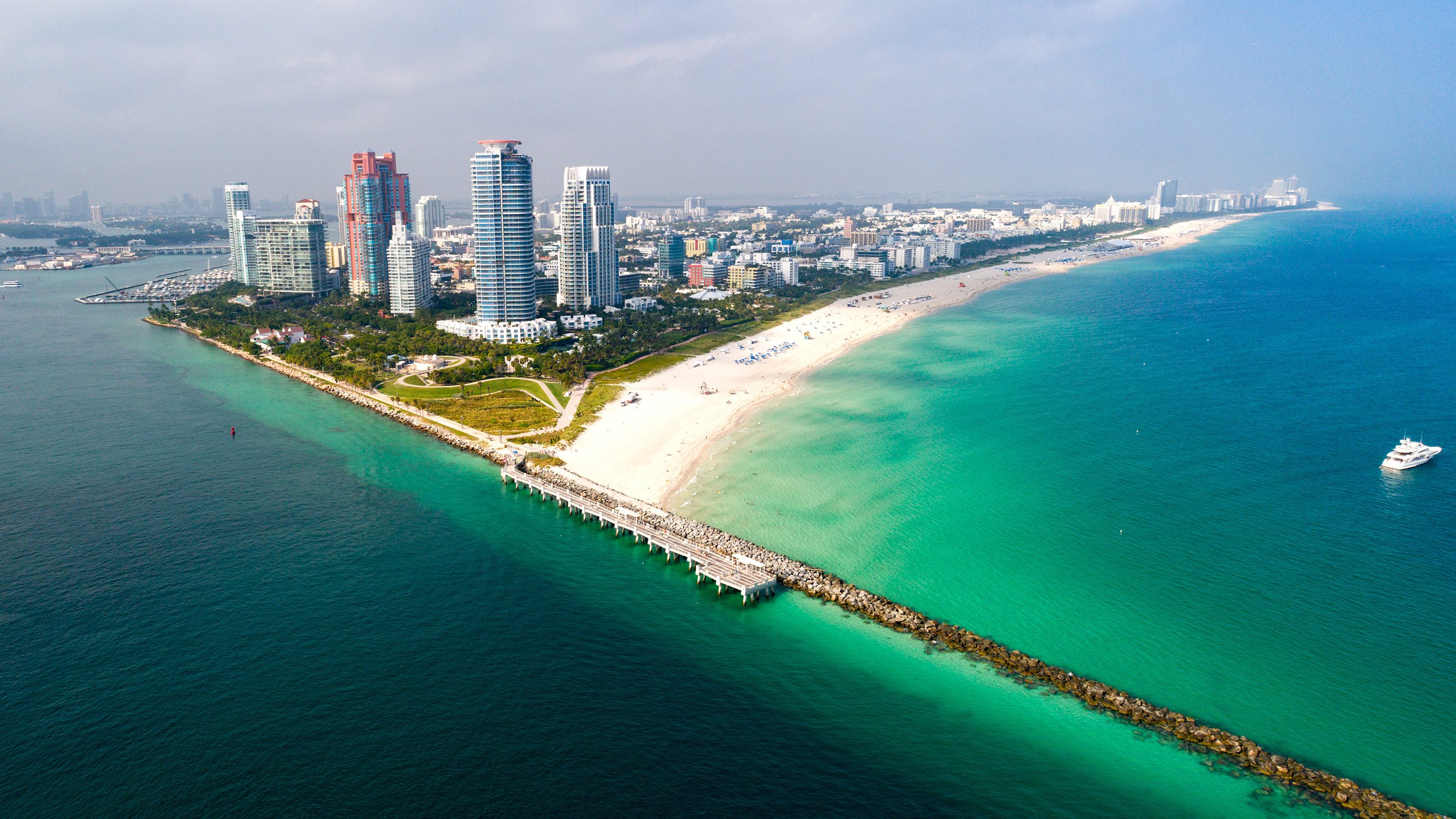
Miami Beach remains South Florida’s most recognizable lifestyle signature, but the luxury tier within it has become more segmented and more exacting. The buyer profile is diverse: global second-home purchasers, domestic executives seeking a pied-à-terre, and long-term residents who want full service without the anonymity of an oversized complex.
What ties these buyers together is a preference for buildings that feel curated. They want private arrivals, wellness that is usable in real life, and amenities designed for repeat use, not just photographs. This is why new, design-driven inventory continues to resonate alongside legacy prestige.
Within that context, Five Park Miami Beach speaks to a Miami Beach buyer who wants contemporary architecture and an urban-resort posture without losing access to the area’s cultural and dining scene. Similarly, Faena House Miami Beach remains a reference point for the high-design side of Miami Beach for buyers who view art, interiors, and service as part of the real estate decision.
At the same time, Miami Beach’s next chapter includes more private, ownership-oriented hospitality concepts. Shore Club Private Collections Miami Beach aligns with the broader shift toward residences that borrow the best elements of hotel living while preserving the discretion and control owners expect.
For buyers scanning the market online, it is also worth recognizing that “Miami Beach” is increasingly less a single neighborhood idea and more a shorthand for micro-markets with distinct noise levels, walkability patterns, and privacy profiles. In luxury, those differences are not superficial. They are pricing variables, and they can determine whether a home feels like an escape or a compromise.
Miami’s luxury market is not purely local. International capital remains a defining force, particularly in new construction and pre-construction. Miami Realtors has reported that global buyers purchased 52% of South Florida new construction, pre-construction, and condo conversion sales over the cited period, with buyers from 73 countries and Colombia and Mexico among the largest sources.
At the national level, the National Association of Realtors has reported foreign buyers purchased $56B in existing homes (78,100 properties) in the April 2024 to March 2025 window, with higher median prices and a higher all-cash share. Miami naturally over-indexes to this pattern because it matches several global priorities in one place: international connectivity, climate, and a luxury product that increasingly meets the expectations set by London, Dubai, and New York.
This global bid can support absorption and liquidity, but it also raises the bar. When buyers arrive with reference points from multiple markets, they tend to reward buildings that feel internationally legible: clear branding, consistent management, predictable service, and layouts that do not require explanation.
At the same time, affordability pressure is real and visible, and it affects the broader functioning of the city. Apartments.com rent-trend reporting has placed average Miami rent around $2.2K per month (with figures updating over time). Miami Realtors’ outlook has also highlighted how ownership has moved out of reach for many locals, pointing to steep long-run price growth, limited affordable inventory, and rising condo costs tied to new reserve and structural requirements.
Even for affluent buyers, these pressures matter. They can influence staffing, service quality, and the long-term resilience of neighborhoods. Luxury does not operate in isolation. A city’s ability to support its workforce, maintain its infrastructure, and deliver consistent services ultimately becomes part of what high-end buyers are paying for.
Luxury in Miami is no longer just about catching the right wave. It is about selecting the right kind of permanence.
First, buyers are underwriting district durability. Brickell’s office surge and institutional projects create a different risk profile than demand driven purely by lifestyle and tourism. When a headquarters tower is planned at the scale publicly disclosed for Citadel, the neighborhood’s commercial future becomes harder to dismiss as a passing trend.
Second, buyers are underwriting liquidity, especially in newer towers. Global demand can stabilize absorption, but it also intensifies competition for the best lines and layouts. The most liquid assets tend to be the ones that read as universally credible: strong branding, strong management, and a location that does not require a narrative to justify it.
Third, buyers are underwriting building governance. With condo costs rising and reserve requirements reshaping association budgets, due diligence has shifted from a formality to a central pillar of the decision. Sophisticated buyers increasingly ask not just, “Is this beautiful?” but “Is this sustainably operated?” Financial transparency, reserve posture, and the quality of decision-making at the association level are no longer background details.
Finally, buyers are underwriting mobility. Miami’s future transportation network is part of the long view, particularly for those who plan to live in the region rather than visit it. Miami-Dade’s SMART Plan Northeast Corridor is described as a 13.5-mile commuter rail segment from MiamiCentral to Aventura, adding five stations (including Wynwood, Design District, Little Haiti, North Miami Beach, and FIU North Campus). Timelines may evolve, but the directional intent is clear: stronger north-south connectivity and more value accruing to nodes that combine transit access with high-quality residential inventory.
Put simply, the most compelling purchases in this cycle tend to share one attribute: they make Miami feel easier. They reduce friction, compress time, and increase privacy, while still capturing the upside of a city whose profile is accelerating.
Is Miami’s luxury market still driven by second-home buyers?
Second-home demand remains important, but the mix has broadened. Finance and tech relocations have contributed to more full-time and semi-full-time residency patterns.
Why does Brickell’s office market matter to condo values?
When Class A office demand pushes rents higher, it tends to increase the value of nearby housing that delivers short commutes, privacy, and a managed building experience.
What is changing most in condo ownership costs?
Public market outlooks have noted rising condo costs tied to reserve and structural requirements, which makes building financial health and governance more central to due diligence.
Are international buyers still a major factor in new construction?
Yes. Miami Realtors has reported global buyers account for a large share of new construction and pre-construction sales, supporting liquidity in many luxury towers.
For tailored guidance on South Florida’s premier residences, connect with MILLION Luxury.
If branded residences are on your mind — as a home or as an allocation — we would be glad to share what we are seeing, privately.
Begin a quiet conversation