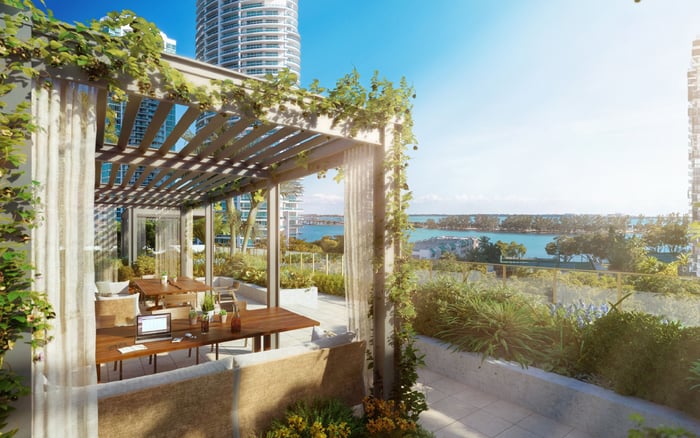
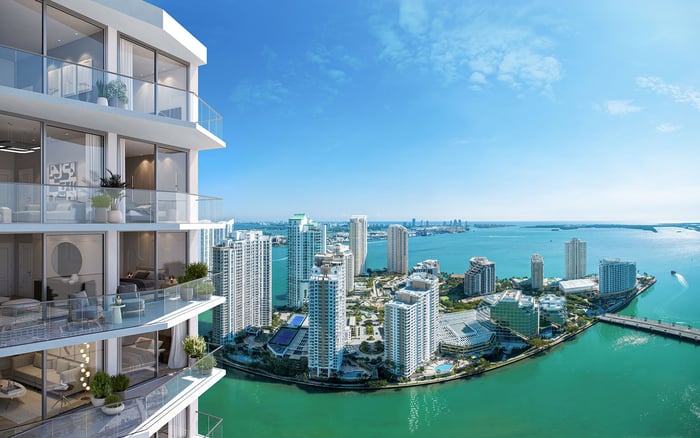
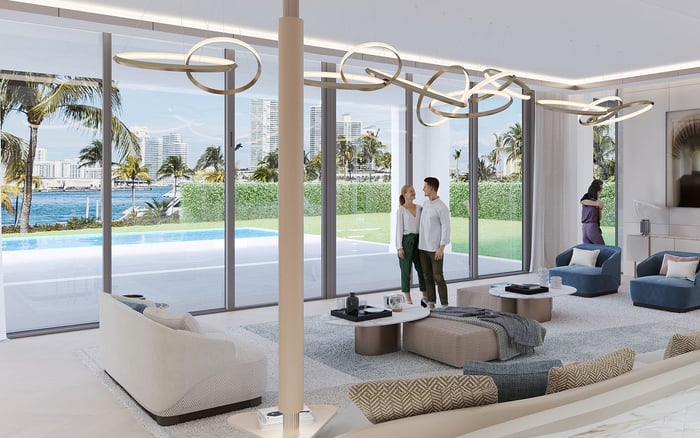
A weaker U.S. dollar can make South Florida pricing feel materially different to overseas capital, but “bargain” is more nuanced than the headline FX rate. In a market where international buyers represent an outsized share of dollar volume and new-development absorption, timing, carrying costs, and exit frictions matter as much as the entry price.
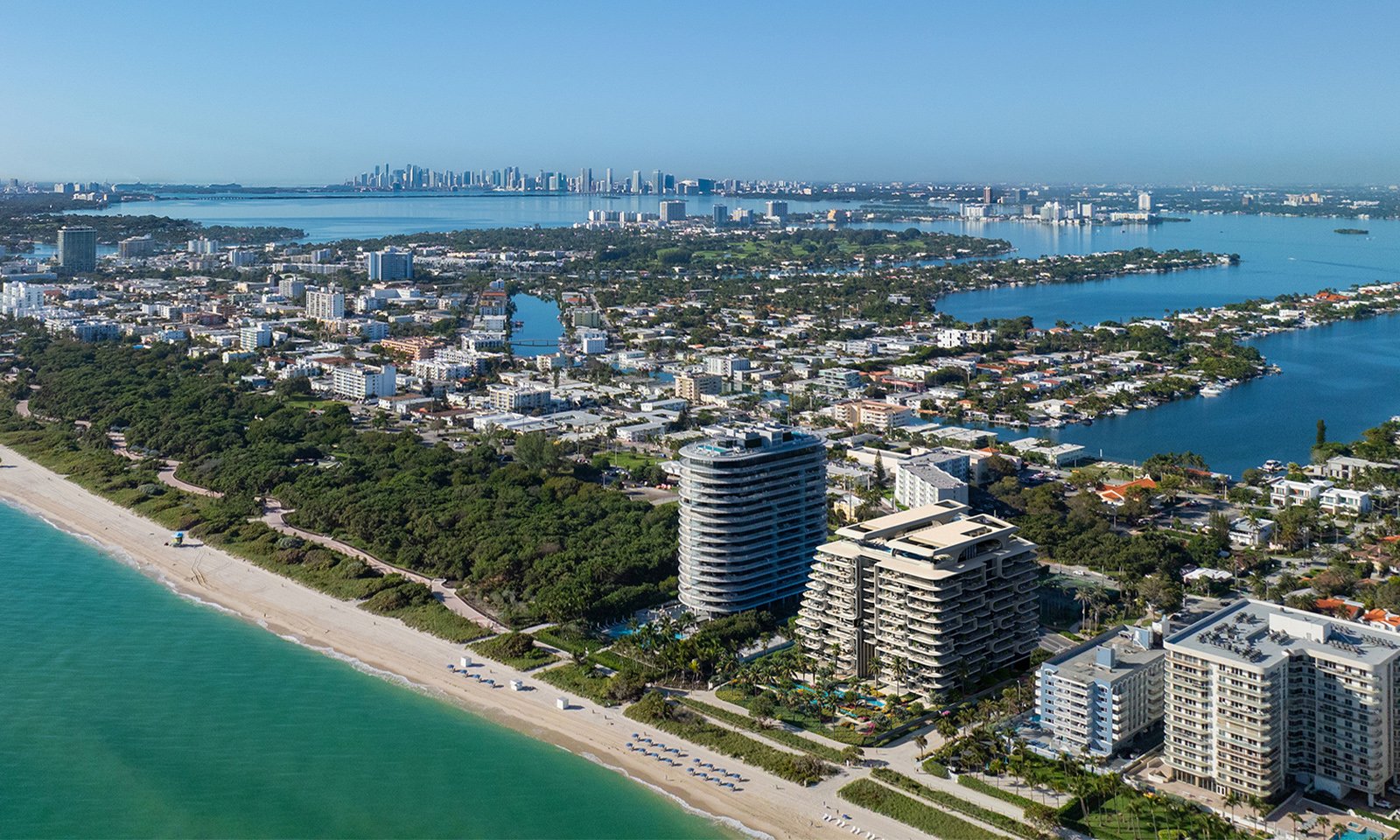
That dynamic helps explain why foreign capital remains structurally relevant here. International buyers purchased $4.4 billion of South Florida residential property in 2025, up from $3.1 billion in 2024. By dollar volume, overseas buyers represent about 15% of South Florida residential sales, versus roughly 2% nationally. This is not a marginal buyer pool-it is a demand segment with the power to influence absorption, negotiating leverage, and the speed at which certain buildings sell through.
Even so, “bargain” is best treated as a portfolio decision, not a slogan. FX can improve entry pricing, but the true cost of ownership is shaped by predictable local expenses and less predictable regulatory or market shifts. If you win on currency and lose on carrying costs, you have not, in practice, bought at a discount.
South Florida is unusually international and unusually condo-forward, which makes currency sensitivity more visible than in many U.S. markets. Many global buyers focus on new construction, pre-construction, and condo conversions. Over a 22-month period through November 2025, international buyers represented 52% of sales in that new-development segment across 73 countries.
That figure matters for two reasons. First, when FX turns favorable, the effect can surface quickly in reservations and contract volume. Second, when FX turns unfavorable, the friction often appears later-during the long runway between contract and closing, when cash calls are staged and timing is fixed.
The foreign-buyer mix is also concentrated. Recent international closed sales have been led by Colombia (34%) and Argentina (27%), with meaningful activity from Mexico, Brazil, and Canada as well. Median purchase prices vary by origin, with Mexico showing the highest median purchase price at $934,000, followed by Brazil at $777,400, Colombia at $583,000, and Canada at $500,000.
In a resale purchase, you typically make one large currency decision close to closing: convert funds, wire, complete. Pre-construction is different. Deposits are often paid in stages over time, and the final closing can occur years after the initial commitment. Each deposit date becomes its own FX moment.
For buyers whose net worth is held outside the United States, that sequence can amplify currency risk. A dollar that stays weak through the full timeline can be a gift. A dollar that strengthens between contract and closing can quietly erase the perceived “discount,” even if the property performs.
This is where sophisticated buyers consider hedging tools such as forward contracts to lock an exchange rate for a future closing. The tradeoff is that hedging can add costs, and its attractiveness depends on rate differentials. In practice, the goal is not to “beat” the market-it is to reduce the chance that a favorable purchase turns into an unfavorable settlement.
In neighborhoods where pre-construction is central to the luxury pipeline, this matters. Brickell, for example, continues to attract global buyers who value the convenience of vertical living and the liquidity of trophy towers. It is one reason projects such as 888 Brickell by Dolce & Gabbana and The Residences at 1428 Brickell are often evaluated not only as homes, but as dollar-denominated holdings with lifestyle utility.
South Florida’s international market is frequently described as cash-heavy, and the numbers support that. About 51% of international residential transactions are all-cash locally, compared with 47% nationally.
Cash, however, is not the same as dollar cash. If your liquidity is in pesos, reais, euros, or Canadian dollars, becoming “cash” at closing still requires conversion. A buyer who plans deliberately may keep flexibility, ladder conversions over time, or align timing to deposit schedules. A buyer who waits until the last possible day may be taking a larger FX bet than intended.
Mortgage strategy introduces its own calculus, especially for buyers who can borrow in dollars while keeping assets in their home currency. Looking ahead, market expectations cited in local outlook commentary include projections for 30-year fixed rates around 5.8% by late 2026. Whether that becomes reality or not, the direction of rates matters because it influences domestic competition for the same inventory. When U.S. borrowing costs fall, the FX advantage can face a new headwind: more local bidders.
For luxury buyers focused on Miami Beach, Bal Harbour, Sunny Isles, or Surfside, the building is part of the asset. That means you are buying into an operating cost structure as much as a view corridor.
HOA fees have been rising, and Miami is cited among the markets with some of the most expensive HOA fees relative to home prices. At the same time, Florida’s post-Surfside condo safety reforms are widely associated with higher ownership costs tied to inspections and reserve funding. Even when those expenses are prudent, they remain recurring cash outflows that compound over time.
Insurance is the other persistent line item. Florida homeowners insurance costs are elevated versus many states, and buyers comparing “discounted” entry pricing should model the ongoing premium environment as carefully as they model FX.
This is where the best buildings differentiate. A boutique oceanfront address may feel expensive on a per-square-foot basis, yet the ownership experience can be more predictable when governance, reserves, and maintenance standards are aligned with long-term stewardship. In Miami Beach, for instance, buyers weighing lifestyle and building quality often compare modern, amenity-forward options such as Five Park Miami Beach with more established luxury stock.
Currency is a catalyst, not the full story. Foreign buyers’ top stated motivations cluster around security, profitability, and location. Reported splits include 35% investment security, 25% profitable investment, and 33% location.
That mix is distinctly South Florida. The region offers a second-home lifestyle with year-round use, plus an ownership framework many international families view as straightforward relative to alternatives. It also offers optionality. A residence can serve as a personal base, a multi-generational asset, or part of a broader U.S. footprint.
The way buyers shop also signals confidence in the destination. In 2025, 11% of foreign buyers purchased without visiting Florida, while 25% bought after one visit and 29% after two visits. That behavior tends to concentrate in product types where the buyer can underwrite the experience with brand cues, reputation, and standardized building delivery.
Entry pricing is only half the equation. For foreign owners, exit mechanics deserve attention early, especially if the property may be sold within a shorter horizon. FIRPTA generally requires withholding on dispositions of U.S. real property interests by foreign persons, commonly described as 15% withholding unless an exception or reduction applies.
Withholding is not always the same as final tax liability, but it can affect liquidity at closing and should be planned for. In luxury, where proceeds may be earmarked for another acquisition, the ability to model timing and withholding matters.
In practice, the cleanest “bargain” is one where FX improves your entry basis, carrying costs are right-sized for your usage, and your eventual sale is structured with the same care as your purchase.
A disciplined overseas buyer tends to break the decision into four questions.
First: what is the FX-driven discount in your home currency, and is it large enough to matter after fees? Second: how long do you expect to hold, and how sensitive are you to annual costs such as HOA and insurance? Third: if you are buying pre-construction, what is your plan for staged deposits, and do you need to hedge any portion? Fourth: what does your exit look like, including withholding mechanics and timing?
Location and product selection remain decisive. A well-chosen waterfront or boutique submarket can deliver intangible value that makes the ownership cost feel rational. In Surfside, for example, the appeal of an intimate, design-forward building such as Arte Surfside often lies in privacy and permanence-qualities that do not fluctuate with currency.
For buyers who prefer a calmer, village-like rhythm without sacrificing proximity to the core, Bay Harbor Islands has become a considered alternative. Wellness-oriented positioning and new-build inventory can be part of the draw, and residences such as The Well Bay Harbor Islands speak to that broader shift toward health, walkability, and daily ease.
Does a weaker U.S. dollar automatically mean South Florida homes are cheaper for me? It can increase your purchasing power in home-currency terms, but total cost depends on timing, fees, and ongoing expenses.
How important are foreign buyers in South Florida compared with the rest of the U.S.? They represent about 15% of local residential dollar volume versus about 2% nationally, which can influence pricing pressure.
Is pre-construction riskier for international buyers when FX is volatile? Often yes, because deposits and closing happen across multiple dates, creating several FX decision points.
Can I hedge my currency exposure on a future closing? Tools like forward contracts can lock an exchange rate, though hedging adds costs and depends on rate differentials.
Are international buyers mostly paying cash in South Florida? About 51% of international transactions are all-cash locally, but currency conversion can still be the main exposure.
What ongoing costs most commonly surprise overseas condo buyers? Rising HOA fees and elevated insurance costs can materially change the annual budget even if the purchase feels discounted.
How have condo safety changes affected ownership costs in Florida? Enhanced inspection and reserve-funding requirements have been widely associated with higher condo ownership costs.
What is FIRPTA and why does it matter on resale? It generally involves withholding on sales by foreign persons, commonly described as 15% unless an exception applies.
Do buyers really purchase without visiting Florida? Yes, a reported 11% did so in 2025, with many others buying after only one or two visits.
If mortgage rates fall, does that change the “bargain” calculation? Potentially, because lower rates can increase domestic demand, tightening competition even if FX is favorable.
For a confidential assessment and a building-by-building shortlist, connect with MILLION Luxury.
If branded residences are on your mind — as a home or as an allocation — we would be glad to share what we are seeing, privately.
Begin a quiet conversation