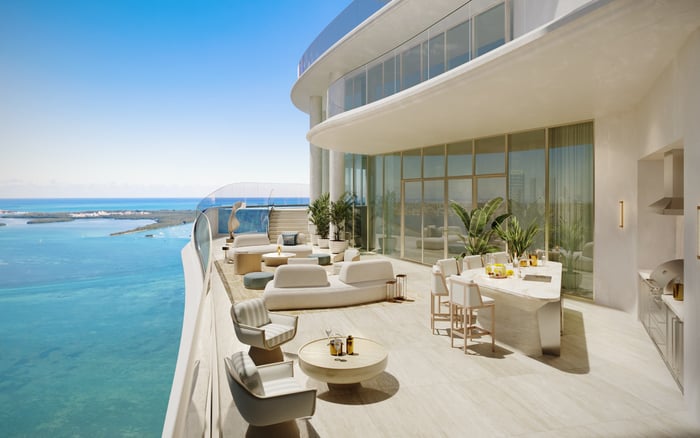
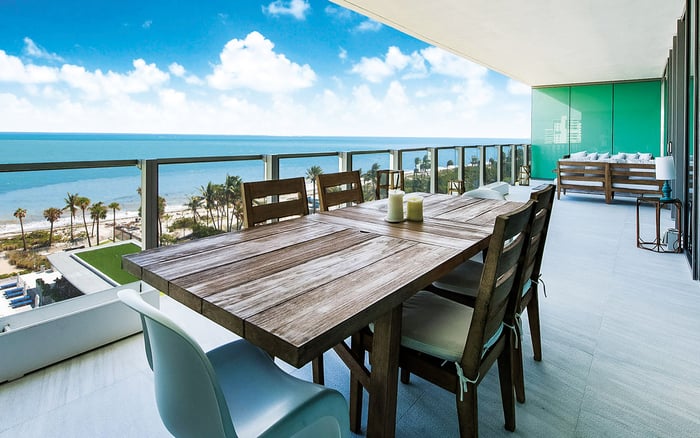
A discreet buyer’s guide to comparing St. Regis® Residences Sunny Isles and Oceana Key Biscayne through the lens of privacy culture, service restraint, security systems, guest management, and long-term residential fit.
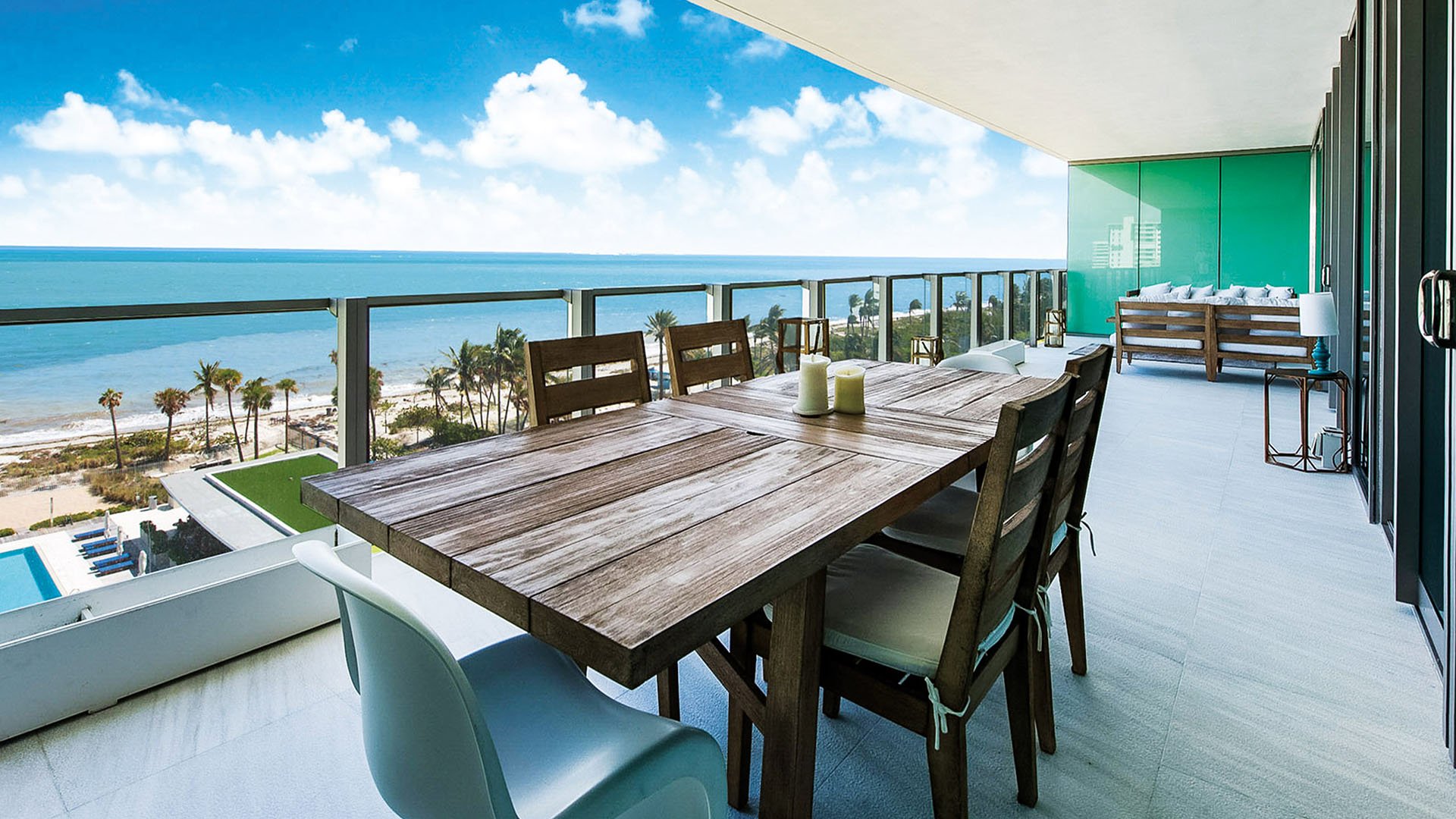
For buyers comparing St. Regis® Residences Sunny Isles with Oceana Key Biscayne, the decision is not simply about architecture, beach proximity, or the prestige of a name. It is a question of temperament. Some owners want a residence that feels orchestrated, staffed, and polished at every touchpoint. Others want a coastal home that recedes into a quieter island rhythm, where service is present but never theatrical.
That distinction matters for families, executives, public figures, and second-home owners who measure luxury by control. The most valuable residence is not always the one with the most visible amenity program. It is often the one where arrivals are calm, guests are screened consistently, staff interactions are discreet, and the building’s social temperature matches the owner’s appetite for privacy.
Sunny Isles naturally enters the conversation through branded hospitality and oceanfront formality. Oceana Key Biscayne, by contrast, is often considered through island composure, residential calm, and a more insulated daily pattern. The comparison should begin with lifestyle exposure, then move into security technology and guest screening.
Understated service is not the absence of service. It is service that anticipates needs without creating a stage. In a luxury condominium, that means staff know when to engage, when to disappear, and how to protect the resident experience from unnecessary attention. A lobby can be beautiful and still feel too performative for a buyer who prefers anonymity.
At St. Regis® Residences Sunny Isles, buyers should evaluate how branded expectations translate into daily residential life. A globally recognized name can bring consistency, polish, and an elevated standard of hospitality. It can also create a more defined arrival sequence, more guest curiosity, and a stronger sense of destination. That may appeal to owners who appreciate ceremonial service, but it may feel overly visible to those who prefer minimal social signaling.
At Oceana Key Biscayne, the privacy conversation is more closely tied to the island setting and residential restraint. Key Biscayne has a different rhythm from mainland-facing luxury corridors, and buyers often register that difference immediately. The question is whether the atmosphere feels quietly controlled or simply less formal. For some, that softer profile is the entire advantage.
In buyer shorthand, this is often a Sunny Isles versus Key Biscayne decision, but the sharper question is personal: do you want service that feels curated and branded, or service that feels embedded and almost invisible?
A privacy-minded buyer should study the approach to the property as carefully as the residence itself. The driveway, porte cochere, valet sequence, lobby threshold, elevator bank, package area, and service corridors all shape the real privacy experience. A building can have exceptional residences and still feel exposed if guests, vendors, residents, and staff converge in the same places at the same times.
Ask how arrivals are staged. Are visitors held at a clear checkpoint, or do they reach the lobby before meaningful verification occurs? Are food deliveries, contractors, domestic staff, chauffeurs, and personal guests routed through separate procedures? Does the building treat discretion as a security issue, a service issue, or both?
Oceanfront living adds another layer. Oceanfront access is a privilege, but it can also introduce more movement at the property edge. Buyers should understand how beach access, pool entries, cabana areas, and outdoor amenities are monitored. The most private buildings make the transition between public-facing coastal life and private residential space feel seamless, secure, and unforced.
Security technology should never be judged by hardware alone. Cameras, access credentials, elevator controls, and visitor management systems are tools. Their value depends on how consistently the building applies them.
For St. Regis® Residences Sunny Isles, buyers should focus on whether a polished hospitality culture is matched by firm residential control. Branded service can be gracious, but privacy-minded owners should confirm that graciousness does not become looseness at the threshold. The best scenario is a building where warmth and verification coexist, so guests feel welcomed but never casually admitted.
For Oceana Key Biscayne, the question may be slightly different. A quieter residential setting can create a stronger sense of trust, but trust should not replace structure. Buyers should still review how vendors are logged, how recurring guests are approved, how temporary access is revoked, and how after-hours arrivals are handled.
The most important questions are practical. Who sees the guest list? How is visitor approval documented? Can residents create limited access windows? Are staff trained to avoid saying resident names aloud in public areas? Are elevators programmed to reduce unnecessary floor access? Does the building maintain a clear distinction between social convenience and residential security?
Guest screening is where privacy either becomes real or remains theoretical. A building may have elegant uniforms, a serene lobby, and a refined design language, yet still expose owners through casual guest handling. The issue is not whether friends can visit. The issue is whether every arrival is intentional.
Seasonal owners should be especially attentive. When a residence is used periodically, access patterns can become more complex. Assistants, family members, housekeepers, drivers, stylists, chefs, wellness providers, and maintenance personnel may all need entry at different times. A strong building makes those permissions easy to manage without making them informal.
Family offices may want written clarity on approval hierarchies. Who can authorize a guest? Can permissions be delegated? Are minors handled differently? Can a resident require call-ahead confirmation for every visitor? How are unapproved arrivals handled if they claim familiarity with the owner?
The strongest buildings combine tact with refusal. Staff should be able to say no without drama, delay without embarrassment, and protect a resident’s privacy without signaling that anything unusual is happening.
Privacy is not only about locks and cameras. It is also about the social field around the residence. Some buildings attract owners who enjoy being seen, hosting, and participating in a more visible amenity culture. Others attract owners who prefer routine, consistency, and low-key encounters.
St. Regis® Residences Sunny Isles may suit buyers who want an elevated environment with a recognizable hospitality framework and a more formal sense of arrival. That does not mean it is inherently less private. It means the buyer should examine whether the building’s presence, brand identity, and amenity rhythm align with a desire for understatement.
Oceana Key Biscayne may suit buyers who value a more residential island cadence. The appeal is not necessarily seclusion in the absolute sense, but a calmer daily frequency. For a buyer seeking an exclusive-area feeling, the distinction may be meaningful: fewer moments that feel like an entrance, fewer cues that invite attention, and a greater sense that home begins before the lobby doors.
A disciplined comparison should be experiential. Visit at different times of day. Observe how staff greet unfamiliar faces. Watch how delivery traffic is handled. Note whether residents linger socially in common areas or move quietly through them. Listen for names spoken aloud. Pay attention to whether the lobby feels like a living room, a hotel lounge, or a controlled residential threshold.
Then test the building’s answers. Ask for a walk-through of guest arrival procedures. Request examples of how temporary vendors are handled. Discuss privacy expectations with management before assuming that luxury automatically means discretion. A polished building and a private building can be the same thing, but only when the culture supports it.
The right answer is personal. If you want branded elegance with a high-touch service posture, St. Regis® Residences Sunny Isles deserves close consideration. If you want a quieter island context where the residence feels less performative, Oceana Key Biscayne may be the more natural fit. Either way, the best purchase is the one where privacy is not treated as an amenity, but as a daily operating standard.
Which building is better for buyers who dislike social visibility? Oceana Key Biscayne may feel more naturally low-key, while St. Regis® Residences Sunny Isles should be evaluated for how its branded service is managed day to day.
Does branded service reduce privacy? Not necessarily. It depends on whether the building pairs hospitality polish with firm access control and discreet staff training.
What should buyers ask about guest screening? Ask how visitors are approved, logged, routed, and denied, especially for recurring vendors and after-hours arrivals.
Is oceanfront living less private? Oceanfront living can be highly private when beach access, pool areas, and amenity edges are controlled with consistent procedures.
Why does the arrival sequence matter? The driveway, valet, lobby, and elevator path determine how exposed residents and guests feel before reaching the home.
Should seasonal owners use stricter access rules? Yes. Seasonal use often involves more delegated access, so permissions should be specific, revocable, and documented.
What is the main Sunny Isles advantage? Sunny Isles can appeal to buyers who want dramatic coastal living, branded polish, and a more formal luxury environment.
What is the main Key Biscayne advantage? Key Biscayne can appeal to buyers who prefer island calm, residential rhythm, and a more understated sense of place.
Can security technology replace staff judgment? No. Technology supports privacy, but staff protocol and discretion determine whether it works in real life.
How should a buyer make the final choice? Compare the lived experience, not just the name, and choose the building whose service culture matches your privacy threshold.
When you're ready to tour or underwrite the options, connect with MILLION.
If branded residences are on your mind — as a home or as an allocation — we would be glad to share what we are seeing, privately.
Begin a quiet conversation