A buyer-focused look at the practical realities of commuting from Oceana Key Biscayne to Brickell, from route timing and tolls to parking, weather risk, and lifestyle trade-offs.
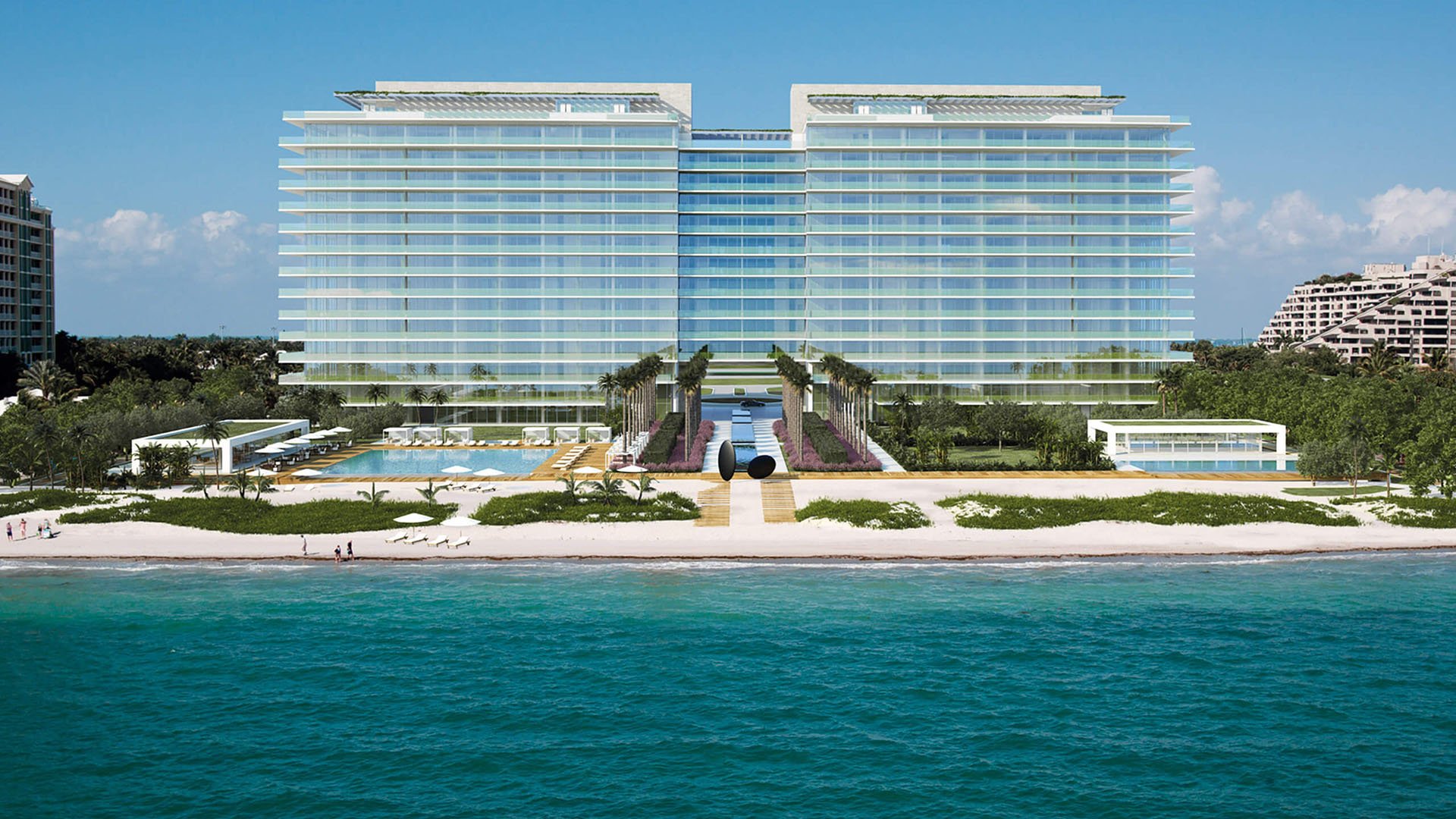
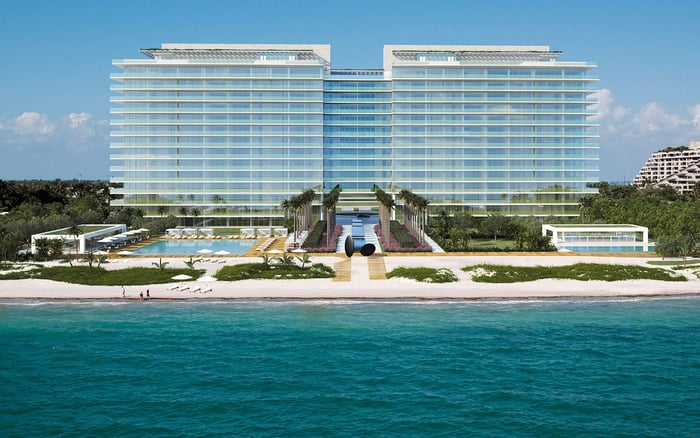
For buyers considering Oceana Key Biscayne, the commute to Miami's financial district is less about mileage than predictability. The address at 1 Oceana Drive places residents on a barrier island southeast of downtown, with Brickell generally about 7 to 9 miles away depending on the exact office tower, valet entrance, or garage.
On paper, that sounds comfortably manageable for an executive household. In practice, the route is defined by one crucial fact: Key Biscayne depends on the Rickenbacker Causeway as its primary road link to the mainland. That single connection shapes everything from departure strategy to monthly carrying costs.
For MILLION Luxury readers, this is the most useful lens through which to evaluate the property. The question is not whether Brickell is reachable. It is. The more relevant question is whether the island rhythm aligns with the cadence of your workweek, your tolerance for variability, and the level of privacy you want when the business day ends.
A typical drive from Oceana Key Biscayne follows the Rickenbacker Causeway onto the mainland, then continues toward Brickell by way of US-1 and South Bayshore Drive before shifting onto local streets. It is a straightforward route in geographic terms, with no complex navigation for anyone making the trip regularly.
That clarity is part of the appeal. Residents are not dealing with a sprawling suburban commute or an unpredictable chain of highways. Instead, they use a relatively direct corridor into one of Miami's most important business districts, where towers such as Baccarat Residences Brickell and The Residences at 1428 Brickell reinforce Brickell's identity as both a workplace and a luxury residential enclave.
Yet direct does not always mean frictionless. Because there is no second causeway for routine car commuting, any slowdown on the Rickenbacker has an outsize effect. A minor incident, lane disruption, or concentrated morning surge can quickly reset the timetable.
In light traffic, the drive can take roughly 15 to 20 minutes. For anyone leaving after the morning rush or returning during a quieter window, that travel time supports an elegant live-work equation. It is one reason Key Biscayne remains compelling for executives who want a residential setting that feels separate from the city without being truly remote.
Weekday peaks tell a different story. During common rush periods, the same drive can stretch to about 30 to 45 minutes or longer. That range matters because it changes the psychological quality of the commute. A trip that feels effortless at 10:15 a.m. can become materially less predictable at 8:00 a.m. or during the evening return.
For some households, the answer is schedule design rather than relocation. A principal with flexible arrival times, hybrid work patterns, or a driver can absorb the difference more comfortably than someone expected at a desk at the same time each morning. For others, especially buyers comparing the island with a closer in-town option such as Una Residences Brickell or 2200 Brickell, the value of proximity may outweigh the serenity of a barrier-island address.
Every Key Biscayne commuter eventually reaches the same conclusion: the route is only as reliable as the Rickenbacker Causeway on a given day. That dependence is the defining logistical consideration for residents heading into Brickell.
The causeway is efficient when conditions cooperate. It is less forgiving when they do not. Because there is no routine alternate road connection, backups can be unusually consequential. This is not simply an inconvenience issue. It affects calendar planning, school drop-offs, airport transfers, household staffing, and the confidence with which one can book a breakfast meeting in Brickell.
That does not make Oceana Key Biscayne less desirable. It simply means the residence suits buyers who understand the relationship between exclusivity and access. In South Florida, many of the most prized residential settings require some trade-off, whether that is drawbridge timing, beach traffic, ferry dependence, or causeway exposure. Key Biscayne's version of that trade is a quieter waterfront lifestyle connected to the urban core by a single main corridor.
Driving costs are part of the equation. The causeway includes a toll, and the current working assumption places the charge at about $2.50 each way. For a five-day office schedule, that is roughly $5 per day before fuel, maintenance, and the far more noticeable Brickell parking bill.
Parking in Brickell can become the larger recurring line item. Commercial daily parking often falls in the range of about $15 to $30, while monthly permits can run roughly $200 to $400. For a senior executive who commutes several days a week, the annualized cost is not prohibitive at this market level, but it is still worth treating as part of the ownership math rather than an afterthought.
This is especially relevant for buyers evaluating a home in Oceana Key Biscayne against a residence embedded within Brickell itself, such as St. Regis® Residences Brickell. The island offers calm, separation, and a refined coastal cadence. Brickell offers immediacy. The more often one must be in the financial district, the more those daily logistics become a quality-of-life question rather than simply a transportation question.
Public transit options from Key Biscayne are limited compared with many mainland neighborhoods, and there is no direct Metrorail connection for a straightforward Brickell-bound journey. For most residents commuting to the financial district, the car remains the practical default.
That is an important distinction for buyers relocating from cities where premium living and rail access often go hand in hand. Oceana Key Biscayne is a residential retreat, not a transit-oriented address. Its appeal lies in discretion, waterfront atmosphere, and separation from office intensity. Commuting from there is entirely workable, but it is generally a driver-dependent lifestyle.
The exposed nature of the causeway means weather can materially affect the trip. Heavy rain, strong wind, and storm-related disruptions can all worsen travel times. During severe weather events or hurricane threats, lane restrictions or closures can sharply complicate island access.
For the seasoned South Florida buyer, this is not alarming so much as instructive. It suggests the need for practical planning: preserving schedule flexibility during summer weather patterns, maintaining awareness of storm-season contingencies, and thinking ahead about when the office truly requires physical presence.
Reverse commuting within Key Biscayne is generally easier than heading north toward Brickell during peak inbound periods, which reinforces an obvious but important point. This address is best suited to someone whose priority is returning to tranquility after work, not someone who wants the simplest possible morning arrival every day.
Oceana Key Biscayne is primarily a luxury residential development rather than a mixed-use employment hub, and that distinction clarifies the buyer profile. Residents are choosing a quieter, more insulated waterfront environment while retaining workable access to Brickell offices.
That trade-off is central to why Key Biscayne continues to resonate with a certain kind of purchaser. Some buyers want to live inside the energy of the city. Others prefer to visit it, conduct business there, and then leave it behind by early evening. Oceana Key Biscayne speaks to the latter instinct with unusual precision.
For those households, the commute is not a flaw to overcome. It is part of a larger composition: island privacy, a more relaxed residential setting, and a credible route into Miami's commercial center when needed. The distance is short. The timing requires intelligence. The lifestyle reward is a sense of removal that very few addresses this close to Brickell can offer.
How far is Oceana Key Biscayne from Brickell? The drive generally covers about 7 to 9 miles, depending on the specific destination within Miami's financial district.
How long does the commute take in light traffic? In favorable conditions, many drivers can make the trip in roughly 15 to 20 minutes.
What is a more realistic rush-hour expectation? During typical weekday peaks, the same drive can take about 30 to 45 minutes or longer.
What route do most drivers use? The standard route uses the Rickenbacker Causeway, then continues toward Brickell via US-1, South Bayshore Drive, and local streets.
Why is the Rickenbacker Causeway so important? It is Key Biscayne's primary road link to the mainland, so congestion there strongly affects commute reliability.
Is there an alternate causeway for daily car commuting? No. There is no second routine causeway option for standard car commuting from Key Biscayne.
Are tolls part of the daily cost? Yes. Using the current working assumption, the causeway toll is about $2.50 one way for drivers.
How much can Brickell parking add? Daily commercial parking often runs about $15 to $30, while monthly permits may fall around $200 to $400.
Can residents rely on public transit to reach Brickell easily? Not usually. Transit options are limited, and there is no direct Metrorail connection from Key Biscayne.
Who is this commute best suited for? It tends to suit buyers who value an oceanfront residential setting and can tolerate some timing variability in exchange for island privacy.
If you'd like a private walkthrough and a curated shortlist, connect with MILLION Luxury.
If branded residences are on your mind — as a home or as an allocation — we would be glad to share what we are seeing, privately.
Begin a quiet conversation