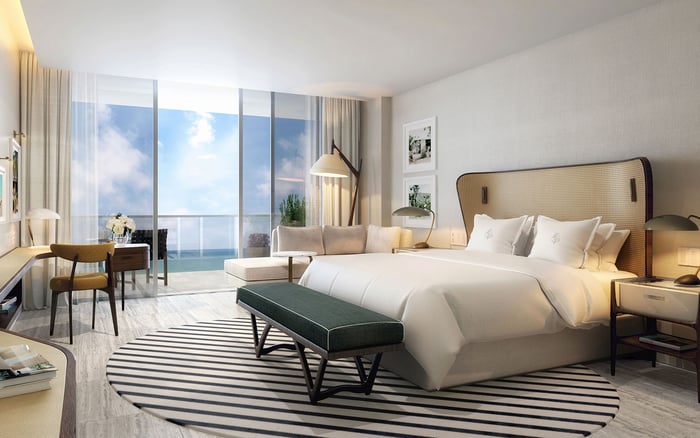
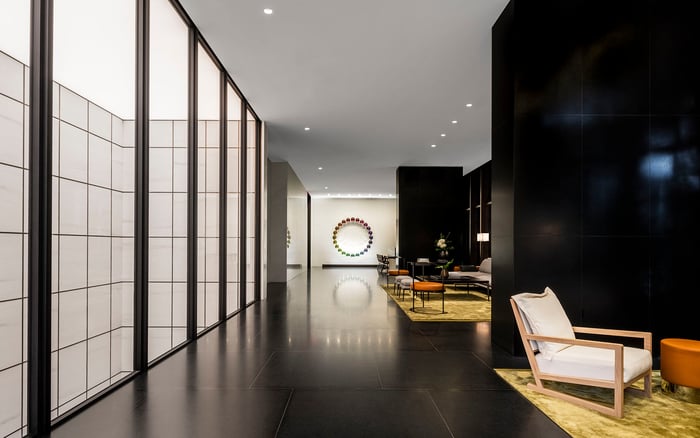
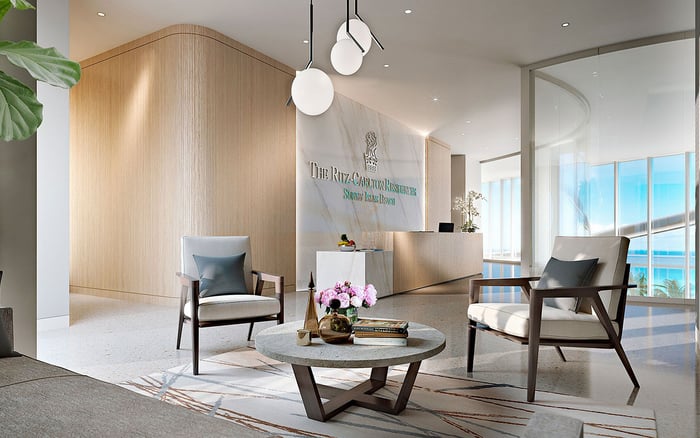
A discreet buyer’s comparison of South of Fifth and Surfside, focused on the lived experience behind the address: how often one wants to be seen, how quiet the beach should feel, and what kind of condominium culture best supports a long-term Miami lifestyle.
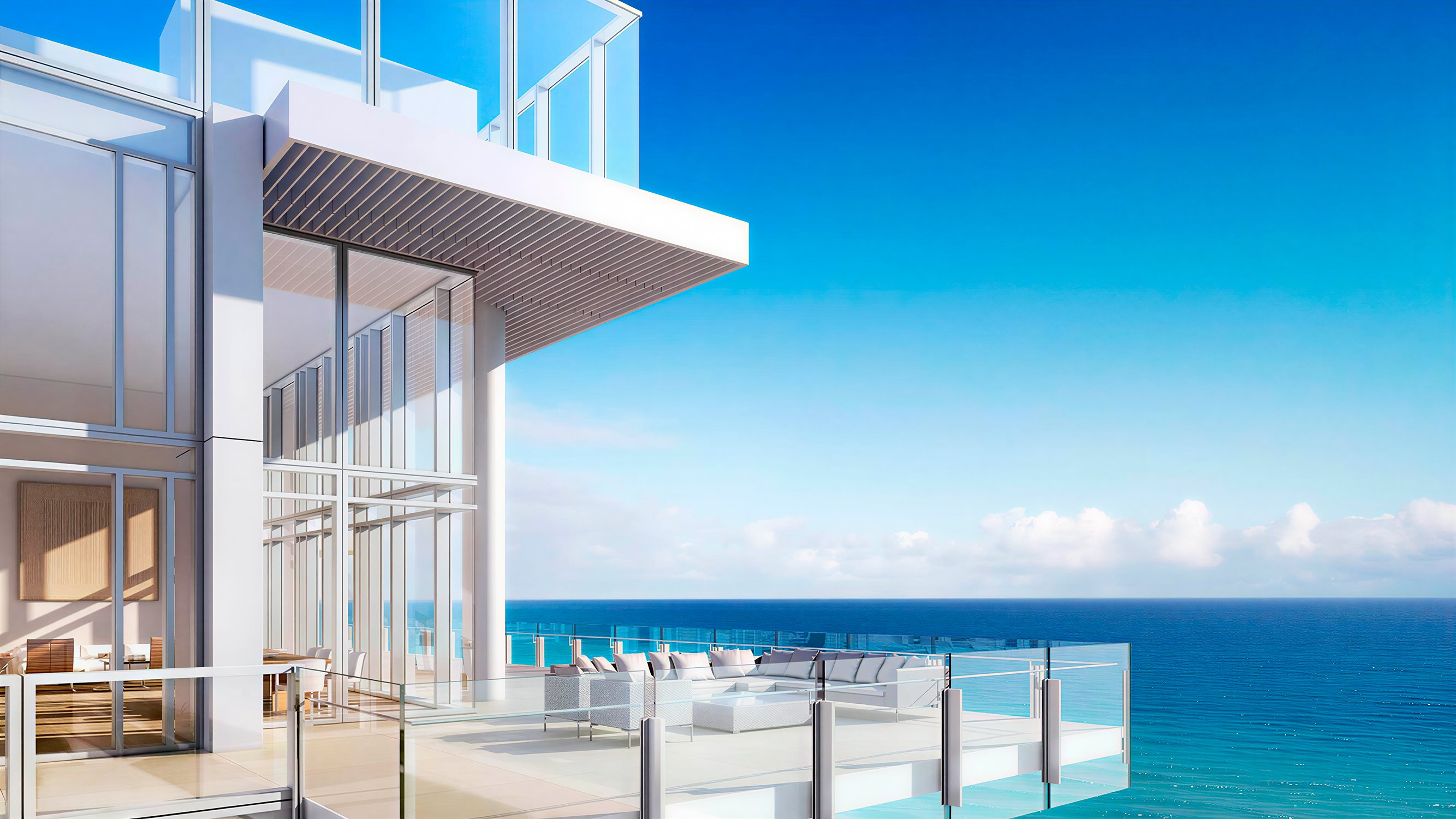
South of Fifth and Surfside occupy the same broader coastal imagination, but they answer to different instincts. Both can serve the buyer who wants ocean proximity, architectural pedigree, and a highly considered residential environment. The distinction is not simply north versus south, or nightlife versus quiet. It is more nuanced: how much social texture one wants at the door, how visible daily life should feel, and whether a building’s culture is shaped by public energy or residential restraint.
For the South Florida luxury buyer, this comparison is often less about square footage than personal choreography. Some owners want a home that places dinner, friends, beach walks, and a strong lobby presence within easy reach. Others want a quieter coastal base where the building itself becomes the principal social arena, and the neighborhood recedes into a calmer background.
In South of Fifth, buildings such as Apogee South Beach and Continuum on South Beach help illustrate the district’s particular blend of prestige and immediacy. In Surfside, residences such as Arte Surfside, Fendi Château Residences Surfside, and The Surf Club Four Seasons Surfside point to a different expression of luxury, one that often feels more hushed, inward, and deliberate.
Social density is not the same as crowding. In luxury real estate, it is the sum of daily encounters: valet arrivals, elevator greetings, dinner plans made by chance, familiar faces on the beach path, and the subtle awareness that a neighborhood has a social pulse beyond the private residence.
South of Fifth tends to attract buyers who appreciate that pulse. Its appeal lies in the idea that a private condominium can remain connected to an active surrounding life. The buyer who chooses this environment may value the ability to move from residence to restaurant, from beach to evening plans, without making the day feel logistically heavy. The neighborhood’s culture rewards those who enjoy proximity, visibility, and a polished urban rhythm.
Surfside, by contrast, often appeals to buyers who want the day to feel edited. The social experience is not absent, but it is more selective. Encounters may be more likely to happen within the building, at a residential amenity, or along a quieter beach routine. The result is a softer cadence, where privacy is not only physical but social. For owners who split time between multiple homes, this can be a meaningful advantage. The residence becomes a retreat rather than a stage.
Beach access is only one part of the equation. The more important question is how the beach feels once one is there. Some buyers are comfortable with a shoreline that carries movement, energy, and a broader sense of Miami Beach theater. Others want the ocean to feel closer to a private ritual, even when the beach itself remains part of the larger coastal landscape.
South of Fifth offers a beach experience integrated into a more animated neighborhood. That can be deeply appealing. Morning walks have texture. The transition from residence to sand to lunch or evening plans feels intuitive. The beach becomes part of a larger lifestyle circuit, not an isolated amenity.
Surfside’s appeal is often tied to a quieter perception of oceanfront living. The beach experience can feel more residential in tone, especially for buyers who prioritize stillness, lower social friction, and a calmer approach to daily routines. This distinction matters for families, second-home owners, and privacy-focused buyers who do not want every beach outing to feel publicly observed.
The correct choice depends on whether beach proximity is being purchased as access to energy or as protection from it. Both are legitimate forms of luxury. They simply serve different temperaments.
The most sophisticated buyers understand that building culture can matter as much as architecture. A condominium is not merely a collection of residences. It is a private society with habits, expectations, service standards, and a particular emotional temperature.
In South of Fifth, building culture may feel more outward-facing. Lobbies can function as transitional spaces between private life and the wider social environment. Residents may be more accustomed to guests, dinner plans, seasonal arrivals, and a degree of social circulation. For some, that is precisely the appeal. The building feels alive, but still protected.
In Surfside, the culture may be more inward-facing. The emphasis often falls on discretion, continuity, and residential calm. Buyers who prefer this environment may be less interested in the neighborhood as spectacle and more focused on how the building filters the world outside. Service, privacy, and a restrained common-area atmosphere become central to the ownership experience.
This is where touring matters. Two buildings with similar views can feel entirely different by late afternoon. The question is not only whether the residence is beautiful, but whether the elevators, lobby, pool deck, beach transition, and staff rhythm feel aligned with the owner’s life.
South of Fifth suits the buyer who wants refinement without withdrawal. It is for the owner who enjoys proximity to the center of Miami Beach life while maintaining a private residential base. The ideal buyer is comfortable with social visibility and may even value it. This is not necessarily extroversion. It is a preference for a neighborhood where the day can unfold with spontaneity.
A South of Fifth residence can work especially well for buyers who entertain, travel frequently, or want a lock-and-leave home that feels connected the moment they arrive. The district’s prestige is reinforced by its compactness and by the sense that much of what one wants is already nearby. For some owners, that density is not a compromise. It is the point.
Surfside is often better suited to the buyer who wants oceanfront presence with a quieter social profile. It appeals to those who prize privacy, slower pacing, and buildings where the residential experience feels highly curated. The buyer may still enjoy Miami’s dining, culture, and design world, but does not need that energy pressed directly against the front door.
This choice can be especially compelling for owners seeking a more serene second-home environment or a primary residence that separates daily life from the intensity of the city. Surfside offers a sense of composure that can be difficult to manufacture inside a busier setting. For the right buyer, that composure is the luxury.
Before deciding between South of Fifth and Surfside, buyers should spend time in each area at different moments of the day. Morning tells one story. Late afternoon tells another. Evening reveals the true social atmosphere of a building and its surroundings.
Consider five questions. Do you want to recognize neighbors often, or only occasionally? Do you prefer a lobby with movement, or one that feels quiet and controlled? Should the beach be a social extension of the day, or a place to disappear? Will guests be frequent, or is the residence primarily for retreat? Finally, does the building’s culture support the way you actually live, not merely the way the floor plan photographs?
The best purchase is rarely the one that wins on paper alone. It is the one whose social density, beach atmosphere, and building culture feel natural after the first impression fades.
Is South of Fifth better for buyers who want a social lifestyle? Often, yes. South of Fifth generally suits buyers who prefer a more active daily rhythm and a stronger connection to surrounding neighborhood energy.
Is Surfside better for privacy-focused buyers? Surfside often appeals to buyers who want a quieter residential atmosphere and a more restrained social profile. The emphasis is typically on calm rather than constant visibility.
Does beach privacy mean the beach is private? Not necessarily. In this context, beach privacy refers to the feel, pacing, and social atmosphere of the shoreline experience.
Which area is better for a second home? It depends on how the owner wants arrivals to feel. South of Fifth offers immediate social energy, while Surfside can feel more like a retreat.
How important is building culture in this decision? It is central. Service style, resident behavior, guest patterns, and lobby energy can shape daily life as much as the residence itself.
Should buyers prioritize views or neighborhood atmosphere? Views matter, but atmosphere determines how the home feels day after day. The strongest choice balances both.
Is South of Fifth too busy for luxury buyers? Not for buyers who value polished access and social proximity. The key is choosing a building whose culture matches one’s tolerance for activity.
Is Surfside too quiet for buyers who entertain? Not necessarily. Entertaining can work beautifully in Surfside, but the lifestyle usually feels more residential and less publicly animated.
Can both areas work for families? Yes, depending on the family’s rhythm. Some prefer South of Fifth’s access, while others prefer Surfside’s calmer daily atmosphere.
What should buyers compare during tours? Compare lobby mood, beach transition, elevator privacy, amenity usage, and how the building feels at different times of day.
For a confidential assessment and a building-by-building shortlist, connect with MILLION.
If branded residences are on your mind — as a home or as an allocation — we would be glad to share what we are seeing, privately.
Begin a quiet conversation