South Florida’s ultra-luxury market is increasingly organized around lifestyle ecosystems: waterfront access, private club golf, and equestrian functionality. With a high share of $10M-plus purchases closing in cash and momentum expected to persist into 2026, buyers are prioritizing day-to-day rhythm over mere square footage. This guide breaks down what defines each ecosystem, how to evaluate them, and which questions sophisticated buyers should ask before committing capital.
South Florida’s $10 million-plus segment continues to operate on its own rules. Recent activity shows hundreds of $10M+ closings in a single year, with South Florida recording 361 closed home sales at $10M+ in 2025-one of the strongest years on record. Even more telling is how those deals are structured: roughly 81% of $10M+ closings were all-cash, a level that reflects decisive buyers optimizing for certainty, speed, and negotiating leverage.
But the most consequential shift is qualitative. At the top of the market, buyers are no longer simply purchasing “luxury.” They are selecting an ecosystem-a self-reinforcing lifestyle environment where the home is only one piece of a larger daily circuit. In South Florida, three ecosystems dominate the conversation:
Momentum is expected to persist into 2026, with ongoing in-migration and continued high-net-worth demand sustaining the premium end of the market. For buyers, the takeaway is straightforward: the best decisions begin with an honest assessment of how you live-not how you want a listing to photograph.
When a category becomes predominantly cash, the transaction behaves differently. Cash buyers can close quickly, reduce financing contingencies, and often gain negotiating power-especially when a seller values certainty over incremental price. That reality sharpens two buyer priorities:
First, underwriting becomes personal rather than institutional. Without a lender imposing appraisals and documentation thresholds, you have to supply your own discipline: scenario analysis, carrying-cost clarity, and a defined exit plan.
Second, liquidity matters more than it sounds. Ultra-luxury is not a single market; it is a collection of micro-markets. In a waterfront enclave, a home with true boat-to-backyard utility can trade on a different timetable than an inland architectural trophy. The ecosystem you choose is one of the clearest indicators of future buyer demand.
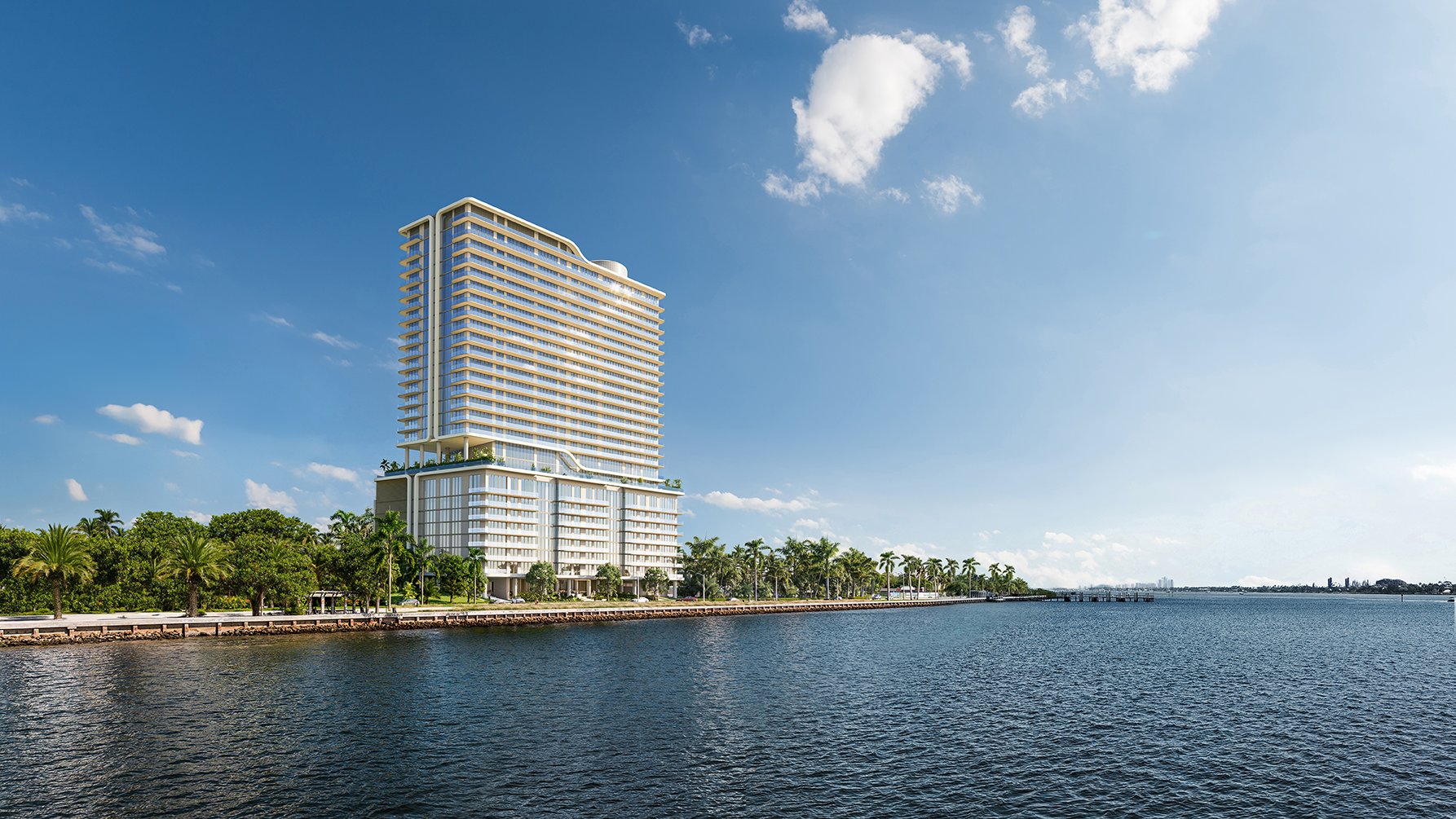
For readers tracking urban luxury with a service-forward posture, buildings like 2200 Brickell and Una Residences Brickell show how “ecosystem” can also mean a walkable, concierge-supported routine rather than acreage or dockage. The principle is unchanged: buy the life you will actually use.
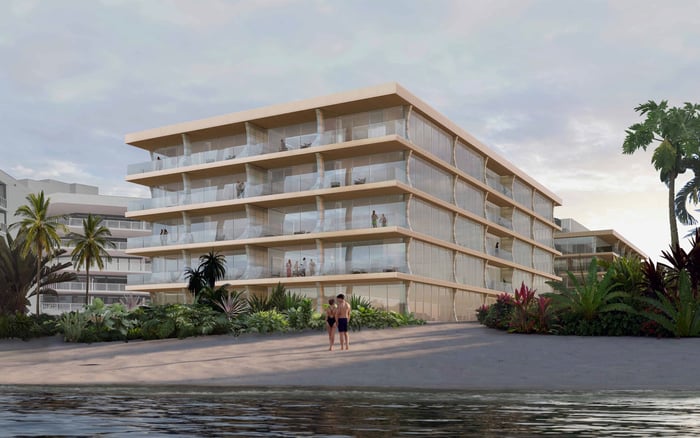
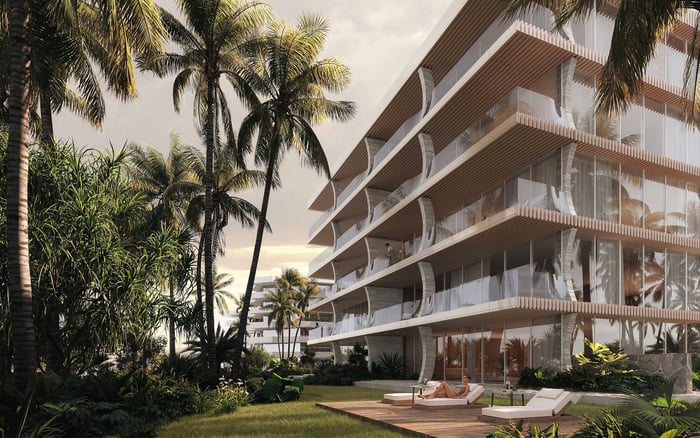
Waterfront inventory is marketed as its own distinct slice because the utility is tangible: proximity to the water, views, and, for many, private dockage and the ability to move from home to boat with minimal friction. In practice, the waterfront ecosystem rewards buyers who treat the shoreline as infrastructure-not just scenery.
The strongest waterfront purchases align the property’s physical realities with the buyer’s calendar. If boating is occasional, a panoramic view and resort-grade outdoor spaces may matter more than the mechanics of daily dock use. If boating is weekly, convenience becomes the luxury.
For buyers who want waterfront positioning with an elevated residential-services layer, Miami Beach options such as 57 Ocean Miami Beach can align the water-driven lifestyle with a more lock-and-leave mindset.
Golf-centered communities and private club environments aren’t simply about the course. They are about access, routine, and the social predictability that comes with a membership-driven culture. In Palm Beach County, Panther National is positioned as a private golf club and residential community, with the club framework serving as the organizing principle alongside real estate.
In this ecosystem, value is often tied to the durability of the club experience. The residence is your base; the club is the engine. Buyers should think in terms of alignment: will you use the amenities enough to justify paying a premium for access and adjacency?
If your priorities blend club-like services with a coastal sensibility, residences such as The Ritz-Carlton Residences® Palm Beach Gardens can be a compelling expression of that hybrid-privacy and polish, with a lifestyle scaffold that reduces decision fatigue.
Equestrian real estate is one of South Florida’s most specialized luxury submarkets because the asset isn’t merely a home-it’s a working environment. Wellington is widely promoted as a premier equestrian destination, and inventory there is frequently defined by facilities-oriented properties. Searches in this category routinely emphasize barns, stalls, arenas, and paddocks, prioritizing performance infrastructure over decorative upgrades.
Palm Beach Gardens also supports a distinct equestrian-home category, signaling demand beyond Wellington and underscoring that the “equestrian ecosystem” can extend beyond a single headline location.
In equestrian buying, the luxury is competence. A beautiful residence is a bonus; operational excellence is the requirement.
Buyers at the top of the market often share one trait: they have enough resources to buy the wrong thing and still live well. The objective is to avoid that outcome.
Use this framework to choose between waterfront, club, and equestrian living.
If you picture boating but rarely have the bandwidth, choose view-forward waterfront rather than dockage-forward. If you want community but protect privacy, lean toward residences with service layers rather than social density.
Friction is every small inconvenience that stops you from using what you bought: long drives, complicated dock procedures, or a barn setup that requires constant troubleshooting. Friction is the enemy of luxury.
Niche assets can be highly liquid within their audience and illiquid outside it. The more specialized the property, the more important it is to understand who the next buyer is-and why they will pay a premium.
Privacy can come from distance, design, staffing, or controlled access. Decide which kind of privacy you need, then buy accordingly.
South Florida’s luxury momentum is expected to persist into 2026, supported by continued in-migration and sustained high-net-worth demand. The structural drivers behind ecosystem buying are unlikely to fade: no-income-tax positioning attracts capital, global buyers maintain interest, and the lifestyle proposition remains unusually legible.
For buyers, that means the “right” purchase is increasingly the one that integrates seamlessly into a life already in motion. The market isn’t simply rewarding opulence; it’s rewarding clarity.
What does it mean to buy a luxury “ecosystem” in South Florida? It means choosing a lifestyle structure such as waterfront, private club golf, or equestrian living where daily routines and amenities drive value.
Is South Florida’s $10M+ market still active? Yes. The region recorded 361 closed $10M+ home sales in 2025, one of the strongest years on record.
Why are so many $10M+ transactions all-cash? All-cash purchases can reduce friction, speed up closing, and increase negotiating leverage for buyers who prioritize certainty.
What should waterfront buyers evaluate beyond the view? Focus on functional water access, dock usability, privacy sightlines, and outdoor entertaining flow.
Is “waterfront” always synonymous with boating? Not necessarily. Many buyers want proximity and views, while others require true boat-to-backyard convenience.
What defines the golf and private club ecosystem? It is anchored by access and recurring lifestyle amenities, where membership culture often shapes the community’s rhythm.
Why is equestrian real estate considered a specialized luxury niche? Because value hinges on operational infrastructure such as barns, stalls, arenas, and paddocks, not just interior finishes.
Is Wellington the only equestrian-centric market in South Florida? No. Wellington is prominent, but Palm Beach Gardens also has a dedicated equestrian-homes category.
What’s a practical way to choose between the three ecosystems? Map your real weekly routine, then choose the ecosystem that minimizes friction and maximizes actual usage.
What is the outlook for South Florida luxury into 2026? Expectations remain positive, supported by continued in-migration and sustained high-net-worth demand.
For a confidential assessment and a building-by-building shortlist, connect with MILLION Luxury.
If branded residences are on your mind — as a home or as an allocation — we would be glad to share what we are seeing, privately.
Begin a quiet conversation